

Wearing Leather in Rain: 4 Conservator Backed Rescue Steps

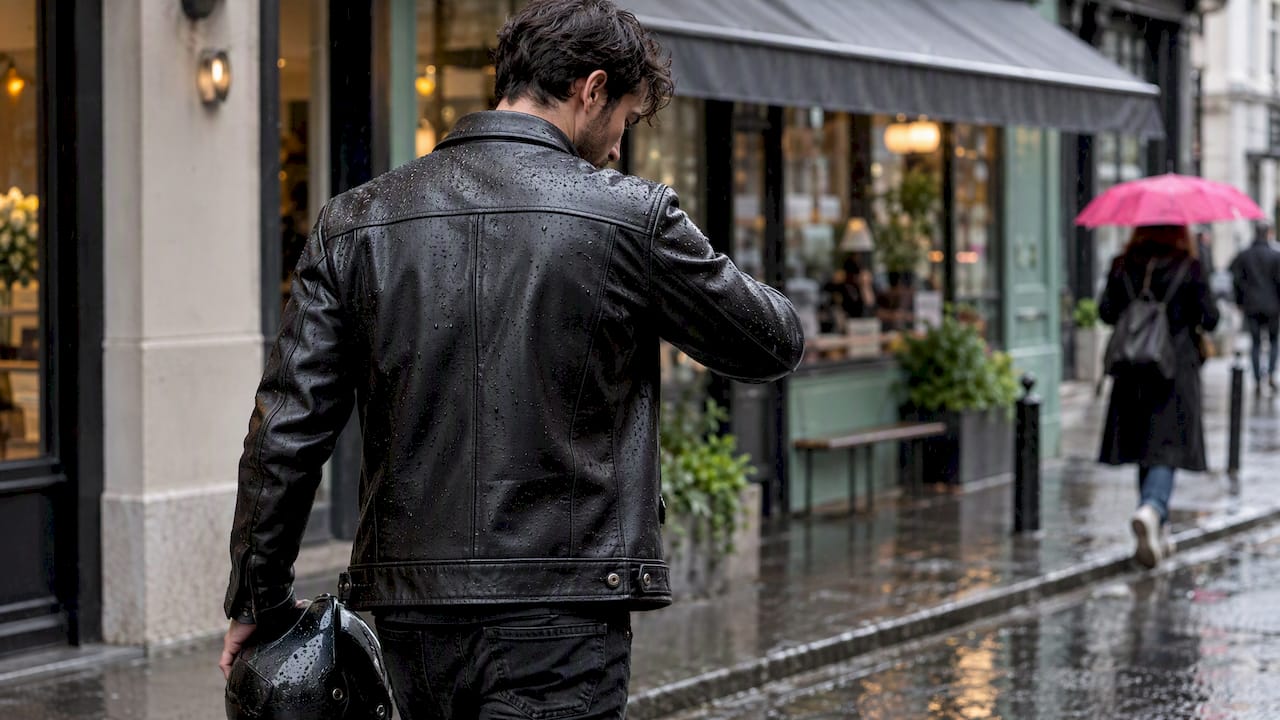
Short answer: yes, you can usually wear leather in a brief light rain if the piece is finished or properly treated, but heavy or prolonged soaking is a different story and can cause lasting damage. If you do get caught out, the single most important move is gentle, slow drying away from heat. Treat waterproofing as ongoing maintenance, not a one-time fix, and always test new products before applying them.
TL;DR:
- Light rain generally causes only temporary surface darkening and swelling, but repeated exposure can lead to permanent shrinkage and brittleness of leather.
- Finished, oiled, and waxed leathers handle light rain better, while aniline leather and suede absorb moisture quickly and should be avoided in wet conditions.
- Properly drying soaked leather involves gentle blotting, air drying in cool ventilation, and delaying conditioning until the leather is about 90% dry to prevent damage.
- Regular maintenance with appropriate products, applied conservatively and with proper test procedures, preserves leather’s water resistance without causing accelerative deterioration.
- Severe damage such as persistent mold, deep cracks, or large-scale shrinkage requires professional conservation rather than home treatment.
Table of Contents
- How rain affects the structure of leather
- When is it okay to wear leather in the rain?
- Protecting leather before you wear it in wet weather
- What to do the moment your leather gets soaked
- Keeping leather resilient season after season
- When a problem is bigger than home care can fix
- Why we build our care advice this way
- Our take: wear it, just don’t ignore it
- FAQ
- Sources
How rain affects the structure of leather
Leather is made of collagen fibers woven into a dense but porous matrix, and that structure is exactly what lets water in. A light sprinkle mostly sits on the surface of finished leather, but sustained rain works its way into the fiber network, swelling it from the inside.
The immediate effects are usually cosmetic: temporary darkening as water fills the pores, and a slightly raised or rougher grain once things dry. Those changes often fade. The real risk comes from repetition. Wet and dry cycles, over and over, slowly collapse the collagen structure, and repeated wetting and drying can cause permanent shrinkage and brittleness that no home treatment reverses. That is how a jacket that seemed fine after one rainstorm ends up stiff and cracking after a season of them.
There is also a chemical risk that has nothing to do with rain directly but gets worse when leather stays damp: fatty acid spew. This is a waxy, whitish bloom that can form when fats or oils in leather dressings migrate to the surface, and it shows up more often on leather that is kept moist or over-oiled. Damp leather left folded or stored is also more hospitable to mold, which needs moisture to establish itself.
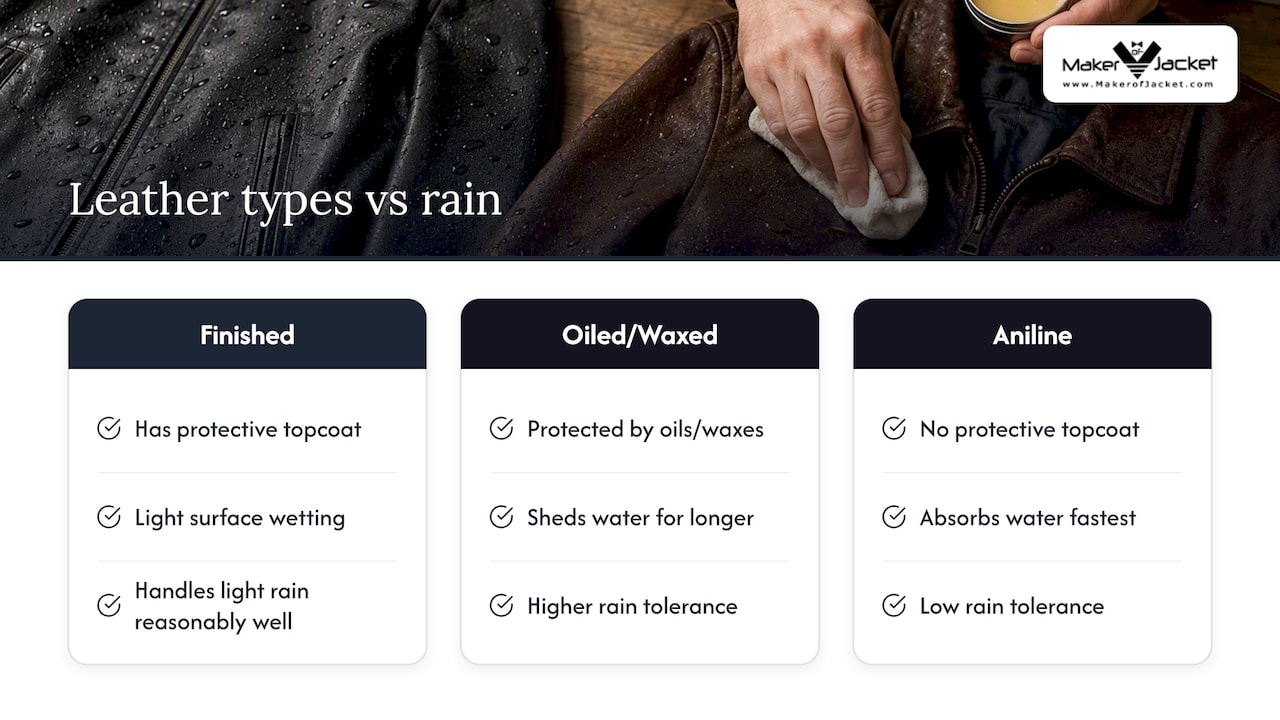
Not all leather responds the same way. Finished or “corrected grain” leather, with its protective top coat, handles light rain reasonably well. Oiled and waxed leathers, common on work boots and motorcycle gear, shed water for longer. Aniline leather, prized for its natural look and soft hand, has no protective topcoat and absorbs water fastest. Suede, with its open nap, is the least rain-tolerant of all and stains easily even from light moisture.
When is it okay to wear leather in the rain?
A useful rule of thumb: light rain, meaning a brief drizzle or mist that dampens the surface without soaking through, is generally fine for most finished leather jackets, boots, and bags. Heavy rain, meaning a sustained downpour, wind-driven rain, or any situation where water is pooling and running off the garment, is where you want to rethink your outfit or at least your route.
Finished, oiled, and waxed leathers are your best bet for unplanned light rain exposure. Aniline leather and suede are the two to actively avoid wearing when rain is likely, since they absorb moisture fastest and show water spots the most visibly.
A few habits reduce risk without much effort:
- Carry a compact umbrella or a lightweight plastic cover for unexpected downpours.
- Tuck a small microfiber towel in your bag to blot moisture the moment you’re indoors.
- Keep jackets zipped and collars tilted slightly upward so water sheds off rather than running into seams.
- Skip the long walk in steady rain if you have an alternative route or transport.
Pro Tip: If you’re unsure whether your leather can handle the forecast, check the care tag or product description first. Pieces built for daily wear, like motorcycle jackets, are usually finished to tolerate more moisture than fashion-forward aniline pieces.
Protecting leather before you wear it in wet weather
The two main approaches to pre-exposure protection work differently. Wax-based conditioners nourish the leather fibers and build up a physical barrier on the surface, while modern water-repellent sprays create a breathable shield that tends not to change how the leather feels or looks much. Both options have real tradeoffs worth understanding before you commit to one.
Before applying anything to a visible area, test it on an inconspicuous spot, like an inner cuff or underside flap, since some treatments darken lighter leathers permanently. Wait a few hours to see how the test spot dries before treating the whole piece.
A simple process to follow:
- Clean the leather lightly to remove dust and surface oils so the product can absorb evenly.
- Apply a thin, even coat of your chosen wax or spray, following the product’s specific instructions for drying time.
- Let it cure fully, usually overnight, before wearing the item in wet conditions.
- Reapply at the interval the product recommends, often every few months for items worn frequently in variable weather.
It is worth knowing that aftermarket sprays and waxes are not working with the same materials as a factory waterproofing process. Polymer nanoemulsion treatments used in manufacturing can impart substantial, measurable water resistance to leather, integrated directly into the fibers during production, while consumer sprays mainly add surface-level repellency. That distinction explains why a factory-waterproofed motorcycle suit holds up to rain better than the same leather treated at home afterward.
For fine dress leathers or pieces you care about keeping original, less is more. Conservation guidance leans toward minimal intervention rather than frequent heavy dressings, since repeated treatment can do more harm than the rain itself.
What to do the moment your leather gets soaked
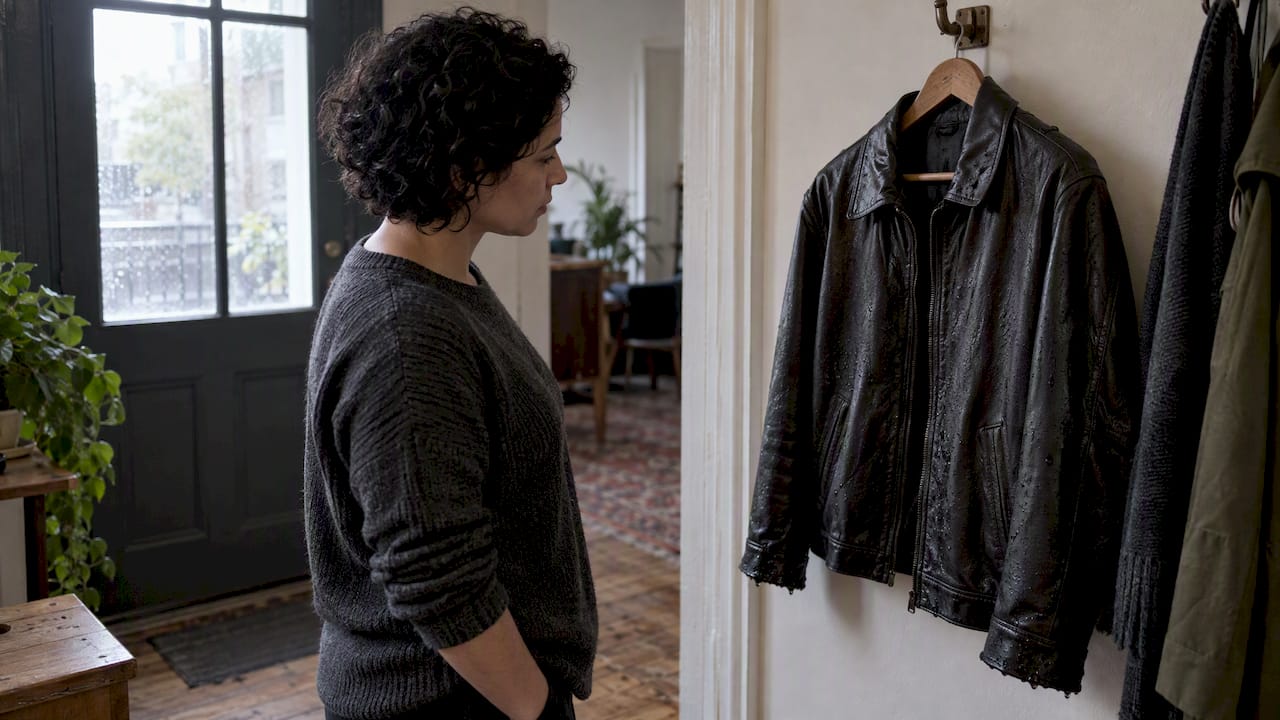
If a downpour catches you off guard, what you do in the next hour matters more than anything else for the garment’s long-term condition.
- Blot standing water immediately with a clean microfiber or cotton cloth, pressing gently rather than rubbing, which can push water deeper into the grain and rough up the surface.
- Unfasten every zipper, button, and snap so the leather isn’t held in a distorted shape while it dries.
- If the piece is heavily saturated, stuff it loosely with absorbent paper to help it hold its natural shape as it dries, replacing the paper once it becomes damp.
- Air-dry in a cool, well-ventilated spot, away from radiators, direct sunlight, and hairdryers. High heat forces moisture out too fast and can leave leather brittle and shrunken; a fan on a low, cool setting to keep air moving is a better choice.
- Once the leather feels cool and dry to the touch, with no visible surface moisture, apply a light, appropriate conditioner to replace oils lost in the process.
That last step has a specific timing window worth getting right. Leather should be about 90% dry, cool to the touch with no remaining surface moisture, before conditioner goes on, since the small amount of internal moisture left at that point helps the oils penetrate rather than just sitting on top.
Pro Tip: Never force-dry leather footwear or jackets with a hairdryer, even on a low setting. For a full walkthrough of safe drying for jackets specifically, our guide on drying a wet leather jacket covers the process start to finish.
Keeping leather resilient season after season
Surviving one rainstorm is easy. Keeping leather in good shape across years of wear in unpredictable weather takes a routine.
Condition leather when it is mostly dry, not wet and not bone dry, and choose a product suited to the specific leather type you own since suede, aniline, and finished leather all respond differently to oils and waxes. Consistent, measured maintenance keeps the surface able to bead water rather than absorb it, which is the whole point of conditioning in the first place.
The mistake many people make is overcorrecting: applying heavy fatty dressings every time it rains, thinking more product means more protection. Museum and archive conservators specifically caution against this, since excess fat content in repeated dressings is a leading cause of fatty acid spew and can accelerate embrittlement rather than prevent it. A conservative schedule, maybe every few months depending on how often you wear the piece, beats a heavy-handed one.
Storage matters just as much as active care. Keep leather in a stable, moderate humidity environment, away from direct heat sources, exterior walls that run cold or damp, and anywhere sunlight hits directly for long stretches. Fluctuating humidity is often what triggers the slow fiber collapse that makes old leather feel stiff and papery.
Check stored pieces periodically for early signs of trouble: a whitish, waxy bloom, a faint musty smell, or small fuzzy patches. Catching these early, and treating them cautiously rather than aggressively, is far easier than fixing advanced damage. For a deeper look at conditioning schedules and product choice, our guide to leather conditioner walks through timing and selection in more detail.
When a problem is bigger than home care can fix
Most rain damage is manageable at home, but a few signs mean it’s time to call in help rather than keep experimenting.
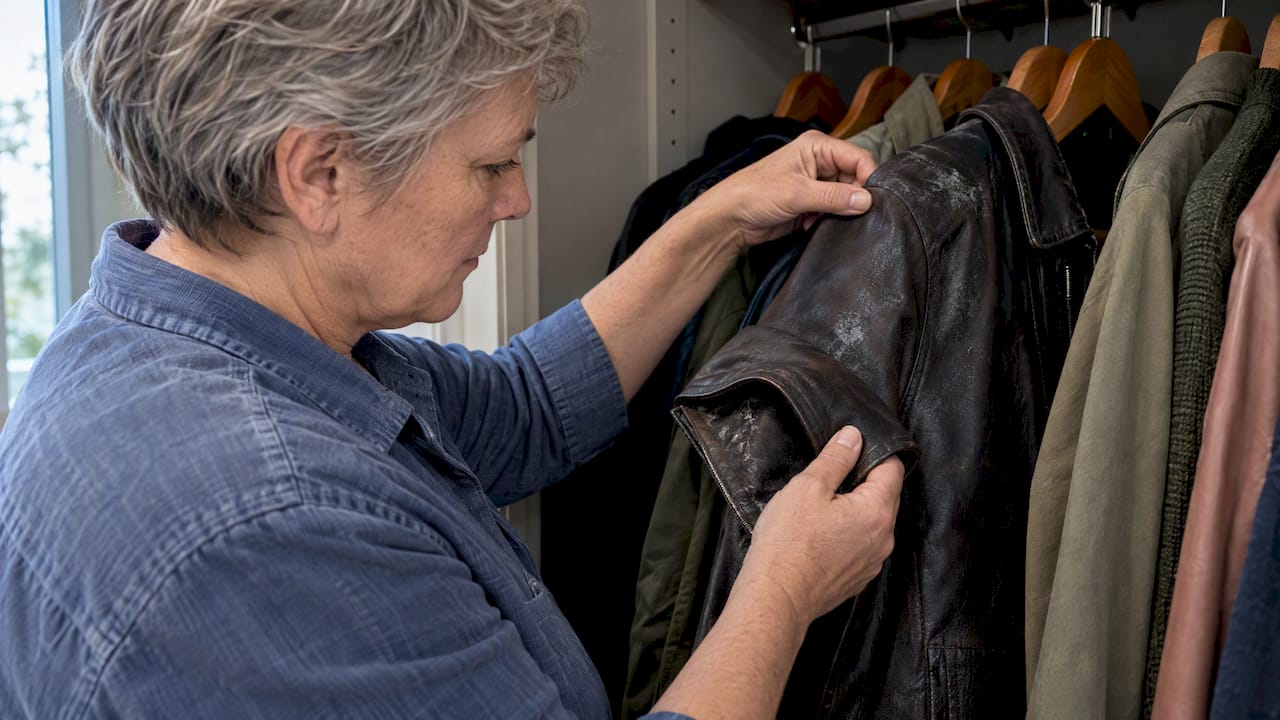
Watch for active fuzzy mold growth, a persistent whitish film that keeps returning after cleaning (a sign of ongoing fatty acid spew rather than a one-time surface issue), visible shrinkage or deep cracking across large areas, or stains that don’t respond to gentle cleaning.
Professional conservators have tools home treatment doesn’t: controlled solvent work that won’t damage dyes, vacuum extraction for spew removal, and specialized slow-drying methods. In rare, severe cases of saturation, items are even freeze-dried to prevent further fiber collapse. If you spot mold, avoid applying any oils or conditioners, which can feed the problem, and document the condition before reaching out to a vetted leather restorer.
Why we build our care advice this way
We put this guide together because the jackets and leather pieces we make are meant to be worn, not just admired in a closet, and that means they need to survive real weather. Our own care guidance on wearing a leather jacket in the rain reflects the same conservative principles outlined here: test first, dry slowly, and condition only when the leather is ready for it.
We also lean on established conservation guidance, including the National Park Service’s warnings about fatty acid spew from over-dressing leather, and peer-reviewed research on waterproof fatliquors to understand what aftermarket products can and cannot replicate from factory treatment. None of this advice asks you to do anything complicated. It asks you to be patient with heat and moisture, and a little skeptical of products that promise a permanent fix in one application.
Our take: wear it, just don’t ignore it
Leather is meant to be lived in, and a jacket that never sees a drop of rain is a jacket that is barely being used. The goal isn’t to avoid every wet day. It’s to build small habits, a quick blot here, a proper air-dry there, that keep repeating the same mistake from ever becoming a pattern.
Most leather damage we hear about didn’t come from one storm. It came from ten storms handled the same careless way. Preventive care, done a little at a time, beats emergency fixes every time, and our waterproofing guide is a reasonable place to start if you want to get ahead of the next downpour instead of reacting to it.
— Maker
FAQ
Will leather be okay if it gets wet?
Leather generally survives brief or light wetting without lasting harm, especially if it’s dried gently and promptly. Prolonged soaking or repeated wet and dry cycles are what cause real damage, including stiffness and surface cracking over time.
Is leather 100% waterproof?
No leather is fully waterproof on its own, since its natural fiber structure is porous and absorbs moisture over time. Factory-applied waterproof fatliquors can make leather highly water resistant, but even treated leather benefits from avoiding prolonged soaking.
Does rain affect leather?
Yes, rain affects leather by causing temporary darkening and a slightly raised grain in the short term, and by weakening the fiber structure with repeated exposure over the long term. How noticeable the effect is depends heavily on whether the leather is finished, oiled, or untreated aniline.
How long does leather take to dry after getting wet?
Drying time varies with saturation level and airflow, but leather should air-dry slowly in a cool, ventilated space rather than near heat. It’s ready for conditioner once it feels cool to the touch with no surface moisture remaining, rather than at a fixed hour count.
Sources
- How to Waterproof Leather Boots (Men’s Journal)
- Conserve O Gram 9/1: Fatty Acid Spew on Leather Objects (NPS)
- Imparting waterproofing properties to leather by polymer nanoemulsion based on long-chain alkyl acrylate (PMC)
- Wet leather guide (Carl Friedrik)


