

Measure Ease, Not Labels: 2–3 vs 4–6 Inches for Slim and Regular

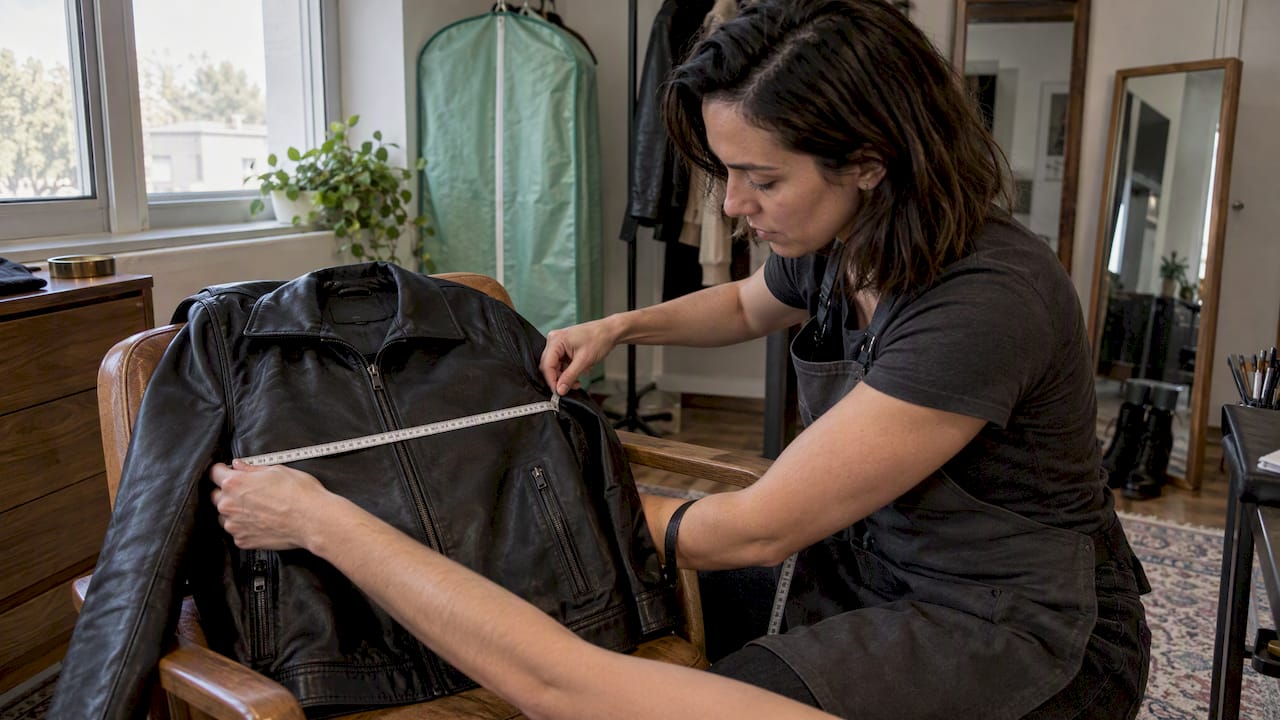
Slim fit uses less ease and sits closer to the body, while regular fit uses more ease for a roomier, more comfortable silhouette. If your measurements comfortably match a garment’s reduced ease, slim fit will give you a streamlined line. If you need mobility, layering room, or have fuller proportions, regular fit is the safer call.
TL;DR:
- Slim fit garments typically add 2 to 3 inches of ease, making them suitable for those whose measurements align closely with reduced ease for a tailored look.
- Regular fit garments usually include 4 or more inches of ease, providing extra room necessary for layering, movement, or broader body types.
- Since ease varies widely between brands, measuring your body and comparing it to finished garment measurements is more reliable than relying solely on fit labels.
- For jackets and suits, proper shoulder seam placement and back ease are crucial for comfort and range of motion, especially for larger or broader frames.
- When in doubt, sizing up one size in slim fit can prevent tightness across the chest or shoulders without losing the tapered silhouette.
Table of Contents
- What ease means and why it decides your fit
- How slim and regular play out by garment
- Which fit suits your build and situation
- A step-by-step checklist for choosing your fit
- Pattern guidance and alteration fixes worth knowing
- My take on why the numbers matter more than the label
- How we make slim and regular fit simple to get right
- FAQ
- Sources
What ease means and why it decides your fit
Ease is the extra room built into a garment beyond your actual body measurements, and it’s the single number that separates “slim” from “regular” far more reliably than the label on the tag. According to New Mexico State University’s pattern guidance, ease determines whether a garment binds, pulls, or moves freely with you, which is why comparing your body measurements plus recommended ease against the actual garment measurements beats trusting a fit name.
Here’s a simple example: say your chest measures 40 inches. A regular-fit shirt might add 4 to 6 inches of ease, landing the finished garment chest at 44 to 46 inches. A slim-fit version of the same shirt might add only 2 to 3 inches, finishing around 42 to 43 inches. Same chest, different garment, noticeably different feel.
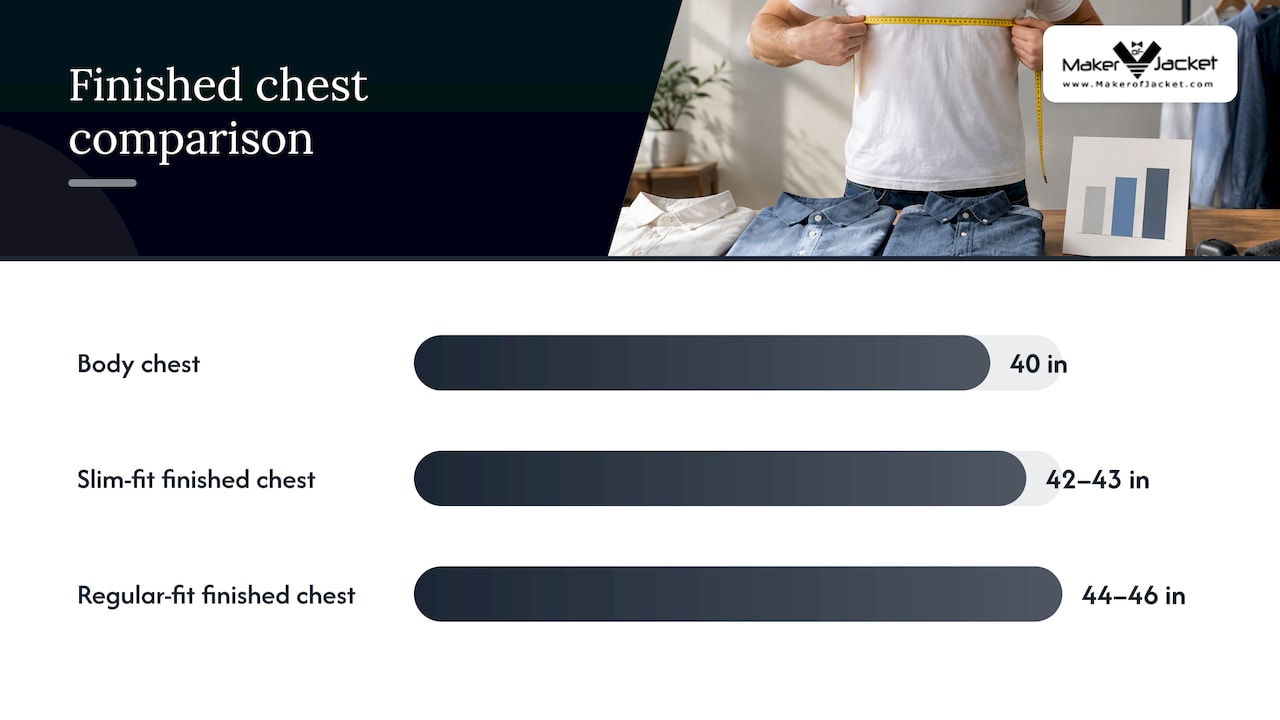
The problem is that fit labels aren’t standardized. One brand’s slim fit might carry 3 inches of ease, another’s might carry 1.5 inches, because ease varies by brand and collection rather than following a fixed industry rule. That inconsistency is exactly why measuring matters more than reading a tag.
To measure yourself accurately:
- Chest: wrap the tape around the fullest part, under the arms, keeping it parallel to the floor.
- Waist: measure at your natural waistline, usually just above the navel.
- Hips: measure around the fullest point of your seat.
- Sleeve: measure from the center back of the neck, across the shoulder, down to the wrist bone.
- Inseam: measure from the crotch seam to the bottom of the ankle on an existing well-fitting pant.
One often-overlooked detail: measuring over thin layers and recording both front and back seam-to-seam values gives a more consistent comparison against a brand’s published size chart than a single quick measurement.
How slim and regular play out by garment
The same ease principle shows up differently depending on what you’re wearing, and the practical signs are easy to spot once you know where to look.
- Shirts: slim fit tapers through the chest and waist, trims the sleeve, and often shortens the hem, which can limit how much you can tuck or layer underneath. Regular fit keeps a straighter drop from chest to hem, giving more room for an undershirt or sweater.
- Pants: slim fit narrows the thigh and tapers toward the ankle, while regular fit keeps a straighter leg with more room through the knee, which matters if you bike, squat, or sit for long stretches.
- Suits: a slim-fit jacket and trouser pairing reads sharper and more formal on a trim frame, but the same cut can feel restrictive across the shoulders or when seated for hours; regular fit trades some polish for comfort during long events.
- Jackets, including leather and custom pieces: shoulder seams need to sit right at the shoulder bone regardless of fit, but back ease is what lets you reach forward or layer a hoodie underneath. Custom sizing removes the guesswork entirely by building ease around your actual shoulder width and back measurement instead of a standard block. Our guide on jacket fit for comfort and safety breaks down how this plays out on riding and outerwear specifically.
Fabric plays a role too. A partner fit and fabric checklist walks through how stretch blends change the calculation, since a shirt with a few percent elastane can carry a slim cut with less binding than a rigid cotton version of the same measurements.
Which fit suits your build and situation
Body type and proportion matter more than personal taste alone when you’re choosing between slim and regular, though taste should still have the final word once comfort is settled.
- Lean or athletic builds usually carry slim fit well, since there’s less excess fabric to taper and the reduced ease still clears the shoulders and chest comfortably.
- Average builds often do fine in either fit, with the decision coming down to how much layering or movement the day requires.
- Fuller or broader builds generally read better in regular fit, since slim cuts can pull across the chest or hips even when the length is correct.
- Torso length and shoulder width shift the calculation: a long torso paired with a slim-fit shirt can ride up at the hem, and broad shoulders on a slim-fit jacket can strain the back seam before the waist even gets tight.
Situational factors matter as much as body type. Athletic activity and heavy layering both favor regular fit’s extra room, while formal events where you’re seated briefly and standing for photos tend to favor the cleaner line of slim fit.
Pro Tip: When your shoulders and chest fit well in a slim cut but the waist feels tight, that’s usually a sign to size up rather than switch fits entirely.
A step-by-step checklist for choosing your fit
Follow this order when you’re shopping, whether online or in a fitting room:
- Measure yourself first, not the garment, using the chest, waist, hips, sleeve, and inseam steps above.
- Pull the brand’s size chart for the specific item, since the same size label can carry different finished measurements across collections.
- Calculate the ease by subtracting your body measurement from the garment’s finished measurement at the same point.
- Compare that ease to the garment’s fit label: a chest ease under 3 inches generally signals slim, while 4 inches or more signals regular.
- Decide based on your priorities: pick slim if the ease matches and you want a closer line, pick regular if you need layering or movement room.
- Try it on and test range of motion: raise your arms, reach forward, and sit down to check if the shoulder seam stays put and nothing pulls at the pockets.
A few extra rules of thumb help here. Sizing up one size in a slim fit often solves chest or shoulder tightness without losing the tapered waist and leg. For jackets specifically, our step-by-step measuring guide walks through tape placement for each measurement point so you’re comparing apples to apples against any size chart.
Pro Tip: If a slim-fit garment fits everywhere except one spot, like a tight sleeve or a pulling pocket, a small alteration usually beats returning the item for a different size.
Pattern guidance and alteration fixes worth knowing
Pattern-making practice backs up the measure-first approach. Pattern alteration guidance from New Mexico State University outlines three standard techniques: folding out excess fullness, slashing and spreading fabric to add room, and redrawing darts to reshape a specific area rather than resizing the whole garment. These are the same principles tailors use to fix store-bought pieces.
Common fixes include:
- Sleeve tightness: often solved with a slight taper adjustment rather than a full size change.
- Chest pulling: usually fixed by letting out side seams rather than switching to a looser fit label entirely.
- Waist gaps in a jacket: corrected by taking in the back seam, which preserves shoulder fit.
This is also why custom sizing tends to beat guessing a fit label. Instead of hoping “slim” matches your numbers, our men’s size guide lets you check specific measurements before ordering a custom-built jacket, pant, or suit designed around your actual proportions rather than a generic block.
My take on why the numbers matter more than the label
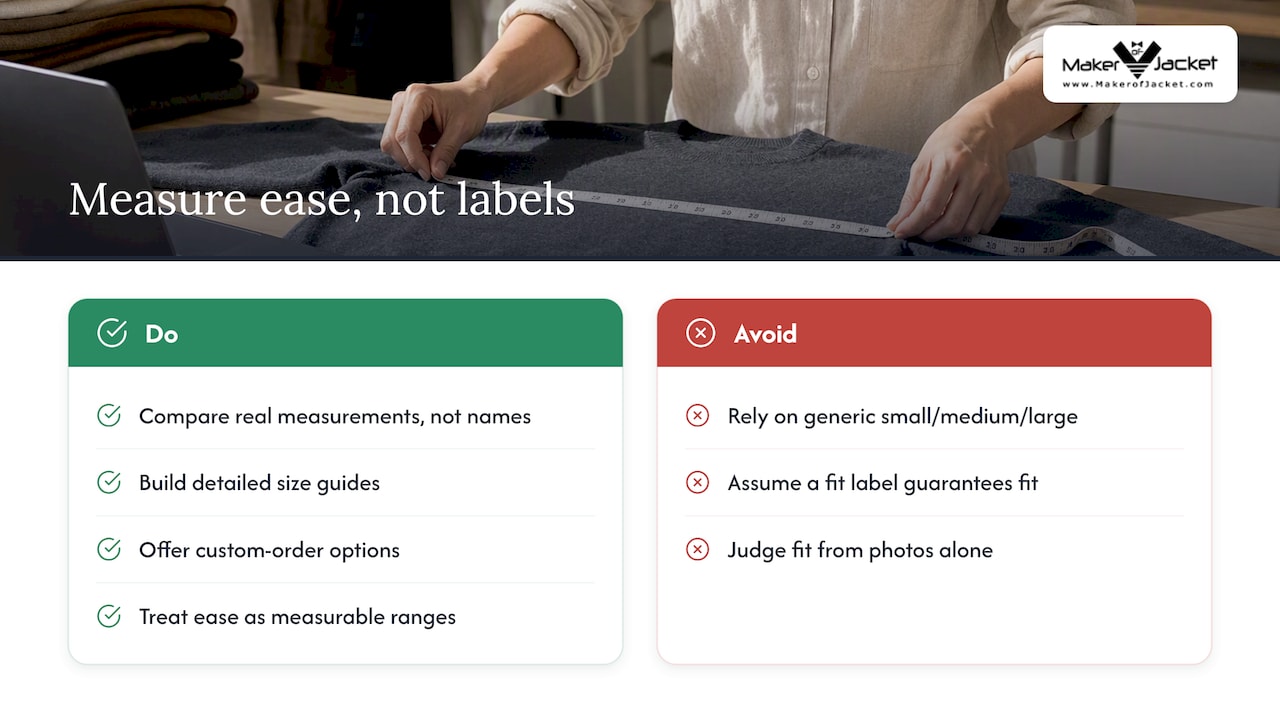
I’ve watched enough buyers struggle with “slim” meaning three different things across three different brands to trust measurements over marketing names every time. A fit label is a starting point, not a guarantee, and the only way to know how a garment will actually sit on you is to compare real numbers.
That’s the thinking behind building detailed size guides and custom-order options rather than relying on generic small, medium, and large labels. When ease is treated as a measurable range instead of a fixed truth, fewer people end up returning a jacket that looked right in a photo but felt wrong on their shoulders.
— Maker
How we make slim and regular fit simple to get right
We built our size guides around actual measurement points, not just size labels, because a chest number tells you more than a word like “slim” ever will. Every custom order starts with your measurements, which means the ease is built around your body rather than a generic block that might run tight in the shoulders or loose at the waist.
If you’re not sure whether to go slim or regular, start with our custom jacket order page and use the measurement steps above before you commit to a size. A Customize Jacket Order runs $199 one-off, and options like the Custom Biker Jacket at $249 or the Custom Bomber Jacket at $249 can be built to your exact chest, shoulder, and sleeve measurements instead of a standard fit label. Check your numbers against our size guide, then place your order with the fit built in from the start.
FAQ
Should I get regular fit or slim fit?
Choose slim fit if your body measurements closely match the garment’s reduced ease and you want a closer, more tailored line. Choose regular fit if you need extra room for layering, movement, or a fuller build, since regular fit carries more ease by design.
Who should wear slim fit?
Slim fit tends to suit lean or athletic builds best, since there’s less excess fabric to taper around the chest and waist. People with average builds can also wear slim fit comfortably as long as their measurements leave enough ease at the shoulders and chest.
Does slim fit mean skinny?
No, slim fit is not the same as skinny fit. Slim fit reduces ease moderately for a closer silhouette while still allowing comfortable movement, whereas skinny fit cuts even closer to the body with minimal ease, often relying on stretch fabric to stay wearable.
Do I need to size up for slim fit?
Sometimes, particularly if your chest or shoulders are broader than average, since slim-fit garments use less ease through the chest and arms. Sizing up one size often preserves the tapered waist and leg while relieving tightness across the chest and shoulders.
Sources
- Check Your Pattern for Proper Fit | New Mexico State University
- 12 Best T-Shirts for Men, According to Our Experts


