

Lambskin vs Cowhide: Which Leather Jacket Is Right for You?

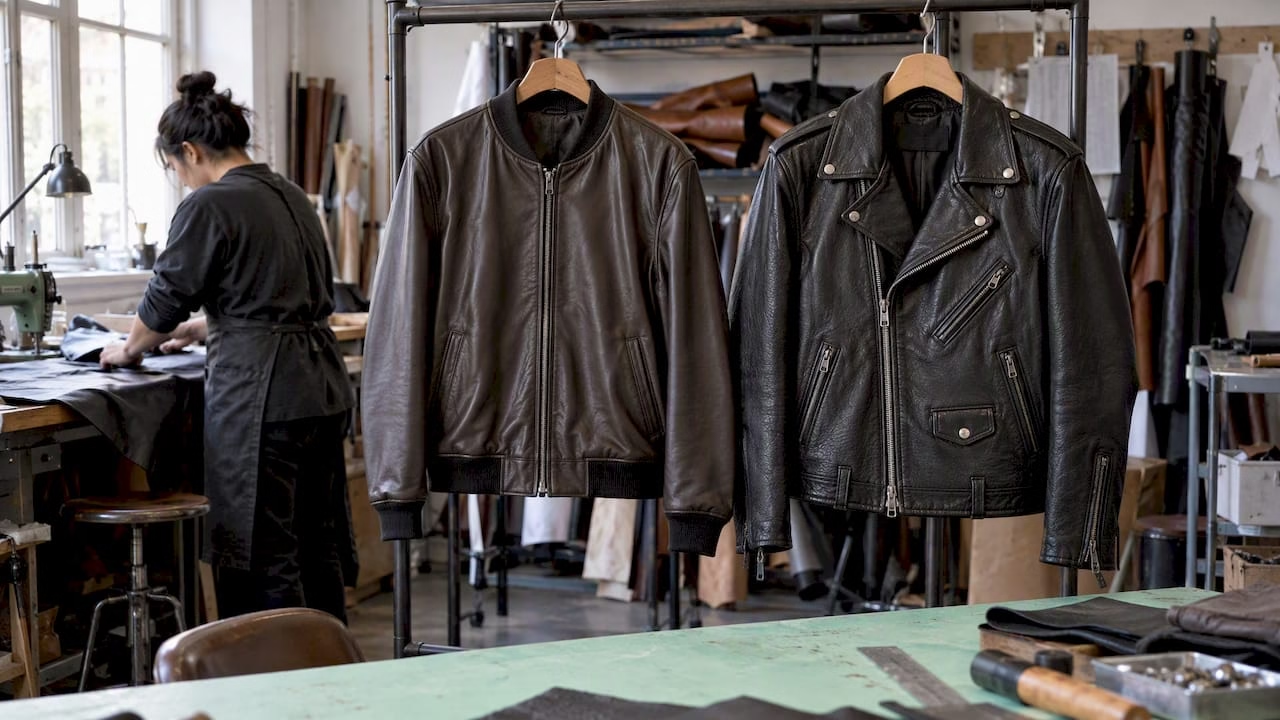
Cowhide is the tougher, heavier leather, and it suits riding, work and decades of hard wear. Lambskin is the softer, lighter leather. It suits fashion pieces and everyday wear where comfort matters more than armor. Goatskin sits between them and is a favorite for riders. The right choice comes down to what you will do in the jacket, not which leather is “better.”
This guide compares the three on the things buyers actually notice: durability, weight, feel, break-in time, upkeep, motorcycle use and cost. It also covers what the label on a jacket does and doesn’t tell you.
TL;DR
- Cowhide is thicker and has higher tear strength, so it is the default for motorcycle jackets, work jackets and anything you plan to wear for decades.
- Lambskin is the softest and lightest option. It feels worn in from day one, but it scratches and scuffs more easily and is not the pick for crash protection.
- Goatskin is tough for its weight, which is why it shows up in riding gear. It is the compromise if you want something lighter than cowhide with more toughness than lambskin.
- Tanning, grade (full grain or top grain) and construction matter as much as the animal. A well-made lambskin jacket beats a poorly made cowhide one for most city use.
- For a custom jacket, tell the maker how you will use it. Leather choice should follow that answer.
Table of Contents
- The short version: how the three leathers compare
- Why cowhide is stronger
- What lambskin does better
- What cowhide does better
- Where goatskin fits
- For riders: toughness is not the only variable
- Perspective: what we see when people order custom jackets
- Grade and tanning matter as much as the animal
- Which leather for which jacket
- Caring for each leather
- Get the jacket made in the leather you want
- FAQ
- Sources
The short version: how the three leathers compare
| Lambskin | Goatskin | Cowhide | |
|---|---|---|---|
| Feel | Very soft, smooth, fluid drape | Supple, slightly pebbled | Firmer, sturdier, more structure |
| Weight | Lightest | Middle | Heaviest |
| Durability | Lowest of the three | High for its weight | Highest overall tear strength |
| Break-in | Almost none | Short | Longest, rewarding |
| Scuff resistance | Marks more easily | Good | Very good |
| Best for | Fashion jackets, bombers, light layering | Riding and daily wear | Biker jackets, work jackets, heritage styles |
These are general tendencies. Individual hides vary, as the next section explains.
Why cowhide is stronger
Leather is a natural material, and its strength comes from the collagen fiber network in the skin. A 2019 study in the Journal of the American Leather Chemists Association compared the molecular makeup of different skins and hides. It found that sheep skin has the lowest collagen content among those compared, which helps explain why lambskin tears more easily than cowhide.
Cattle also grow a bigger, thicker hide because it protects a larger animal. That is why cowhide has more body, more weight and more resistance to abrasion, and why it takes longer to soften.
Strength also varies within a single hide. Research that mapped tear strength and collagen fiber orientation in cattle, sheep and deer skins describes leather as a variable natural material, and it ties part of that variation to fiber orientation. The University of Cincinnati’s leather lab makes the same point more plainly in its overview of leather testing. Strength depends on the animal’s age and health and on which part of the hide a panel is cut from.
For a buyer, this means two things:
- Cowhide is stronger on average, but a premium lambskin jacket can outlast a cheap cowhide one.
- Lambskin is thinner and its strength varies more across the hide. That puts a premium on careful cutting, so the garment doesn’t stretch or warp unevenly. Maker quality matters more with lambskin than with cowhide.
What lambskin does better
Lambskin wins on feel. It is thin, smooth and flexible, so it drapes close to the body, moves with you and needs almost no break-in. That is why it is the usual choice for slim bombers, cropped jackets, café racer silhouettes and women’s fashion jackets.
The Leather Working Group’s overview of how leather is made explains that softness is shaped by tanning, not only by species. A cowhide can be processed to feel fairly soft. It still won’t match the delicate drape lambskin has naturally.
Lambskin also suits you if:
- You run warm, live somewhere mild, or layer a jacket over a light sweater or under a coat.
- You want a jacket that looks refined at dinner or at work.
- You dislike the stiff first month of a new leather jacket.
The trade-offs are real. Lambskin marks more easily from keys, zippers, bag straps and rough surfaces. It needs gentler handling and conditioning. If you want to know what to look for in a good one, we cover that in Lambskin Jacket: Why Quality Matters Most. The truths and myths about lambskin jackets are also worth reading before you pay a premium for the name alone.
What cowhide does better
Cowhide is the workhorse. It is thicker, denser and more resistant to wear, and it ages into the deep patina that people associate with a jacket worn for twenty years. The Leather Working Group’s guidance on modern cow leather processing also points out that hides are a by-product of the food industry, which matters if sourcing is part of your decision.
Choose cowhide if:
- You ride a motorcycle, or want a classic biker, work or varsity-style jacket with structure.
- You live in a cold or windy climate and want a jacket that blocks wind well.
- You want one jacket for a decade or more and don’t mind a break-in period.
The downsides are weight and stiffness. A heavy cowhide jacket can feel stiff for the first weeks of wear. Our guide on how to soften a leather jacket covers how to speed that up safely. For a deeper dive, see cowhide leather explained.
Where goatskin fits
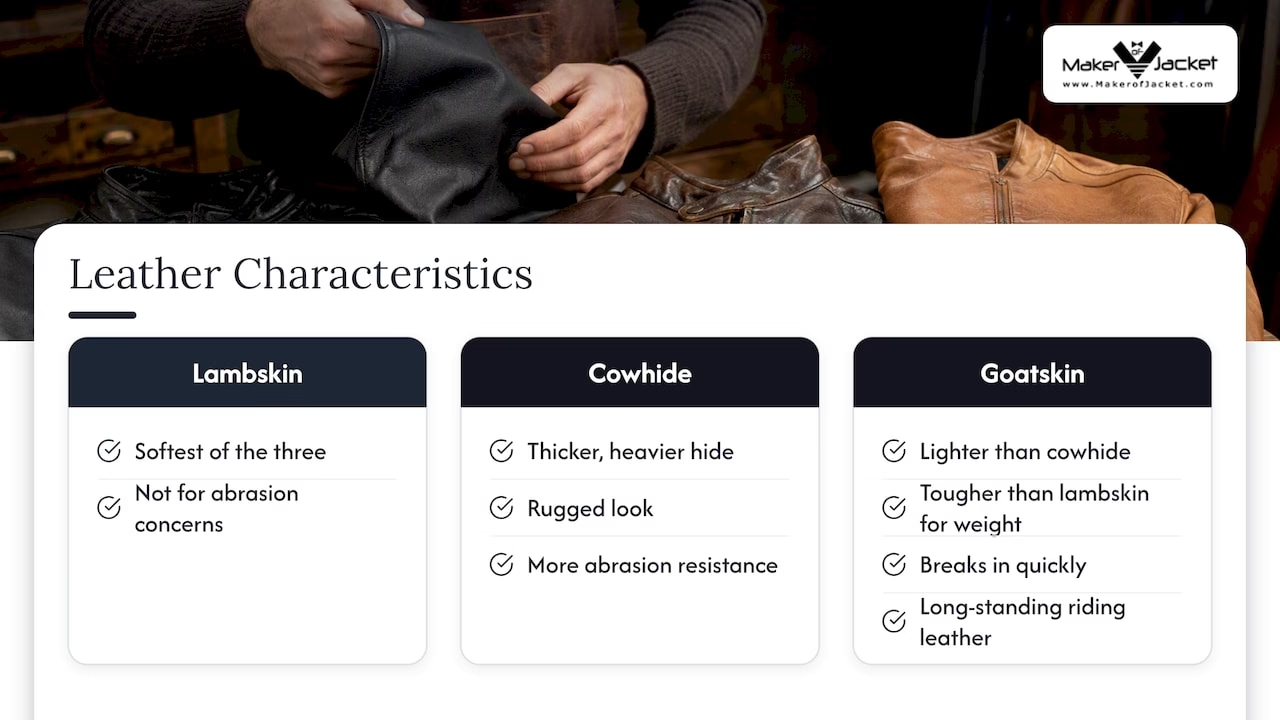
Many shoppers who search lambskin against cowhide are really weighing a third option. Goatskin is lighter than cowhide and tougher than lambskin for its weight. It has a natural, slightly pebbled grain and breaks in quickly.
The motorcycle world has long favored it. A 1984 IRCOBI paper that tested fabrics and leathers on a crash dummy cites the Folksam study, which concluded that goat leather was the best material available for motorcyclists’ suits. That is a four-decade-old result, so treat it as history, not a current ranking. It still explains why goatskin is a long-standing riding leather.
If you are choosing between goatskin and cowhide, the question is weight against sheer mass. Cowhide gives you more thickness and a rugged look. Goatskin gives you more comfort for the same level of toughness, particularly in warm weather or on long rides. Lambskin is the softest of the three, but it isn’t the one to reach for when abrasion is the concern.
For riders: toughness is not the only variable
If you are buying for the road, cowhide or goatskin should be your starting point. The IRCOBI research says the same: leathers that are thicker and tougher are preferred over thin, soft ones for abrasion. Lambskin is not a riding leather.
Two cautions keep this honest.
Thicker is not automatically safer. The same research shows that tanning quality and construction count as much as the species. Seam strength, stitching and reinforcement in impact zones decide how a jacket behaves in a slide. A heavy cowhide with weak seams can fail where a well-built goat jacket would hold.
Heavy leather tires you. Stiff, heavy cowhide can be fatiguing on long rides. Riders who want less weight sometimes move beyond cowhide altogether. Motorcycle apparel writer Alisa Clickenger notes in Motorcycle & Powersports News that kangaroo leather is thinner and lighter than cowhide yet remains strong and flexible. Our own breakdown of cow, kangaroo or textile for motorcycle jackets goes through that decision.
If you ride regularly, look for a jacket sold as protective riding gear, with armor pockets and reinforced seams. A fashion biker jacket in any leather, lambskin included, is styling. It is not crash protection. Check the specifics of any certified protective gear with the maker and your local riding community before you rely on it.
Perspective: what we see when people order custom jackets
Most people who come to us start with the wrong question. They ask which leather is best. We ask what the jacket will do.
We make jackets to order, so we see both sides. When someone wants a slim bomber, a cropped silhouette or a women’s jacket that sits close, lambskin is almost always the right call. It cuts cleanly, drapes well and feels finished from the first day. When someone wants a biker jacket, a studded or fringe design that needs structure, or a motorcycle suit, we steer them to cowhide, because the garment has to hold its shape and take punishment.
The mistake we see most is buying on the label. “Genuine leather” tells you very little. As the industry uses the term, it covers a broad range of grades. Ask for full grain or top grain, which describe how much of the hide’s surface is used, and ask which animal it is. A jacket described only as “genuine” could be either animal and any grade.
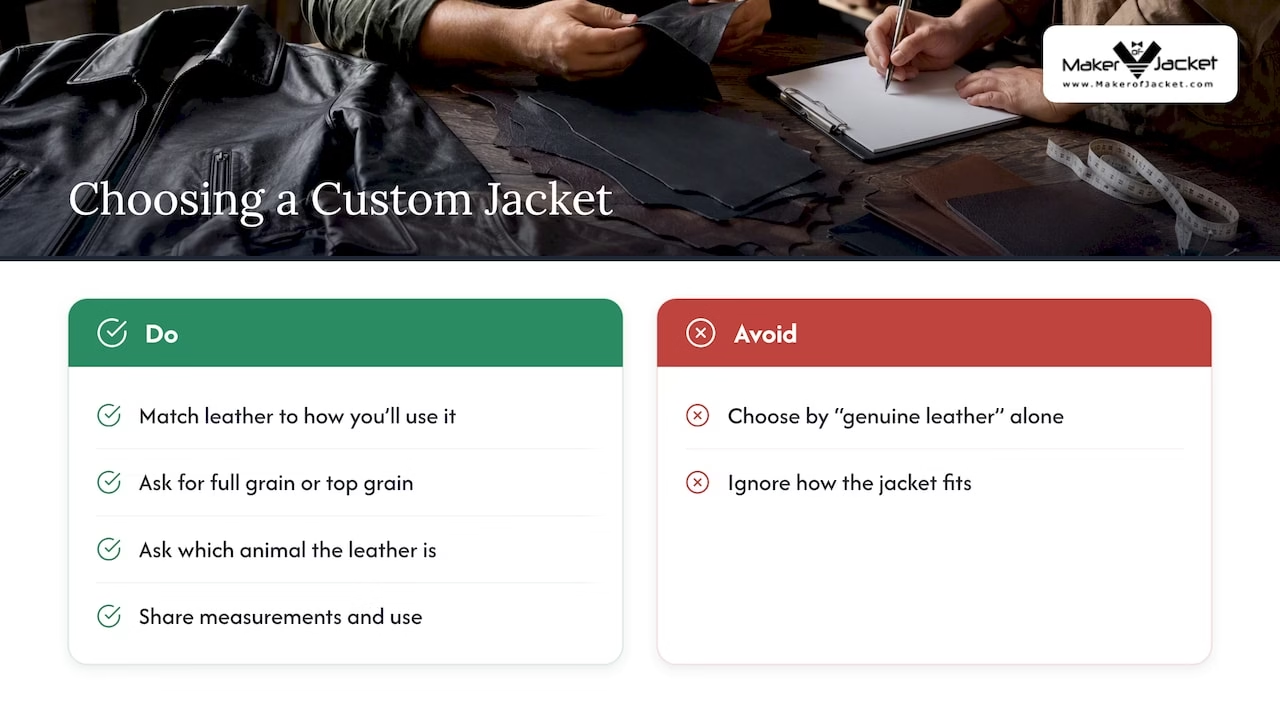
The second mistake is ignoring fit. Lambskin is thin and has more variable strength, so it needs precise cutting to avoid stretching unevenly. Cowhide is more forgiving of the pattern but heavier, so its fit depends on how the sleeves and shoulders move. This is why we ask for your measurements and use size guides, and why a made-to-measure order beats a rack jacket more often than people expect.
Our honest rule: pick lambskin for comfort and looks, cowhide for toughness and longevity, and tell us your use so we can recommend the weight of leather to match.
— Maker
Grade and tanning matter as much as the animal
Two cowhide jackets can feel and last completely differently. The Leather Working Group says leather properties change with the tanning process, not just the animal source. Industry scientists also stress that no leather is best in a vacuum. The best choice depends on whether your priority is protection or aesthetics.
When you shop, check these:
- Grade. Full grain keeps the natural surface and ages best. Top grain is sanded or buffed for a more even look. “Genuine leather” alone is a vague term and tells you little about longevity or patina.
- Animal. A good seller names it: lambskin, goatskin, cowhide, or something else.
- Weight and thickness. Ask how thick the leather is, particularly for riding or cold weather.
- Lining and hardware. Zippers, snaps and stitching are the first things to fail on a cheap jacket.
- Finish. Aniline and semi-aniline finishes show the grain. Heavily coated finishes hide flaws and can crack.
Our wider guides on the best leathers for jackets and which materials last longest go deeper on each of these. If you are weighing lambskin against sheepskin, which is often confused with it, read lambskin and sheepskin compared.
Which leather for which jacket
| Jacket or use | Best leather | Why |
|---|---|---|
| Slim bomber or cropped jacket | Lambskin | Light, soft, drapes close |
| Women’s fashion jacket | Lambskin | Comfort and clean lines |
| Classic biker jacket for style | Cowhide or lambskin | Cowhide for structure, lambskin for a softer look |
| Motorcycle jacket or suit | Cowhide (or goatskin) | Abrasion resistance and toughness |
| Studded, fringe or heavily detailed jacket | Cowhide | Holds the weight of hardware |
| Trench coat | Lambskin or thinner cowhide | Drape matters over a long length |
| Cold-weather daily jacket | Cowhide | Body and wind resistance |
| Mild-climate, layering, office | Lambskin | Light and comfortable |
Caring for each leather
Lambskin needs gentler care. Keep it away from sharp objects, avoid overstuffed pockets, let it dry naturally if it gets wet and condition it sparingly with a product made for fine leather. Hang it on a wide shaped hanger so the shoulders hold.
Cowhide forgives more. Wipe off dirt, condition it once or twice a year, and let it dry away from heaters if it gets wet. A cowhide jacket often looks better with scuffs and creases. A lambskin jacket usually looks best kept smooth.
In both cases, avoid storing leather in plastic. Use a breathable garment bag in a cool, dry place.
Get the jacket made in the leather you want
If you already know which leather suits you, we build to your measurements and your design. Our custom range includes, among others, a Custom Biker Jacket at 249 USD, a Custom Bomber Jacket at 249 USD, a Customize Motorcycle Jacket Order at 299 USD and a Custom Suede Leather Jacket at 299 USD. Riders can also look at the Custom Motorcycle Jackets page or our custom motorcycle suit option, priced at 575 USD for the Customize Motorcycle Suit Order.
We offer worldwide free shipping and 24/5 support, and our jackets are handcrafted by skilled craftsmen. If you want to see a finished piece first, the women’s lambskin jacket in tan is a good example of what lambskin looks like in a clean, simple cut.
FAQ
Is lambskin or cowhide more durable?
Cowhide. It is thicker and has higher tear strength, and lambskin has the lowest collagen content of the common clothing leathers in the 2019 study cited above. Lambskin can still last many years with careful handling, but it marks and scuffs more readily.
Is goatskin better than cowhide for a jacket?
It depends on what you value. Cowhide is heavier and more rugged, while goatskin is lighter and tough for its weight, which is why riders have long used it. If comfort and weight matter more than maximum thickness, goatskin is a strong choice.
Is lambskin good for a motorcycle jacket?
It isn’t the usual choice. Riding research tends to favor cowhide or goat leather over thin, soft leathers for abrasion resistance. If you want a lambskin biker look for style, that is fine, but for real riding choose protective gear built for the road and talk to a riding gear specialist about certification.
Does cowhide get as soft as lambskin?
Not quite. Tanning can make cowhide quite soft, and a good break-in helps, but it will not match the natural drape of lambskin. Expect a firmer, more structured feel that improves with wear.
Is lambskin worth the higher price?
If you want softness, light weight and a refined look, yes. If you want longevity under hard use, cowhide gives you more for your money. Check the grade (full grain or top grain) either way, because that affects value more than the animal alone.
Sources
- Insights into the Molecular Composition of the Skins and Hides used in Leather Manufacture, JALCA (2019)
- Mapping Tear Strength and Collagen Fibril Orientation in Bovine, Ovine and Cervine Hides and Skins, JALCA
- University of Cincinnati Leather Research Laboratory
- Leather Working Group, Making Leather overview
- Leather Working Group, Modern Cow Leather Processing
- IRCOBI 1984, clothing for motorcyclists and soft tissue injuries
- Motorcycle & Powersports News, Understanding Apparel Construction Techniques


