

Science Backed: Cowhide vs Lambskin for Riders or Fashion

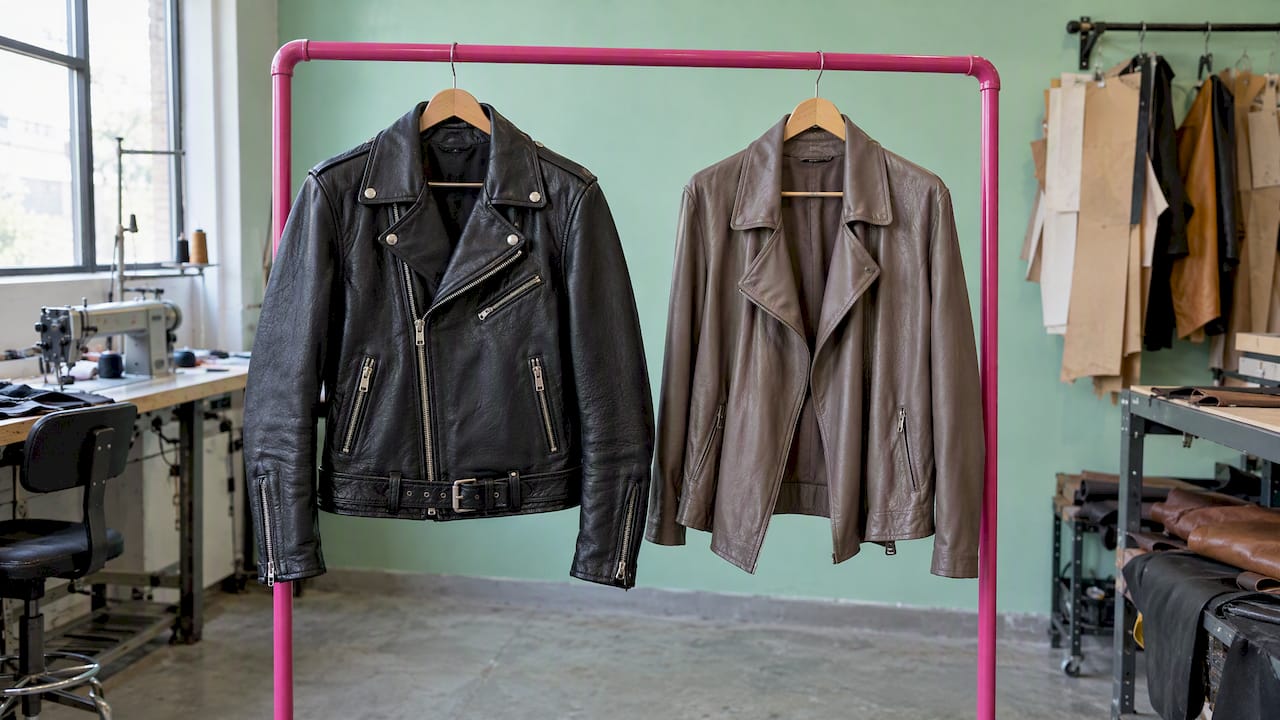
Choose cowhide when you need a jacket that shrugs off abrasion and holds up to years of hard wear, and choose lambskin when softness, light weight, and a close fit matter more than toughness. Quality still decides a lot: a well-finished lambskin jacket can outlast a cheap, poorly tanned cowhide piece in everyday use. The sections below walk through the science and the practical trade-offs behind that verdict.
TL;DR:
- Cowhide offers significantly higher tear strength and abrasion resistance, making it the better choice for heavy-duty use like motorcycle jackets.
- Lambskin is lighter, softer, and more flexible, but it tears and wears out more quickly under repeated abrasion or stress.
- The molecular structure of cowhide, with denser collagen fibers, explains its durability compared to lambskin’s lower collagen content.
- Finishing techniques and proper construction are crucial, as even cowhide or lambskin jackets from reputable sources outperform poorly made equivalents.
- Both hides require regular conditioning and careful cleaning to maintain their appearance and longevity over time.
Table of Contents
- Cowhide vs Lambskin at a Glance
- What the Hides Are Made of: Collagen, Fiber Orientation, and Finishing
- Durability and Abrasion Resistance in Real-World Use
- Hand, Drape, and How Each Leather Ages
- Which Jacket Styles Use Each Hide
- Caring for Cowhide and Lambskin Jackets
- How to Choose the Right Hide for Your Jacket
- Maker of Jacket: How We Match Hide to Jacket Style
- Ready to Order? Here’s How We Help You Choose
- FAQ
- Sources
Cowhide vs Lambskin at a Glance
Before you dig into the material science, here is how the two hides stack up on the traits that matter most for a jacket buyer.
- Strength and abrasion resistance: cowhide wins by a clear margin due to denser collagen fiber structure.
- Weight and thickness: cowhide runs heavier and thicker; lambskin is notably lighter and thinner.
- Drape and hand feel: lambskin feels buttery soft and molds to the body; cowhide feels firmer and more structured.
- Warmth: cowhide traps more heat on its own; lambskin often needs a liner for the same warmth.
- Typical finish and look: cowhide shows a coarser, more visible grain; lambskin looks smoother and more refined.
- Price direction: lambskin fashion pieces often sit at a similar or lower price point than heavy cowhide gear, depending on construction and finish.
- Longevity: cowhide tends to last longer under repeated stress; lambskin holds up well under lighter, occasional use.
Studies indicate bovine hides generally have higher average normalized tear strength than ovine skins across comparative hide strength research, which explains why cowhide is the default pick for anyone who needs a jacket to survive rough treatment.
If you ride or work in your jacket, lean cowhide. If you want a dress-up or everyday fashion piece that feels light against your skin, lambskin is the better match.
What the Hides Are Made of: Collagen, Fiber Orientation, and Finishing
The performance gap between cowhide and lambskin starts at the molecular level, not on the tannery floor. A study published in the Journal of the American Leather Chemists Association mapped collagen crosslinks and glycosaminoglycan (GAG) content across species and found that sheep skin carries the lowest collagen content and the highest GAG concentration when compared with cowhide. Collagen is the structural protein that gives hide its tensile strength, so less of it, combined with more GAGs acting as a softening agent, produces a skin that feels gentler but tears more easily.
Bovine hides, by contrast, pack denser collagen fiber bundles that run in tighter, more interwoven patterns. That density is a major reason cowhide resists stretching and tearing better than lambskin under the same stress.
Tanning and finishing choices then push each hide further in its natural direction. Fatliquoring, the process of working oils into the fiber structure during tanning, softens cowhide somewhat but rarely brings it close to lambskin’s suppleness. Finish coatings (aniline, semi-aniline, or pigmented) change surface feel and abrasion resistance without altering the underlying collagen structure. None of this is uniform across every hide: tear strength varies within a single animal’s skin and across individual animals, so a single sample from a supplier never tells the whole story. Treat any specific cowhide or lambskin jacket on its own merits rather than assuming the species label guarantees a fixed outcome.
Durability and Abrasion Resistance in Real-World Use
Lab testing gives us a way to compare leathers beyond marketing claims. ASTM D7255 is a standardized abrasion test that measures how many cycles a leather sample withstands on a rotary platform abraser before failure, and it is commonly used to rank relative durability for end uses like outerwear and protective gear.
Higher collagen density gives cowhide a measurable edge in both tear strength and abrasion cycles compared with lambskin, according to the comparative hide strength research cited earlier. That gap is why cowhide shows up in nearly every motorcycle jacket built for real protection, not just style.
ASTM scores are useful for ranking, but they don’t replace common sense about construction. A thick, well-stitched cowhide jacket from a disciplined cowhide leather resource will outperform a thin cowhide piece with sloppy seams. Under casual wear, a quality lambskin jacket can serve for many years without issue. Under repeated abrasion, like sliding against a motorcycle seat or scraping against gear straps daily, cowhide holds its surface and seams noticeably longer.
Hand, Drape, and How Each Leather Ages
Lambskin’s suppleness changes how a jacket fits from the first wear. Because the hide flexes and molds quickly, lambskin jackets often get cut closer to the body, and that drape is part of why fashion houses favor it for tailored silhouettes. Cowhide holds its shape more rigidly, so jackets cut from it tend to keep a structured, slightly stiffer silhouette even after months of wear.
Finish type changes how wear shows up on the surface. Aniline finishes, which preserve the natural grain with minimal surface coating, let both hides develop visible character over time, scuffs on cowhide, soft creasing on lambskin. Pigmented finishes mask more of that natural variation and resist surface marking longer, at the cost of a less organic look.
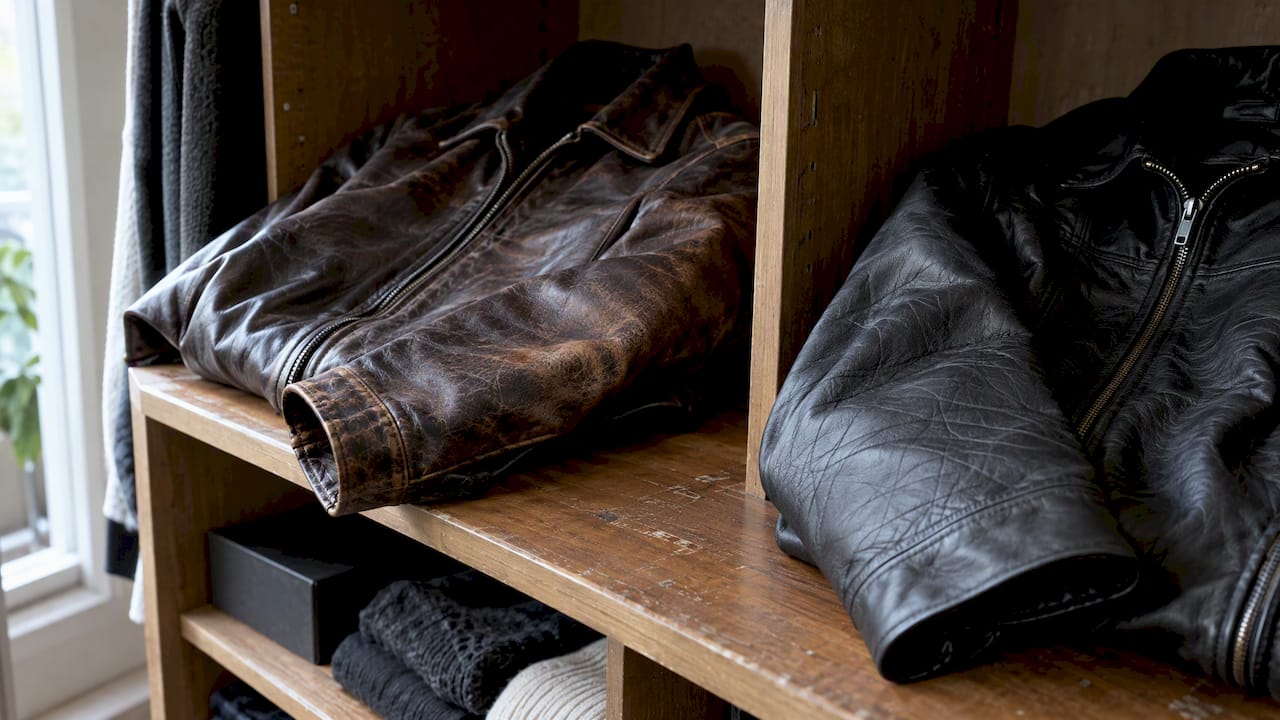
Over years of use, cowhide tends to develop a patina: a gradual darkening and smoothing at stress points like elbows and cuffs. Lambskin shows wear differently, often as fine surface creasing rather than a true patina, since the thinner hide doesn’t build up the same oxidized sheen.
Which Jacket Styles Use Each Hide
Fashion-forward pieces lean on lambskin because its drape and light weight suit close tailoring. Soft bomber jackets, designer-label blazers, and dressy cropped styles routinely use lambskin for that reason.
Motorcycle gear, field jackets, and heavy workwear lean on cowhide because the jacket needs to survive abrasion, not just look good. Riders specifically favor cowhide-grade panels in impact zones, a point reinforced by research on belt abrasion testing for motorcycle apparel.
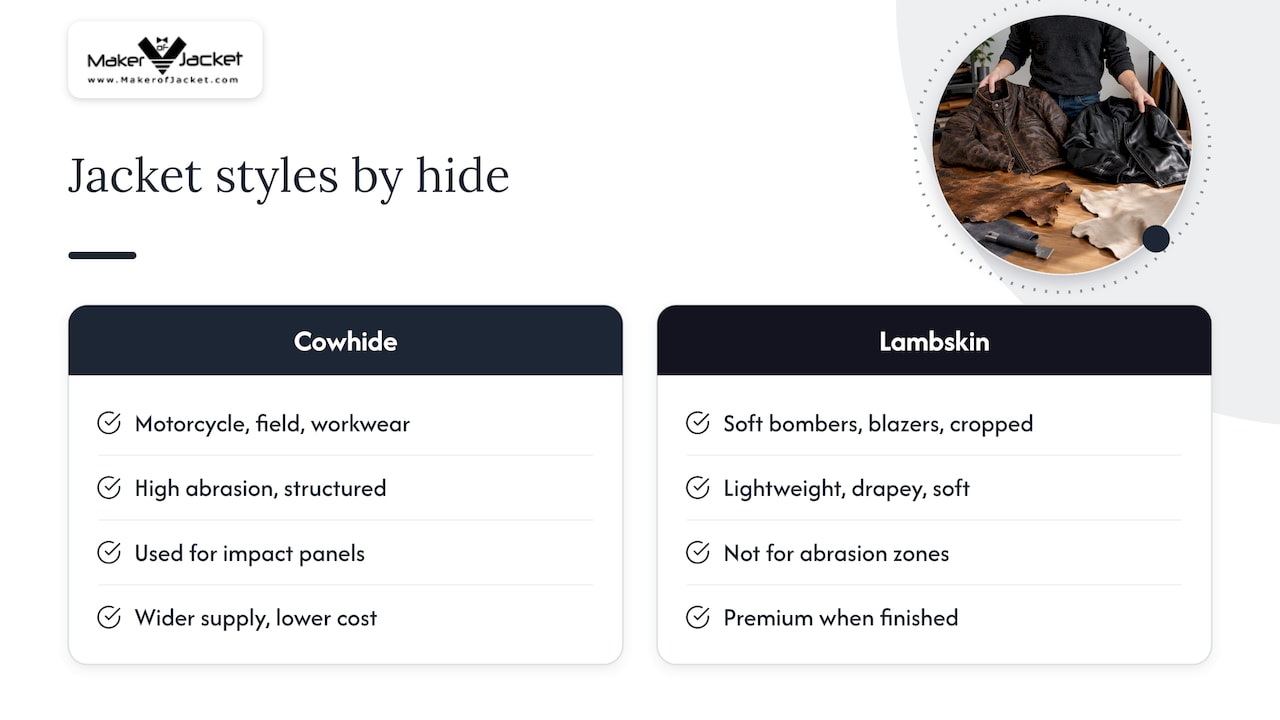
Supply and cost patterns track the same split: cowhide is widely available and generally cheaper per square foot, while well-finished lambskin can command a premium for its softness. If you’re pairing a leather jacket with other wardrobe pieces, a leather-note fragrance like Rook’s Suede Eau de Parfum complements either hide’s aesthetic without competing with it.
Caring for Cowhide and Lambskin Jackets
Both hides reward basic, consistent care more than any single miracle product.
- Store jackets on padded hangers away from direct sunlight and heat sources.
- Condition leather every few months with a dedicated leather conditioner to keep fibers from drying out.
- Spot-clean with a damp cloth and mild soap, then let the jacket air-dry away from heat.
- Avoid soaking, harsh detergents, and direct heat sources like radiators or hair dryers, all of which can crack or shrink the hide.
Our guide to maintaining a leather jacket and our leather conditioner guide walk through product-specific steps for deeper cleaning and conditioning.
Pro Tip: Test any new conditioner or cleaner on a hidden seam first, since lambskin in particular can darken slightly with certain oil-based products.
How to Choose the Right Hide for Your Jacket
Start by naming your priority honestly: protection and daily abuse, or softness and style. From there, work through this checklist.
- Define your main use. Riding, working, or casual wear points toward cowhide; dress-up or fashion wear points toward lambskin.
- Check the stated thickness and weight. Heavier hides (measured in ounces per square foot) generally mean more durability.
- Ask about the finish type. Aniline, semi-aniline, and pigmented finishes each wear differently, and a seller should be able to name which one you’re buying.
- Confirm the stated origin and species. A vague “genuine leather” label without a named species is a red flag, since FTC guidance requires accurate descriptions of leather content.
- Inspect grain and stitching. Visible, even grain and tight, reinforced stitching at stress points matter more than the species label alone.
Our guide on how to spot genuine leather covers the label language and visual cues worth checking before you buy.
Maker of Jacket: How We Match Hide to Jacket Style
We choose lambskin for fashion-forward lines where drape and softness carry the design, and cowhide for heavy-duty and custom motorcycle pieces where abrasion resistance matters most. When a custom order is placed, finish options and hide weight are discussed based on how the jacket is planned to be worn. Our lambskin versus sheepskin comparison and our size guides are worth a look before you order.
— Maker
Ready to Order? Here’s How We Help You Choose
Both soft lambskin fashion jackets for everyday style and rugged cowhide builds for riders who need gear that holds up are available. Every piece ships with custom sizing options, avoiding standard fit limitations.

- Fashion and dress styles: browse our women’s jackets or men’s jackets for lambskin-friendly cuts.
- Motorcycle and heavy-duty builds: start with our custom motorcycle jackets category.
- Fully bespoke orders: head to our custom jacket order page to set hide, finish, and measurements from scratch.
| Need | Starting point | Price |
|---|---|---|
| Custom jacket, any style | Customize Jacket Order | $199 one-off |
| Custom biker jacket | Custom Biker Jacket | $249 one-off |
| Custom motorcycle jacket | Customize Motorcycle Jacket Order | $299 one-off |
Read our size guide and the care pages above before you order, so the hide and fit match how you’ll actually wear the jacket.
FAQ
What are the disadvantages of lambskin?
Lambskin tears and abrades more easily than cowhide because sheep skin carries less collagen and a thinner fiber structure, according to research comparing hide strength across species. It also shows surface creasing sooner under repeated stress and needs more careful handling during cleaning.
What is the highest quality type of leather?
Quality in leather depends more on tanning, finishing, and grain quality than on species alone. Full-grain leather from a well-managed hide, whether bovine or ovine, generally outperforms a poorly finished leather of any species.
Which animal skin makes the best leather?
There’s no single best skin. Cowhide suits protective, heavy-wear jackets because of its documented tear strength advantage, while lambskin suits soft, lightweight fashion pieces where drape matters more than abrasion resistance.
Is 100% cowhide real leather?
Yes, cowhide is genuine leather made from the hide of cattle, processed through tanning and finishing like any other animal leather. Sellers describing a product only as “genuine leather” without naming the species should raise questions, since FTC guidance calls for accurate species disclosure.
Sources
- PubMed: comparative hide strength findings (bovine vs ovine)
- Journal of the American Leather Chemists Association — molecular composition of skins and hides
- ASTM D7255-22 — Test method for abrasion resistance of leather
- FTC guidance on leather and imitation leather marketing


