

Match Your Riding: When One or Two Piece Motorcycle Suits Protect Best

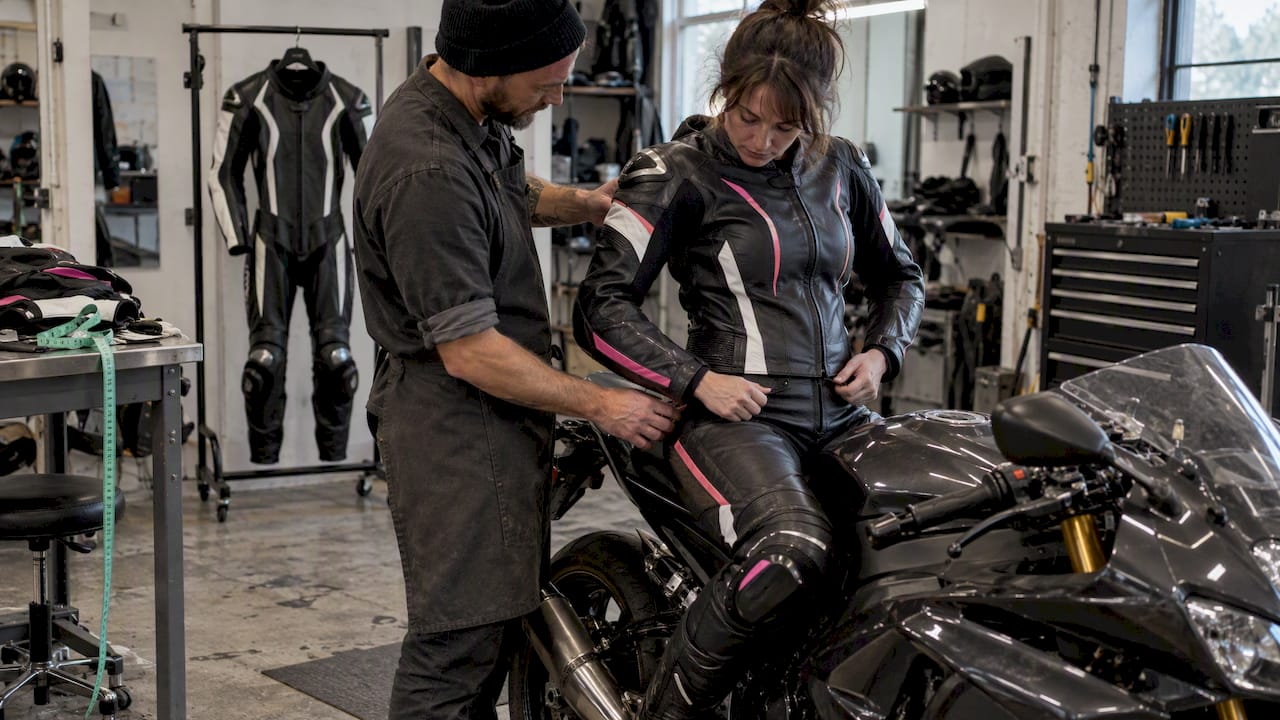
For repeated high-speed track use, a one-piece race suit is generally the better pick because of its integrated fit and fewer seams at high-abrasion zones. For commuting, touring, and everyday riding, a two-piece jacket-and-pant setup usually wins on convenience and layering. Both formats protect well when purpose-built and properly fitted, so the construction and armor matter more than the format itself.
TL;DR:
- Proper fit and purpose-built construction are more crucial for protection than whether the suit is one-piece or two-piece.
- One-piece suits offer continuous armor coverage and fewer weak points but are less convenient for daily stops, while two-piece suits provide easier layering and separation.
- The safety of a two-piece suit depends heavily on the quality of the zipper connection and overlap design to prevent gaps during a slide.
- Leather suits are the most abrasion-resistant choice for racing, while textile or vented leather options are better suited for everyday riding in warm weather.
- Custom sizing and adjustable armor placement improve fit and protection, especially for online purchases, making tailored suits a safer and more comfortable option.
Table of Contents
- Pros and cons: one-piece race suit vs two-piece jacket-and-pants
- What to check for safety and fit before you buy
- Materials, armor, and features that matter for protection
- A short decision flow: pick the right format for your riding
- Why we recommend customizable options
- How we can help you get the right suit
- FAQ
- Sources
Pros and cons: one-piece race suit vs two-piece jacket-and-pants
A one-piece suit wraps you in a single garment with no waist seam to separate under load, which keeps armor and abrasion-resistant panels continuous across your body, similar to the benefits described in this one-piece vs. two-piece swimsuit guide comparing integrated garment designs. That construction benefits riders who crash at speed, since fewer seams means fewer weak points where leather can peel back. The trade-off is flexibility in daily life: you cannot easily remove the jacket at a gas stop or loosen the pants for a long highway stretch.
A two-piece suit solves that problem by separating into a jacket and pants that zip together at the waist. MSF describes jacket-and-pants combinations that zip together and treats that connection zipper as a functional safety feature, not just a convenience add-on. A well-designed connection with internal overlap can approach the protective continuity of a one-piece suit while staying far easier to live with off the bike.
- Safety: one-piece suits minimize seam exposure and keep armor aligned; two-piece suits depend on zipper quality and overlap design to avoid gaps.
- Fit: race-cut one-pieces hug an aggressive forward-leaning posture; street-cut two-pieces fit a more upright riding position.
- Comfort: one-piece suits seal out wind and water more completely; two-piece suits let you vent or layer the jacket and pants independently.
- Convenience: two-piece suits separate at stops and for bathroom breaks; one-piece suits limit how much armor shifts during a crash.
- Maintenance: a damaged two-piece jacket or pant can often be replaced on its own, while a one-piece suit usually requires full replacement or specialized repair.
Cost follows the same split. One-piece race suits tend to run higher because of the tailored cut and continuous panel construction, while two-piece suits offer more budget flexibility since you can buy or replace the jacket and pants separately. Resale also favors two-piece gear, since a jacket or pant alone still has value even if the other half wears out first.
What to check for safety and fit before you buy
Getting the format right matters less than getting the construction and fit right. MSF’s personal protective gear guidance advises selecting purpose-made motorcycle gear that fits properly and covers your limbs completely, letting your riding habits and local weather guide the choice between styles.
- Confirm the suit is purpose-built motorcycle gear made from abrasion-resistant leather or a high-denier technical textile, not a fashion jacket repurposed for riding.
- Check for CE-rated impact armor at the shoulders, elbows, hips, and knees, and confirm there’s room to add or upgrade a back protector.
- If you’re buying a two-piece, test the zipper connection yourself: zip the jacket and pants together and check for an internal overlap or storm flap that shields the seam from direct abrasion.
- Sit in your normal riding position, lean forward if you ride sport-style, and verify the armor stays over your joints rather than sliding toward your spine or shins.
- Inspect stitching density and look for reinforced panels at the shoulders, elbows, and knees, since those zones take the brunt of a slide.
NHTSA’s motorcycle safety guidance recommends full limb coverage with abrasion-resistant materials as part of a complete protective system that also includes boots and gloves, not the jacket or suit alone.
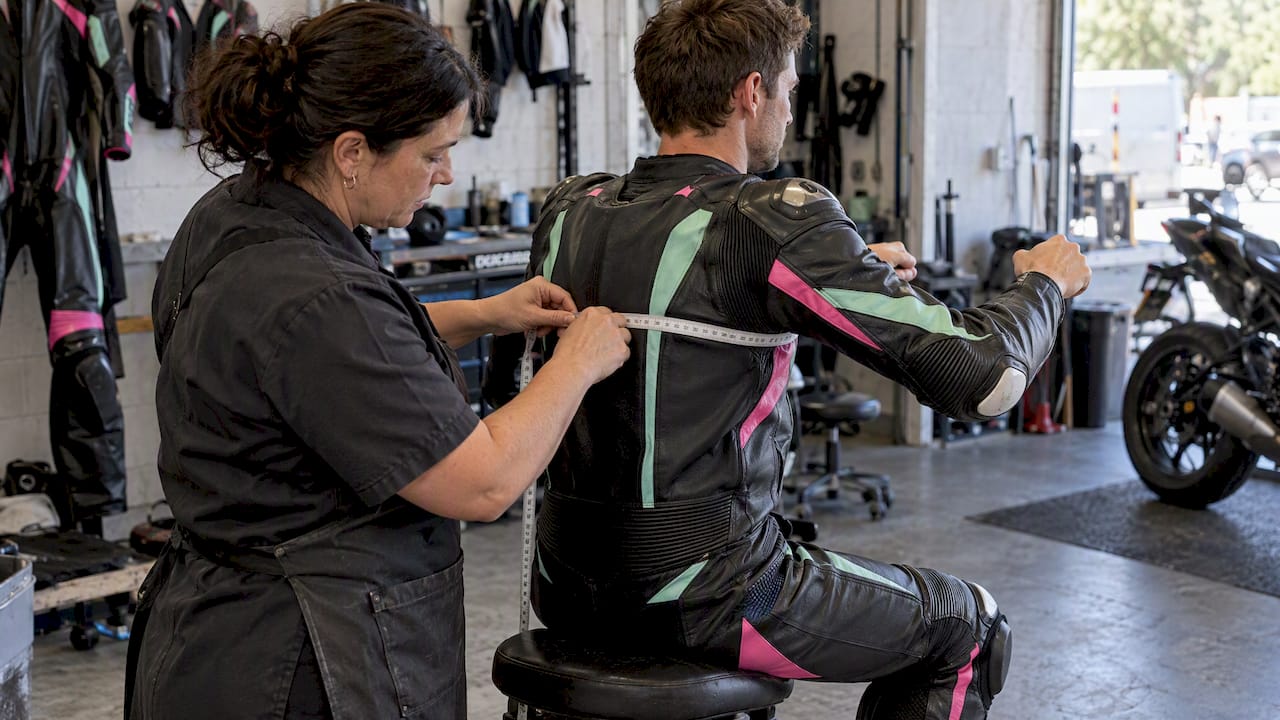
Pro Tip: Request measurements taken in your riding posture, seated with elbows bent, rather than standing straight, so armor lands where it needs to in a crash rather than where it sits on a mannequin.
Materials, armor, and features that matter for protection
Leather remains the benchmark for abrasion resistance in a slide, which is why most race-oriented one-piece suits are built from it. Modern technical textiles like Cordura close much of that gap and add better water resistance and breathability, making them a common choice for two-piece touring gear. MSF’s analysis of protective clothing distinguishes fashion details from genuinely protective features, pointing to abrasion resistance and impact protectors as the elements that actually matter in a fall.
- Armor placement: CE-rated protectors belong at the shoulders, elbows, hips, knees, and back, with the back protector often sold or upgraded separately.
- Ventilation and liners: removable thermal or waterproof liners let a single jacket work across seasons, especially useful in a two-piece setup you wear daily.
- Stretch panels and articulation: gusseted seams at the elbows and knees keep armor in place as you move, a detail MSF’s garment design notes flag as central to maintaining coverage.
- Connection systems: a two-piece suit’s waist zipper should include internal overlap so the seam doesn’t become a weak point during a slide.
- Climate fit: heavier leather with minimal venting suits track days; perforated textile or vented leather suits daily commuting in warm weather.
Rain gear illustrates the same trade-off in miniature. MSF notes that both one-piece and two-piece rain suits exist, but two-piece versions tend to accommodate riding posture and stops more easily, which is why they dominate everyday use.
A short decision flow: pick the right format for your riding
Match the suit to how you actually ride, not to how you’d like to ride someday.
- Track-focused riders: choose a one-piece suit with a racing cut and integrated armor, since the aggressive forward posture and crash speeds reward a seamless, contoured fit.
- Commuters and tourers: choose a two-piece suit for the convenience of separating at stops, and confirm the zip-connection and armor placement hold up before you buy.
- Mixed-use riders: consider owning both, or select a high-quality two-piece with a robust connection zipper that gets you close to one-piece continuity without sacrificing daily usability.
- Budget-limited buyers: prioritize armor quality and correct fit over format. A well-armored two-piece in the right size beats a cheaper one-piece that fits poorly.
Weather and typical trip length often settle the question on their own: short aggressive rides favor one-piece suits, while longer rides with stops favor two-piece gear.
Why we recommend customizable options
Fit uncertainty is the biggest risk in buying protective gear online, and we built our ordering process around closing that gap. Custom sizing and bespoke adjustments are available so you can request a racing cut for track days or a roomier street cut for daily commuting, rather than settling for a generic size chart.
Product galleries and size guides give you a closer look at construction and armor placement before ordering, and customer reviews on product pages add another layer of confidence about fit and quality. For two-piece buyers who want protection closer to a one-piece suit, custom armor placement and connection zipper requests can enhance the seam where the jacket meets the pants to avoid weak points in the gear.
*— Maker
How we can help you get the right suit
Choosing between formats is only half the job. Getting a suit that actually fits your body and your riding style is the part that protects you. Our custom motorcycle suit line lets you specify size, color, and armor position for either a one-piece or two-piece build, so you’re not stuck guessing from a standard size chart.
- Browse our custom motorcycle jackets category to see armor and construction options before you commit to a full suit.
- Use our size guides and product galleries to compare cuts and confirm fit before ordering.
- Request bespoke adjustments for your riding posture or track frequency directly through our custom order page, where a Customize Motorcycle Suit Order runs 575 USD one-off.
FAQ
Is a one-piece or two-piece suit safer on a motorcycle?
Neither format is inherently safer; MSF and NHTSA both emphasize that proper fit and purpose-built construction matter more than whether a suit is one-piece or two-piece. A one-piece suit has fewer seams, which helps in high-speed slides, while a well-connected two-piece suit can offer comparable protection for everyday riding.
Can I wear a two-piece suit for track riding?
You can, but most track riders choose one-piece suits because the racing cut matches an aggressive forward posture and keeps armor aligned during a fall. A two-piece suit with a strong zip-connection and good overlap design can work for slower track days, though it’s less common at speed.
How do I know if a two-piece suit’s zipper connection is strong enough?
Zip the jacket and pants together and check for an internal overlap or storm flap that covers the seam, a feature MSF highlights as a safety element rather than just a convenience. If the zipper sits exposed with no backing material, abrasion resistance at that seam is weaker.
What does a custom motorcycle suit cost?
A Customize Motorcycle Suit Order through our site runs 575 USD one-off, while a Custom Motorcycle Pant alone is 199 USD one-off. Pricing depends on whether you need a full one-piece suit or separate jacket-and-pant pieces.
Do I need different armor for a one-piece versus a two-piece suit?
The armor itself, CE-rated protectors for shoulders, elbows, hips, knees, and back, is the same regardless of format. What differs is placement and how well the garment keeps that armor from shifting, which is why fit and stretch-panel design matter as much as the armor rating.
Sources
- You and Your Motorcycle: Riding Tips (MSF, 2023)
- Motorcycle safety: Helmets, motorists, road awareness | NHTSA


