

From $199: How Buyers Spot Permanent Contrast Stitching on Jackets


Contrast stitching is decorative topstitching that deliberately uses a thread color that stands apart from the fabric, drawing the eye to seams, pockets, and paneling. It’s a defining feature of the 2026 “rugged luxury” and utility movement showing up on denim chore coats, barn jackets, and leather outerwear. If you want a jacket that reads as deliberately built rather than mass-produced, this detail delivers that, and it suits nearly any wardrobe looking for one standout texture piece.
TL;DR:
- Contrast stitching uses a thread color that visibly contrasts with the fabric, highlighting seams and panel details as a deliberate design choice.
- Heavier threads and longer stitches create a rugged, workwear look, while finer stitches and tight tension produce a more tailored appearance.
- Temporary tack stitches are often placed to hold the garment during shipping and should be removed carefully before wear to avoid fabric distortion.
- Durable seam finishes, like flat-felled or Hong Kong edges, ensure longevity and resistance to wear, especially on unlined jackets.
- Custom contrast stitching options cost around 199 to 399 USD, offering more control over thread color, stitch pattern, and fit than stock designs.
Table of Contents
- What contrast stitching is and how designers use it in construction
- Styles and materials: where contrast stitching appears
- How to tell permanent stitching from tack stitches and check quality
- Shopping checklist: fit, fabric, and product details to confirm
- Styling guide: outfit formulas that highlight contrast stitching
- Price ranges and value considerations for contrast stitching jackets
- How long the buying process typically takes
- Maker of Jacket perspective: when custom contrast stitching is worth ordering
- Get your own contrast-stitched jacket made to order
- FAQ
- Sources
What contrast stitching is and how designers use it in construction
Contrast topstitching and tack stitching look similar at a glance, but they serve opposite purposes. Topstitching is permanent, sewn with even length and consistent tension so the line reads as intentional design rather than an accident of assembly, according to garment-construction literature from Cornell. Tack stitches, by contrast, are loose, widely spaced, and meant to be cut away once the garment leaves the factory floor.
Designers reach for a contrasting thread color specifically to call attention to structure: a yoke seam, a welt pocket, a paneled sleeve. The effect changes with the materials behind it.
- Heavier thread weight creates a bolder, more rugged line suited to denim and canvas.
- Shorter stitch length reads as refined and tailored, while longer stitches feel more workwear.
- Tension that’s too tight puckers the fabric, a flaw visible precisely because the thread contrasts.
Styles and materials: where contrast stitching appears
Contrast stitching shows up across a wide range of silhouettes, and the fabric underneath changes how it reads. On denim trucker and chore jackets, it’s practically a signature, outlining yokes and pocket flaps in a way that’s been part of workwear history for generations. Worker and barn jackets use it the same way, turning structural reinforcement into a visible design choice rather than hiding it.
Leather jackets take the detail further, using contrast thread to outline panels, lapels, and seams in a way that museum garment records show has been used for decades to add both decorative flair and structural clarity, as seen in a Smithsonian costume jacket with contrasting topstitching along its lapels and seams. On lighter wool, canvas, and twill, the same stitch reads differently depending on the weave:
- Denim and canvas show contrast stitching with high clarity because of their flat, tight weave.
- Leather holds a crisp line but demands more precise machine control since mistakes can’t be unpicked without leaving holes.
- Wool and twill soften the contrast slightly, making it feel more tailored than rugged.
Runway coverage for fall and winter 2026 points to designers leaning into this exposed-construction look across all of these fabrics, using it to make tailoring and workwear read as deliberate statements rather than default manufacturing choices.
How to tell permanent stitching from tack stitches and check quality
Before you wear a new jacket, look for stitches that are noticeably longer, looser, or placed in odd spots like the center back vent, hem, or chest pocket. Those are almost always temporary tacks meant to hold the garment’s shape during shipping, not a design feature.
- Check the back vent and any flap pockets first: tack stitches are usually there to keep the garment flat on the hanger.
- Snip the thread with small scissors or a seam ripper, cutting only the loose stitch and never the fabric underneath.
- Pull the cut thread free gently rather than tugging, especially near lined areas where fabric can pucker.
- Inspect the wrong side of the seam for loose bobbin thread or snarled loops, both signs of poor machine tension.
- Check stitch length across the whole seam. Uniformity from end to end is the clearest sign of a well-made topstitch.
Seam finishing matters just as much as the stitch itself. Flat-felled seams and Hong Kong (bound) finishes resist raveling and hold up over years of wear, especially on unlined jackets where the inside is visible, a detail sewing and extension resources consistently point to as a durability marker.
Pro Tip: Hold the jacket up to a window or bright light and run your finger along a seam. Uneven stitch spacing shows up instantly under direct light, even when it’s hard to spot in a dim fitting room.
Shopping checklist: fit, fabric, and product details to confirm
A contrast-stitched jacket is only worth the price if the fabric, fit, and thread description all check out before you buy. Start with the product page itself rather than the photos.
- Confirm the fabric type and thread material listed, since colorfastness and care instructions depend on both.
- Check whether the jacket is cropped, boxy, or oversized, and size up one if you plan to layer a sweater or hoodie underneath.
- Decide how much contrast you actually want: stark pairings like white on black read bold and casual, while tonal, near-match threads look dressier and more versatile.
- Read customer reviews specifically for mentions of loose threads or stitch failure after washing, since that’s the first place quality problems surface.
- Look for shopper-submitted photos rather than studio shots, since they show how the stitching actually sits on a real body.
Our guide to verifying jacket quality walks through these same construction checks in more detail if you want a closer look before ordering.
Styling guide: outfit formulas that highlight contrast stitching
The easiest way to style a contrast-stitched jacket is to let the thread color talk to something else in the outfit. A denim jacket with white stitching pairs naturally with white sneakers or a white tee, turning a small detail into a through-line across the whole look.
- Casual: denim or canvas jacket, plain tee, boots in a color that echoes the stitching.
- Smart-casual: a cropped contrast-stitch jacket over tailored trousers or a slip dress, letting the jacket do the texture work.
- Leather: keep accessories minimal so the stitched panels and lapels stay the visual focus.
- Proportion: balance a boxy or cropped jacket with slim trousers, or let a fitted jacket sit over wider-leg pants.
An oversized hoodie layered underneath, like the SVBCORE stonewashed style, works well under a cropped contrast-stitch jacket for the rugged-luxury layering look currently on runways. Our 2026 jacket trends overview covers more seasonal pairings if you want additional direction.
Price ranges and value considerations for contrast stitching jackets
Contrast-stitched jackets span a wide price range depending on material and construction. Mass-market denim and canvas versions tend to sit at the lower end, while leather pieces with hand-finished panels and multiple stitched seams cost more because of the labor involved in keeping tension consistent across thick hides.
Custom options change the math slightly. At Maker of Jacket, a Custom Biker Jacket runs 249 USD, a Custom Bomber Jacket is 249 USD, and a Custom Trench Coat runs 399 USD, all one-off prices tied to a specific build rather than a size-run template. That pricing structure reflects the fact that a custom thread color or stitch pattern requires its own setup, unlike stock jackets manufactured in bulk with one fixed design.
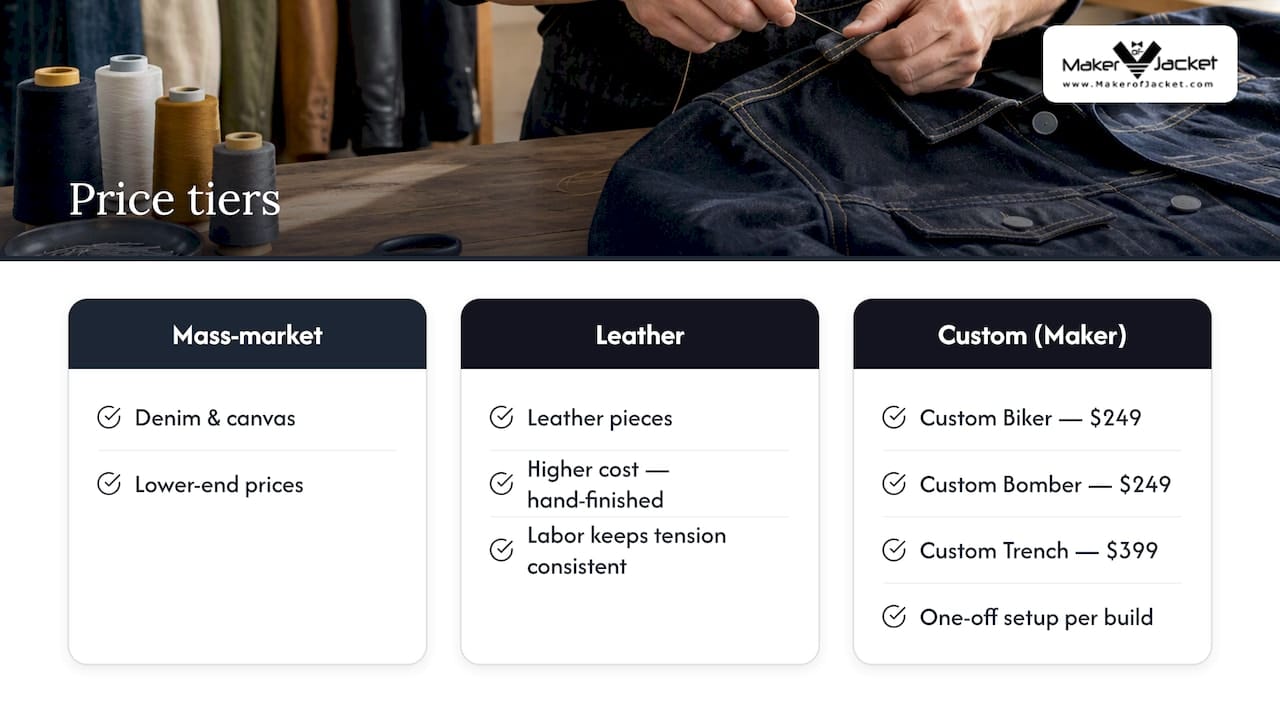
Value here isn’t only about the sticker price. A jacket with uniform, well-tensioned contrast stitching and a durable seam finish will outlast one with the same price tag but sloppy construction, since loose threads and puckered seams tend to fail faster under regular wear. Spending slightly more for visible quality markers, flat seams, even stitch spacing, colorfast thread, usually pays off over a few seasons rather than one.
How long the buying process typically takes
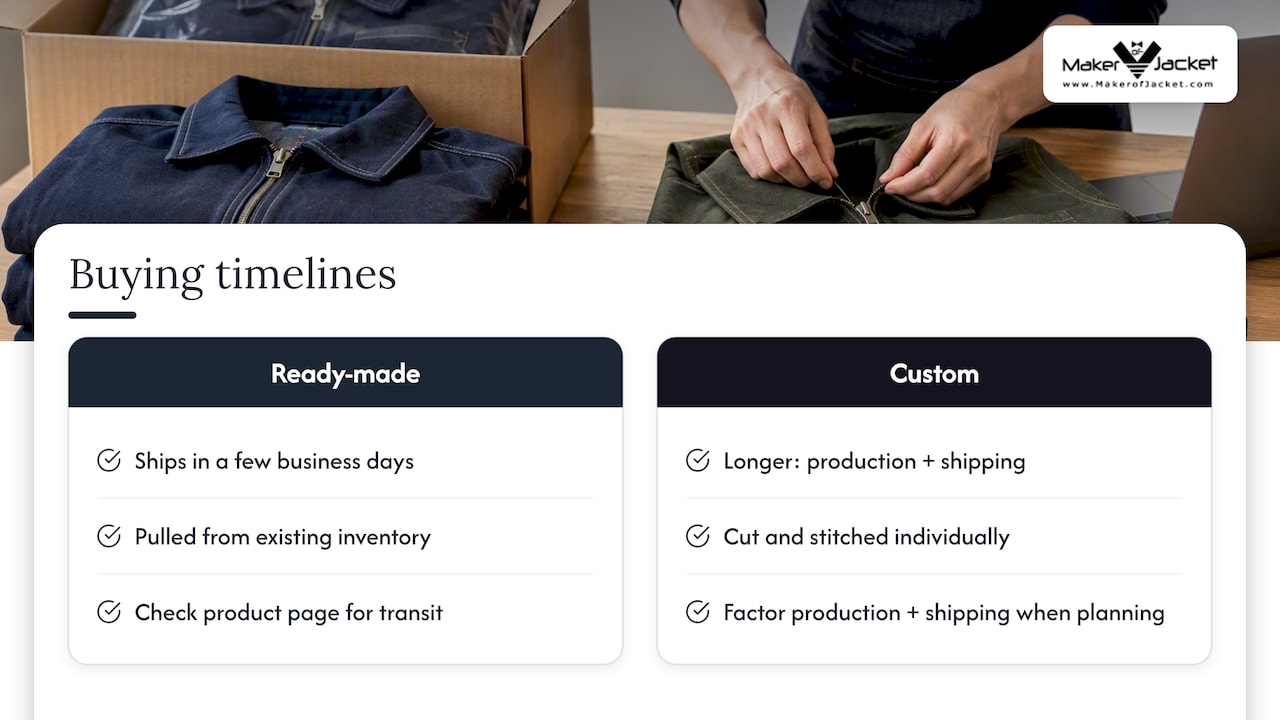
Buying a ready-made contrast-stitch jacket online is usually the fastest route, since most retailers ship stock sizes within a few business days of the order. Custom jackets take longer by design, since a bespoke piece has to be cut and stitched individually rather than pulled from existing inventory.
Delivery timelines vary by destination and whether the order is customized or ready-made, so checking the specific product page before ordering is the most reliable way to know what to expect. Shoppers planning a jacket for a particular season or event should factor in both production time for custom pieces and standard shipping transit when deciding how far in advance to order.
Maker of Jacket perspective: when custom contrast stitching is worth ordering
A custom order makes the most sense when you want a thread color, stitch pattern, or material combination that stock jackets simply don’t offer. Some bespoke jacket makers build each piece to the customer’s size and style preferences, using premium-grade materials and handcrafted construction, which gives more control over contrast placement than picking from a rack.
If you have a specific vision, an uncommon leather shade paired with a bold stitch color, for example, custom is the more reliable path. If you’re happy with a common combination like white-on-denim, a ready-made jacket will likely fit the bill just as well and faster.
— Maker
Get your own contrast-stitched jacket made to order
Some custom jacket providers build contrast-stitched jackets to your exact size, thread color, and material choice rather than offering only standard stock options. Our customization pricing runs from 199 USD, covering everything from a Custom Biker Jacket to a Custom Trench Coat.
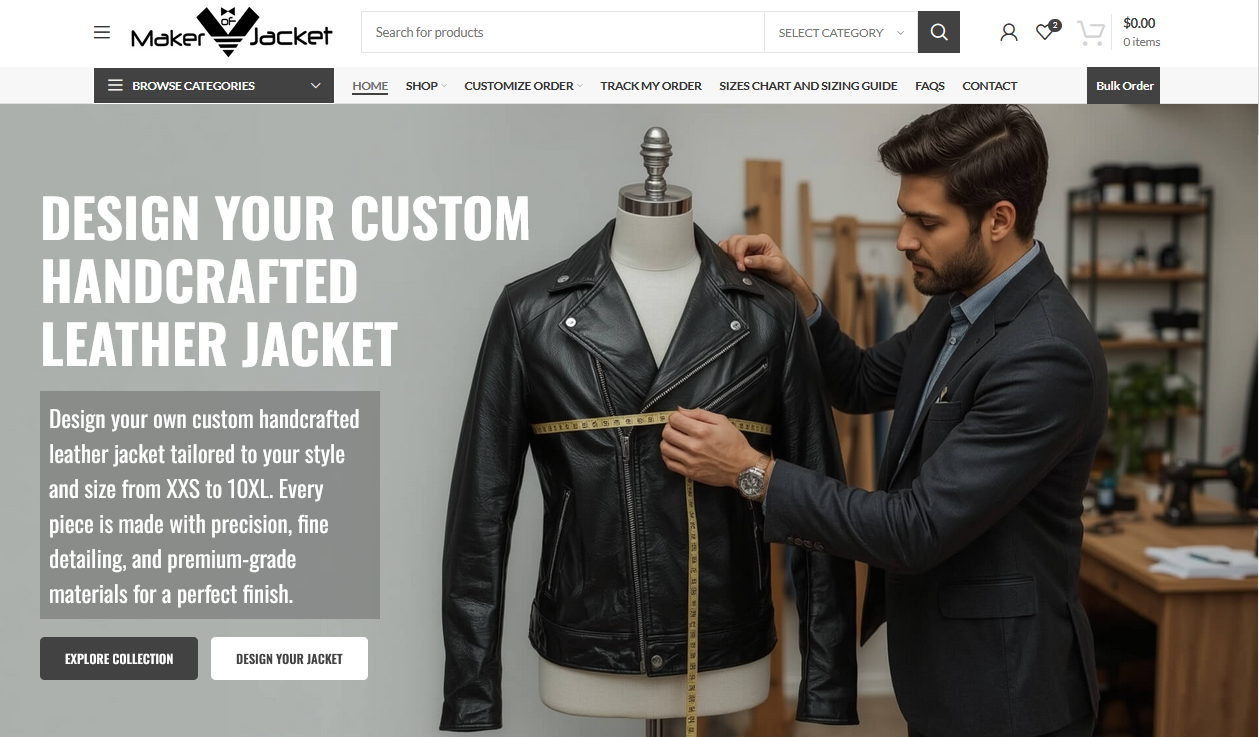
Pricing starts at $199 for a Customize Jacket Order, a fixed one-off cost regardless of how specific your stitch and color requests get.
Browse the full customization catalog to pick your thread color, stitch style, and fit, and check the site’s size guides before placing your order so the finished jacket matches what you pictured.
FAQ
What is contrast stitching?
Contrast stitching is decorative topstitching sewn in a thread color that stands out against the fabric, used to highlight seams, pockets, and paneling. It differs from tack stitches, which are temporary and meant to be removed, by being permanent and evenly spaced across the whole seam.
Should you remove tack stitching?
Yes, tack or basting stitches are temporary and should be removed once you’ve checked that vents, flaps, and pockets sit correctly. Snip the loose thread carefully with scissors or a seam ripper rather than pulling it, since tugging can distort the fabric around it.
What are the jacket trends for 2026?
Runway and trend coverage for 2026 points to a “rugged luxury” and utility aesthetic, with designers exposing seams and using contrast stitching on denim chore coats, barn jackets, and leather outerwear. The look favors visible construction over hidden seams, treating topstitching as a design statement rather than a manufacturing detail.
What is the stitch on the back of a blazer called?
The stitching along a blazer’s back vent is often a tack stitch, a temporary stitch used to keep the vent flat during shipping and display. It’s meant to be cut and removed before wearing, unlike the permanent topstitching found elsewhere on the garment.
Sources
- 5 Menswear trend predictions for fall/winter 2026 | Vogue
- Garment construction notes: topstitching and finishing | Cornell eCommons
- Seam finishes and edge treatments | Oregon State extension
- Tom the Leatherman costume jacket, Smithsonian NMAAHC


