

Custom Order Returns: Your Rights and What to Check

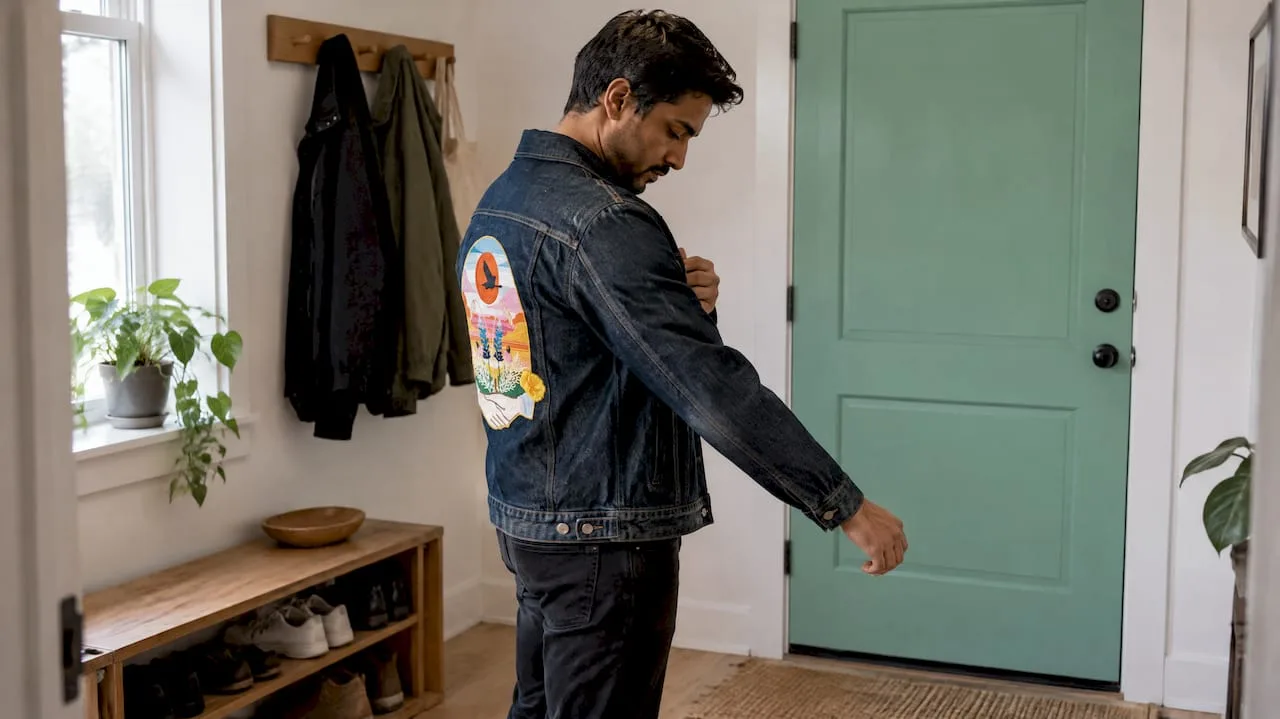
In the US, no federal law lets you return a purchase just because you changed your mind, so a custom order is usually governed by the seller’s posted policy and your contract. Made-to-order items are often final once production starts. But a defective, wrong or not-as-agreed item is a different matter, and you keep real remedies there. This guide explains both sides, shows how to read a custom-order policy before you pay, and tells you what to do if something goes wrong.
TL;DR
- Changing your mind is rarely a legal ground for returning a custom item. The seller’s written policy and your order terms decide.
- A defective, incorrect or materially different item is treated differently. Sales law gives you remedies that a “no returns” line cannot simply erase.
- Before paying, read the return window, restocking fees, what counts as a defect, and who pays shipping.
- Measure carefully and confirm every design detail in writing. Most custom disputes start with size or a misunderstood spec.
- If a seller will not fix a real problem, escalate to your state attorney general or consumer protection office.
Table of Contents
- What the law says about returning custom orders
- When a custom order can be returned or fixed
- What to check before you place a custom order
- How Maker of Jacket handles returns
- Perspective
- Packing and sending an item back
- Getting the fit right the first time
- If a seller refuses a legitimate return
- Why strict custom policies exist
- Order a custom piece with the details settled
- FAQ
- Sources
What the law says about returning custom orders
There is no blanket federal right to return something you simply no longer want. Legal summaries of non-returnable items note that the retailer’s posted policy generally controls, and that contracts for personalized goods almost always make the sale final once production begins.
State agencies say the same thing in plainer words. Georgia’s consumer office explains that rights for custom-ordered products come from the contract. The state has no law forcing businesses to accept returns, refunds or exchanges, but a business must honor the policy it posts. The same page points out why: makers of made-to-order goods can sink real money into production, so they are likely to have strict cancellation and refund terms.
That logic is easy to see with a jacket. Once a seller has cut leather to your measurements and added your patches, lettering or color choices, the piece cannot go back on a shelf for the next customer.
Why “custom” and “ready-made” are treated differently
Two kinds of products get confused:
- Made to your specification: cut, sewn or decorated after you order, from your measurements or design choices. Sellers commonly treat these as final or restrict returns heavily.
- Standard stock with an option: an off-the-rack item in a size and color you picked. These usually follow the store’s normal return window.
The label matters less than what you signed up to when you paid. Read the product page and the policy together, because the policy is what the seller has promised to honor.
Cooling-off rules rarely help with online custom orders
People sometimes expect a three-day cancellation right. The federal Cooling-Off Rule covers qualifying sales of at least $25 made at your home or $130 at a temporary location. It is aimed at door-to-door and similar sales, not a standard website checkout.
States add their own versions with narrow scope. Connecticut’s three-day right of rescission, for example, applies to a short list of transactions such as health club contracts, timeshares, home improvement contracts and door-to-door sales. New York’s Door-to-Door Sales Protection Act, as cited by the state attorney general, gives up to 20 days to return goods when a company has no clear refund policy, again in door-to-door sales.
California’s disclosure statute is also limited. Civil Code section 1723 does not apply to customized goods received as ordered. Rules differ by state, so check yours if a purchase is large.
When a custom order can be returned or fixed
A no-returns policy covers buyer’s remorse. It does not cover a seller who sends the wrong thing.
Under the Uniform Commercial Code, section 2-601, when goods fail in any respect to conform to the contract, the buyer may reject the whole, accept the whole, or accept the conforming units and reject the rest, subject to the other UCC provisions and valid agreements. In plain terms: if what arrives does not match what you ordered, you are not stuck with it just because the page said “final sale.”
One retail-law resource makes the same point: retailers may refuse returns for custom items, yet buyers typically keep rights when merchandise is defective or not as described.
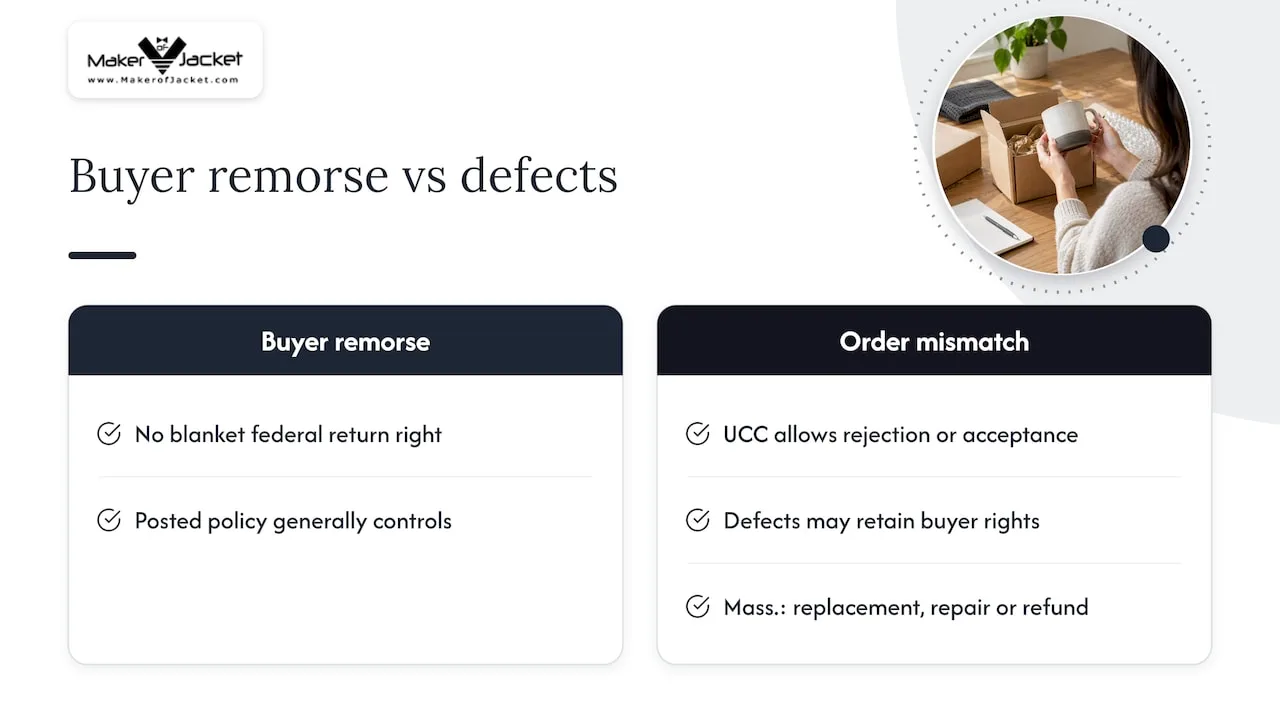
Some states go further. The Massachusetts Attorney General’s guide says a merchant’s ordinary return policy cannot govern defective merchandise there. The merchant must offer replacement, repair or refund, although specially ordered merchandise may carry additional restrictions. That is a Massachusetts rule, not a national one.
What usually counts as a real problem
| Situation | Typical treatment |
|---|---|
| Wrong item, size or color shipped versus your confirmed order | Seller error. Report it quickly with photos. |
| Manufacturing defect (broken zipper, split seam, flawed lining) | Qualifies for repair, replacement or refund under most policies and sales law. |
| Item damaged in transit | Report right away with photos of the box and the item. |
| You ordered the wrong size or changed your mind about the style | Usually not covered for custom work. |
| Slight natural variation in handmade or natural materials | Often addressed in the policy as normal. Read how the seller defines it. |
The pattern is consistent: errors on the seller’s side get fixed, preferences on your side generally do not.
What to check before you place a custom order
Because the contract rules, the best protection is reading it first. Washington’s attorney general advises shoppers to check the retailer’s policy before buying, including whether sale items have different terms, whether online returns carry shipping fees, and what the deadline is. It also says merchants have a legal and ethical obligation to explain their terms clearly.
Use this checklist for any custom clothing order:
- Return window. How many days after delivery, not after the order date?
- What is covered. Does the policy name wrong items, defects and tampering as eligible?
- What is excluded. Look for lines on personal preference, color, fit and small items.
- Fees. Are restocking or payment-processing fees possible, and when are they quoted?
- Condition rules. Tags attached, unworn, original packaging.
- Refund method and timing. Original payment method, and how long banks take.
- Production start. Can you cancel before work begins? Ask in writing.
- Measurements. Does the seller offer a size guide, and who bears the risk of a wrong measurement?
If any answer is vague, email the seller before paying and keep the reply. A written answer becomes part of your record.
Get the details in writing
For a bespoke jacket, send your measurements, leather type, color, lining, patches and lettering in one message, and ask for confirmation. If the finished piece differs from what was confirmed, you have a clear basis for a claim. If you only described it loosely, the disagreement is harder to settle.
How Maker of Jacket handles returns
We publish our terms on our Returns & Refunds page so you can read them before you order. Our policy is set at 15 days from delivery. Refunds go back to the original payment method, and processing can take 10 to 45 days depending on your card issuer.
You are entitled to a return or refund if you receive the wrong product, the product has defects, or it has been tampered with. Our policy also says:
- Items must be unused, in their original packaging, with tags and labels attached.
- Returns are not accepted for personal preference, such as color, design or style, or for changes in circumstances.
- Patch orders are not eligible for returns or exchanges, because of their small size and low order value.
- A restocking fee and merchant fees may apply to returns. The amount depends on the item and is communicated when you request the return.
- Our jackets are handcrafted, so slight variations in stitching, cutting, color or texture can occur.
- Before a jacket ships, our product inspector reviews the color, sizing, stitching, leather quality and pattern.
The policy also asks you to cross-check your measurements carefully before ordering, and our size charts explain how to measure. Clearance Sale items are ready-made, which is a different category from a bespoke order. The page above is the authority for current terms.
Perspective
Custom work is a promise in both directions. You promise to give us accurate measurements and clear design choices. We promise to build exactly that, with premium-grade materials and the attention of skilled craftsmen.
That is why we put so much into the steps before production: detailed size guides, product galleries with visual previews, and support that answers questions before you pay. Every jacket is made for one person, so we would rather settle every detail up front than have you wait for something that is not quite right.
Our policy is written with that in mind. If we send the wrong product, or a defect turns up, we stand behind the order. The way to get the best result is to take ten extra minutes with the size chart and to confirm your specification with us in writing.
Maker
Packing and sending an item back
If you do have an eligible return, how you send it affects how smoothly it goes. Most policies, ours included, require the item to be unused with tags and original packaging. Keep the box and inner wrapping until you are sure the jacket fits and is right. A clothing packaging guide helps if you need to repack a garment so it arrives in clean condition.
A short routine protects you:
- Photograph the item, labels and any defect before packing.
- Pack it flat or folded the way it arrived, with tags attached.
- Use a tracked shipping service and keep the receipt.
- Email the seller your order number, the reason and your photos before you ship, and wait for return instructions if the seller requires them.
Do not wear the item to “test” it. Used or worn goods are often refused, and in California, for instance, merchandise worn or sampled before return generally has to be sold as used unless the use was solely for inspection.
Getting the fit right the first time
Since fit is the most common reason a custom order cannot be returned, spend your effort there.
- Measure over the clothing you will wear under the jacket. For a biker jacket, that may be a hoodie or thick shirt.
- Measure chest, waist, shoulder width and sleeve length, and compare each against the seller’s size chart rather than your usual off-the-rack size.
- Ask whether the cut is slim or relaxed, and whether leather will stretch or stay stiff.
- For motorcycle gear, say how you ride, because a riding posture changes how sleeves and the back should be cut.
- If you are between sizes, ask the seller which way to go before ordering.
If you are ready to specify, our custom biker jacket page walks through the options.
If a seller refuses a legitimate return
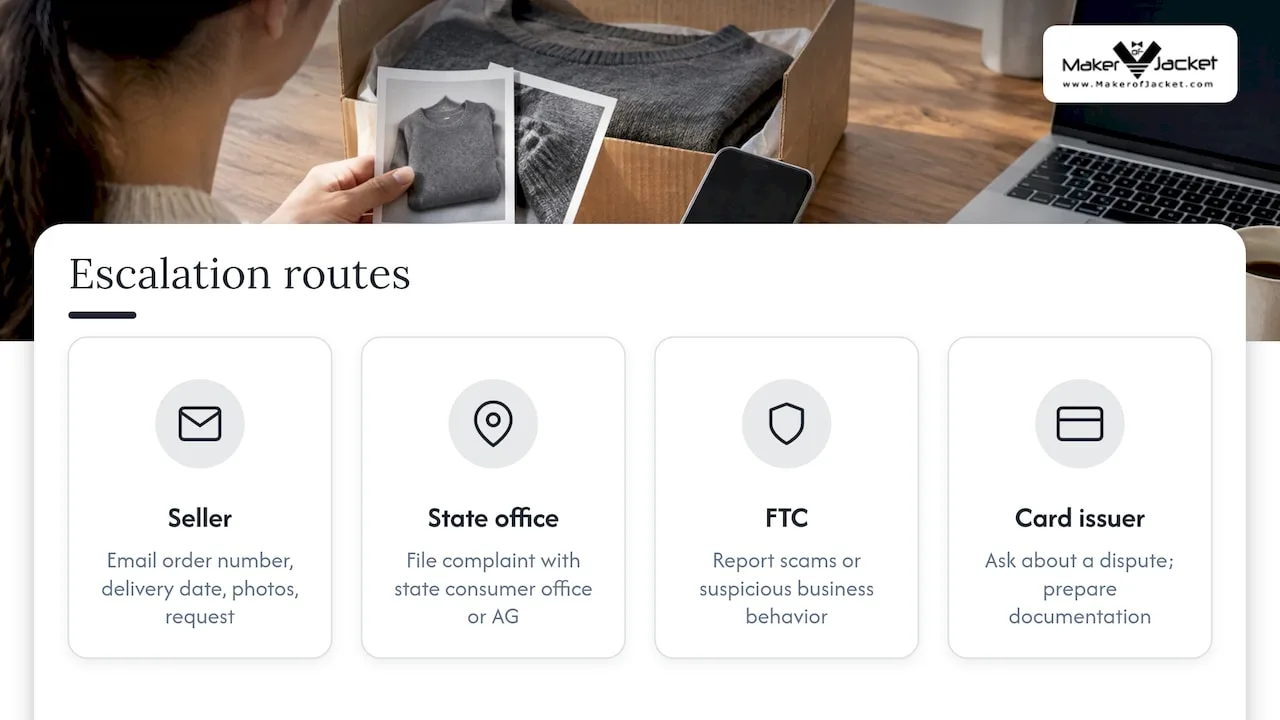
Start with the seller. Write a calm email with your order number, delivery date, photos and what you want: repair, replacement or refund. Cite the part of their policy or the mismatch with your confirmed order.
If that fails, USAGov explains that you can file a complaint with your state consumer protection office or attorney general. For scams or suspicious behavior, you can also report the business to the Federal Trade Commission. Paying by credit card gives you another route: ask your card issuer about a dispute, and have your documentation ready.
Enforcement does happen. In one federal case, a court order required Fashion Nova to offer buyers a choice between accepting a shipping delay or cancelling for a prompt refund when it could not ship by the original date, and to refund orders cancelled under the order. Delays and clear disclosure are things regulators look at.
Why strict custom policies exist
Researchers have looked at this tradeoff. A study from Queen’s University’s business school discusses whether customized products should be returnable and concludes that a stringent policy is best for firms that offer only customized products. The reason is simple economics: a made-to-measure item has little resale value, so the seller carries the full cost of a return.
For you as a buyer, the useful takeaway is to treat the order as a commitment and to put your effort into the details before production.
Order a custom piece with the details settled
If you know the piece you want, we build it to your size and style. Our custom range starts at $199 for a Customize Jacket Order, with the Custom Biker Jacket at $249 and the Customize Motorcycle Jacket Order at $299. We also make the Customize Motorcycle Suit Order at $575, a Custom Trench Coat at $399, and a Custom Leather Vest at $229. Patches start at $5.
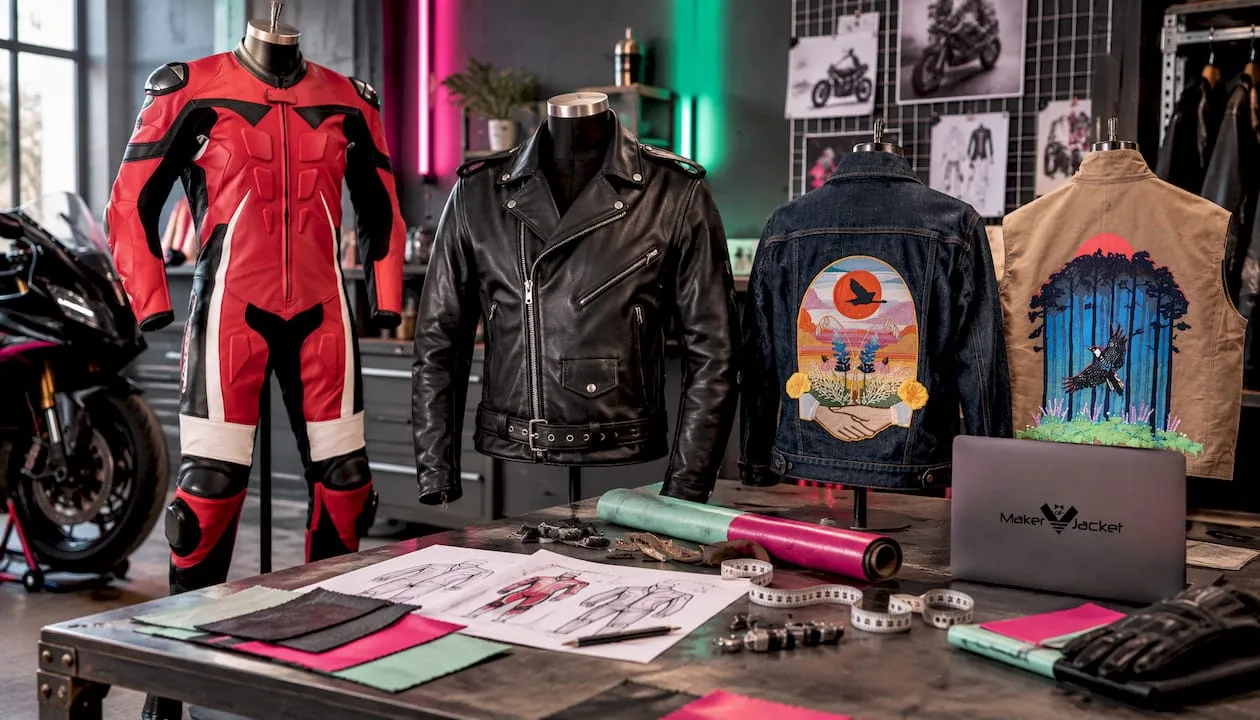
Browse the full custom order collection, pick your style, and send us your measurements. We offer worldwide free shipping and support to answer questions before you pay. You can also start from our Customize Jacket Order page.
FAQ
Can I return a custom order if I just change my mind?
Usually not. No federal law gives you that right, and sellers of made-to-order goods typically make the sale final once production starts. Check the seller’s written policy before paying, because a business must honor the policy it posts.
What if my custom jacket arrives defective or wrong?
Report it quickly, with photos and your order confirmation. Under UCC section 2-601, goods that do not conform to the contract can be rejected, and a no-returns policy does not simply erase that. Under our policy, a wrong product, a defect or tampering qualifies for a return or refund.
Can I cancel a custom order after I place it?
It depends on the contract and on whether production has started. Federal cooling-off rules are aimed at door-to-door and temporary-location sales, not website checkouts. Ask the seller in writing as soon as possible, because early requests are the most likely to succeed.
Who pays for return shipping?
It depends on the policy and the reason. Washington’s attorney general advises checking for return shipping fees on online orders before you buy. Under our policy, a restocking fee and merchant fees may apply to returns, and the amount is communicated when you request the return.
Where do I complain if a seller will not help?
Contact your state attorney general or consumer protection office. You can also report scams to the FTC, and ask your card issuer about a dispute if you paid by card.


