

Cleaning a Motorcycle Suit: Leather Care Step by Step

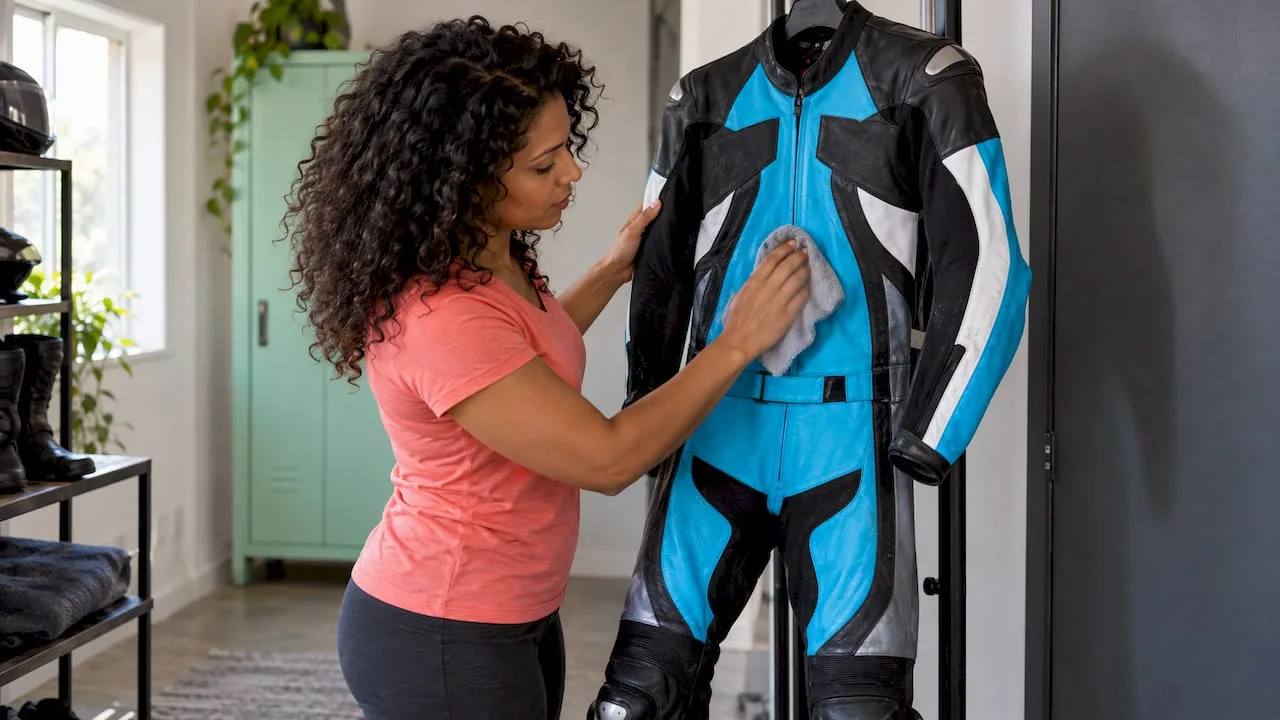
Clean a leather motorcycle suit by hand, not in a washing machine. Wipe off dirt and bugs with a damp cloth, wash the shell with a pH-neutral leather cleaner, wash the removable liner separately, and let everything air dry at room temperature, away from heat. Check the care label first, because the right method depends on how your suit was made.
This guide walks through each part of that routine: the quick wipe after a ride, a deeper clean, the liner, the smell, drying, conditioning, and the point where a professional is the better call.
TL;DR
- Wipe the suit after rides with a damp cloth, and do a full clean with a leather-specific, pH-neutral cleaner a few times a season.
- Never machine-wash a leather shell, never use saddle soap, and never dry wet leather near a heater, in direct sun or with a hair dryer.
- Wash a removable liner on its own, gently and cool, and let it air dry.
- Perfume sprays only mask odor. Wash the liner and the inside surfaces, and use a professional treatment for deep-set smell.
- Read the care label before conditioning. Some leathers take conditioner and some do not.
Table of Contents
- Check the label and the leather first
- What you need
- After every ride: the quick wipe
- Deep cleaning the leather shell
- Cleaning the inside and the liner
- Getting rid of sweat and odor
- Drying the suit the right way
- Conditioning after cleaning
- A simple care schedule
- When to use a professional
- Our perspective
- Need a suit that fits and lasts?
- FAQ
- Sources
Check the label and the leather first
Not every suit wants the same treatment. Motorcycle leather is usually chrome-tanned with a pigmented coating, and the care label or the maker’s instructions come before any general advice, including this article’s. Gear makers disagree on the details. One comparison of manufacturer instructions found that some allow a soft brush for dirt while others forbid it, and that suits with built-in airbag systems cannot be immersed in water at all.
Two checks before you start:
- Read the label inside the suit. It tells you whether the liner comes out and how the maker wants the shell cleaned. If there is no label, ask the dealer or the maker.
- Do the water drop test on a hidden spot. Furygan’s care guide, as reported by Motorcycle Bulletin, says that if a few drops of water run through the material or leave a slight mark, you should not use wax or cleansing milk, because greasy or water-based products may damage it. Some leathers are oily or porous by nature and behave differently from a standard coated hide.
Test any cleaner on a small hidden area, such as the inside of a cuff or the back of a calf panel, before you do the whole suit.
What you need
A short kit covers nearly everything:
- Two or three clean, soft cotton or microfiber cloths
- A soft sponge
- A leather cleaner made for motorcycle leather, ideally pH neutral
- A mild detergent for the liner
- A mesh laundry bag if the liner is machine washable
- A padded or wide hanger, or a flat surface for drying
On the cleaner, Bennetts’ leather care advice says leather is pH neutral, so look for a pH-neutral, leather-specific cleaner. It also says saddle soap should stay off chrome-tanned motorcycle leather because it contains lye, which is corrosive. The same advice warns that products made for leather car interiors are not always suitable for bike leathers.
After every ride: the quick wipe
The easiest way to keep a suit clean is to never let it get really dirty. Motorcycle.com recommends regular spot cleaning after a ride. Hold a clean, damp cloth over a bug splat or dirt for a few seconds so it softens, then wipe. Rubbing dry bugs and grit straight away drags it across the surface.
A few habits that take two minutes:
- Brush loose sand and grit off gently, if your maker allows a brush, before wiping.
- Wipe the visor-height areas of the chest and sleeves where bugs collect.
- Open every vent and zipper and hang the suit somewhere airy so the inside can dry out.
Bug residue is acidic and bakes on in the sun, so the sooner you wipe, the less it stains. We cover this in more detail in our guide to cleaning bug splatter off motorcycle leathers.
Deep cleaning the leather shell
Do this when the suit looks dull, grimy at the elbows and knees, or after a dusty or wet trip. Pick a cool, shaded spot and allow an hour or so of hands-on work.
- Remove the liner and any armor if the suit is designed that way. Close all zippers and fasteners so they do not scratch the leather.
- Dry-clean the surface. Gently remove loose dirt and debris with a soft cloth, or a soft brush if the maker permits one.
- Spot treat stubborn marks. Motorcycle.com’s method is to work a clean rag moistened with leather shampoo into leftover spots first.
- Clean the whole exterior with the same leather cleaner, panel by panel, using a fresh section of cloth as each one picks up dirt. Do not soak the leather. Light, even pressure is enough.
- Wipe off residue with a clean, barely damp cloth so no cleaner dries on the surface.
- Hang it to dry completely (more on that below).
Pay extra attention to the collar, the inside of the thighs and the cuffs, where skin oils and sweat collect, and to the knee sliders and any textile panels, which tend to hold more dirt.
What not to use
| Avoid | Why |
|---|---|
| Washing machine or dryer for the leather shell | Soaking and tumbling can ruin leather. Some makers state their leather clothing is not machine washable at all |
| Saddle soap | Contains lye, which is corrosive to chrome-tanned leather |
| Household cleaners and harsh solvents | They strip the finish and the oils in the hide |
| Heaters, hair dryers, direct sun | Heat makes fibers contract unevenly, which can harden, warp and crack leather |
| Soaking the suit in a tub | Too much water pulls out the oils that keep leather supple |
Cleaning the inside and the liner
The inside of a suit does most of the smelling. It takes the sweat, and it rarely sees the sun.
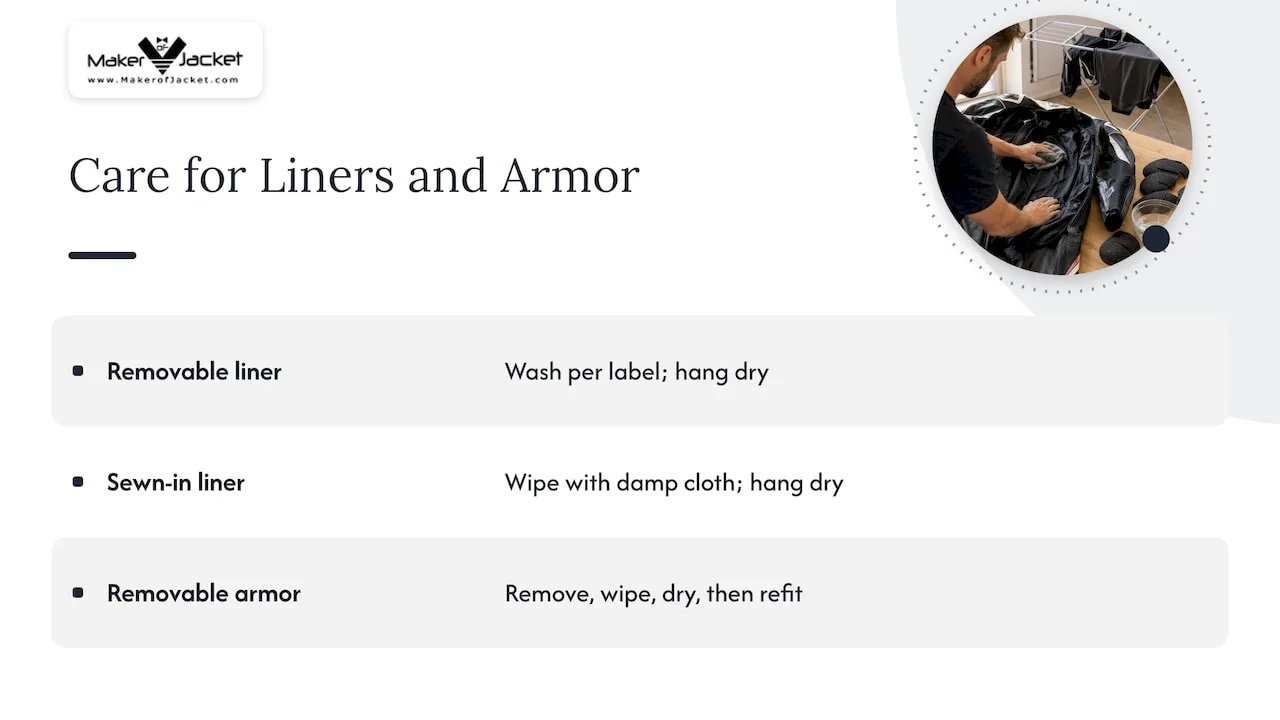
If the liner is removable. Check the label for the maker’s temperature. Some guidance is cautious: one care guide says removable thermal inserts can go in the washing machine with a wool washing liquid, on a delicate cycle at 30°C maximum and a medium spin of no more than 800 rpm. Another source suggests hand washing a removable lining in lukewarm water with a mild detergent. Some makers ask for the lining to be washed separately in water no hotter than 40°C with neutral soap, so follow your own label.
If the liner is air mesh and the label allows machine washing, put it in a mesh bag so it does not snag. Then hang it to dry. Avoid the tumble dryer.
If the liner is sewn in. Wipe it with a damp cloth and a little mild soap, working in sections and avoiding the zippers. Rinse the cloth often. Leave the suit open and hanging until the lining is fully dry.
Armor. Remove it if the suit allows, wipe it with a damp cloth and let it dry before refitting.
Getting rid of sweat and odor
Sweat leaves salt behind. Motorcycle.com notes that salt on liners and sleeves can cause funk and visible sweat stains on hot days. The fix is regular cleaning of the inside, not a stronger spray.
- Wash or wipe the liner often. Do it more often in summer or if you ride long days.
- Air the suit out after each ride. Hang it somewhere with moving air, not in a closed bag or a damp garage.
- Use a spray made for helmets and riding gear on the inside only, if at all, and keep it off the exterior leather.
- Do not rely on air fresheners. Bennetts’ expert says that fabric sprays mostly mask the smell instead of removing what is inside. For serious odor, the same source recommends professional treatment in an ozone chamber, which kills the bacteria behind the smell.
Drying the suit the right way
Drying is where most damage happens. The usual instinct, a radiator or a hair dryer, is the wrong one. Iowa State University Extension advises that a wet leather garment be air dried away from heat, and that leather can dry out under dry heat and mildew when stored somewhere hot and humid.
A reliable routine:
- Let excess water drip off.
- Hang the suit on a wide, padded hanger, or lay it flat, in a room-temperature space with moving air. Do not use a thin wire hanger, which can distort the shoulders.
- Turn it and shift the hanger now and then so air reaches the inside.
- Give it a full day or more, longer if it was soaked. Do not wear it until the leather and liner are completely dry.
- Stuff damp boots or gloves with paper if they come into play, and change the paper as it absorbs moisture.
Caught in the rain? The same rules apply. Our guides on drying a wet leather jacket and how to dry wet leather go through the process in more detail. If you see white or green spots after storage, see our guide to removing mold from leather.
Conditioning after cleaning
Cleaning removes dirt, and a bit of the leather’s natural oil goes with it. Iowa State’s extension service says leathers are impregnated with oils during tanning, and some are lost during cleaning, which may slightly change how the garment feels.
Motorcycle.com recommends replenishing oils with a conditioner once the leather is dry, since supple leather protects better in a crash than dry, cracked leather. Some experts take a different view for coated motorcycle leather. Bennetts’ expert says that chrome-tanned, pigment-coated bike leather should not be oiled, and that the goal is to keep it clean and protected from moisture.
The practical way through that disagreement:
- Follow your suit’s label. If the maker recommends a conditioner, use that type.
- Use a light, leather-specific product, never a heavy oil, and apply a thin coat with a clean cloth.
- Wipe off any excess after it has soaked in, and let the suit rest before riding.
- If a water drop soaks in or marks the leather, skip waxes and creams.
For more on choosing a product, see our guide to leather conditioner.
A simple care schedule
| When | What to do |
|---|---|
| After each ride | Damp-cloth wipe, remove bugs, hang to air, open the vents |
| Every few weeks of regular riding | Wash or wipe the liner, clean the collar, cuffs and inside surfaces |
| Every few months, or after a dirty trip | Deep clean the shell with a pH-neutral leather cleaner, dry fully, and condition if your label allows |
| After rain | Air dry slowly at room temperature, no heat |
| End of season | Clean, dry completely, then store in a cool, ventilated spot |
The frequency varies with how often and how hard you ride. A weekend commuter needs less than someone who tracks the suit every week.
When to use a professional
Home cleaning handles dust, bugs and light sweat. A leather specialist is worth it when:
- The smell survives washing. Ozone treatment and liner sanitizing are things a specialist can do that a spray cannot.
- The leather is stained, stiff or hard, or has deep-set grime that a gentle cleaner does not touch.
- The suit has mildew or mold that has gone beyond surface spots.
- The finish is cracking or flaking, or you need stitching, a zipper or a liner replaced.
- The suit has an airbag system. Do not wet it without the maker’s instructions.
- It has been in a crash. Have the suit inspected, as leather and seams can be weakened where you cannot see.
Pick a cleaner who works with riding leather specifically, not a dry cleaner who treats it like a fashion jacket, and ask about their process.
Our perspective
We build custom leather motorcycle suits, so we see what happens to leather after a season of riding, and the pattern is the same every time. Suits fail from neglect and from the wrong fix, not from use.
Gentle and regular beats strong and rare. A damp cloth after a ride, a proper clean when the suit needs it, a slow dry and a leather-appropriate conditioner keep the hide supple and the stitching clean. We design our suits to be handcrafted from premium-grade materials, and we want that work to last for many seasons of riding.
Fit matters here as well. A suit made to your measurements moves with you, which means less rubbing and less strain on seams and leather. A suit that fits well is also easier to keep clean, because the liner sits evenly against your body.
Whatever you wear, follow the care label, keep heat away from the leather, and give the liner the attention you give the shell.
Maker
Need a suit that fits and lasts?
If your current suit is past its best or never fit right, we make custom motorcycle suits to your size and style. Our Customize Motorcycle Suit Order is $575, and we offer free shipping worldwide. You can also browse the full custom order range, including a Custom Motorcycle Pant at $199.
If you want a ready-made racing look first, see our racing leather suits.
FAQ
Can I put a leather motorcycle suit in the washing machine?
No, not the leather shell. Washing machines can ruin it, and one source calls it taboo, with only a few models designed for it at 30 degrees on a gentle cycle without spinning. A removable liner is different: follow its label, usually a gentle, cool wash.
Can I use saddle soap on my motorcycle leathers?
It is best avoided. Bennetts says saddle soap contains lye, which is corrosive to chrome-tanned motorcycle leather. Choose a pH-neutral leather cleaner made for motorcycle gear instead.
How do I get the smell out of a leather riding suit?
Wash or wipe the liner and inside surfaces regularly, then air the suit out fully. Sprays mostly mask odor. If the smell stays, a specialist can treat the suit, for example in an ozone chamber.
What should I do if my suit gets soaked in the rain?
Hang it on a padded hanger at room temperature with air moving around it and let it dry slowly. Keep it away from radiators, heaters, direct sun and hair dryers, which can harden and crack leather. Condition it afterward only if the label allows.
How often should I clean my motorcycle suit?
Wipe it down after rides, wash the liner as often as your riding and sweating requires, and deep clean the shell every few months or after a dirty trip. Heavy use calls for more frequent care.


