

Mesh vs Leather Jacket: Which One Should You Ride In?

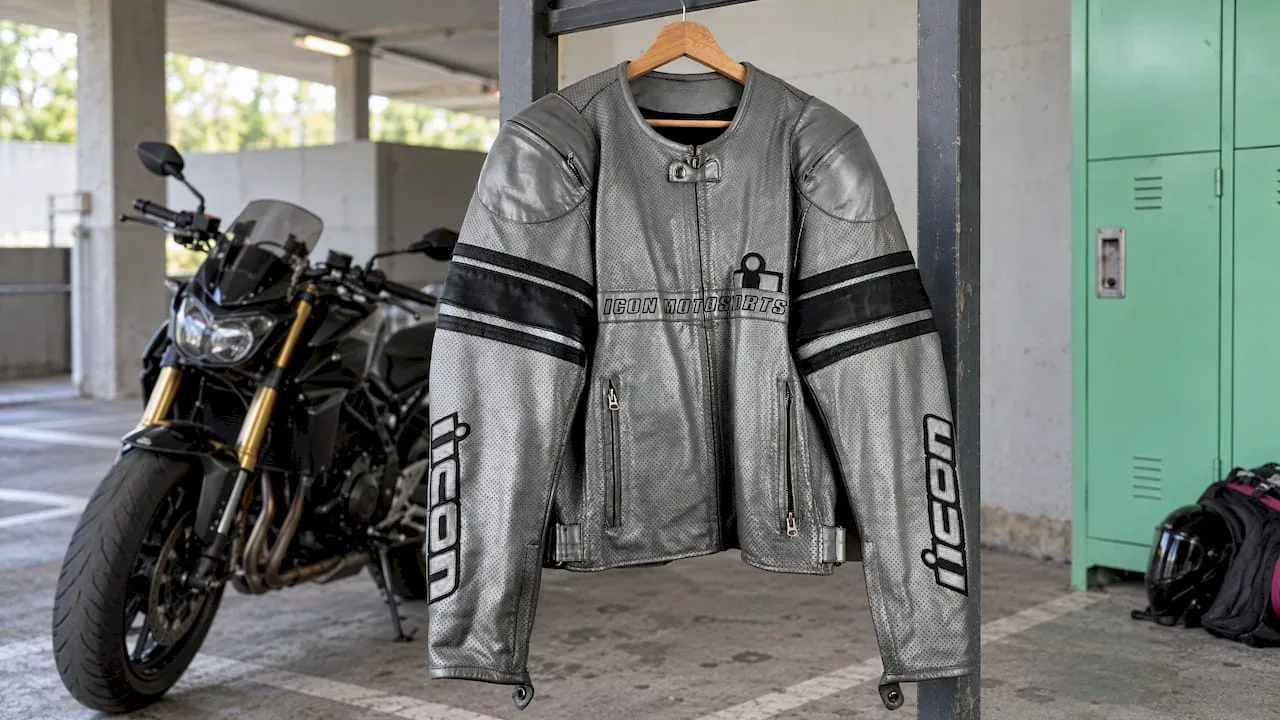
Mesh wins on airflow, and leather wins on slide protection. If most of your riding is slow, hot and urban, a mesh jacket with armor will keep you comfortable. If you ride fast roads, highways or the occasional track day, leather is the stronger choice, and perforated leather gives you some of the cooling without giving up the hide. This guide shows how the two compare on heat, crash protection, weather, thickness and upkeep, so you can pick the one that fits how you actually ride.
TL;DR
- Mesh gives the most airflow, which is why it is the go-to summer jacket. It is typically less protective than non-mesh versions and not waterproof.
- Leather resists abrasion best in a slide. Perforated leather adds ventilation, but it cools best once you are moving at speed.
- Thickness alone does not decide safety. Treatment, construction, armor and certification all matter.
- Check the garment’s CE abrasion class (A, AA or AAA) and the armor rating, not just the material name.
- For a leather jacket cut to your size and style, we make custom biker and motorcycle jackets to order.
Table of Contents
- The short answer: airflow or slide protection
- Mesh vs leather jacket at a glance
- How mesh jackets balance air and protection
- How leather holds up in a slide
- Perforated leather vs solid leather
- Leather thickness: what the number really tells you
- Understanding CE ratings
- Which one fits your riding
- Our perspective
- Get a jacket made for the way you ride
- FAQ
- Sources
The short answer: airflow or slide protection
Every jacket is a trade between how much air gets to your body and how much material stands between your skin and the road. Mesh is an open-weave textile, so air passes straight through. Leather is a dense hide, so it blocks air, but it holds together when it meets asphalt.
The Motorcycle News guide to mesh jackets describes mesh as the most effective summer jacket for airflow. It also notes that mesh jackets are typically less safe than non-mesh versions, because mesh replaces some of the abrasion-resistant material. You get comfort in exchange for some protection.
Perforated leather sits between the two. It is a leather jacket with small holes punched through the panels. It lets air in while keeping leather where most of the jacket is.
Mesh vs leather jacket at a glance
| Factor | Mesh jacket | Perforated leather | Solid leather |
|---|---|---|---|
| Airflow | Highest, even at low speed | Good at speed, limited when stopped | Lowest |
| Slide protection | Depends on the solid panels and the rating | Leather in most panels | Leather throughout |
| Rain | Not waterproof unless it has a liner | Not waterproof, needs treatment or a rain layer | Resists light moisture, can stain or stiffen when soaked |
| Weight | Lightest | Medium | Heaviest |
| Best for | Hot weather, city and commuting | Warm weather, sport and spirited riding | Three-season riding, highway, track-style riding |
| Cooler-weather use | Needs a thermal liner or layers | Needs layers | Easier to layer under |
Treat the table as a starting point. Within each type, build quality varies a lot, so the specific jacket matters as much as the category.
How mesh jackets balance air and protection
A good mesh jacket is not mesh everywhere. The same MCN guide says these jackets commonly put solid, tougher material at the outside of the arms, the shoulders and the upper back, then use mesh at the chest, the inner arms and under the arms. Those are the areas that tend to take the road in a slide, and the areas that benefit most from cooling.
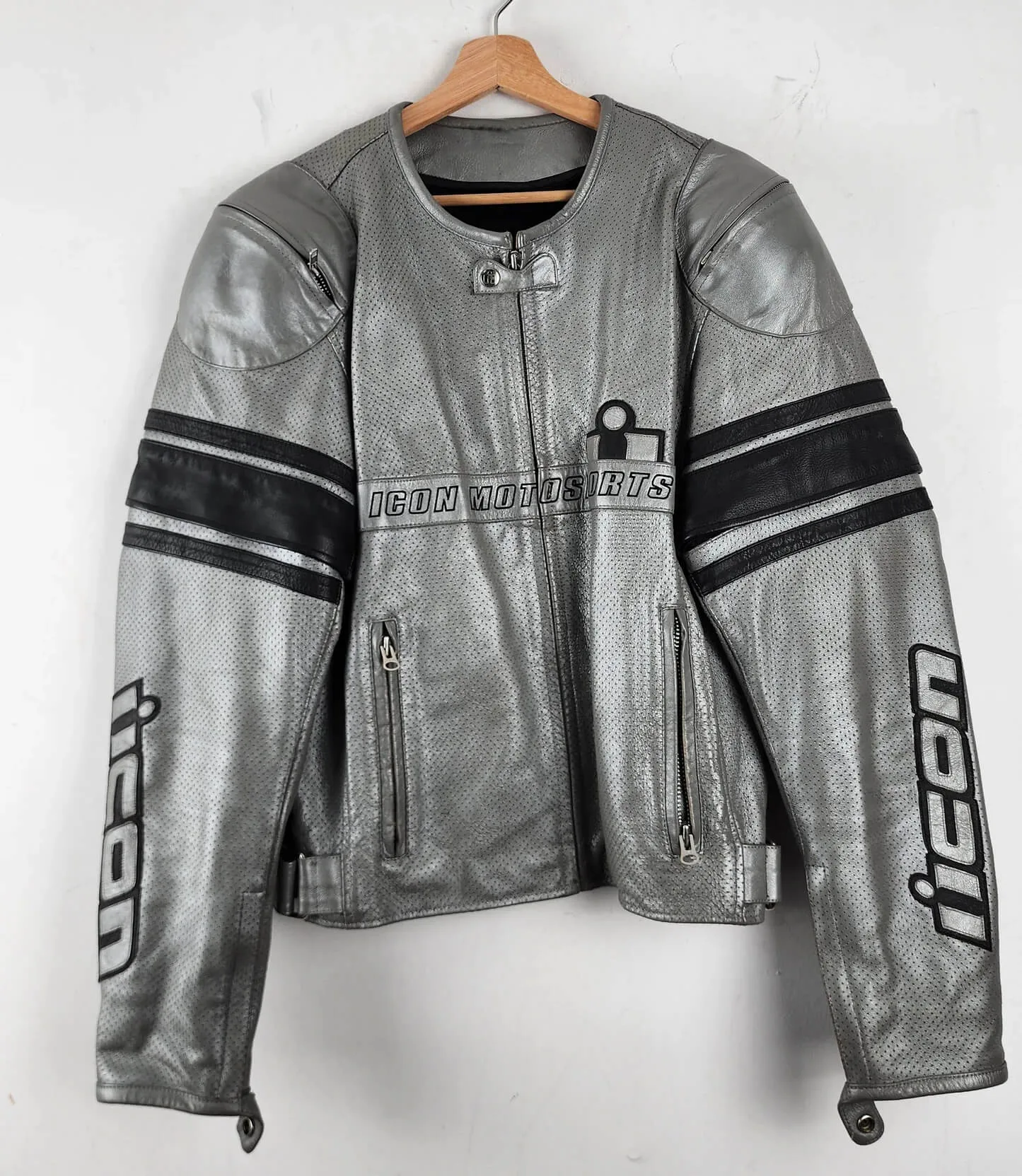
When you shop, look at where the solid panels sit. Large mesh areas across the shoulders or elbows are a red flag. Mesh jackets also come in different weights, and some have thermal or waterproof liners for added versatility, as the MCN guide notes.
What mesh does well:
- Keeps you cool in traffic and at stoplights, where leather feels hottest.
- Dries out quickly after sweat or a shower.
- Packs small and weighs little, which helps on long summer days.
What to plan around:
- It is not waterproof, so a rain layer or a liner should be part of the plan.
- It is cold when the temperature drops, so carry layers.
- The protection depends heavily on the rating and the armor, so read the label.
For more on how these jackets are built and styled, see our mesh motorcycle jacket guide.
How leather holds up in a slide
Leather’s advantage is that one continuous piece of hide protects you. It does not have a weave that can catch and tear. That is why riders who corner hard or ride at highway speed tend to prefer it, and why a thread on a rider forum will tell you that mesh will not last long sliding on tarmac. Forum opinion is not testing, though, so lean on ratings and tested products when you decide.
Leather also brings other benefits:
- It can be worn over many seasons, with a thermal layer under it in cool weather.
- It breaks in and molds to your body with use.
- It carries a classic biker look that works off the bike as well.
The cost is heat. A solid leather jacket in 90-degree traffic is hard work. Plenty of riders solve that by wearing a lightweight base layer and keeping the zipper vents open, or by choosing a perforated version.
Perforated leather vs solid leather
Perforation punches small holes through the hide in the chest, back, arms or sides. The leather still covers the jacket, but the holes let moving air reach your body. MCN’s leather suit guide notes that motorcycle cowhide is commonly around 1.2 to 1.3 mm thick and may be perforated to give cooling air for circuit riding.
Here is how to think about the choice:
- Airflow: Perforated is clearly cooler than solid once you are moving, and it will still feel warmer than mesh when you are stopped. Solid leather is the warmest.
- Durability: Perforated leather is generally used in the panels where you want ventilation. Holes remove some material, so the placement and the jacket’s rating matter.
- Protection: Check the rating on the garment you are buying. A perforated jacket with a stronger abrasion class and good armor can outperform a poorly built solid jacket.
- Weather: Perforated panels let rain and wind in. Solid leather handles a passing shower better.
If you want to see the style, our black perforated motorcycle leather vest shows how perforation looks in practice, and our suede mesh moto black jacket combines suede with mesh.
Leather thickness: what the number really tells you
People searching this topic often ask how thick a leather jacket should be. Thickness is a useful number, but it is not a guarantee.
The Motorcycle Council of NSW safety FAQ reports that bovine leather around 1.2 to 1.4 mm can give roughly 6 to 12 seconds of abrasion resistance in the tests it cites. It also makes the key point that treatment can produce big differences even between pieces of equal thickness. Tanning and finishing matter as much as millimeters.
A few ways to use that:
- Treat 1.2 to 1.4 mm as the range to look for in a riding jacket, not a pass mark on its own.
- Ask what the jacket is certified to, not only how thick it is. A tested 1.3 mm multi-panel jacket reviewed by MCN carried an overall AA rating, which shows thickness and certification working together.
- Remember that EN 1621 refers to the impact protectors inserted in the jacket, not the whole garment, per the same Motorcycle Council FAQ. The armor and the jacket are rated separately.
- Thicker leather is heavier and hotter. If you commute in summer, you may prefer a thinner hide that still meets a good rating, or a perforated one.
Understanding CE ratings
Whether you choose mesh or leather, the label is the fastest way to compare. MCN advises checking the garment’s CE abrasion rating and the armor rating. It describes class A as lower protection than AA and AAA, with AAA the highest in that hierarchy.
A quick checklist before you buy any riding jacket:
- Find the abrasion class (A, AA or AAA) on the label or product page.
- Confirm the armor is rated and sits at the shoulders and elbows, and that there is a pocket or slot for a back protector.
- Check the fit. Armor only works if it stays over the joint when you move, so the jacket should be snug without restricting you.
- Look at the seams and the zippers. Strong stitching matters as much as the material.
Our features of quality motorcycle jackets page goes through these details, and our motorcycle jacket safety tips cover fit and care.
Which one fits your riding
City commuting in hot weather. Mesh is the comfortable pick. Stop-and-go traffic is where leather is at its worst and mesh is at its best.
Long summer touring. Many riders want both: a mesh jacket for the hot stretches and a leather jacket or liner for cooler mornings and mountains. If you can only choose one, pick a mesh jacket with a thermal liner, or a perforated leather jacket with layers.
Spirited road riding and track-style days. Leather, ideally perforated, is the usual choice. Higher speeds bring more airflow through the perforations and call for more slide protection.
Cruiser and classic riding. Leather fits the look and the pace. Solid leather works across three seasons, and a vest or chaps can add coverage in summer. The look matters to a lot of riders, and it is fine for it to be part of your decision.
Rain and mixed weather. Neither mesh nor perforated leather is waterproof by default. Pack a rain shell, or look for a mesh jacket with a waterproof liner.
One more reason to choose carefully: comfort affects safety. A jacket you take off because you are overheating is not protecting you.
Our perspective
We make leather and motorcycle apparel to order, so we see the same question from riders all the time: should I go mesh or leather? Our answer is that leather is the foundation, and the details are where you tailor it to your riding.
Our jackets are handcrafted by skilled craftsmen from premium-grade materials, and that is the point of ordering custom. Fit is the part a rack jacket cannot give you. A jacket that sits right on your shoulders and elbows is more comfortable on long rides, and it stays where it should.
If you ride in heat, tell us. A custom order lets you describe how you ride, your size and the style you want, and we build around it. Browse the perforated and suede-mesh pieces in the shop for ideas, then send us your specs.
Maker
Get a jacket made for the way you ride
If you want leather that fits, our custom motorcycle jacket order is $299, and the custom biker jacket order is $249. If you ride on the track or want full coverage, the custom motorcycle suit order is $575, and custom motorcycle pants and chaps are $199 each. Shipping is free worldwide, and our support team is available 24/5.
Start with our custom motorcycle jackets, or see everything in the customize order category. If you are still comparing styles, our overview of the different types of motorcycle jackets can help.
FAQ
Is a mesh jacket safe enough for riding?
A mesh jacket can protect you if it has solid, abrasion-resistant panels at the shoulders, elbows and back, plus rated armor. MCN notes that mesh jackets are typically less safe than non-mesh versions, so check the CE class and the armor rating. Look for AA or AAA if you want higher protection.
Is perforated leather as good as mesh for hot weather?
Perforated leather is cooler than solid leather, but it works best once you are moving. In slow traffic, mesh is cooler. If you ride faster roads and want the slide protection of leather, perforated is a sensible compromise.
How thick should a leather motorcycle jacket be?
Motorcycle cowhide is commonly around 1.2 to 1.3 mm, and tests cited by the Motorcycle Council of NSW put 1.2 to 1.4 mm bovine leather at roughly 6 to 12 seconds of abrasion resistance. Treatment changes results a lot, so look at the certification as well as the thickness.
Are leather jackets good in the rain?
Solid leather handles light moisture better than mesh, but it is not a rain jacket. Mesh jackets are not waterproof unless they have a liner. In wet weather, wear a waterproof shell over either one.


