

Pebble Grain vs Smooth Leather: How to Choose for Your Jacket

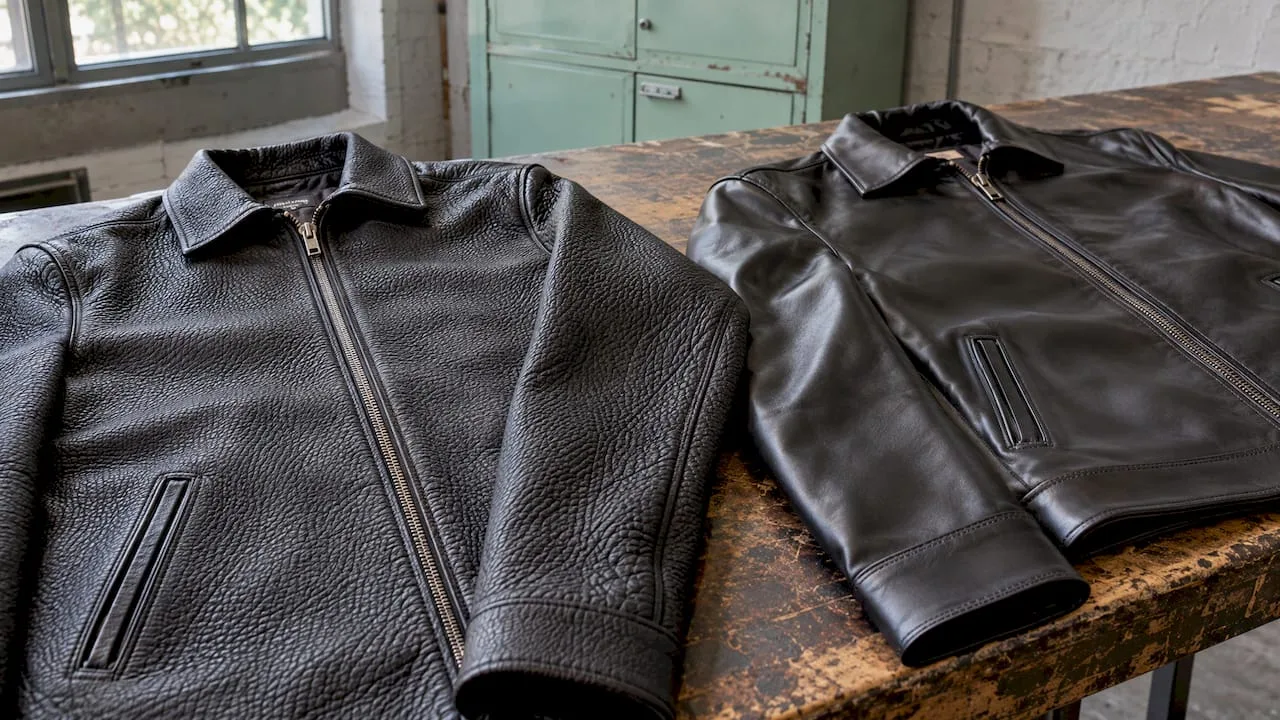
Pebble grain leather has a raised, bumpy texture that hides scuffs and feels relaxed. Smooth leather has a flat, polished surface that looks sleeker and develops a deeper patina, but it shows marks sooner. Neither finish is physically tougher than the other. The real choice is about the look you want and how much upkeep you will do. Below, we compare appearance, wear, aging, care and cost, then match each finish to the jacket or gear you have in mind.
TL;DR
- Look: smooth leather reads sleek, formal and glossy. Pebble grain reads casual, textured and soft.
- Wear: pebble grain hides scratches better because its texture scatters light. It is not physically stronger.
- Aging: smooth leather builds a visible patina. Pebble grain ages more quietly.
- Care: smooth leather needs conditioning and an occasional polish. Pebble grain needs regular brushing so grit does not settle in the texture.
- Choosing: pick pebble grain for daily, low-fuss wear. Pick smooth for a clean, classic silhouette that rewards care.
Table of Contents
- What the two finishes actually are
- Look and feel side by side
- Which one hides scratches better?
- Aging, patina and shape
- Care: what each finish needs
- Which finish suits which piece?
- Does one cost more?
- Our view on choosing
- Ready to get a jacket made your way?
- Quick decision guide
- FAQ
- Sources
What the two finishes actually are
Smooth leather has a sleek, uniform surface with no visible grain pattern. It often feels soft and polished, as Cheaney’s guide to smooth and grain leather puts it. Grained leather keeps the hide’s natural texture, or has a grain pressed into it to look natural.
Pebble grain is the best-known grained finish. The surface is covered in small, rounded bumps, a bit like a pebbled beach. The pattern can reach the leather in three ways, according to The Patina Bench:
- Naturally. Some hides, buffalo for example, have a pebbled surface on their own.
- By shrinking. Full-grain hide is treated so its surface bunches into a pebble.
- By embossing. A pattern is pressed into the leather under heat and pressure. That guide says this is by far the most common method on bags.
This matters because the word “pebble” describes the surface, not the quality of the hide underneath. A pebbled jacket can be made from excellent leather or from something much more ordinary, just as a smooth one can. To judge the hide itself, read our breakdown of full grain vs top grain leather.
Look and feel side by side
Hold the two next to each other and the difference is obvious in seconds.
| Smooth leather | Pebble grain leather | |
|---|---|---|
| Surface | Flat, even, often glossy | Raised, rounded bumps |
| Light | Reflects light in a clean sheen | Scatters light across many small highlights |
| Mood | Sleek, formal, classic | Casual, relaxed, rugged |
| Hand feel | Cool, silky, polished | Grippy, soft, slightly dimpled |
| Scratches | Show as a clean line | Blend into the texture |
| Aging | Deepening color, visible patina | Quiet softening |
| Upkeep | Condition and polish | Brush and wipe regularly |
How each finish wears on a jacket
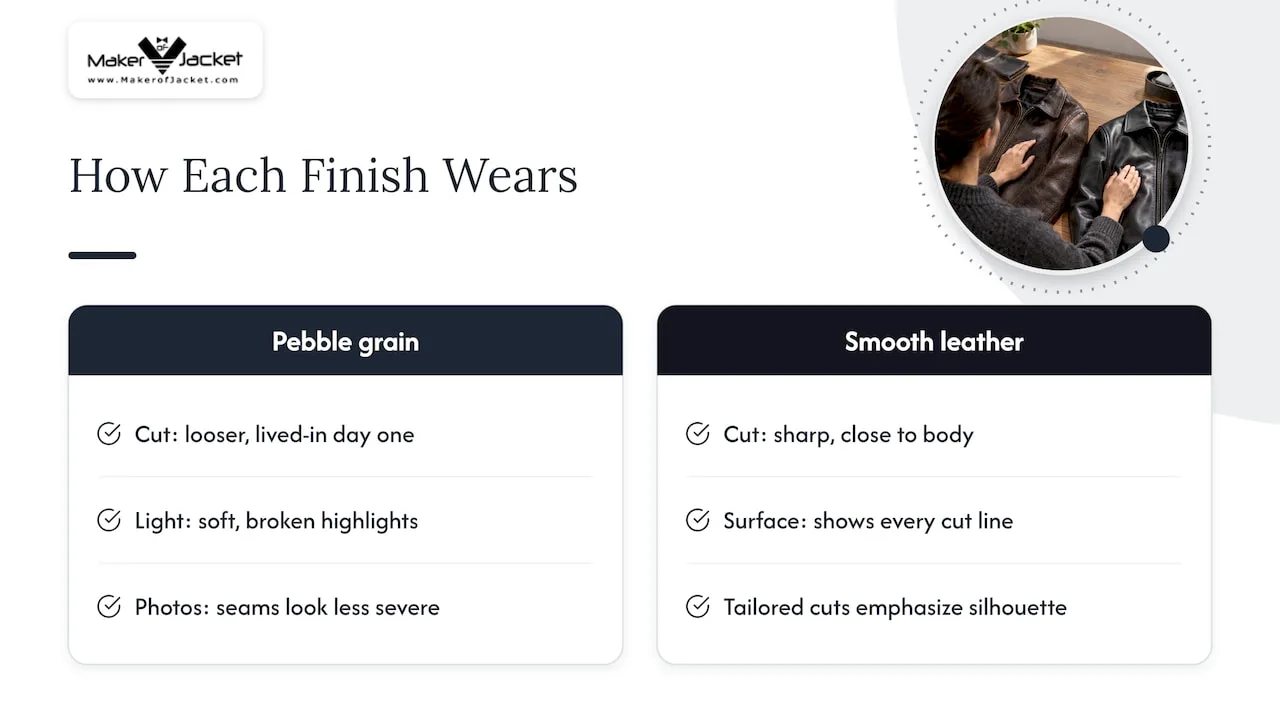
On a jacket, the finish changes how the whole garment reads. A smooth lambskin or calf bomber looks sharp and close to the body. The same cut in pebble grain looks looser and more lived in from day one. Pebble grain also tends to catch light in soft, broken highlights, so seams, collars and sleeve creases look less severe in photos and under harsh lighting.
Smooth leather shows every line of the cut. That is a plus on a tailored café racer or a slim trench, where the clean surface emphasizes the silhouette.
Which one hides scratches better?
Pebble grain does, but not because it is tougher. Several guides agree on the mechanism. The Patina Bench explains that the texture breaks up reflected light, so a scratch crosses dozens of small highlights and stops looking like a line. On smooth leather, the same mark is a clean stripe across a uniform surface. The same guide stresses that neither finish is physically tougher.
In practice, that means:
- Daily carry and commuting: a pebbled jacket shrugs off zipper rub, bag-strap scuffs and brushes against walls without looking worn.
- Motorcycle riding: small marks from gloves, tank bags and straps are less visible on texture. Your protection depends on the thickness and construction of the garment, not on the surface pattern.
- Dressier wear: smooth leather shows marks, but a mark on smooth leather can often be treated. Our guide on how to repair leather scratches walks through it.
So if you want a jacket you can throw on without thinking, pebble grain forgives more. If you enjoy keeping a clean surface, smooth leather is perfectly manageable with a little attention.
Aging, patina and shape
This is where smooth leather earns its reputation. Smooth finishes tend to build patina: color deepens, tone varies across the areas that get the most handling, and the surface gains a glow. Elbows, cuffs, collar edges and pocket openings develop their own character. If you want a jacket that visibly tells the story of your wear, smooth is the more dramatic finish.
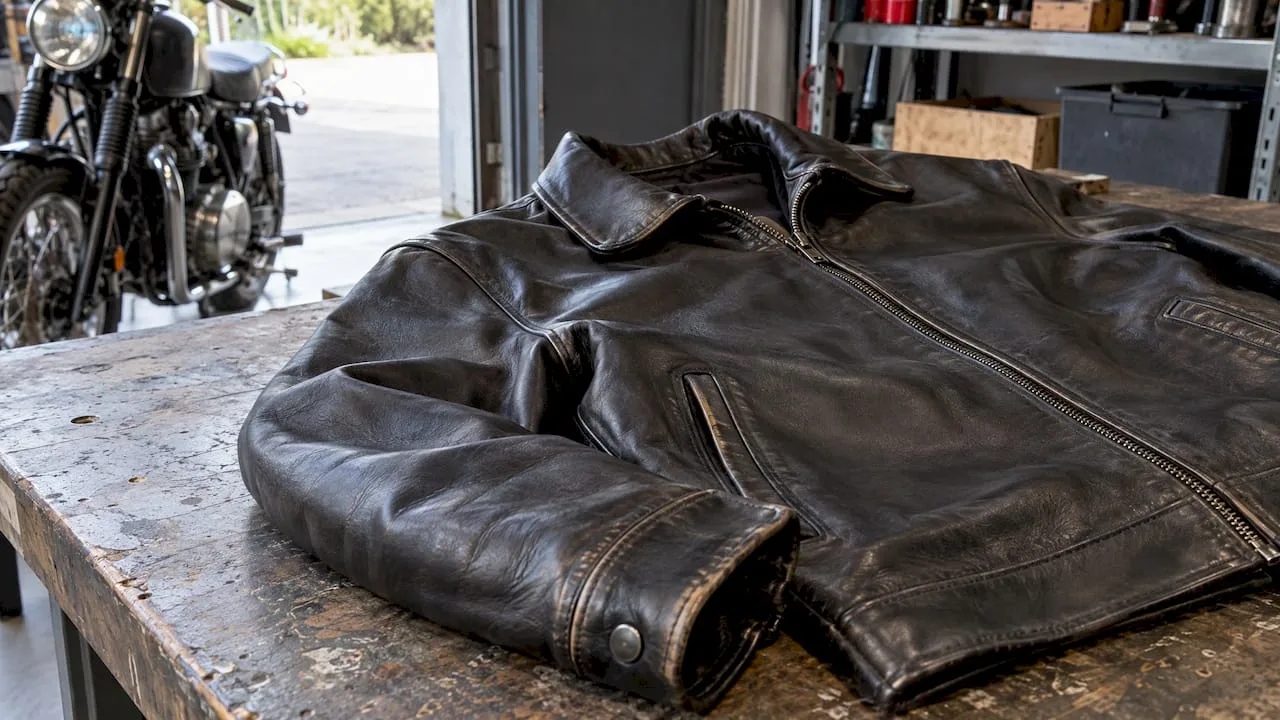
Pebble grain ages differently. It softens slightly and settles into a comfortable, broken-in character without changing as obviously. Some people like that, because the jacket looks consistent for years. Others miss the rich color shift. Neither is better, so ask which kind of change you want to see.
On shape, the finish matters less than the leather’s weight and the jacket’s construction. A structured biker in heavy hide will hold its shape in either finish. If your jacket feels stiff at first, the answer is break-in, not a different finish: see how to soften your leather jacket.
Care: what each finish needs
Both finishes are real leather and both need regular care. The method differs a little because of the surface.
Smooth leather
Smooth leather benefits from a simple routine:
- Wipe off everyday grime with a soft damp cloth. Specialists interviewed by The Guardian mention baby wipes for everyday dirt and saddle soap for ingrained dirt.
- Condition regularly. A cobbler quoted in the same piece advises treating leather as the skin it is, which means moisturizing it.
- Use a cream rather than a hard polish. The same article quotes a specialist saying hard polish dries and cracks, while cream nourishes.
For jackets, our leather conditioner guide covers how often and how much to apply, and our step-by-step cleaning guide covers the wiping stage.
Pebble grain leather
The texture is what you manage here. The small valleys between the bumps can hold dust and grit. Practical habits that follow from that:
- Do a dry wipe-down every week or so, before buildup settles into the grain. A lint-free microfiber cloth helps avoid snagging on the raised edges, a tip from PurseRevive’s pebbled leather guide.
- Use a soft brush when the jacket has been somewhere dusty or muddy. Grit sits in the texture where a flat cloth skims over it.
- Avoid heavy wax pastes. They sit on top of the texture and do not sink in, so use a cream conditioner instead.
For either finish, keep the jacket away from direct heat, and let it dry naturally if it gets wet. Our guide to wearing leather in the rain covers the rescue steps. For a general routine, see how to care for leather and jacket care basics.
Which finish suits which piece?
Here is how we would match the finish to the garment and the wearer.
| Piece or use | Often a good fit | Why |
|---|---|---|
| Everyday bomber | Pebble grain | Hides daily scuffs, looks relaxed |
| Slim biker or café racer | Smooth | Shows off clean lines and builds patina |
| Trench coat | Smooth | A sleek, formal surface suits the cut |
| Motorcycle jacket for commuting | Either | Texture hides marks, smooth is easier to wipe |
| Vest or chaps | Either | Choose by look and by how much you ride |
| Varsity-style leather sleeves | Pebble grain | Casual finish pairs with wool and patches |
| Bags and accessories | Pebble grain | Handles, straps and corners take constant contact |
These are style tendencies, not rules. Climate, color and your own habits matter too. A black smooth jacket can look as casual as any pebbled one once it is broken in, and a tan pebbled jacket can look polished with the right trousers.
Does one cost more?
The finish alone does not set the value. What drives quality is the hide, its grade and how the leather was tanned and finished. Because pebbling is often embossed, it can be applied to many grades of leather. Smooth leather has no texture to cover surface imperfections, so a smooth piece shows the hide as it is. Judge a jacket by its leather grade, weight, stitching and lining rather than by whether it is bumpy or flat.
If you see the phrase “refined pebble leather” in product descriptions, treat it as a marketing description of the surface treatment. Ask what the underlying leather is, and check whether the grain is natural or embossed.
Our view on choosing
At Maker of Jacket, we think the finish should follow the person, not the other way around. Some customers want a jacket they can wear to work, ride in and toss on a chair without worrying. Others want a clean, glossy surface they will condition and enjoy watching change.
That is why we put customization first. Our pieces are made to your size and style preferences, and our craftsmen work with premium-grade materials. When you request a bespoke jacket, you can tell us how you plan to wear it, how often, and what look you have in mind, and we build the order around that.
Our advice is simple. If you want low fuss, lean toward texture. If you want the classic, sleek look and enjoy care, lean toward smooth. In both cases, a good conditioning routine will keep the leather supple for years.
Maker
Ready to get a jacket made your way?
If you already know your preferred look, you can start a custom order directly. Our customize range includes the Custom Biker Jacket at $249, the Customize Motorcycle Jacket Order at $299, the Custom Bomber Jacket at $249, the Custom Trench Coat at $399 and the Custom Suede Leather Jacket at $299. Smaller add-ons such as a custom patch start at $5, and we offer free shipping worldwide.
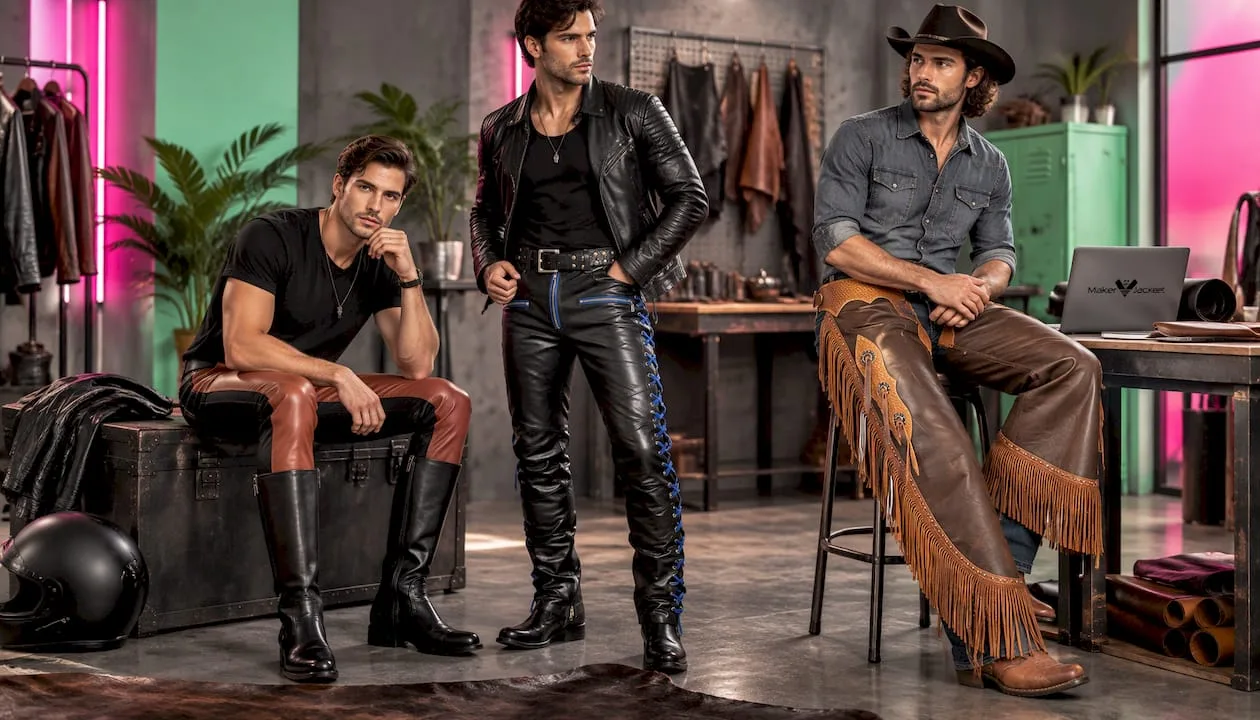
Browse the full customize order range to pick your style, or visit Maker of Jacket to see our ready-to-ship motorcycle apparel, women’s apparel, sports league jackets and accessories. Check the size guides on each page before ordering.
Quick decision guide
Ask yourself four questions:
- Do I want to see the jacket age? If yes, smooth. If you want it to look steady, pebble grain.
- How hard will I wear it? Heavy daily use points to pebble grain for its scuff-hiding texture.
- What is the cut? Tailored and minimal suits smooth. Relaxed and casual suits pebble grain.
- How much care will I give it? Both need conditioning. Smooth rewards polish and attention, pebble grain rewards regular brushing.
If you split evenly between the two, pick the one that matches the cut you love, because the silhouette is what you will notice every time you put the jacket on.
FAQ
Is pebble grain leather real leather?
Yes. Pebble grain describes the surface pattern, not a material. The pattern can occur naturally, come from shrinking, or be embossed into the leather, according to The Patina Bench. What matters is the grade of the hide underneath.
Is pebble grain more durable than smooth leather?
Not physically. Pebble grain hides scratches and scuffs better because its texture breaks up light, so wear is less visible. Smooth leather shows marks sooner, but regular conditioning keeps it supple and many surface marks can be treated.
Which finish is better for a motorcycle jacket?
Either can work. Pebble grain hides the small marks that come from straps and gloves, while smooth is simple to wipe clean. Safety depends on the thickness and construction of the garment, so choose the cut and weight first, then the finish.
How do I clean pebbled leather?
Wipe it down regularly with a lint-free microfiber cloth, and use a soft brush to lift grit from the texture. Condition it with a cream rather than a hard wax paste. Our leather jacket cleaning process guide covers the full routine.
Will a smooth leather jacket scratch easily?
It shows marks more clearly than a textured finish, because a scratch reads as a clean line on a uniform surface. Regular conditioning helps, and our guide on maintaining your leather jacket explains how to keep it looking its best.


