

Types of jacket fit: Choose for comfort and safety


TL;DR:
- Proper jacket fit depends on measuring shoulders, chest, sleeves, and body length for comfort and safety.
- Fashion jackets are categorized as slim, regular, relaxed, or oversized based on ease and style needs.
- Motorcycle jacket fit varies for race, touring, or street use; a snug, correctly positioned fit is essential for safety.
Getting jacket fit wrong is one of the most common and costly mistakes buyers make. You find a style you love, order your usual size, and then it arrives feeling either like a straitjacket or a tent. The problem is that “fit” means something different depending on whether you’re shopping for a fashion jacket or motorcycle gear. Slim, regular, relaxed, race, touring, street — each term describes a specific relationship between the garment and your body. This guide walks you through every major fit type, explains the key differences, and gives you a clear framework to choose the one that actually works for your body, your riding style, and your wardrobe.
Table of Contents
- How to assess jacket fit: Key criteria and measurements
- Main types of fashion jacket fit: Slim, regular, and relaxed
- Specialty fits for motorcycle jackets: Race, touring, and street
- Matching fit to your body and lifestyle: Practical tips and mistakes to avoid
- Fit comparisons at a glance: Summary table and quick recommendations
- What most fit guides miss: Why fit is personal, not just a chart
- Discover your ideal fit with Maker of Jacket
- Frequently asked questions
Key Takeaways
| Point | Details |
|---|---|
| Fit impacts safety and style | The way a jacket fits affects both how you look and how well you’re protected, especially when riding. |
| Know your measurements | Taking accurate chest, shoulder, and sleeve measurements ensures the best fit for your needs. |
| Match fit to use | Choose slimmer fits for a sharp look, regular for versatility, and specialty moto fits for riding safety. |
| Test movement and layering | Always try on jackets with intended layers and in real-world poses for maximum comfort and performance. |
How to assess jacket fit: Key criteria and measurements
Before you can compare fit types, you need to understand what “fit” actually measures. The most important concept is ease, which is the extra space built into a garment beyond your bare body measurements. Ease allows you to move, breathe, and layer. A jacket with zero ease would be a second skin. Too much ease and you’re swimming in fabric.
Here are the four foundational fit checkpoints every jacket buyer should know:
- Shoulders: The seam should sit right at the edge of your shoulder bone, not drooping down your arm or pulling toward your neck.
- Chest: The jacket should zip or button closed with roughly a one-inch gap for layering, as proper fit guidelines confirm: shoulder seams at the bone edge, chest zips with a 1-inch gap for a layer, sleeves to the wrist bone, and no ride-up in motion.
- Sleeves: They should reach your wrist bone, covering the cuff of any shirt underneath.
- Body length: The jacket hem should not ride up when you raise your arms. For moto jackets, this is especially critical.
Fit also affects insulation. A jacket that’s too tight traps less warm air. One that’s too loose lets cold air circulate freely. For measuring for jacket fit, use a soft tape measure and take your chest, waist, and sleeve measurements over a light base layer, not a bare torso.
Pro Tip: Always measure your measuring jacket size with the clothes you plan to wear underneath. A jacket that fits over a t-shirt may feel strangling over a hoodie.
Experts consistently rank fit over style as the top priority. A jacket that looks incredible on a hanger but restricts your shoulder movement is a bad jacket for you, full stop.
Main types of fashion jacket fit: Slim, regular, and relaxed
Now that you know what to measure and prioritize, let’s break down the classic fashion jacket fits. General jacket fits include slim, regular, relaxed, and athletic or oversized, each defined by torso ease, layering capacity, and body contouring.
| Fit type | Chest ease | Layering room | Best for |
|---|---|---|---|
| Slim | 1-2 inches | Minimal | Lean builds, sharp looks |
| Regular | 3-4 inches | Moderate | Most body types, everyday use |
| Relaxed | 5-6 inches | High | Cold weather, bulkier layers |
| Oversized | 7+ inches | Maximum | Fashion-forward, streetwear |
Here’s what each fit actually means in practice:
Slim fit hugs the torso closely. It creates a sharp, tailored silhouette and works best on lean or athletic builds. The trade-off is limited movement and almost no room for a thick mid-layer. Great for a night out, not great for a January commute.
Regular fit is the all-arounder. It suits the widest range of body types and activities. You get enough room to move freely and add a light sweater underneath without looking boxy. Think of it as the Goldilocks option.
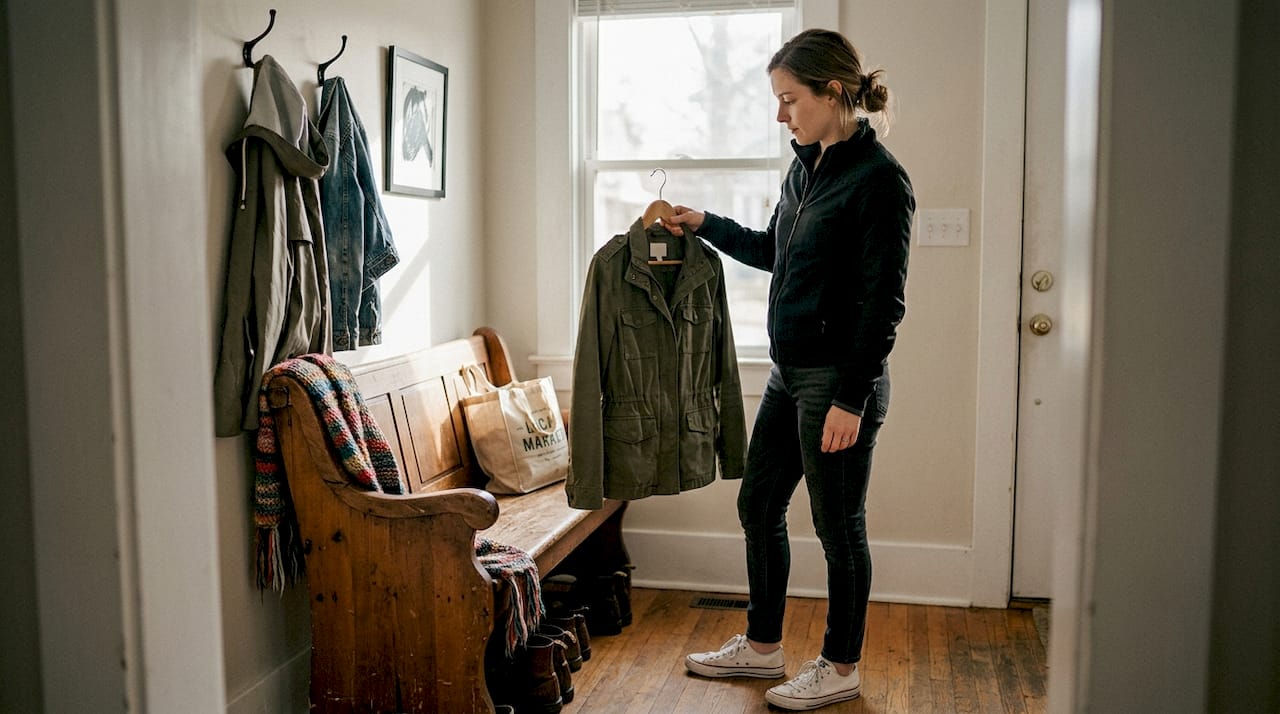
Relaxed fit prioritizes comfort and layering. If you run cold or live somewhere with harsh winters, relaxed gives you the space to stack a fleece or heavy knit underneath. The silhouette is less tailored, but warmth wins.
Oversized fit is a style statement. It’s borrowed from streetwear culture and intentionally exceeds your measurements. It’s not about function — it’s about the look.
Pro Tip: If you’re between two fits and you don’t plan to layer heavily, lean toward the slimmer option. Jackets stretch slightly with wear, and a slightly snug fit will look sharper than one that’s slightly too big.
For a broader look at fashion jacket types, knowing your fit preference first makes browsing far less overwhelming.
Specialty fits for motorcycle jackets: Race, touring, and street
While those are the basics for streetwear, motorcycle jackets introduce fits with distinct functional priorities. A fashion jacket that’s slightly loose is a style choice. A motorcycle jacket that’s slightly loose is a safety risk.
Motorcycle jacket fits break into three main categories: race or sport (tight, pre-curved for a lean or tuck riding position), touring or adventure (relaxed, adjustable for layers), and street or urban (semi-fitted and casual), all of which should be tested in riding position for armor alignment.
| Fit type | Cut | Armor support | Ideal use |
|---|---|---|---|
| Race/sport | Very tight, pre-curved | Maximum, CE Level 2 | Track days, sport bikes |
| Touring | Relaxed, adjustable | Moderate, removable | Long-distance, adventure |
| Street/urban | Semi-fitted | Basic, integrated | City commuting, casual rides |
Here’s a quick breakdown of each:
Race fit pros: maximum armor coverage, aerodynamic, designed for aggressive posture. Cons: uncomfortable upright, not practical off the bike.
Touring fit pros: comfortable for hours, room for thermal layers, versatile. Cons: bulkier, less streamlined at speed.
Street fit pros: wearable on and off the bike, looks like regular outerwear. Cons: less protection than race or touring.
Never evaluate a motorcycle jacket standing upright in a store. Sit on your bike or mimic your riding posture. Armor that sits on your shoulder blade while standing may shift to your upper arm when you grip the handlebars.
For a full breakdown of motorcycle jacket types and their motorcycle safety features, fit and protection are always evaluated together. You can also follow a step-by-step motorcycle fitting guide to make sure armor placement is correct before you ride.
Matching fit to your body and lifestyle: Practical tips and mistakes to avoid
With the key types and their features in mind, let’s focus on how to match your selection to your specific needs and avoid common mistakes.
Body type matters more than most guides admit. Muscular builds need athletic or relaxed fits to avoid shoulder strain, shorter riders do better with a jacket length of 21 to 22 inches, and 68% of men size up for shoulder room only to end up with baggy sleeves. Leather also breaks in with wear, so a slightly snug leather jacket today may feel perfect in a month.
Here’s a step-by-step approach to matching fit to your body:
- Identify your dominant measurement. For most people, that’s chest or shoulders. Start there and work outward.
- Test the jacket in motion. Raise your arms, cross them, reach forward. If the back rides up or the shoulders pull, it’s the wrong fit.
- Consider your typical layers. A winter commuter needs more ease than someone wearing the jacket in mild weather.
- Account for your riding posture if buying moto gear. Lean forward and check that the jacket doesn’t bunch at the waist or expose your lower back.
- Check sleeve length last. Sleeves are the easiest thing to alter on a fashion jacket and the most overlooked measurement.
Fit evaluation in riding position is non-negotiable for motorcycle jackets. Armor that shifts even two inches out of position can mean the difference between a bruise and a serious injury.
Pro Tip: If you’re buying a leather jacket, size down by half a size from your usual. Leather stretches and molds to your shape over time, so what feels slightly firm at first will become a perfect fit within a few weeks of regular wear.
Understanding why fit matters goes beyond aesthetics. The right fit also affects how jacket materials and safety work together to protect you.
Fit comparisons at a glance: Summary table and quick recommendations
To make the final decision easier, here’s a quick-reference guide that compares all fits and suggests what’s best for common needs.
| Fit | Chest ease | Layer room | Posture focus | Best for |
|---|---|---|---|---|
| Slim | 1-2 in | None | Upright | Sharp style, lean builds |
| Regular | 3-4 in | Light | Upright | Everyday, most builds |
| Relaxed | 5-6 in | High | Upright | Cold weather, comfort |
| Race | Minimal | None | Aggressive lean | Track, sport bikes |
| Touring | Moderate | High | Upright/forward | Long rides, adventure |
| Street | Semi-fitted | Light | Upright | Urban commuting |
Body-type matching is more effective than generic sizing. Measure your chest, shoulders, and sleeves, and when you’re between sizes, size down for a tailored look.
Here are quick recommendations by scenario:
- Best for sharp everyday style: Slim or regular fit in a fashion jacket
- Best for cold-weather layering: Relaxed fit with 5+ inches of chest ease
- Best for motorcycle safety: Race fit for sport riding, touring fit for long distances
- Best for versatility on and off the bike: Street fit or a well-fitted regular fashion jacket
- Best for muscular or broader builds: Athletic or relaxed fit to avoid shoulder restriction
Always return to your measurements. Charts and tables are guides, not guarantees. Your body is the final reference point.
What most fit guides miss: Why fit is personal, not just a chart
Every fit guide, including this one, relies on tables and categories. They’re useful. But here’s what they can’t tell you: how a jacket feels when you’re actually living in it.
Measurement charts assume average proportions. If your shoulders are wide relative to your chest, or your torso is short relative to your arms, no standard fit category will land perfectly. That’s not a flaw in your body. It’s a limitation of mass sizing.
For fashion jackets, the risk of getting fit wrong is mostly aesthetic. For motorcycle jackets, the stakes are higher. A jacket that’s too tight restricts the arm movement you need to control your bike. One that’s too loose lets armor shift away from the impact zones it’s designed to protect.
The only reliable test is motion. Wear the jacket. Move in it. Sit in your riding position. Layer under it the way you actually would. The importance of fit becomes obvious the moment you stop treating it as a number on a chart and start treating it as a lived experience. Custom fit exists precisely because standard sizing will never account for every body.
Discover your ideal fit with Maker of Jacket
Now that you know exactly what to look for in jacket fit, here’s how Maker of Jacket can help you put it into practice.
At Maker of Jacket, both fashion and motorcycle buyers can find jackets built to real fit standards, not just generic sizing. Whether you need a slim leather biker jacket or a fully armored touring jacket, the range covers every fit type discussed in this guide. For those who need something truly personal, custom jacket options let you specify your exact measurements so the jacket is built around your body from the start. Browse the full collection of handmade leather jackets and use the on-site size guides to match your measurements to the right fit before you order.
Frequently asked questions
What is the most versatile jacket fit for everyday use?
A regular fit jacket is the most versatile, working for most body types and everyday activities. It offers enough ease for light layering without sacrificing a clean silhouette.
How tight should a motorcycle jacket be?
A motorcycle jacket should fit snugly without restricting movement or compressing armor. Loose motorcycle jackets shift armor out of position, compromising your safety in a crash.
Can I size up in a jacket for more layering?
Only size up if the jacket’s cut is designed to accommodate layers. Sizing up for shoulder room often leads to baggy sleeves, so make sure the extra room is proportional across the whole jacket.
How do I choose the best jacket fit for a muscular build?
Muscular builds do best with athletic or relaxed fits to avoid shoulder and arm restriction. Slim fit tends to pull across the upper back and limit range of motion.


