

How to Maintain Jacket Quality: Your Practical Guide


TL;DR:
- Proper jacket maintenance depends on understanding the specific needs of each material to prevent damage and extend lifespan. Regular cleaning, correct storage, and early repairs safeguard the jacket’s condition, while avoiding aggressive cleaning preserves coatings and natural oils. Built-in quality and regular care habits ensure jackets remain functional and stylish for many years.
You spend good money on a jacket. Then a season later, the leather cracks, the down goes flat, or the seams start fraying. Knowing how to maintain jacket quality is the difference between a jacket that looks sharp for years and one that ends up at the back of the closet after twelve months. This guide covers everything you need: what care routines fit which materials, how to clean jackets without causing damage, how to store jackets properly, and how to handle repairs before small problems become expensive ones.
Table of Contents
- Key takeaways
- How to maintain jacket quality by material type
- Cleaning your jacket safely at home
- Drying and storing jackets the right way
- Repairs, touch-ups, and routine maintenance
- My honest take on jacket maintenance
- Get a jacket built to last from the start
- FAQ
Key takeaways
| Point | Details |
|---|---|
| Match care to material | Leather, down, wool, and synthetics each need different cleaning methods and products. |
| Clean before storing | Body oils left in fabric attract pests and weaken fibers during long-term storage. |
| Start with the gentlest method | Brush and spot clean before committing to a full wash to protect coatings and natural oils. |
| Dry completely before storing | Moisture trapped inside a jacket causes mildew, odor, and insulation breakdown. |
| Fix small damage early | Addressing a loose seam or a stiff zipper now prevents irreversible damage later. |
How to maintain jacket quality by material type
Not every jacket plays by the same rules. The single biggest mistake people make is treating all jackets like they’re machine-washable cotton. They are not. The fabric in your jacket determines almost every decision you make about cleaning, drying, and storage.
Here is a quick comparison of the most common jacket materials and what each one needs:
| Material | Washing method | Key care concern |
|---|---|---|
| Leather | Spot clean only; no submersion | Retains natural oils; needs regular conditioning |
| Down | Machine wash on delicate with technical cleaner | Insulation clumping; requires low-heat drying |
| Wool | Brush regularly; professional clean preferred | Shape distortion; attracts moths |
| Synthetic shell | Machine wash on gentle cycle | Coating degradation from heat and harsh detergents |
Breaking it down further:
- Leather: Leather’s natural oils provide the flexibility and durability you feel in a quality biker or moto jacket. Water and soap strip those oils fast. Full submersion in water is off the table entirely.
- Down: The fill inside a down jacket can clump into hard lumps if washed incorrectly or dried too fast. Once that happens, you lose insulation performance and the jacket looks misshapen.
- Wool: Wool fibers felt and shrink under heat and agitation. Structured wool coats need regular brushing and professional cleaning to keep their silhouette and prevent fabric degradation.
- Synthetic shells: Gore-Tex and similar technical fabrics hold up reasonably well in a machine, but hot water and fabric softeners break down the DWR (durable water repellent) coating quickly.
Knowing your material is step one in any solid jacket maintenance guide.
Cleaning your jacket safely at home
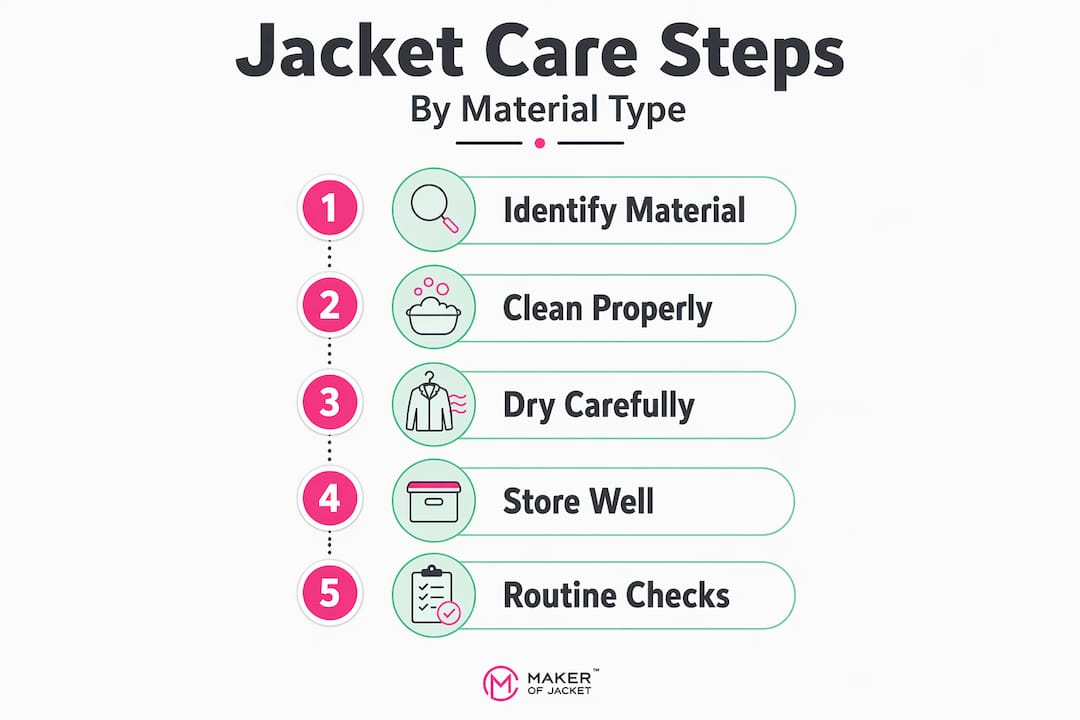
The golden rule with jackets is to start with the least aggressive method and only escalate if needed. This protects coatings, natural oils, and fabric integrity. Here is how to approach cleaning by material:
Leather jackets
- Wipe down the surface with a dry microfiber cloth to remove dust.
- Mix a few drops of mild soap with water. Dampen a cloth. Do not soak it.
- Rub gently in small circular motions on stained areas only.
- Wipe away soap residue with a clean damp cloth.
- Allow to air dry away from direct heat or sunlight.
- Apply a leather conditioner once fully dry to restore oils and prevent cracking.
Pro Tip: Never use household cleaners like dish soap or all-purpose spray on leather. They strip oils faster than you think. Stick to products made specifically for leather care, and check out this step-by-step leather cleaning guide for deeper stains.
Down jackets
- Check for rips or loose seams before washing. Fix them first.
- Use a front-loading machine on a delicate or gentle cycle with cold water.
- Add a cleaner specifically designed for down or technical fabrics.
- Run an extra rinse cycle to remove all soap residue.
- Transfer immediately to the dryer on low heat with two or three dryer balls.
That last step matters more than most people realize. Dryer balls break up clumping and restore the loft that makes down warm. Skip them and the fill stays balled up, leaving you with cold spots.
Wool and synthetic shell jackets
For wool, skip the machine entirely. Brush the surface with a soft clothes brush after each wear to lift dirt before it settles. When a deeper clean is necessary, hand wash in cold water with a gentle wool-safe detergent, or take it to a professional cleaner.
For synthetic shells, a gentle machine cycle works. Use a technical fabric cleaner, avoid fabric softener, and keep the water temperature cold.
| Jacket type | Washing method | Cleaner to use | Dryer safe? |
|---|---|---|---|
| Leather | Spot clean only | Leather-specific soap | No |
| Down | Machine, delicate cycle | Down-specific cleaner | Yes, low heat |
| Wool | Hand wash or professional | Wool-safe detergent | No |
| Synthetic shell | Machine, gentle cycle | Technical fabric cleaner | Low heat only |
Drying and storing jackets the right way
Getting the wash right means nothing if you store your jacket wrong. Improper drying and storage are responsible for more ruined jackets than any stain.
Drying first:
- Always air dry leather and wool away from direct heat. Radiators and hair dryers cause cracking and shrinkage.
- Down jackets need complete drying before storage to avoid mildew and loss of insulation. This can take several hours in the dryer on low heat.
- Lay wool flat to dry on a clean towel to prevent the fabric from stretching under its own weight.
- Hang synthetic shells on a wide hanger to let air circulate through all layers.
Storage that actually protects:
- Use padded, wide-shouldered hangers for structured jackets. Wire hangers create pressure points that distort shoulder shape over months.
- Store jackets in breathable fabric garment bags, not plastic. Plastic traps moisture and accelerates mildew.
- Keep leather jackets away from direct sunlight, which fades and dries out the material.
- Do not store any jacket when even slightly damp.
Pest prevention:
- Cedar blocks or lavender sachets placed near wool jackets deter moths without leaving chemical residue on the fabric.
- Avoid mothballs directly touching fabric. The residue is difficult to remove and can leave stains.
- Clean wool jackets before putting them away for the season. Insects are attracted to body oils and food residue left in fabric.
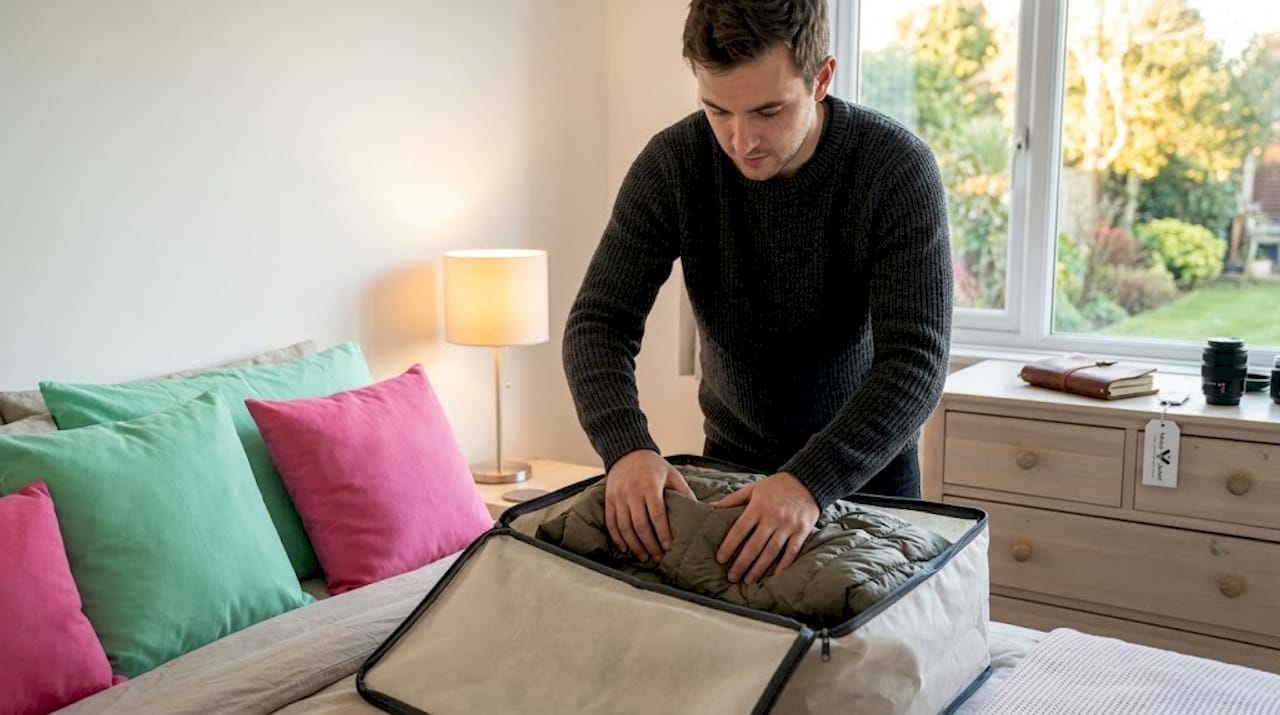
Pro Tip: If you are folding a down jacket for travel or off-season storage, stuff it loosely into a large breathable bag rather than compressing it tightly. Long-term compression can permanently damage the fill clusters.
For more detail on storing leather jackets specifically, including seasonal prep steps, Makerofjacket has a dedicated guide worth bookmarking.
Repairs, touch-ups, and routine maintenance
The best way to preserve jackets over the long term is catching problems while they are still small. A frayed seam you ignore for one season becomes a tear that no patch can fix cleanly.
Here are the most common issues and how to handle them:
- Zipper problems: If a zipper sticks or skips teeth, rub the teeth lightly with a graphite pencil or zipper lubricant. Most zipper issues at an early stage are friction problems, not structural failure. Small repairs like this extend jacket life far beyond what most owners expect.
- Seam reinforcement: Use a needle and thread to reinforce any seam showing loose stitching. If you wait until it fully separates, re-stitching from scratch is harder and less clean.
- Patching small tears: Iron-on fabric repair patches work well on synthetic shells and linings. Leather requires a leather repair kit with color-matched filler.
- De-pilling wool and fleece: Use a fabric shaver (also called a lint remover) to remove pills from wool surfaces. Pilling is normal with wear, and removing it regularly keeps the jacket looking new.
Leather conditioning deserves special attention here. Conditioning is not just cosmetic maintenance. Conditioning restores oils that keep leather flexible and prevent the dry cracking that weakens the material structurally. Do it two to three times per year, or after any cleaning session.
Reproofing technical and down jackets is another step most people skip. Washing alone does not restore water resistance. After cleaning, apply a spray-on DWR reproofing product and tumble dry briefly on low heat to reactivate the coating.
Pro Tip: Keep a small repair kit in your closet: a leather conditioner, a zipper pull tool, a fabric shaver, and iron-on patches. You will be surprised how often a five-minute fix saves a jacket that would otherwise sit unworn.
When to call a professional: bring your jacket to a specialist if the lining is torn at multiple points, if leather has deep cracks or major discoloration, or if a zipper replacement is needed. Attempting complex structural repairs without experience usually makes things worse.
My honest take on jacket maintenance
I have seen countless jackets come through the hands of people who care deeply about them, only to watch years of hard wear get undone in one careless cleaning session. The biggest myth I have encountered is that more cleaning means better care. It does not.
Cleaning too aggressively degrades coatings, strips natural oils, and shortens the life of a jacket faster than normal wear does. What I have found actually works is building small, consistent habits. Brush your jacket after wearing it. Condition leather before it looks like it needs conditioning. Store things properly the moment a season ends, not three months later.
The other thing I tell people: treat your jacket like an investment, not a consumable. A quality jacket built from good materials, cared for correctly, lasts a decade or longer. That math makes every ten minutes of maintenance completely worth it. The readers who treat keeping jackets in good shape as a regular habit, rather than an emergency response to visible damage, are the ones whose jackets still look great five years in.
— Maker
Get a jacket built to last from the start

Maintenance gets easier when your jacket is made right in the first place. At Makerofjacket, every piece is crafted with durability and material quality as the foundation, which means less fighting against premature wear and more time actually enjoying what you own. Whether you are looking for a custom leather biker jacket, a bomber, or a tailored varsity piece, you can order a custom jacket built to your exact specifications. For those who want to go deeper on caring for what they already own, the leather care resource at Makerofjacket covers conditioning, repair, and long-term maintenance in detail. Quality starts at purchase and gets protected through consistent care.
FAQ
What is the best way to preserve jackets long-term?
Clean your jacket before storing it, use breathable garment bags, and hang it on padded wide-shoulder hangers. Body oils left in fabric attract pests and weaken fibers over time.
How often should you clean a leather jacket?
Spot clean leather as needed and do a full surface clean once or twice per year. Condition it two to three times annually to keep the material flexible and prevent cracking.
Can you machine wash a down jacket?
Yes. Use a front-loading machine on a delicate cycle with a down-specific cleaner, then dry on low heat with dryer balls to restore loft and prevent clumping.
How do you restore water resistance after washing a jacket?
Apply a spray-on DWR reproofing product after washing and tumble dry briefly on low heat. Washing alone removes the water-repellent coating and does not restore it.
When should you take a jacket to a professional cleaner?
Take your jacket to a professional when it has deep leather cracking, structural lining damage, or a zipper that needs full replacement. DIY repairs on complex structural issues tend to cause more damage than they fix.


