

Your Complete Guide to Jacket Color Selection

TL;DR:
- Choosing the right jacket color depends on your skin tone, wardrobe, occasion, and season to achieve a cohesive look. Navy remains the most versatile color for first jackets, as it suits almost all occasions and pairs well with many hues. Focus on building a wardrobe with three core colors—dark, mid-tone, and neutral—to maximize versatility and style confidence.
Picking the right jacket color is one of those decisions that looks simple but quietly shapes how your entire outfit reads. The wrong choice leaves you looking uncoordinated no matter how well everything else fits. This guide to jacket color selection cuts through the noise by covering the key factors that actually matter: your skin tone, your existing wardrobe, the occasion, and the psychology behind color perception. By the end, you will know exactly which hues work for you and why.
Key takeaways
| Point | Details |
|---|---|
| Start with occasion, then color | Choose jacket color only after deciding where and how you will wear it most. |
| Navy is your safest first pick | Navy pairs with almost every color and works across casual and formal occasions. |
| Undertones matter as much as color | Matching warm or cool undertones to your skin prevents unflattering, washed-out looks. |
| Neutral does not mean boring | Adding value contrast between light and dark pieces stops neutral outfits from looking flat. |
| Build a color anchor system | One primary versatile color plus one seasonal neutral covers most wardrobe situations. |
The guide to jacket color selection: what to know first
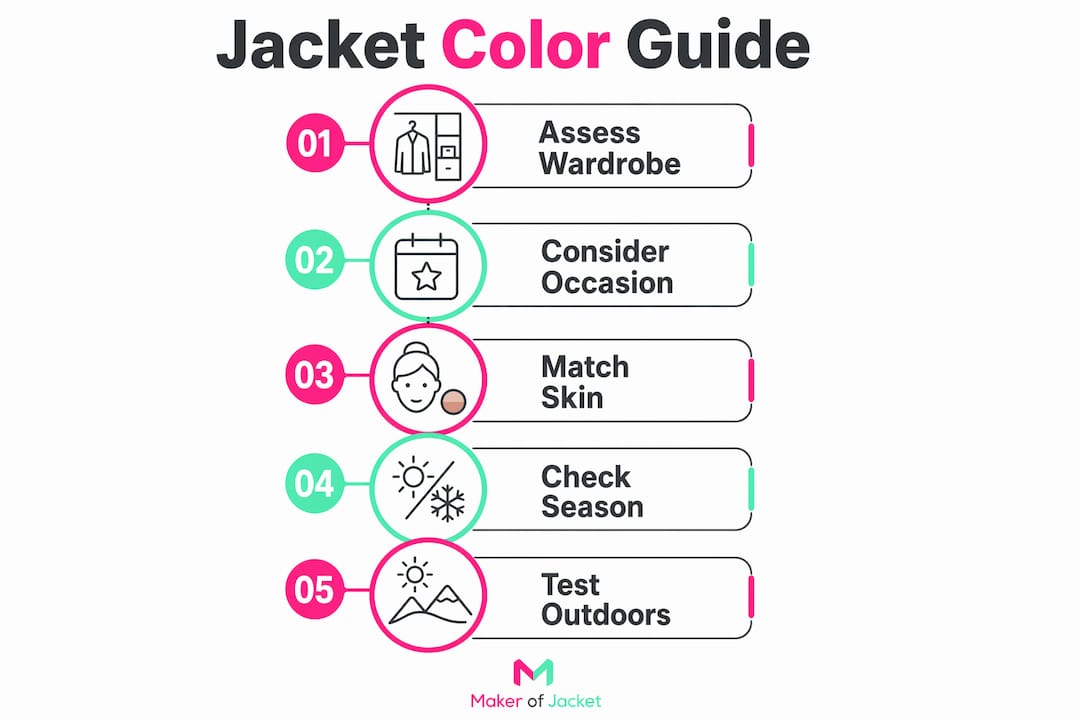
Before you start browsing jacket options, you need to look inward before you look at a color chart. The best jacket color for someone else might be completely wrong for you, and that comes down to four things: your existing wardrobe, your lifestyle, your skin tone, and where you will actually wear the jacket.
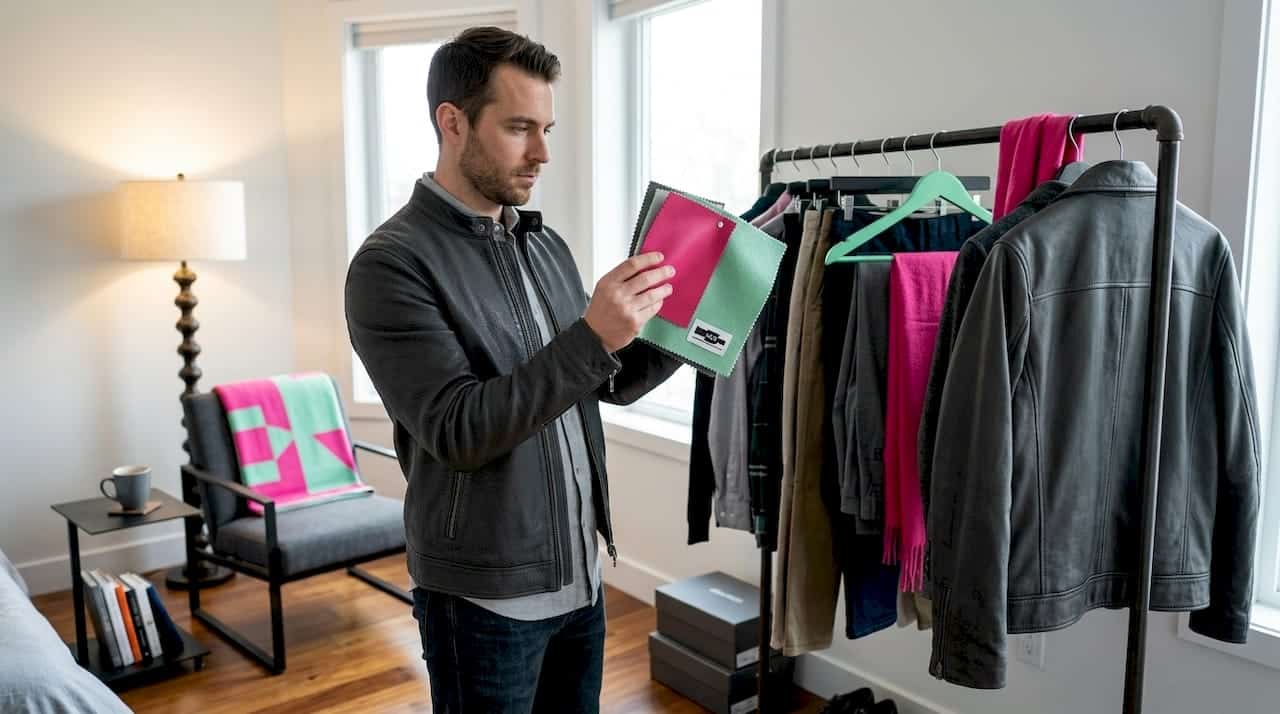
Start by laying out the clothes you wear most. What colors dominate your pants, shirts, and shoes? If your wardrobe runs cool (navy, gray, white, black), you want a jacket that lives in the same family. If you favor earthy tones like camel, tan, and rust, a warm-toned jacket will tie everything together. Choosing jacket colors gets dramatically easier once you know your existing palette.
Lifestyle and occasion matter just as much. A jacket you wear to business meetings needs to work harder than one you grab for weekend errands. Starting with occasion then style before even thinking about color is how experienced dressers approach wardrobe building. Ask yourself: is this jacket primarily casual, business casual, or formal? That answer will eliminate at least half the color options immediately.
Skin tone is where many people trip up. Most people check whether a color “looks good” under store lighting, which is misleading. Warm, cool, or neutral undertones respond very differently to jacket colors, and testing in natural light gives you a far more accurate read. Warm undertones (golden, peachy, yellow-based skin) tend to shine in earthy browns, camel, olive, and warm navy. Cool undertones (pink, blue, or red-based skin) typically look sharpest in charcoal, true navy, gray, and jewel tones.
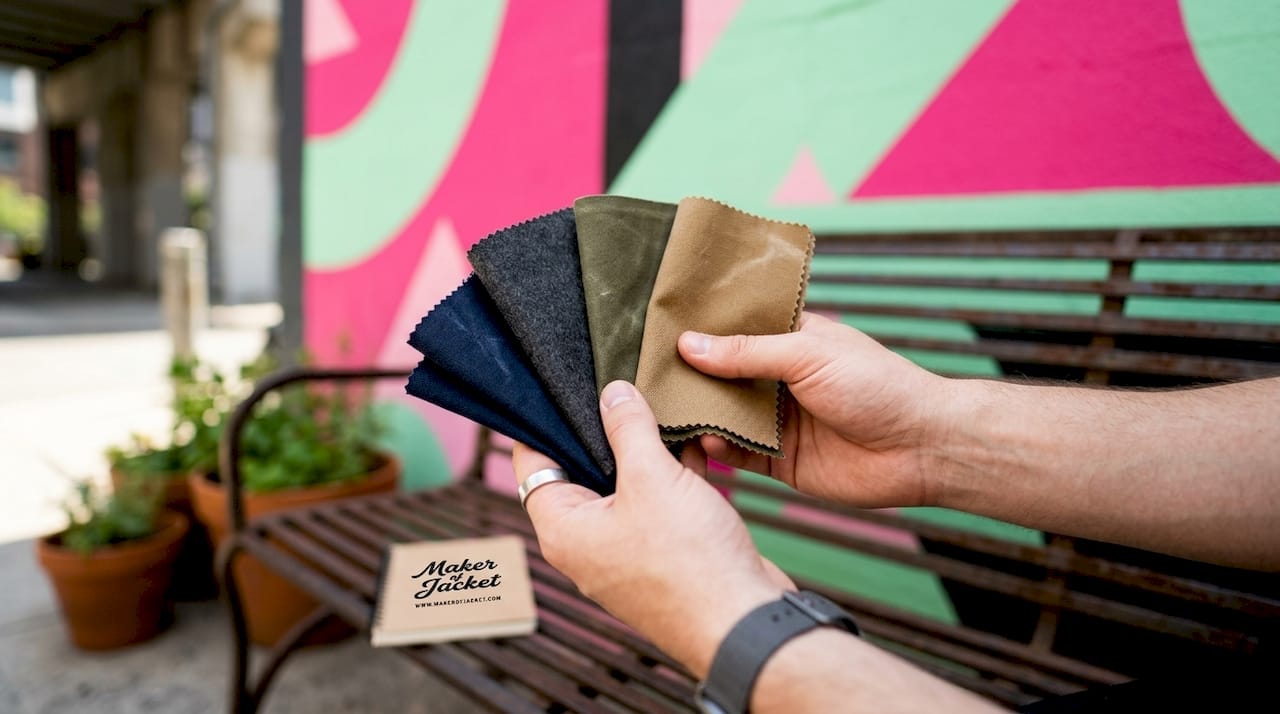
Pro Tip: Take your most-worn pants outside in natural light and hold potential jacket swatches next to them. If the combination looks intentional and the colors do not compete, you have a match.
Season and climate round out the picture. Lighter, breathable colors like beige and tan read well in warm months and tend to absorb less heat visually. Deeper hues like charcoal, forest green, and dark navy feel right in fall and winter and photograph with more authority in layered cold-weather looks.
Popular jacket colors and what each one actually does
Not all colors carry the same stylistic weight. Here is a breakdown of the most dependable options, what each one does for your look, and where it falls short.
| Jacket color | Best for | Works with | Limitation |
|---|---|---|---|
| Navy | All-around versatility | Almost everything | Can be overused |
| Charcoal gray | Sharp, authoritative looks | White, light blue, burgundy | Less casual flexibility |
| Mid-gray | Neutral, fresh canvas | Almost everything | Can read as plain without contrast |
| Beige / Tan | Warm weather, casual elegance | White, olive, rust, navy | Shows dirt; less formal |
| Olive | Casual and smart-casual | Denim, khaki, rust, white | Hard to dress up |
| Black | Formal, evening, streetwear | Bold colors, white, gray | Can feel heavy in daylight |
Navy is the clear winner for a first jacket because it works at funerals, job interviews, date nights, and Saturday farmers markets without looking misplaced. That kind of range is rare in a single color.
Charcoal gray delivers a different kind of authority. Where navy is approachable, charcoal is commanding. It photographs exceptionally well in formal settings and pairs cleanly with light blue dress shirts or crisp white tees depending on the dress code.
Mid-gray is the underrated workhorse. It sits between navy and charcoal in terms of formality and gives you more room to play with color in the rest of your outfit. The risk with mid-gray is falling into an all-neutral trap. Staying within neutrals without contrast creates flat, forgettable looks. Solve this by adding a bolder shirt, a warm shoe, or a textured accessory.
Olive has quietly moved from military surplus to mainstream style staple. It pairs naturally with raw denim, khaki chinos, and any earthy tone without looking costume-y. The downside is that olive has a ceiling on formality. It is a casual and smart-casual color.
Bright and trendy colors like cobalt blue, mustard, or fuchsia have their place, but they work as statement pieces, not wardrobe foundations. Wear them when you are confident in the rest of the outfit and know the look you are going for. Otherwise, they limit what you can pair them with.
Pro Tip: If you want to explore versatile jacket color combinations without committing, try ordering fabric swatches or use a virtual try-on tool before purchasing.
How to coordinate jacket colors with your outfit
The most common mistake in outfit coordination is focusing on matching rather than harmonizing. Matching means your jacket and pants are the same color. Harmonizing means they live in the same color family or create intentional contrast. Harmonizing almost always looks better.
Here is a practical framework for putting outfits together:
- Upper and lower contrast: As a general rule, the upper and lower halves of your outfit should differ in value (lightness or darkness). A dark jacket over light pants reads as intentional. A mid-tone jacket over mid-tone pants can feel monotonous.
- Coordinating with prints: If your shirt or pants feature a print, match dominant or secondary colors in the print with your jacket. A floral shirt with navy, olive, and white tones? A navy jacket is the clean, obvious choice.
- Avoid competing textures at the same value: A chunky knit sweater and a heavily textured jacket at the same shade of gray will fight each other. One piece should be smooth if the other is textured.
- Use neutrals to anchor bold pieces: If your pants or shoes are a strong color, pull your jacket back toward a neutral. The jacket holds the outfit together rather than competing for attention.
| Jacket color | Pairs well with | Avoid |
|---|---|---|
| Navy | Camel pants, gray trousers, white chinos | Navy pants (too matchy) |
| Olive | Raw denim, khaki, rust tones | Black pants (too stark) |
| Charcoal | Light gray, soft white, pale blue | Dark brown (murky contrast) |
| Beige | Navy, white, olive | Pastels (washed out) |
Pro Tip: Value and undertone matching is a stronger coordination tool than simply pairing complementary colors. Two colors that share similar warmth or coolness look like a deliberate choice, even if they are not traditionally “matched.”
Choosing colors by occasion and season
Your jacket color needs change depending on what you are doing and when you are doing it. A thoughtfully built jacket wardrobe accounts for both dimensions.
For seasonal dressing:
- Spring and summer: Reach for beige, tan, light gray, and soft olive. These colors read appropriately light for warm weather and do not visually overheat an outfit.
- Fall and winter: Charcoal, dark navy, deep olive, and rich camel all carry the visual weight that colder-weather layering demands. A strategic pairing of navy and camel covers the vast majority of fall and winter looks without requiring a full wardrobe overhaul.
- Year-round neutrals: Black, mid-gray, and true navy are genuinely season-neutral and work across the full calendar.
For occasion-specific needs, seasonal jacket choices extend beyond aesthetics. Ski and snow sport jackets are one area where color has a safety function. Neon yellow, orange, and green maximize visibility against snow, while lighter shades perform better in sunshine and darker ones on overcast days.
Pro Tip: Build your jacket wardrobe around a capsule of three core colors: one dark (navy or charcoal), one mid-tone (olive or mid-gray), and one warm neutral (beige or camel). That trio covers formal events, smart-casual situations, and weekend wear without overlap.
For formal events, darker and more saturated hues project authority. For creative or casual settings, olive, tan, and mid-gray give you room to express personality without breaking the dress code. Streetwear and evening occasions are where black jackets earn their place. For grooming and style advice that complements a well-chosen jacket, classic men’s styling remains a reliable reference for putting together a complete look.
My honest take on jacket color choices
I have watched people overthink this decision for years, and the pattern is almost always the same. They chase a bold color they saw on a style influencer, buy it, wear it twice, and then go back to the black jacket they have owned since college. Not because the bold color was wrong, but because it was the wrong starting point.
My experience is that navy should be the first jacket color almost anyone buys. Navy suits nearly all occasions and pairs with more colors than any other single option. Once you have a jacket that works everywhere, you have the freedom to experiment with olive, tan, or even a statement color knowing your wardrobe is covered.
The other thing I have learned is that people underestimate undertones. Getting this wrong is subtle but cumulative. You do not look obviously off, but nothing quite pulls together. Testing colors against your skin in natural daylight solves this faster than any color theory chart.
The best jacket color is the one that feels intentional on your body in your actual life. Not on a mood board, not on someone else. Build from the practical colors outward. Statement pieces earn their spot after the foundation is solid.
— Maker
Find your perfect jacket color at Makerofjacket
You now know what to look for when selecting jacket hues. The next step is finding a jacket that actually delivers on color, quality, and fit at the same time.
Makerofjacket specializes in customizable leather and fashion jackets across every major style category, from biker and bomber to varsity, trench, and beyond. You can choose your exact color, specify custom details, and get a jacket built to your preferences rather than settling for whatever a retailer happens to stock. The platform offers a full custom jacket builder where you pick your style, color, and tailoring options in one place.
If you are still exploring color direction, the 2026 jacket trends guide breaks down which fashion jacket colors are leading the season and which ones have real staying power. Makerofjacket ships worldwide with free shipping, so your perfect color is never far away.
FAQ
What is the most versatile jacket color?
Navy is the most versatile jacket color because it pairs with nearly every other color and suits occasions from formal to casual. It is the safest first choice for anyone building a jacket wardrobe.
How do I pick a jacket color that suits my skin tone?
Identify whether your skin has warm, cool, or neutral undertones, then test potential jacket colors in natural daylight. Warm undertones typically favor earthy tones like camel and olive, while cool undertones look best with charcoal, gray, and true navy.
Can I wear a neutral jacket with a printed outfit?
Yes. Choose a neutral jacket that matches the dominant or secondary color in the print. Keeping the jacket neutral prevents visual competition while still creating a cohesive, intentional look.
How many jacket colors do I actually need?
Three well-chosen colors cover most situations: one dark (navy or charcoal), one mid-tone (olive or mid-gray), and one warm neutral (beige or camel). That combination handles formal events, smart-casual settings, and everyday wear.
Do jacket colors need to change by season?
They do not have to, but it helps. Light neutrals like tan and beige feel appropriate in warm weather, while charcoal, dark navy, and camel carry more visual weight suited to fall and winter layering.


