

Can You Wear a Leather Jacket in the Rain?

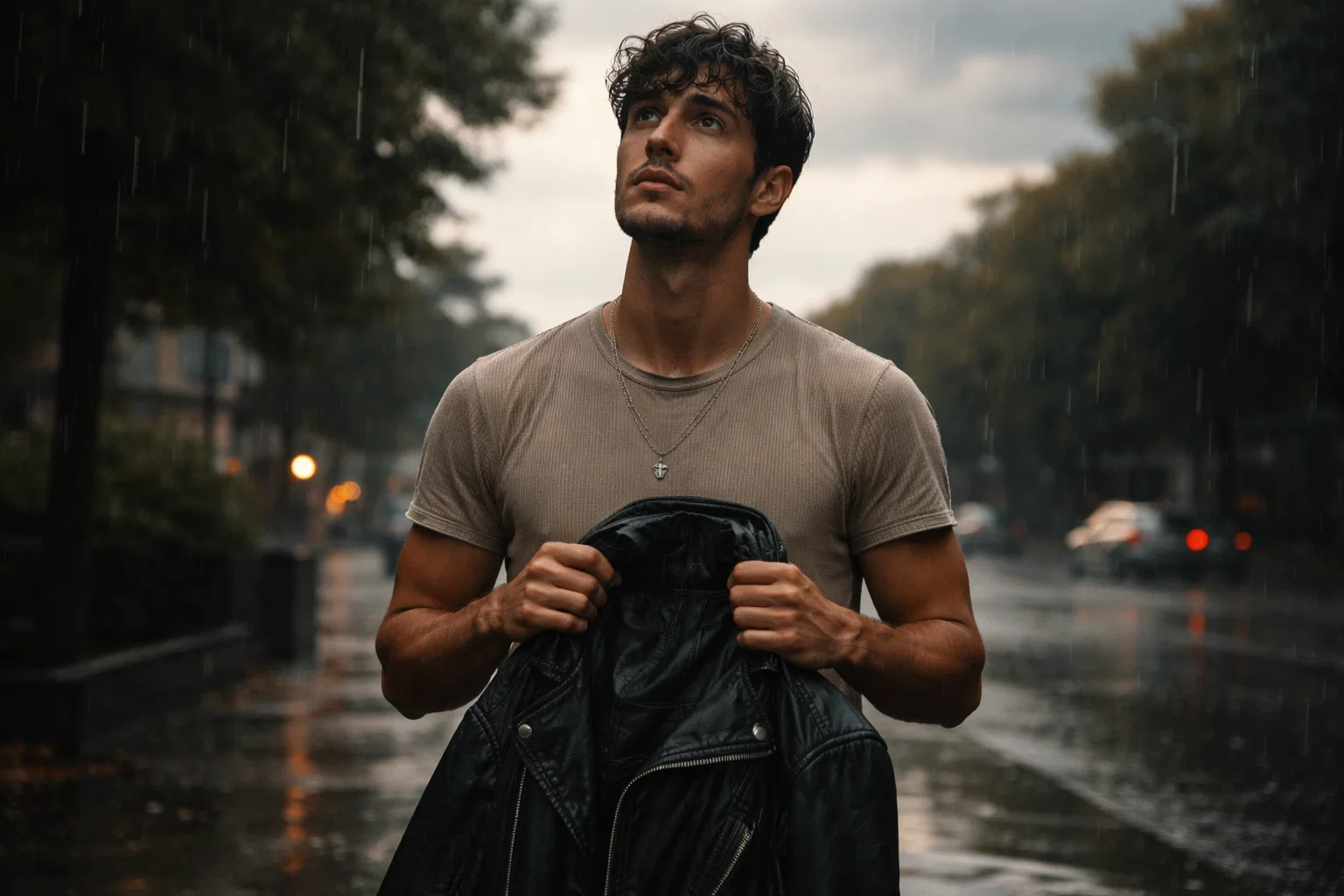
Leather jackets are built to last decades, but most people treat them like they’ll fall apart the moment a raindrop lands on them. You’re heading out the door, and the sky looks a little moody. Now, the question is, do you grab your leather jacket or leave it behind?
You can wear a leather jacket in the rain. But whether it comes out of that experience looking good or looking ruined depends entirely on two things: the type of leather you have and how well you care for it. A light drizzle on a well-treated jacket? No big deal. Standing outside in a heavy downpour with an untreated suede jacket and no plan afterward? That’s where things go wrong.
This blog gives you everything you need to know: whether rain damages leather jackets, what actually happens when leather gets wet, which types handle rain better than others, how to prepare your jacket before heading out, and exactly what to do for a wet leather jacket. By the end, you’ll know how to wear your leather jacket with confidence, whatever the weather.
Is a Leather Jacket Waterproof?
Here is something many people get wrong: leather is water-resistant, not waterproof. There is a big difference between the two, and knowing it will change how you treat your jacket.
Water-resistant means your jacket can deflect moisture up to a point. Waterproof means water cannot get through at all. No leather jacket, regardless of quality, is completely waterproof unless it has been treated with a specialized waterproofing solution, and even then, prolonged exposure to heavy rain will eventually get through.
Leather is a porous material made from animal hide. Its natural fibers can absorb moisture, and when they do, the internal oils that keep the leather supple start to break down. The tanning process affects how much water resistance your jacket has. Chrome-tanned leather holds up better in wet conditions than purely vegetable-tanned leather, which is more open and porous by nature. Combination-tanned leathers fall somewhere in between.
The finish on your jacket also matters. A pigmented or heavily coated finish acts as a surface barrier. Aniline leather, which has minimal surface treatment, gives you a beautiful natural look but less protection against moisture. Naked leather, which has no finish at all, is the most vulnerable in the rain.
How Different Types of Leather React to Rain
Not all leather is created equal when it comes to moisture. Before you decide whether to grab your jacket on a rainy day, it helps to know exactly what you are working with.
Full-Grain and Top-Grain Leather
Full-grain leather is the most durable of the available leather materials. It retains the entire top layer of the hide, which gives it a natural ability to repel light moisture. That said, it is not immune to heavy or prolonged rain, which will still soak through if you leave it unprotected. Top-grain leather has had the very top layer sanded down, which makes it slightly thinner but often more resistant after surface treatment.
Full-grain leather is the most durable of the available leather materials. It retains the entire top layer of the hide, which gives it a natural ability to repel light moisture. That said, it is not immune to heavy or prolonged rain, which will still soak through if left unprotected. A detailed comparison of full-grain vs top-grain leather provides insights into their differences in durability, texture, and moisture resistance. Top-grain leather has had the very top layer sanded down, which makes it slightly thinner but often more resistant after surface treatment.
Waxed and Oiled Leather
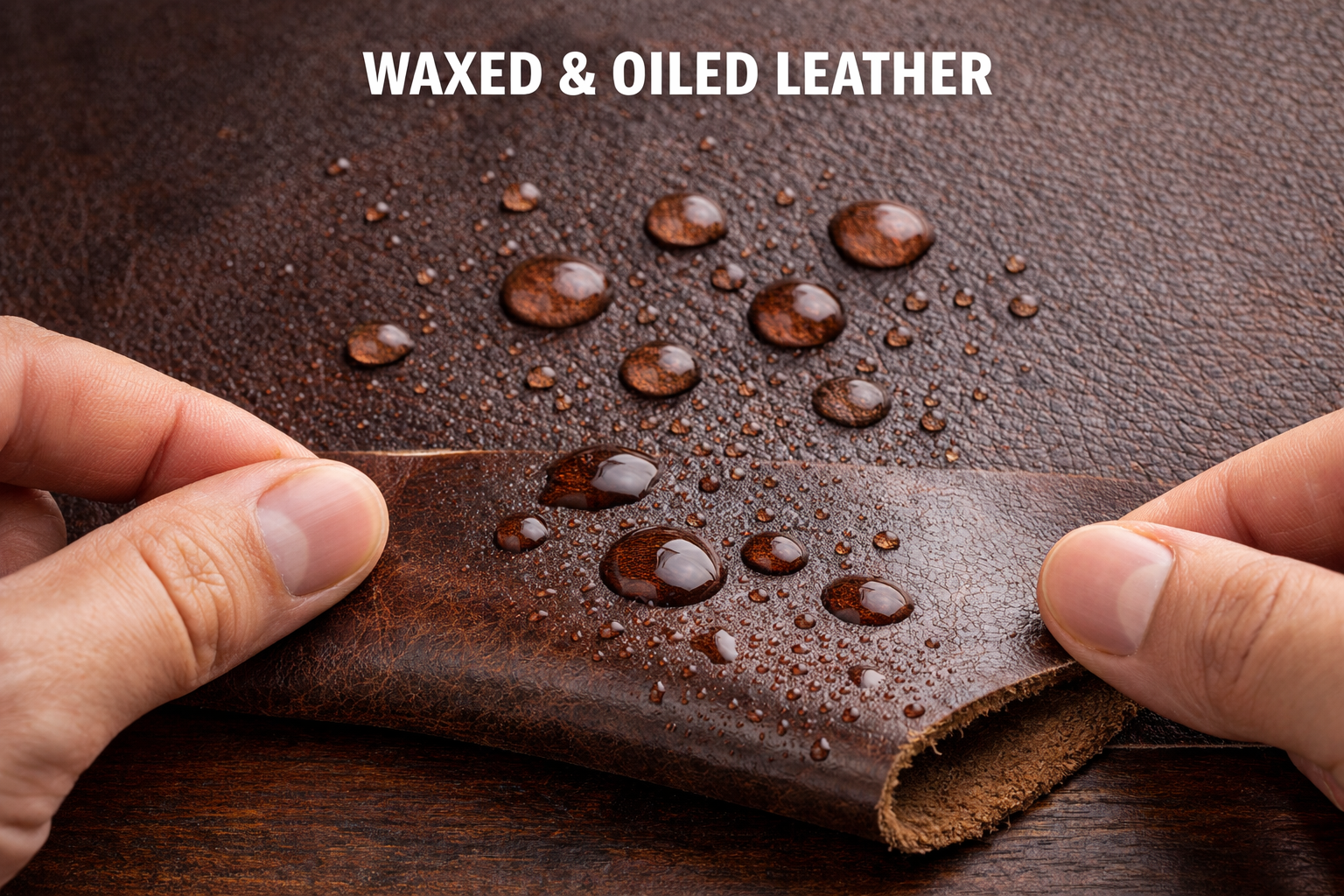
This is the best performer in wet conditions. The wax coating sits on the surface and actively pushes water away rather than absorbing it. If you live in a consistently rainy climate, waxed leather outerwear is your best option. Horween Chromexcel leather, a well-known waxed and hot-stuffed leather, is a great example. Many riders and outdoor enthusiasts choose it specifically because rain simply beads off the surface.
Goatskin Leather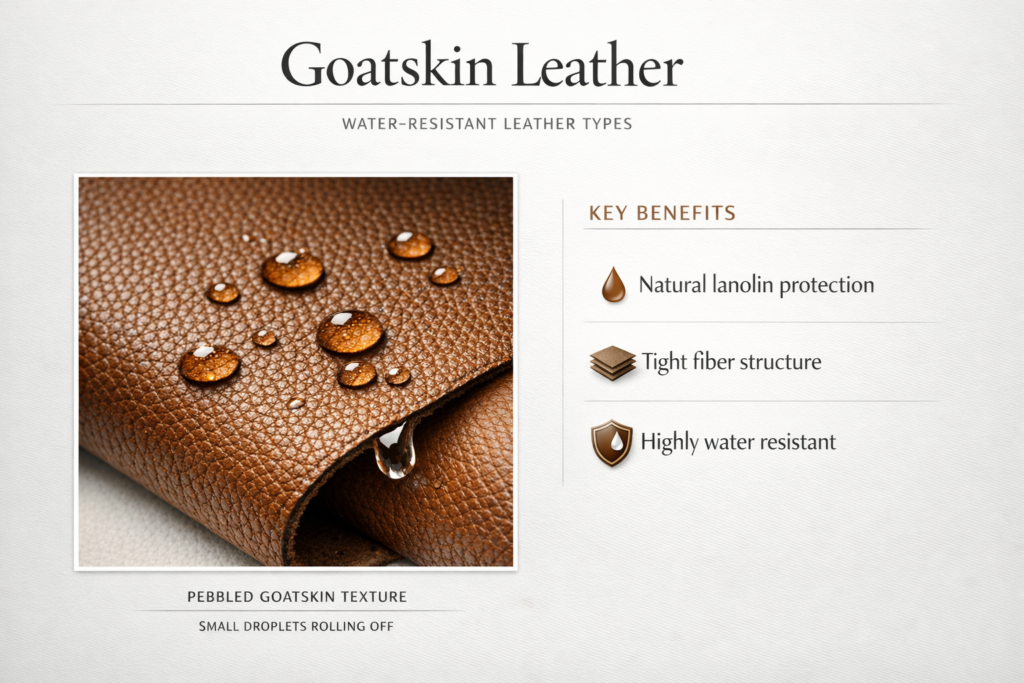
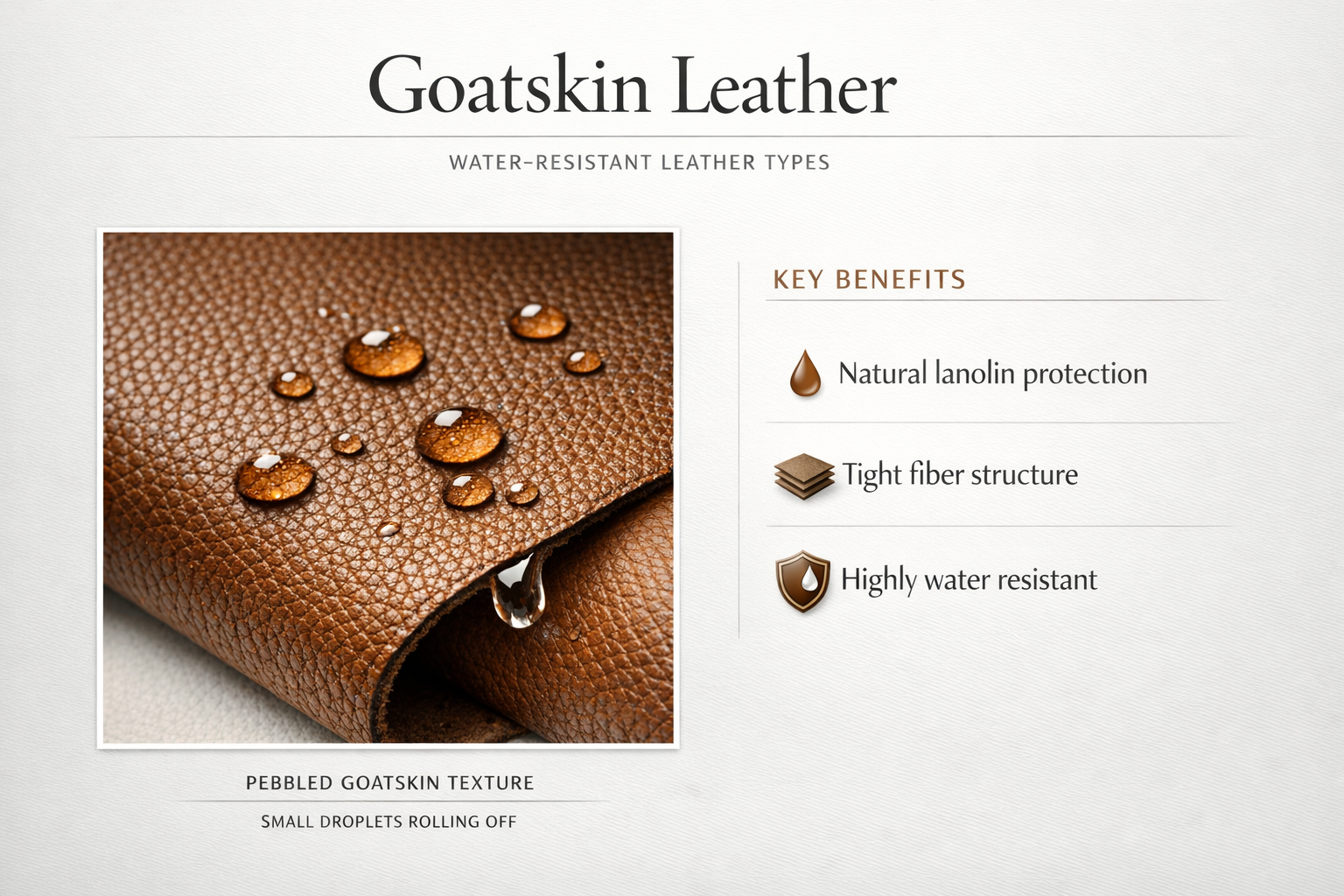
Goatskin is one of the most naturally water-resistant leathers available. Its natural lanolin coating, a waxy grease produced by the goat’s skin, repels water from the surface. The fibers in goatskin are also tighter and thinner than most other hides, which makes it less porous. It is tough, breathable, and handles rain better than almost any other natural leather.
Suede and Nubuck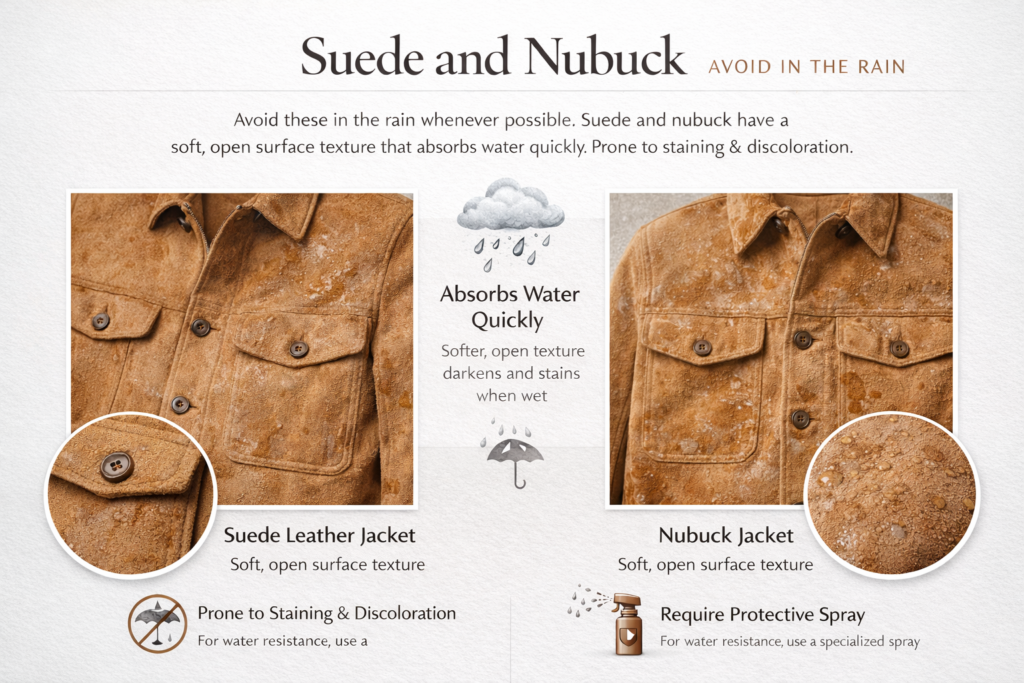
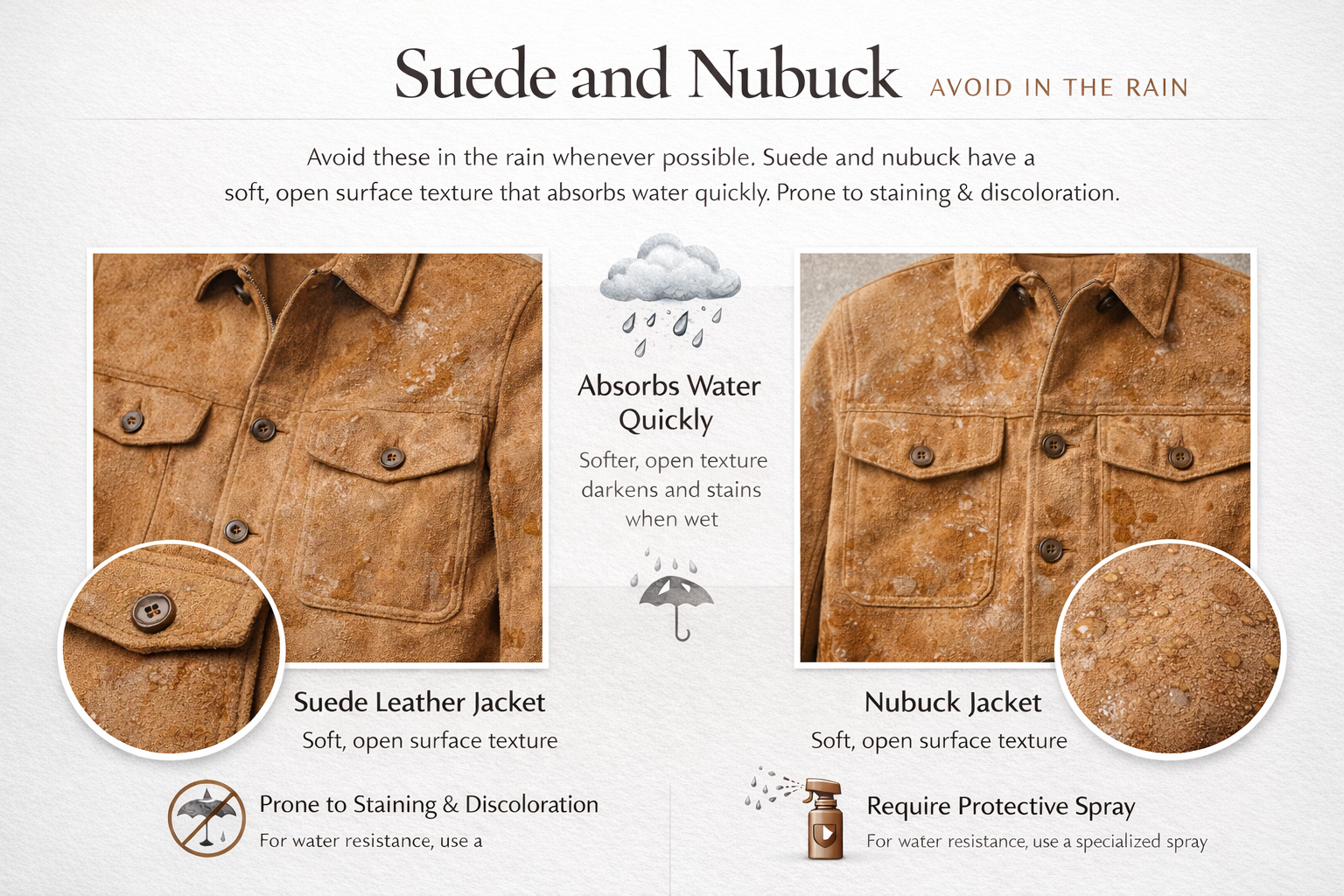
Avoid these in the rain whenever possible. Suede Leather Jacket styles and nubuck have a soft, open surface texture that absorbs water quickly. Even light rain can leave visible stains and discoloration on the nap. If you do wear suede or nubuck in wet weather, a specialized protective spray applied beforehand is essential, not optional.
Faux and PU Leather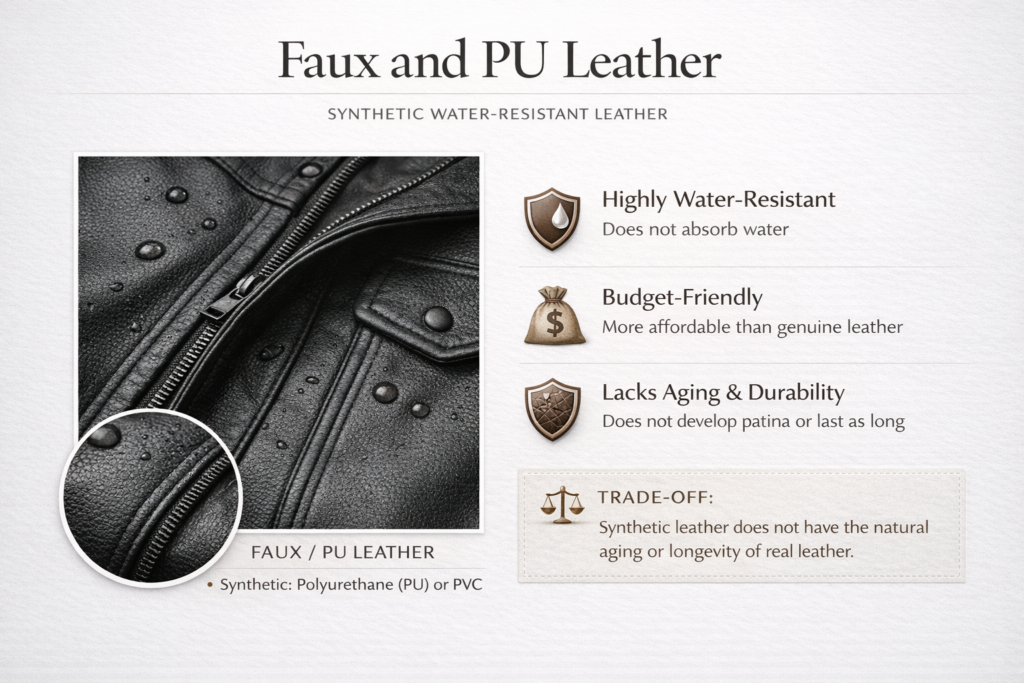
Faux leather, made from polyurethane or polyvinyl chloride, is inherently more water-resistant than genuine leather because it is synthetic. Water does not absorb into it the same way. It is also more budget-friendly and easier to maintain in wet conditions. The trade-off is that it lacks the aging character and long-term durability of real leather.
What Actually Happens When Your Leather Jacket Gets Wet
Understanding what rain does to leather helps you react correctly when it happens. Water affects leather in more ways than most people realize.
- Loss of natural oils: When water penetrates the leather fibers, it pulls out the oils that keep the material supple and flexible. Once those oils are gone, the leather dries stiff and becomes prone to cracking.
- Water spots and staining: Rain carries dirt and particles. As water evaporates off the surface, those particles can leave marks, especially on lighter or untreated leather.
- Mold and mildew: A leather jacket left damp and unventilated is a breeding ground for mold and mildew. This is one of the most overlooked risks of improper aftercare.
- Stitching and lining damage: Prolonged rain weakens the stitching on your jacket and can damage the inner lining, particularly if the seams are not covered or sealed.
- Structural changes: Heavy saturation can alter the shape and texture of the jacket. Leather that stays wet too long can shrink, stiffen, or develop an uneven texture once dry.
None of this means a rainy day will destroy your jacket. It means that moisture damage is cumulative and preventable, and that how you handle your jacket after getting wet matters just as much as what happens during the rain.
How to Protect Your Leather Jacket Before Going Out in the Rain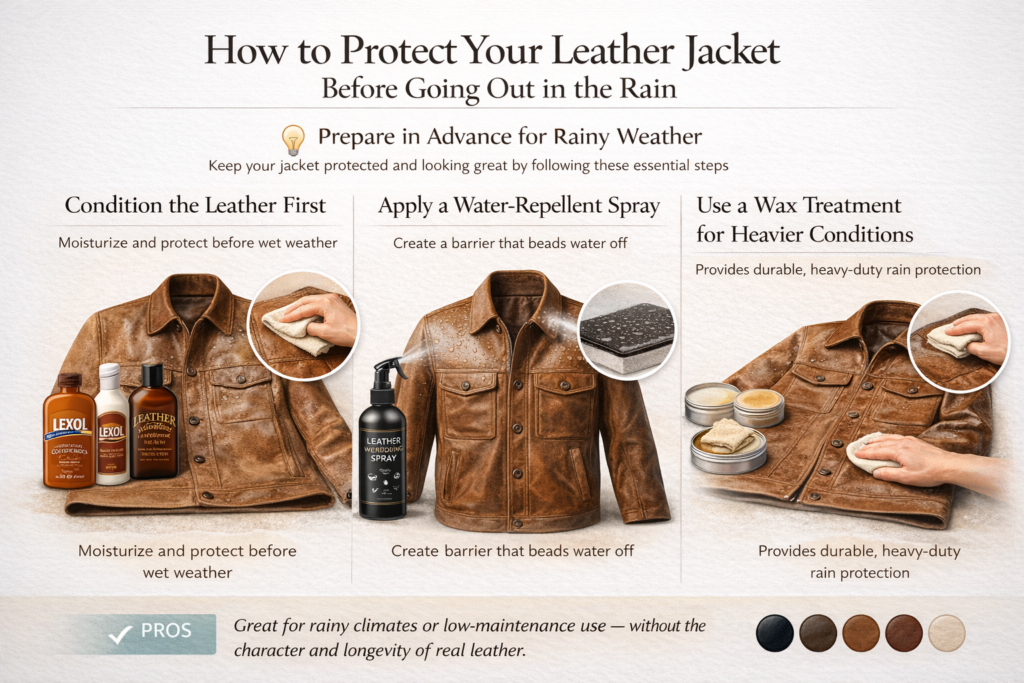
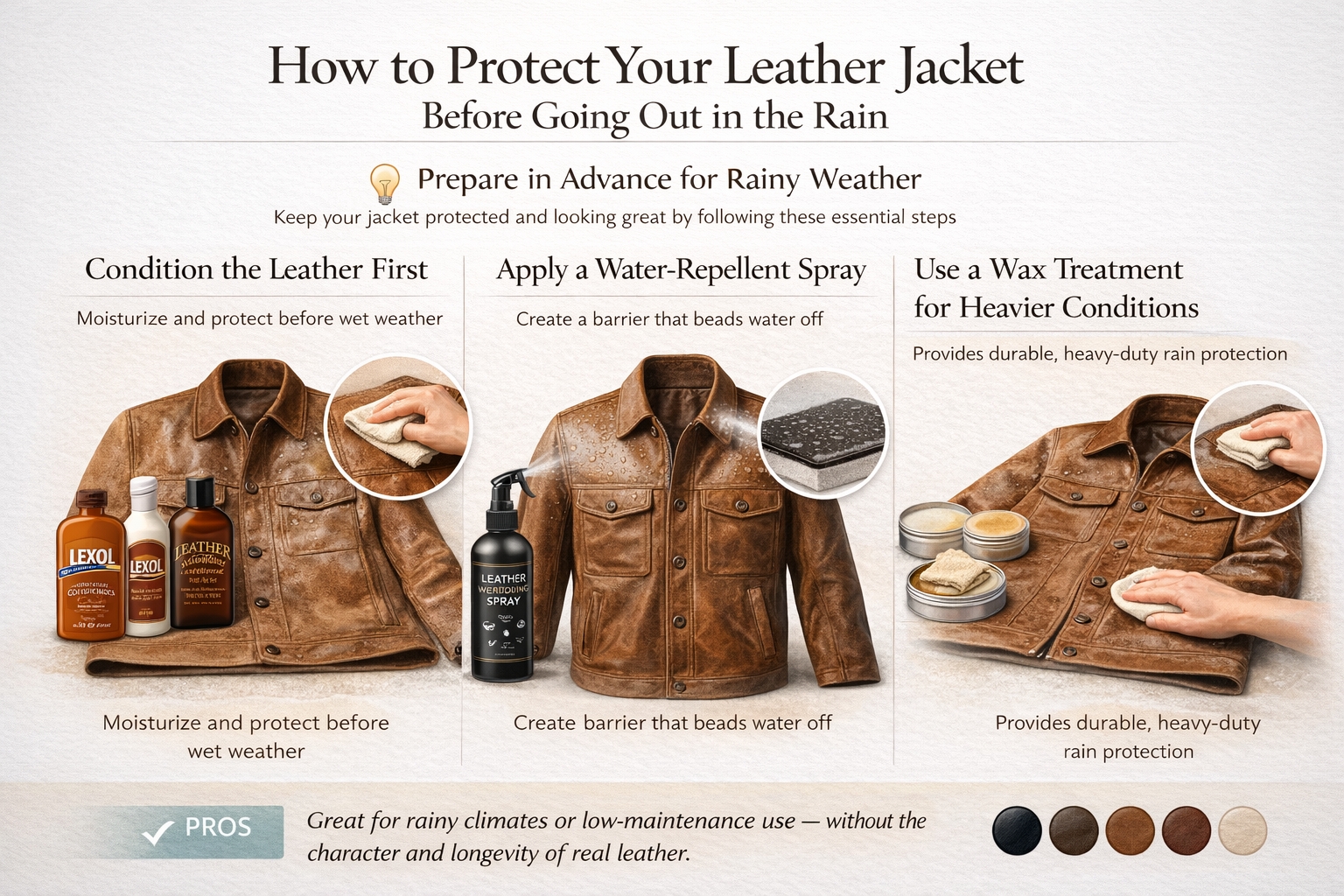
The best leather jacket rain protection starts before you step outside. A few minutes of preparation can save you hours of worry and keep your jacket in great shape for years.
Condition the Leather First
A leather conditioner replenishes the natural oils in the hide and creates a foundation layer of protection against moisture. Think of it as hydration for your jacket. Well-conditioned leather is more flexible, more resistant to water absorption, and less likely to crack when it does get wet. Products like Lexol, Leather Honey, and Bickmore Bick 4 are solid options. Apply a conditioner once or twice a year, regardless of the weather, more often if you wear your jacket frequently.
Apply a Water-Repellent Spray
A leather protection spray forms an invisible barrier on the surface that causes water to bead off rather than soak in. Always test the spray on a small, hidden area first to make sure it does not change the color or texture of your jacket. Reapply every two to three months, or any time you notice water no longer beading on the surface.
Use a Wax Treatment for Heavier Conditions
If you ride a motorcycle, work outdoors, or live somewhere that gets serious rainfall, investing in quality motorcycle jackets and applying a wax-based treatment gives you thicker, more durable protection than a spray alone. It takes more effort to apply, but it creates a much stronger water barrier. Rub it into the leather and let it absorb fully before wearing.
What to Do When Your Leather Jacket Gets Wet
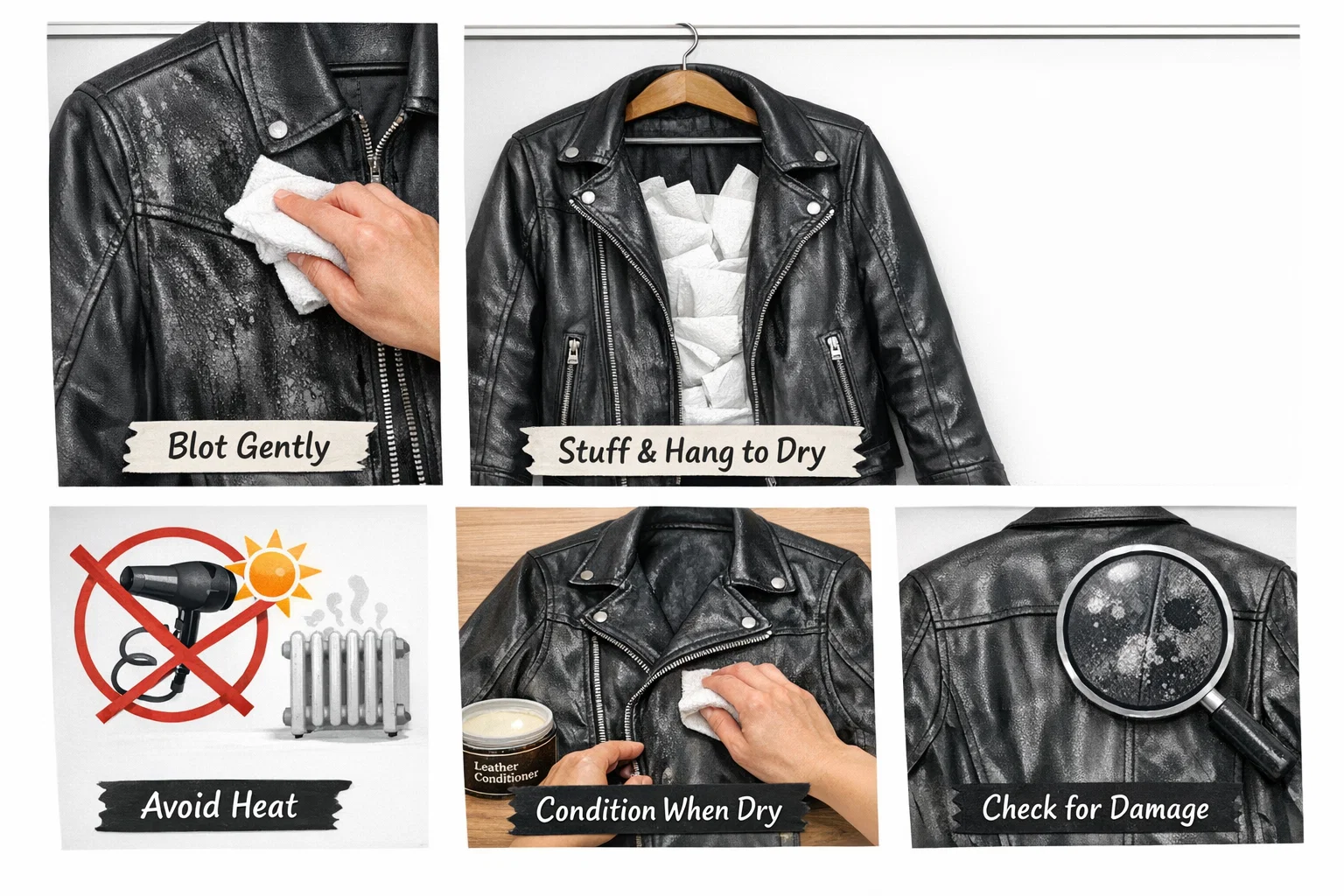 Even with the best preparation, your jacket will get wet at some point. Here is exactly what to do, and what to avoid, when it does.
Step 1: Blot Out the Excess Water
The moment you get inside, take a soft, dry cloth and gently blot the wet areas. Do not rub; rubbing pushes water deeper into the leather fibers and can spread surface damage. Focus on the most saturated spots and work through the jacket systematically.
Step 2: Stuff the Interior and Hang It Up
Stuff the inside of your jacket with paper towels or clean cloths to wick moisture away from the lining and help it hold its shape as it dries. Then hang it on a wide, padded hanger in a cool, well-ventilated space. Air circulation is what properly dries leather.
Step 3: Keep It Away from Heat
This is where most people make a critical mistake. Radiators, hair dryers, direct sunlight, and heat vents all dry leather too fast. When leather loses moisture too quickly, it shrinks, stiffens, and cracks. Let your jacket dry naturally at room temperature, even if it takes several hours or a full day. Patience here protects your investment.
Step 4: Condition Once Dry
Once your jacket is completely dry, apply a leather conditioner to restore the natural oils that the water pulled out. You can follow our detailed ultimate leather conditioner guide for step-by-step instructions. Work a small amount evenly across the surface with a clean cloth and let it absorb fully. This step is non-negotiable. Skip it, and your jacket will feel stiffer than it should the next time you put it on.
Step 5: Check for Damage and Mold
After conditioning, inspect your jacket carefully. Look for water spots, discoloration, or any early signs of mold. Address stains immediately with a leather-specific cleaner. If you notice significant discoloration or the jacket is heavily soaked, take it to a professional leather care specialist rather than attempting aggressive home fixes that can do more harm than good.
Common Mistakes to Avoid
A few bad habits can undo years of good care in a single rainy day. Here is what not to do:
- Do not use a hair dryer, oven, or heat source to speed up drying. Heat causes leather to crack and shrink.
- Do not store a damp jacket in a plastic bag or sealed space. Trapped moisture promotes mold growth fast.
- Do not use household soaps or detergents. Regular cleaning products strip the leather of its natural oils and cause long-term damage.
- Do not skip reconditioning. Many people dry their jackets and move on; that missing step is what leads to cracking down the line.
- Do not leave the jacket damp for hours without starting the drying process. The longer the leather stays wet, the more structural damage it sustains.
- Do not fold or compress a wet jacket during storage. Doing so creates deep creases that weaken the material over time.
Rain-Resistant Alternatives to Consider
Sometimes the smartest move is knowing when to reach for something else. If you live in a climate with frequent heavy rain, these alternatives give you strong protection without putting your leather jacket at risk every time.
Waxed leather jackets are the closest you’ll get to having it both ways: genuine leather look and feel with significantly better rain resistance than untreated options.
Faux leather (PU) Faux leather is highly water-resistant, easy to wipe clean after rain, and has much lower maintenance than genuine leather. To make sure you’re choosing the right material, check out our guide on how to spot genuine leather. Durability over the years is lower, but for everyday wet-weather use, it performs well.
Waxed canvas jackets are excellent for heavy, sustained rain. The wax coating repels water effectively, the material is rugged and durable, and it develops a beautiful patina over time, similar to how leather ages.
Packable rain shells are the most practical option for unpredictable weather. Keep one in your bag, pull it over your leather jacket when the rain picks up, and you protect your leather without changing your entire outfit.
Special Situations – Suede, Motorcycle Rides, Heavy Rain, and Snow
Motorcycle Riders
If you ride, your leather jackets take more punishment than a casual wearer’s. Cowhide and horsehide jackets, popular in motorcycle gear, are among the most naturally rain-resistant genuine leathers thanks to their density. Apply a heavy-duty wax treatment regularly, and you’ll have solid protection. Lambskin, on the other hand, is much more delicate and requires extra care after any exposure to rain.
Heavy Rain vs. Light Drizzle
A quick drizzle with a treated jacket is manageable. Heavy, sustained rain is a different situation; even waxed leather can become saturated given enough time and volume. In heavy rain, layer a packable waterproof shell over your jacket or carry an umbrella. Your leather jacket is not a raincoat, and treating it like one repeatedly will shorten its lifespan.
Wearing Leather in Snow
Snow is slightly less damaging than rain if you brush it off quickly before it melts into the surface. Wet snow, however, behaves like rain once it comes into contact with the leather. The same rules apply: dry it properly and condition afterward.
Humid Weather
Humidity on its own is less harmful than rain, but it’s still worth paying attention to. If you wear your leather jacket in humid conditions and then store it improperly, such as in a sealed closet without ventilation, you create conditions for mold to grow. Always store leather in a cool, dry, well-ventilated space on a padded hanger.
Long-Term Storage and Leather Care Routine
Your leather care routine should not start and stop at rain events. Consistent maintenance is what keeps leather outerwear looking great for decades rather than a few seasons.
- Store your jacket in a cool, dry, well-ventilated space on a wide padded hanger.
- Avoid plastic covers; they trap moisture and are one of the most common causes of mold on stored leather.
- Keep it out of direct sunlight, which fades color and dries out the leather over time.
- Condition the leather once or twice a year, whether it gets wet or not, and reapply your waterproofing treatment every 2 to 3 months, or before rainy seasons.
These simple steps add years to your jacket’s life and keep the leather supple and strong through regular wear.
Final Word
A leather jacket in the rain is not automatically a disaster. It is a manageable situation, one that thousands of motorcyclists, outdoor workers, and everyday leather jacket owners handle without a second thought. The key is knowing your leather type, preparing it before exposure, and taking care of it properly afterward. You can learn exactly how to protect your jacket with our guide on how to waterproof a leather jacket.
Light to moderate rain on a properly treated jacket will not do lasting damage. Heavy, prolonged soaking without aftercare will. The difference between the two outcomes comes down to preparation and a consistent leather maintenance routine. Condition it, protect the leather jacket from rain as much as possible, dry it correctly, and your jacket will handle whatever the weather throws at it and look better for it over time.
Leather is built to last. With the right care, so is your jacket.
Frequently Asked Questions
Can leather jackets get wet in the rain?
Yes, leather jackets can get wet in the rain without immediate damage. Leather has natural water-resistant properties, but it is not waterproof. Light rain on a treated jacket is generally fine. Heavy or prolonged rain requires proper aftercare, blotting, air-drying, and reconditioning to prevent stiffness or cracking.
Does water permanently damage leather?
Water alone does not permanently damage leather if you act quickly. Minor stiffness and water spots from rain are usually reversible with conditioning. Permanent damage, cracking, mold, and structural breakdown typically result from improper drying, repeated soaking without care, or long-term neglect after moisture exposure.
How do you dry a wet leather jacket?
Blot excess water with a soft cloth, stuff the interior with paper towels to retain shape, and hang it on a padded hanger in a ventilated space at room temperature. Never use heat sources like hair dryers or radiators. Once fully dry, apply a leather conditioner to restore suppleness.
Can you waterproof a leather jacket?
You can make leather significantly more water-resistant with the right products, but fully waterproof is not realistic for genuine leather. Water-repellent sprays, wax treatments, and regular conditioning all help. Reapply every 2 to 3 months for consistent protection, especially if you regularly wear your jacket in wet conditions.
How much rain can leather handle?
A treated leather jacket handles light to moderate rain well without lasting damage. Short exposure to heavy rain is manageable with prompt aftercare. Extended saturation, riding in a downpour for an hour or more, pushes past what most leather can handle comfortably and requires thorough drying and reconditioning afterward.


