

Beginner’s Guide to Motorcycle Jackets for New Riders

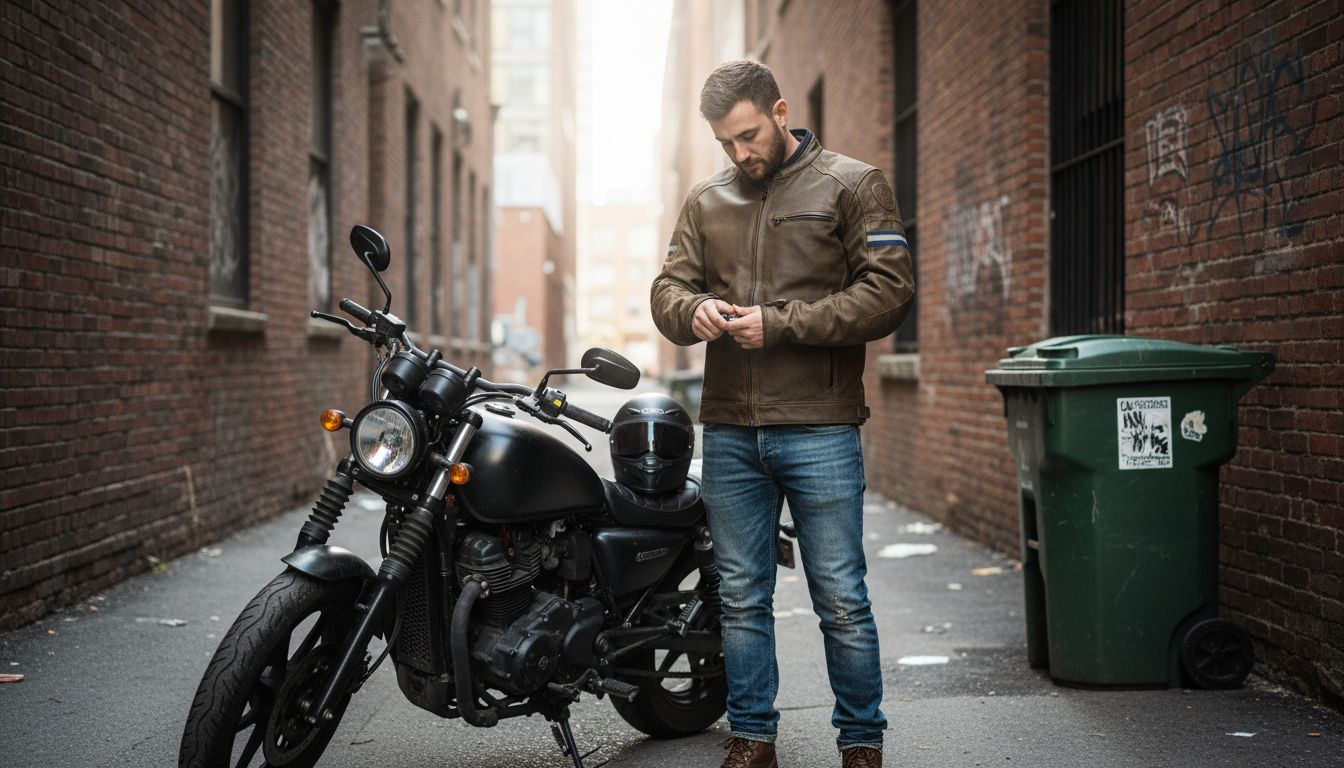
Finding the right leather jacket for your ride is about more than just looking sharp. For young American riders, a jacket needs to reflect your personality while offering protection that matches how and where you ride. From making sure armor covers the right zones to picking materials built for city streets or long tours, knowing your preferences helps you build gear that is both protective and uniquely yours. Balancing safety, comfort, and self-expression turns an everyday jacket into your go-to riding companion.
Table of Contents
- Step 1: Identify Your Riding Needs And Style
- Step 2: Select The Right Jacket Material And Fit
- Step 3: Try On Different Styles And Check Sizing
- Step 4: Personalize Your Jacket For Maximum Comfort
- Step 5: Verify Safety Features And Complete Your Purchase
Quick Summary
| Key Insight | Explanation |
|---|---|
| 1. Identify Your Riding Needs | Understand your riding style, climate, and preferences before selecting a jacket to meet your specific requirements. |
| 2. Choose the Right Material | Select jacket materials based on climate and protection level; leather offers durability, while textiles provide versatility. |
| 3. Ensure Proper Fit | Try on jackets with your riding gear; a snug fit is crucial for protection and comfort during rides. |
| 4. Personalize for Comfort | Customize your jacket for seasonal adjustments and personal comfort issues to enhance your riding experience. |
| 5. Verify Safety Features | Check for certified armor and reinforced seams to ensure your jacket provides necessary protection in case of an accident. |
Step 1: Identify Your Riding Needs and Style
Before you start shopping for a jacket, take time to understand how you actually ride. Your jacket choice depends entirely on this foundation. Different riding styles demand different protection levels, comfort features, and design priorities.
Start by answering these core questions about your riding:
- What type of riding will you do most? (commuting, weekend cruising, long-distance touring, aggressive sport riding, or off-road adventures)
- What climate and weather conditions will you face regularly?
- How much protection versus comfort do you prioritize?
- Will you be riding solo or with passengers?
- How often do you plan to ride each week?
Your answers reveal your true needs. A commuter hitting city streets has completely different requirements than someone planning multi-day touring adventures. City riders need easy on-and-off functionality. Touring riders need all-day comfort. The Motorcycle Safety Foundation emphasizes that riders should select gear matching their specific riding conditions and skill level.
Consider the protection zones that matter for your style. Different riding activities create impact risks in different areas. Armor placement like shoulder, elbow, and back protection corresponds with critical impact zones you should understand for your particular riding type.
Your personal style matters equally. Do you want a classic, timeless look? Something edgy and modern? A sleek racing aesthetic? Your jacket reflects who you are on the road, and you’ll wear it more often if it matches your style preferences.
Match your jacket choice to both your riding reality and personal aesthetic—the best jacket is one you’ll actually wear.
Once you know your riding needs, you can explore different motorcycle jacket types to find styles designed specifically for your situation.
Pro tip: Keep a riding log for one week before buying—track your weather conditions, riding duration, and comfort issues to reveal exactly what features matter most for your riding pattern.
Step 2: Select the Right Jacket Material and Fit
Material choice directly impacts your safety, comfort, and how often you’ll actually wear your jacket. The right material balances protection with the riding conditions you identified in step one. Your fit determines whether that protection stays in place when you need it most.
Leather remains the gold standard for abrasion resistance. It’s durable, classic, and improves with age. However, leather weight varies significantly. Heavyweight leather offers maximum protection but can feel stiff and heavy in warm weather. Lighter leathers breathe better for summer riding but sacrifice some durability.
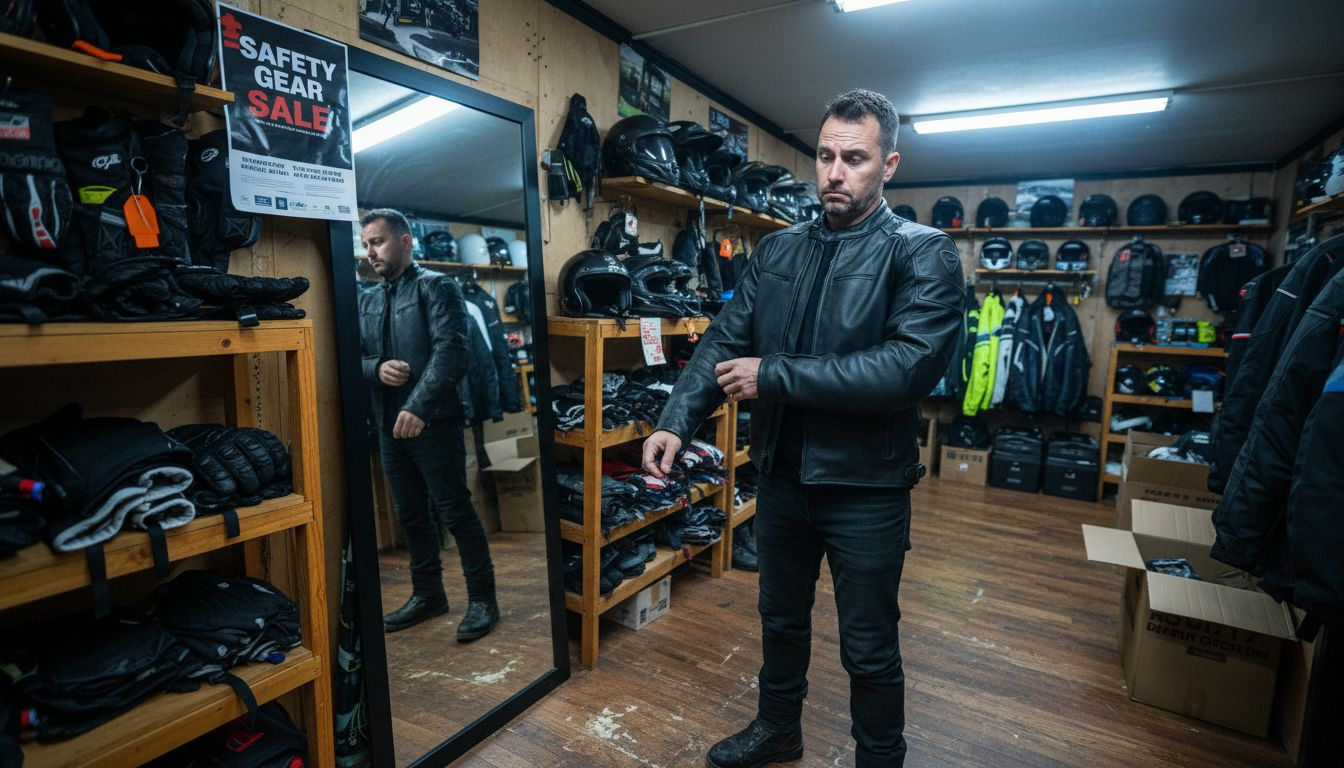
Textile jackets offer modern versatility that many new riders prefer. They typically weigh less than leather, incorporate waterproof liners and ventilation options, and feel more like regular clothing. Textiles also tend to be more affordable and easier to maintain. The trade-off is slightly less abrasion resistance than heavy leather.
Consider these material factors for your situation:
Here’s a summary comparing key motorcycle jacket materials for different riding needs:
| Material Type | Protection Level | Climate Suitability | Maintenance Effort |
|---|---|---|---|
| Heavy Leather | High abrasion resistance | Cooler climates, spring or fall | Requires leather care, conditioning |
| Lightweight Leather | Moderate protection | Warm climates, summer riding | Easier care, less durable |
| Textile (Cordura, Mesh) | Lower abrasion resistance | All climates with liners or vents | Machine washable, low maintenance |
| Hybrid (Leather/Textile mix) | Balanced protection | Variable climates, adaptable | Moderate effort, depends on blend |
- Leather weight and thickness for your climate
- Waterproof or water-resistant capabilities
- Ventilation features if you ride in heat
- Lining materials for comfort during long rides
- Durability versus ease of care
Now for the critical part: proper fit. An ill-fitting jacket compromises everything. Armor placement stays positioned correctly only in a jacket that fits snugly without restricting your movement. A too-loose jacket lets protection shift. A too-tight jacket creates pain on long rides.
Your jacket should feel snug through the shoulders and chest, with armor aligned over your shoulders, elbows, and back. Sleeves should reach your wrist crease when your arms hang naturally. You need enough room to rotate your shoulders fully and bend your elbows without excess fabric bunching.
Fit is everything. A protective jacket that doesn’t fit properly offers false security.
When trying on jackets, wear the same gear you’d normally ride with underneath. Test movement by rotating, bending, and simulating riding posture. Pay special attention to how the jacket feels in a tucked position since you’ll spend most riding time bent forward.
Pro tip: Order from retailers offering easy returns, then ride in your jacket on short trips before committing—comfort on the bike differs from comfort standing in a shop, and you need to know how it truly feels during your actual rides.
Step 3: Try on Different Styles and Check Sizing
Trying on jackets is where theory meets reality. You’ll discover which styles actually suit your body and personality, and which ones just look good on hangers. This step separates impulse buys from jackets you’ll genuinely wear.
Start by measuring your key dimensions before shopping. Accurate chest, waist, shoulder, and arm length measurements ensure you try on the right sizes from the start. Measure while wearing a thin shirt, not bulky layers. This baseline saves time and prevents ordering jackets that don’t fit.
When you try on jackets, wear your typical riding layers underneath. A t-shirt won’t tell you how the jacket feels over a hoodie or thermal top. The Motorcycle Safety Foundation emphasizes this point because fit changes dramatically with different layers. What feels perfect in a shop may be too tight once you add riding gear.
Focus your try-on testing on these key areas:
- Shoulder mobility and rotational movement
- Arm length reaching your wrist crease naturally
- Chest and torso snugness without restricting breath
- Waist fit when you bend forward in riding position
- Sleeve movement when elbows bend at 90 degrees
Bend forward as if gripping handlebars. Rotate your shoulders. Simulate real riding posture. This reveals whether the jacket will stay comfortable during actual rides, not just while standing still.
Try on multiple styles to see what resonates. A classic black leather might not suit your vibe compared to a textured cafe racer style or modern sport jacket. Your jacket expresses your riding identity, so the aesthetic matters as much as the fit.
The right jacket feels like you’re wearing it, not like it’s wearing you.
Pay attention to how closures work. Can you open and close zippers easily? Do snaps stay secure? Test every functional element because annoying closures become maddening on long rides.
Pro tip: Take photos from different angles while wearing each jacket, then review them at home away from sales pressure—what feels okay in the shop might look awkward in photos, revealing fit issues you missed in mirrors.
Step 4: Personalize Your Jacket for Maximum Comfort
A jacket that fits your body perfectly is great. A jacket that fits your body and your life is transformative. Personalization turns a generic purchase into gear that feels made for you. This step focuses on adjustments and customizations that amplify comfort during actual riding.
Start by identifying your comfort pain points. Do you run hot or cold? Do you need extra ventilation for summer riding or more insulation for winter? Does the standard collar rub your neck? Are the sleeves slightly too long or short? These small issues become major annoyances after an hour in the saddle.
Many riders add custom linings for temperature control. Thermal linings keep you warm in cold months. Mesh linings or removable options provide breathability in heat. Layering options and adjustable insulation levels directly optimize your thermal comfort across different riding seasons. You don’t need a different jacket for every season if one adjusts properly.
Consider these personalization options:
- Removable or adjustable sleeves for seasonal changes
- Custom collar padding or lining materials
- Added ventilation zippers or mesh panels
- Interior pockets positioned for your phone or wallet
- Adjustable waist tabs or side zippers for fit fine-tuning
- Embroidery, patches, or custom color treatments
Personalizing your jacket to match your identity and functional preferences enhances satisfaction significantly. When your jacket reflects your style and meets your comfort needs, you’ll reach for it consistently. This isn’t vanity—it’s practical gear maintenance.
Request specific modifications when ordering. Many jacket makers offer customization services. You can specify lining materials, add extra pockets, adjust sleeve length, or create unique color combinations. The investment in customization pays dividends through years of comfortable riding.
Your perfect jacket isn’t found off-the-rack—it’s built to your specifications.
Document what you want before ordering. Write down temperature preferences, problem areas from previous jackets, preferred materials, and style elements that matter to you. Clear communication with makers ensures your customized jacket arrives exactly as envisioned.
Pro tip: Start with a standard jacket, wear it for a month, then customize based on real-world experience rather than guessing what you’ll need—actual riding reveals comfort issues that theoretical planning misses.
Step 5: Verify Safety Features and Complete Your Purchase
Before you finalize your purchase, take time to verify that your jacket actually delivers the protection you need. Safety features aren’t just marketing language—they determine how well your jacket protects you when things go wrong. This verification step ensures you’re making a confident, informed decision.
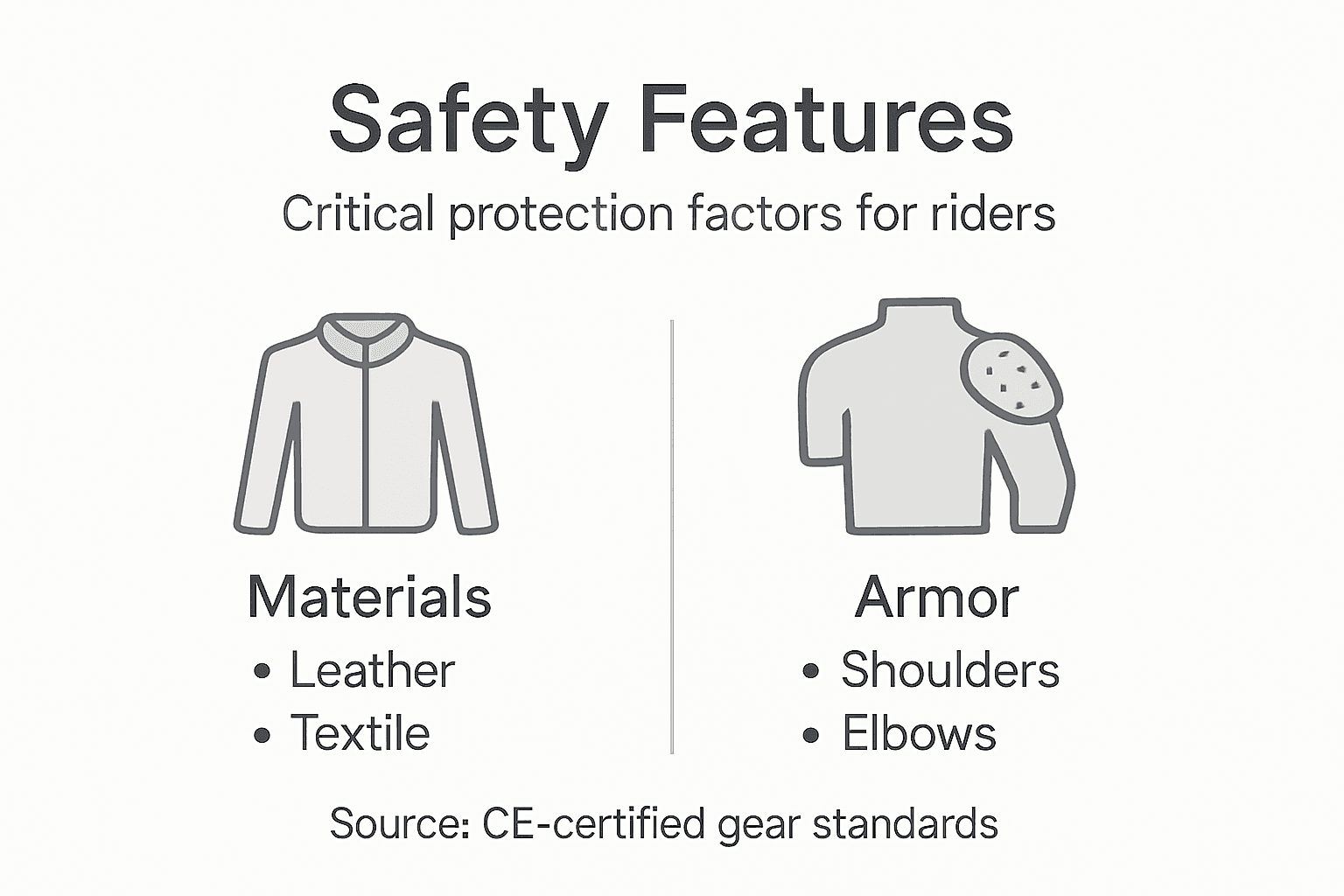
Start by checking for certified armor. Look for CE-approved armor in shoulders, elbows, and back areas. CE certification means the armor meets European safety standards for impact protection. Integrated armor at critical impact zones provides essential protection during crashes. Don’t assume a jacket has armor—verify it explicitly by checking product specifications or asking the maker directly.
Confirm the abrasion-resistant materials. Quality leather or textile jackets resist tearing when sliding across pavement. Ask about material thickness and composition. The Motorcycle Safety Foundation emphasizes prioritizing gear meeting recognized safety standards, including verified abrasion resistance. A good jacket protects in multiple ways, not just through armor.
Before purchasing, review these safety verification points:
- CE-certified armor present in shoulders, elbows, back
- Material thickness appropriate for abrasion resistance
- Seam quality and reinforced stitching at stress points
- Secure closure systems that won’t accidentally open
- Reflective elements for visibility
- Proper fit ensuring armor stays positioned correctly
Check the fit one final time with the armor in place. Armor shifts if your jacket is too loose. It restricts movement if too tight. The jacket should feel snug but comfortable, with armor sitting directly over your joints.
Read customer reviews specifically mentioning safety and durability. Real riders reveal what manufacturers sometimes downplay. Look for mentions of how jackets hold up after crashes or long-term wear. These insights prove invaluable for predicting how your jacket will perform.
Safety features matter most on the day you need them—don’t compromise here.
Verify your order details match exactly what you discussed. Confirm customizations, sizing, armor specifications, and expected delivery. This final check prevents surprises when your jacket arrives.
Review these factors to verify your motorcycle jacket’s safety and functionality before purchasing:
| Safety Feature | Why It Matters | How to Verify |
|---|---|---|
| CE-certified Armor | Protects impact areas | Check product tags or spec sheet |
| Reinforced Seams | Prevents tearing at stress points | Inspect stitching quality in person |
| Reflective Elements | Improves night visibility | Look for reflective piping or panels |
| Secure Closures | Prevents accidental opening | Test zippers, snaps, and Velcro |
Pro tip: Request a detailed product specification sheet before ordering, documenting armor certifications, material composition, and safety ratings—having this documentation protects your purchase and proves what you actually ordered if issues arise.
Find Your Perfect Motorcycle Jacket Tailored to Your Riding Style and Safety Needs
Choosing the right motorcycle jacket can be overwhelming with so many factors like riding style, material, fit, and safety features to consider. This guide highlights how important it is to match your jacket to your specific riding habits, climate, and protection goals for maximum comfort and security. Many riders struggle with finding gear that fits well, offers certified armor, and reflects their personal style — all crucial for confidence on the road.
At Maker of Jacket, we understand these challenges and specialize in delivering customizable, high-quality motorcycle jackets designed with riders like you in mind. Whether you seek a classic leather jacket with CE-certified armor or a versatile textile option tailored for your climate, our collection combines safety, style, and fit.

Explore our range now and take advantage of custom sizing, personalized features, and detailed fit guides to ensure your jacket feels made just for you. Don’t settle for gear that compromises protection or comfort — visit Maker of Jacket today to find a jacket that truly matches your riding identity and keeps you safe every mile. Your perfect ride-ready jacket awaits.
Frequently Asked Questions
How do I determine which motorcycle jacket is right for my riding style?
Choosing the right motorcycle jacket depends on your riding needs and style. Start by defining your primary riding activities, such as commuting, touring, or sport riding, and then assess the climate you ride in. Once you’ve identified these factors, you can explore jacket types that meet your specific requirements.
What materials should I consider for a motorcycle jacket?
The main materials for motorcycle jackets include leather and textiles, each offering different levels of protection and comfort. Leather provides high abrasion resistance, while textile jackets often include features like waterproof liners. Evaluate your climate and comfort preferences when choosing between these materials.
How should a motorcycle jacket fit me?
A motorcycle jacket should fit snugly around the shoulders and chest without restricting movement, allowing you to comfortably bend and rotate your arms. When trying on, ensure that the armor aligns properly with your joints while still providing enough room for your riding layers. Test the fit thoroughly in a riding position to ensure comfort.
What safety features should I look for in a motorcycle jacket?
Look for jackets with CE-certified armor in critical areas like the shoulders, elbows, and back for optimal impact protection. Additionally, ensure the materials are abrasion-resistant and pay attention to the quality of seams and closures. Verifying these features can significantly enhance your safety while riding.
How can I personalize my motorcycle jacket for added comfort?
You can personalize your motorcycle jacket by adding features such as removable thermal linings, adjustable sleeves, or ventilation panels. Identify specific comfort pain points you experience while riding and consider modifications that address them. Effective customization can enhance your overall riding experience significantly.
What should I do if my motorcycle jacket does not fit comfortably after purchase?
If your motorcycle jacket does not fit well after purchase, check if it is eligible for returns or exchanges. Adjustments can sometimes be made by a professional tailor if the brand does not offer a size exchange. Taking prompt action within the return window ensures you can find a jacket that perfectly suits your needs.


