

Waxed Leather Care: How to Clean, Restore and Store It

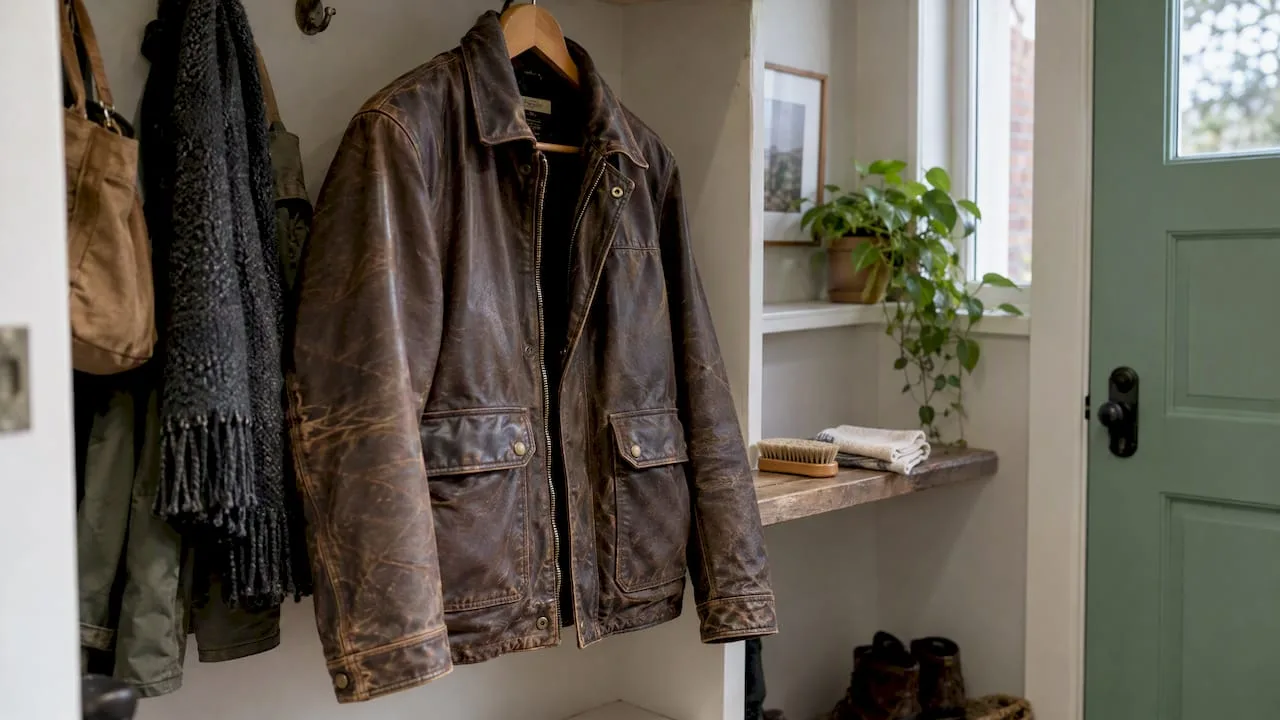
Waxed leather needs less product than most people think and more patience than they expect. Brush off dust with a soft dry cloth or horsehair brush, wipe spots with a barely damp cloth, let it dry naturally, and only add wax or dressing after checking what the maker recommends for that exact leather. Skip soap, saddle soap and household cleaners. This guide covers the routine, the cleaning method, stain handling, scuff repair, drying and storage for waxed jackets, boots and bags.
TL;DR
- Dust it regularly: wipe or brush along the grain with a soft, dry cloth or horsehair brush.
- Clean sparingly: use deionized water or an approved finished-leather cleaner on a cloth, never soak the leather and never scrub.
- Treat grease and oil by blotting with a dry cloth. Do not add water.
- Keep soaps, dish detergent, alcohol, saddle soap, mink oil and furniture polish away from the surface.
- Dry it away from direct heat, and store it breathing, never in a plastic bag.
Table of Contents
- What waxed leather is, and why it needs its own routine
- Routine care: the five-minute habit
- How to clean waxed leather without damaging the finish
- Dealing with specific stains
- What to keep off waxed leather
- Restoring the finish: scuffs, dry spots and worn wax
- Drying and storing waxed leather
- A simple care calendar
- Our perspective
- Make your next jacket one built for you
- FAQ
- Sources
What waxed leather is, and why it needs its own routine
Waxed leather is aniline-dyed leather that has had liquefied wax applied to the surface, then been burnished to create a distressed look and a time-worn patina, according to Townsend Leather’s 2023 care guidelines. That description matters because it tells you how to treat the piece. The wax does not form a protective surface film the way a heavy pigmented coating does, so the same guidelines say waxed leather should be handled much like aniline leather.
In practice, that means three things:
- The surface is more sensitive to water, oils and harsh products than a coated leather.
- It changes with wear. Creases, rub marks and darker areas are part of the look, not defects to be erased.
- The wrong product can darken it, leave a white residue or strip the finish.
You will see waxed leather described by several names: waxed, wax-pull, pull-up, oil-wax. They are close cousins and the care logic is similar, but the exact finish varies from one tannery to the next. That is why the first step is always the care label or the maker’s instructions.
How to tell which instructions apply to your piece
Look for a care tag inside the jacket or bag, or the product page where you bought it. Names to watch for include waxed, wax-pull, pull-up and oiled. If the tag says aniline or semi-aniline, the waxed routine below is a safe starting point.
When you are about to apply any wax or dressing, check the maker’s care instructions for that specific leather first. Products are not universally compatible, and some will darken the leather or change how it looks. If you cannot find instructions, work on a hidden spot such as an inside hem or under a collar and let it dry fully before deciding.
Routine care: the five-minute habit
Most of what keeps waxed leather looking good is dry, gentle and frequent. Regular care means keeping the item free of dust by wiping or brushing along the grain with a soft, dry cloth or a horsehair brush, as CTL Leather’s cleaning instructions for wax-pull leather recommend.
A simple rhythm:
- After wearing: a quick pass with a dry cloth over the shoulders, collar and cuffs, where dust and skin oils collect.
- Every few weeks in heavy use: a brush along the grain, paying attention to seams and creases where grit sits.
- Seasonally: look the piece over in good light. Check for dry patches, pale scuffs and areas where the wax has worn thin.
Brushing along the grain, not across it, helps avoid dragging grit over the surface. Use light pressure. The brush is lifting dust, not polishing.
Let some wear stay
The appeal of waxed leather is that it records how you live in it. Fine scratches, soft lighter streaks where the leather stretches and darker patches at the elbows are part of what gives it character. Not every mark needs a fix. Treat a mark when it is dirt, damp or a deep scuff, and leave it when it is simply patina.
How to clean waxed leather without damaging the finish
Cleaning waxed leather is a light-touch job. Cleaning and normal use can rob leather of its natural moisture, and The Leather Institute’s care and cleaning guide says plainly not to scrub it. Use only what you need, and stop as soon as the mark comes off.
What to use
For waxed leather, use only deionized water or an approved finished-leather cleaner, and avoid soaking the material, per the Townsend Leather 2023 guidelines. Deionized water, sold as distilled or deionized water in most US grocery and hardware stores, avoids the minerals in tap water that can leave marks as it dries.
Step by step
- Dust first. Brush or wipe the whole piece with a dry cloth so you are not rubbing grit into the surface.
- Dampen a clean white cotton cloth. Wring it until it is barely damp. If you are using a cleaner, apply it to the cloth, never directly onto the leather, a step stressed in The Leather Institute’s guide.
- Wipe in circular motions with moderate pressure. Work a small area at a time and keep the movement even.
- Watch the cloth. Stubborn spots can be monitored by checking whether the stain is transferring onto the white cotton cloth. If nothing is transferring, stop. Further rubbing only risks the finish.
- Blend the edges. Lightly wipe the area surrounding the spot so you do not leave a ring.
- Let it air dry. No hair dryer on the cleaned area, no radiator, no sunny windowsill.
If the piece is a jacket, work panel by panel and let each section dry before moving on. For a broader walkthrough that applies to jackets in general, see our step-by-step guide to cleaning a leather jacket and the leather jacket cleaning process.
Dealing with specific stains
Grease, oil and butter
The instinct is to reach for water and soap. Don’t. For grease, oil or butter stains, wipe the leather with a clean, dry cloth and let the remainder dissipate. Herman Miller’s leather quality standards advise against applying water or trying to wash these spots.
On waxed leather this works in your favor. The leather is already carrying oils and wax, and a small amount of extra oil often blends in over days. Blot, wait and look again before doing anything more. For jackets, our guide on removing grease and oil stains from leather jackets goes further.
Mud and dried dirt
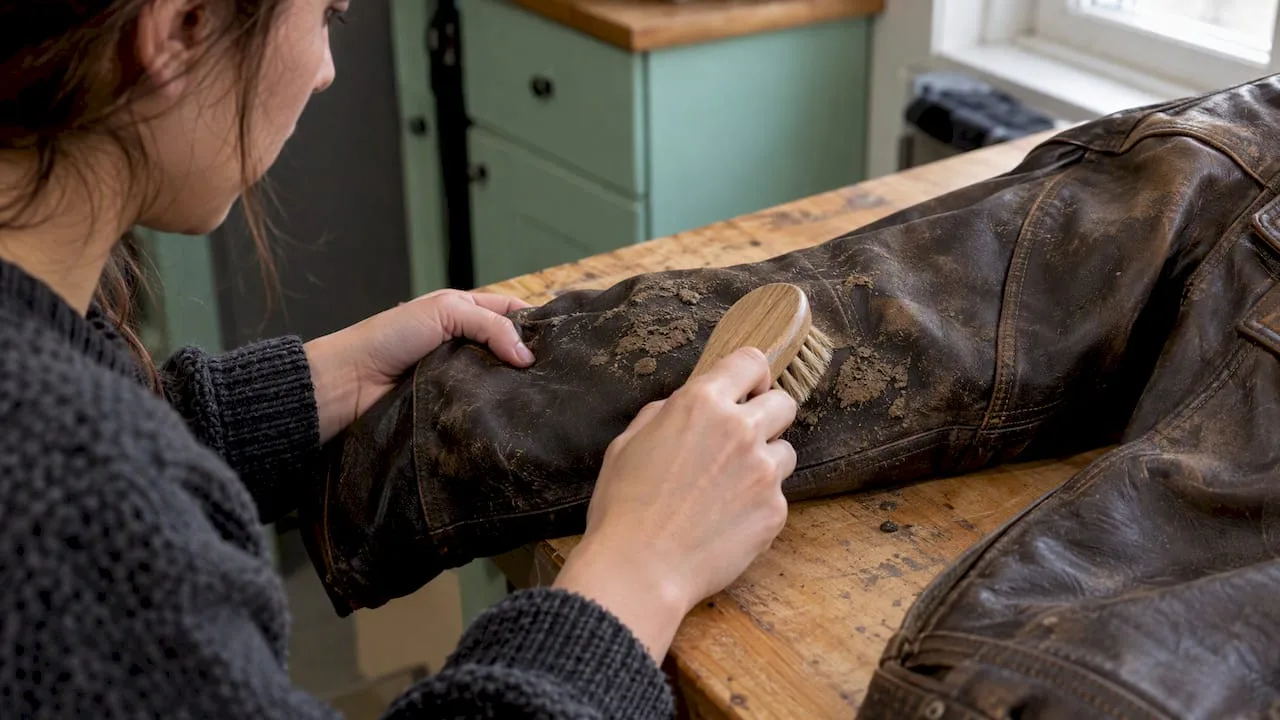
Let mud dry completely, then brush it off with a soft brush along the grain. Wiping wet mud pushes pigment and fine particles into the surface. Once the loose dirt is gone, use the damp-cloth method above for any shadow that remains.
Rain spots and water marks
Waxed leather sheds light rain, but water can leave temporary dark spots as it dries. Blot excess water with a dry cloth, shape the item, and let it dry slowly at room temperature. Many spots fade as the leather dries and evens out. If the jacket got properly soaked, follow our tips for drying a wet leather jacket.
White residue
A pale, chalky film in the creases is usually built-up wax. A grooved or textured grain needs only a light touch with any polish, because excess product can collect in the grooves and leave an unattractive white residue. Brush the residue out with a soft brush rather than adding more product on top.
What to keep off waxed leather
This is where most damage happens, usually with the best intentions. The Leather Institute lists high-pH cleaners, abrasives, alcohol, butyl cellosolve, strong solvents, saddle soap, mink oil, wax, furniture polish, glass cleaner, soaps and dish detergent as products that may cause cracking or other damage to leather, per its care and cleaning guide.
That list includes some things people grab for leather out of habit. A few translations for everyday use:
| Reach for | Not for |
|---|---|
| Dry cloth or horsehair brush | Abrasive pads or stiff scrubbing brushes |
| Deionized water on a barely damp cloth | Dish soap, hand soap or glass cleaner |
| An approved finished-leather cleaner, applied to the cloth | Alcohol wipes, solvents or household sprays |
| A dressing the maker approves for your leather | Mink oil, furniture polish or random wax |
Notice that wax appears on the caution list for general leather care. For a piece that is already waxed, the answer is not a blanket yes or no: it is a maker-approved product, used sparingly, after checking instructions for your exact leather. That is the thread running through all waxed leather care.
Restoring the finish: scuffs, dry spots and worn wax
Before reaching for wax, ask what you are actually seeing.
- Light scuffs and color inconsistencies: often they can be rectified with low heat from a hair dryer. Start at a distance and move slowly closer while working the area in a circular motion, per the Townsend Leather guidelines. Keep the setting low and stop if the leather feels hot to your hand.
- A rub mark you can feel: try warming and gently working it with a clean fingertip or soft cloth before anything else. Often the natural oils and wax in the leather migrate and blur the mark.
- A dry, flat patch: the wax layer may have worn thin. This is when a maker-approved wax dressing makes sense, and only after checking the maker’s instructions and trying a hidden spot.
When you do apply a dressing, keep it light. Put a small amount on a clean cloth, work it thinly in the direction of the grain, let it settle, then buff gently. Too much product is the common mistake, and it is what causes the sticky feel and white residue in creases. Add a second thin coat later instead of a thick first one.
If you are unsure, a leather specialist or cleaner who handles garments can assess a valuable or vintage piece before you try anything. That is worth doing for a rare jacket or a deep stain you cannot identify.
Drying and storing waxed leather
Drying
Always dry waxed leather slowly and at room temperature. Stuff boots or bags with plain paper or let a jacket hang on a wide, shaped hanger so it keeps its form. Direct heat, such as a radiator or a hair dryer on high, pulls moisture out and can leave the leather stiff or cracked. The only heat in this guide is the gentle, distant hair dryer technique for light scuffs.
Storing
Waxed leather needs to breathe. The guidance from Iowa State University Extension’s leather care tips is blunt: do not store leather in a plastic bag. Trapped moisture is how mildew starts.
A storage routine that works:
- Clean and fully dry the piece first.
- Use a padded or wide-shouldered hanger for jackets so shoulders do not sag.
- Choose a cool, dry closet with air movement, away from sunlight and heaters.
- Use a breathable cotton garment bag if you want dust protection.
- Give the piece space. Leather packed tightly against other garments creases and rubs.
Our guide on how to store leather jackets covers the details by season, and the same principles apply to waxed leather boots and bags, where proper shoe storage tips help keep their shape between wears. Traveling with a jacket? See how to pack your favorite leather jacket so it arrives without creases.
A simple care calendar
| When | What to do |
|---|---|
| After each wear | Wipe down with a dry cloth, let the piece air out before hanging |
| Every few weeks | Brush along the grain, check seams and creases |
| When something lands on it | Blot immediately, then spot clean only if needed |
| Once or twice a year | Inspect for dry patches and thin wax, deep clean only if the piece is actually dirty |
| Off season | Clean, dry, hang on a wide hanger in a breathable bag |
A real-world example: you wear a waxed jacket on a rainy commute, and it comes home with damp shoulders and a few splashes. Blot it with a dry cloth, hang it on a shaped hanger away from the radiator, and leave it overnight. In the morning, brush it lightly along the grain. That is most of the maintenance a waxed jacket needs in a normal week.
Our perspective
We make and sell leather jackets for people who wear them hard: on bikes, at games, on weekends and for years afterward. What we see again and again is that people damage good leather by being too eager. They scrub, they over-oil, they reach for whatever is under the sink.
Our advice is to slow down. Dry cloth first, minimal moisture, patience while it dries. Treat a patina as something the jacket earns, not a problem to polish away.
It is also why we care about how a jacket is made in the first place. Our approach is custom work, built to your size and style by skilled craftsmen using premium-grade materials, because a piece that fits properly and is made with care is easier to look after and more satisfying to keep. For more on how finishes behave, read our own waxed leather benefits, care and buying tips guide and our jacket care basics.
Maker
Make your next jacket one built for you
If you are caring for a jacket you love, you probably know what you want from the next one. We build custom jackets to your measurements and style preferences. Our Customize Jacket Order starts the process at $199, a Custom Biker Jacket is $249, a Custom Bomber Jacket is $249, and a Custom Motorcycle Jacket is $299. Worldwide shipping is free, and our team is available through 24/5 support if you have questions on size or design.

Start with the Customize Jacket Order page, or browse every custom option in our customize order category. If you want to see what already exists first, our men’s jackets collection is a good place to begin. Looking after the leather you already own? Our guide to maintaining a leather jacket is the next read.
FAQ
Can I use water on waxed leather?
Yes, in small amounts. Use deionized water on a clean, barely damp white cotton cloth, wipe gently and let the leather air dry. Avoid soaking it. For grease or oil stains, skip water altogether and blot with a dry cloth.
How often should I clean or re-wax waxed leather?
Dust it regularly with a dry cloth or horsehair brush, and clean only when it is visibly dirty. Add a wax or dressing only when the surface looks dry or worn, and only after checking the maker’s care instructions for that exact leather. Over-treating causes more problems than under-treating.
Is saddle soap or mink oil okay on waxed leather?
No. The Leather Institute lists saddle soap, mink oil, soaps, dish detergent and furniture polish among products that may crack or damage leather. Stick to a dry brush, deionized water or an approved finished-leather cleaner.
How do I get a scuff out of waxed leather?
For light scuffs, try low heat from a hair dryer, starting at a distance and slowly moving closer while working the area in circles. Often the wax and oils in the leather blend the mark away. Deeper marks may need a maker-approved dressing, applied thinly.
Can I store a waxed leather jacket in a plastic bag?
No. Plastic traps moisture and can lead to mildew. Hang the jacket on a wide, padded hanger in a cool, dry closet, and use a breathable cotton garment bag if you want to keep dust off.


