

Sherpa vs Shearling Jackets: Easier Care or Years of Wear?

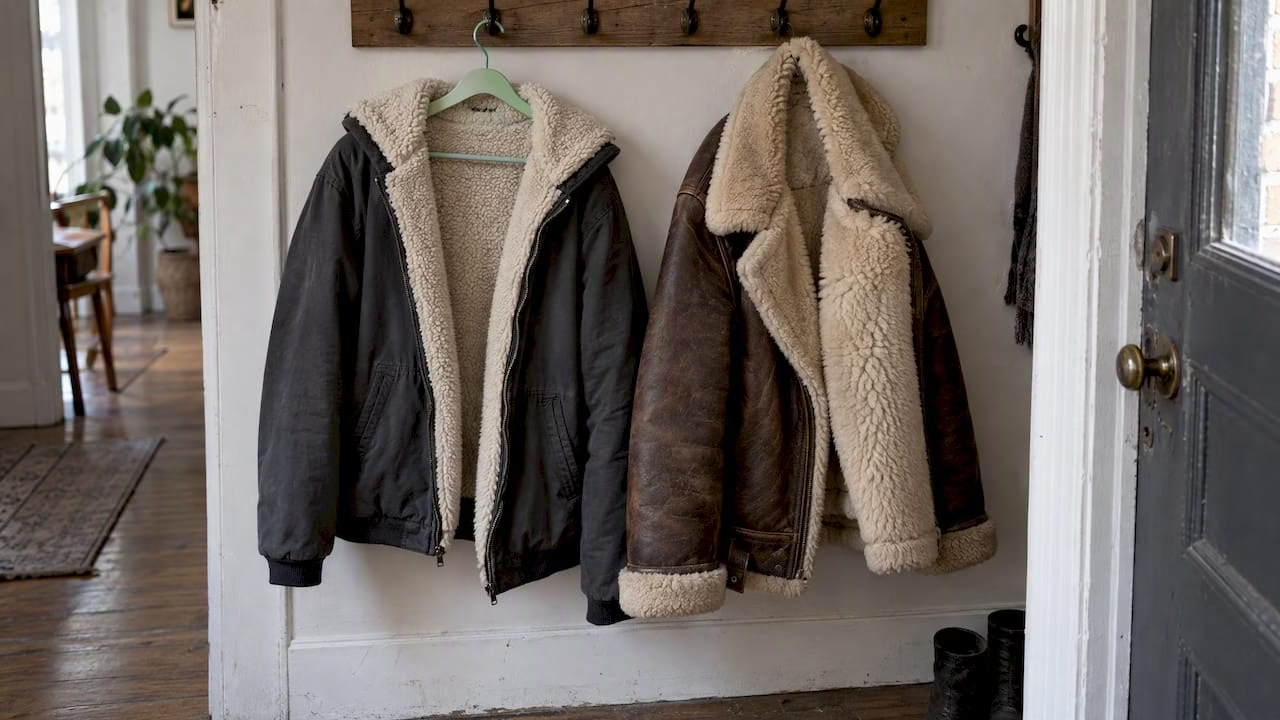
Choose shearling when you want long-term warmth, a luxury feel, and a jacket that can last for years with proper care. Choose sherpa when you want lower upfront cost and the convenience of machine-washable fabric. Both show up across current collections, and both are available as custom linings through Maker of Jacket, though care obligations differ under the FTC Care Labeling Rule.
TL;DR:
- A water resistant shell can make sherpa more practical in wet conditions than an unlined shearling jacket, and synthetic pile dries faster than wet leather.
- Check the garment tag before cleaning: shearling usually needs professional leather care, while sherpa’s safe washing method depends on its fabric blend and construction.
- Shearling can last years with conditioning and proper storage, while sherpa pile tends to flatten or mat at cuffs, collars, and friction points.
- Inspect shearling for supple leather and even grain; for sherpa, look for dense, uniform pile, tight knitting, and reinforced seams at stress points.
Table of Contents
- At-a-glance comparison: sherpa vs shearling
- Warmth and weather performance in cold, wind, and moisture
- Durability and lifespan: how each material wears over time
- Comfort, weight, and fit for everyday wear
- Care and maintenance: cleaning, storage, and what the label tells you
- Price ranges and sustainability considerations
- When Maker of Jacket recommends shearling or sherpa
- Order your custom shearling or sherpa-lined jacket
- FAQ
- Sources
At-a-glance comparison: sherpa vs shearling
Shearling is a double-faced material: the leather hide and its attached wool fleece form one piece, which is why it holds heat and resists wind the way a natural hide does. Sherpa is a knit synthetic fabric, usually polyester, engineered to look like sheep’s wool without any animal hide or hair involved. That construction difference drives almost every other distinction between the two.
- Warmth: shearling offers denser, more consistent insulation and better wind blocking; sherpa performs well in moderate cold but loses ground in sustained wind or deep freezes.
- Durability: shearling can last many years with leather conditioning and proper storage; sherpa pile tends to flatten and mat sooner, especially with frequent washing.
- Comfort: shearling molds to the body over time and feels supple once broken in; sherpa stays uniform in texture but can add bulk for the same warmth.
- Care: shearling usually needs professional leather cleaning; sherpa often tolerates gentle machine washing, though the garment tag is the final word.
- Cost: shearling carries a higher purchase price and ongoing care cost; sherpa is cheaper to buy and cheaper to maintain.
- Best use: shearling suits cold-climate commuters and long-term investment pieces; sherpa suits casual layering, moderate winters, and lower-maintenance wardrobes.
The trade-off in one line: shearling buys you thermal performance and lifespan, sherpa buys you a lower price tag and easier washing.
Warmth and weather performance in cold, wind, and moisture
Shearling’s edge in cold weather comes from its structure. The leather backing blocks wind the way a windbreaker shell does, while the wool fleece traps warm air close to the body, and the combination lets the garment breathe by releasing moisture vapor while retaining heat. That natural thermoregulation is hard for a knit synthetic to match, which is one reason shearling is the standard choice for extreme cold and heavy wind exposure.
Sherpa still earns its place. In moderate winters, mild wind, or situations where you are moving around rather than standing still, a sherpa lining provides enough insulation without the weight or price of real shearling. Synthetic pile fabrics also dry faster than wet leather, which matters if you are caught in rain or snow and need the jacket usable again quickly.
When comparing product listings, look past the marketing copy and check the specifics. Pile density and leather backing thickness matter more than branding, and a weatherproof outer shell changes the performance picture entirely, since a sherpa lining under a water-resistant shell can outperform an unlined shearling piece in wet conditions. Our shearling jackets guide breaks down what to look for in construction before you commit to either material.
Durability and lifespan: how each material wears over time
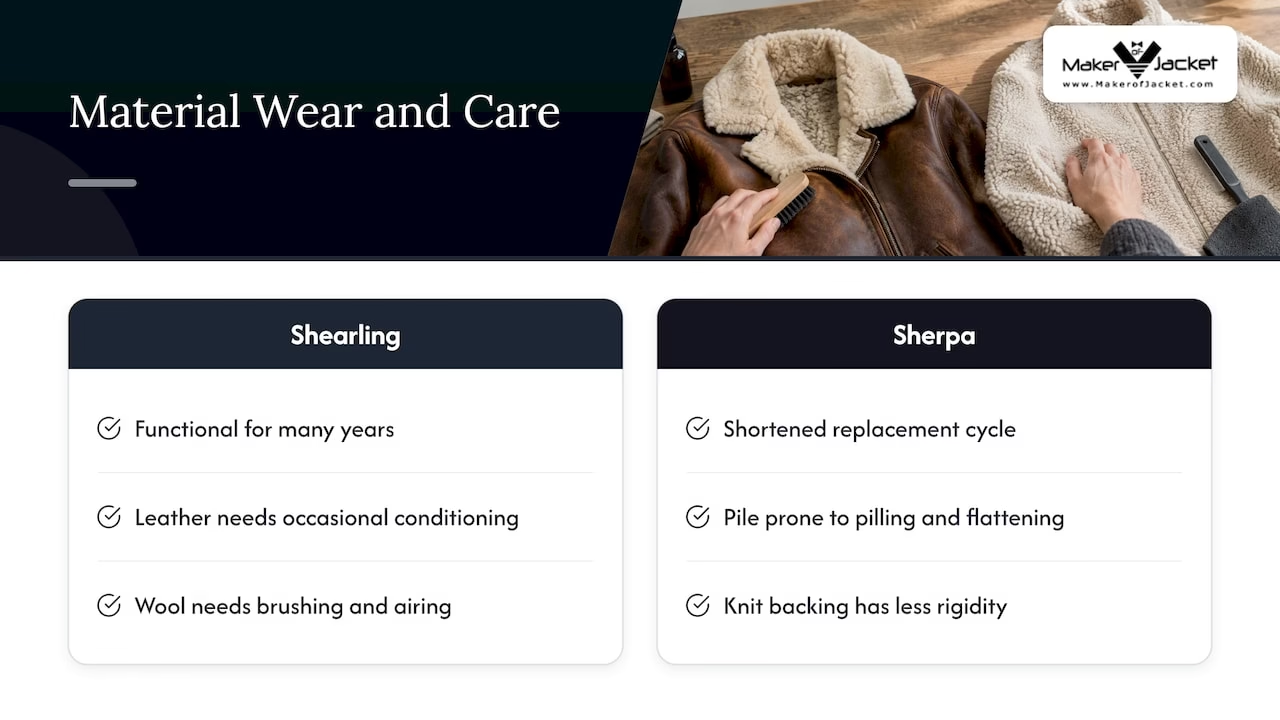
A well-made shearling jacket can stay functional for many years, but it asks for upkeep. The leather needs occasional conditioning to stay supple, and the wool side needs brushing and airing to keep its loft. Common long-term issues are leather drying out, stitching loosening at stress points, and the wool matting in high-friction areas like underarms and cuffs; all are manageable with periodic care rather than full replacement.
Sherpa follows a different wear curve. The synthetic pile is prone to piling and flattening, especially around pockets, collars, and wherever fabric rubs against itself repeatedly. Seams under a sherpa lining also take stress differently than stitched leather, since the knit backing has less structural rigidity. For mass-market sherpa-lined jackets, a shortened replacement cycle is the norm rather than the exception.
When judging quality on a product page, check for leather suppleness and even grain on shearling pieces, and look at wool density and uniformity rather than just color and style photos. For sherpa, tighter knit construction and reinforced seams at stress points are the signals worth paying for. Our breakdown of lambskin and sheepskin leather covers how hide quality affects long-term wear, and custom construction is worth the premium when you plan to keep a jacket for several seasons rather than one.
Comfort, weight, and fit for everyday wear
Shearling can feel surprisingly light for how warm it is, since the insulation comes from a single integrated layer rather than stacked fabric panels. Some sherpa-lined garments, by contrast, add noticeable bulk because the outer shell and the sherpa lining are separate layers sewn together, which is worth factoring into sizing.
Shearling also changes shape with wear. The leather softens and the garment molds to your posture and movement over weeks of use, similar to how a leather boot breaks in. Sherpa stays more consistent in hand and texture from day one to year three, which some buyers prefer precisely because there is no adjustment period.
One practical note: natural wool can trigger sensitivity in people with wool allergies or sensitive skin, so anyone with a known reaction should check the lining material before buying shearling. Sherpa, being fully synthetic, avoids that concern. Whichever material you choose, size up slightly if you plan to wear thick sweaters or base layers underneath, since both materials add bulk at the shoulders and sleeves compared with an unlined shell.
Care and maintenance: cleaning, storage, and what the label tells you
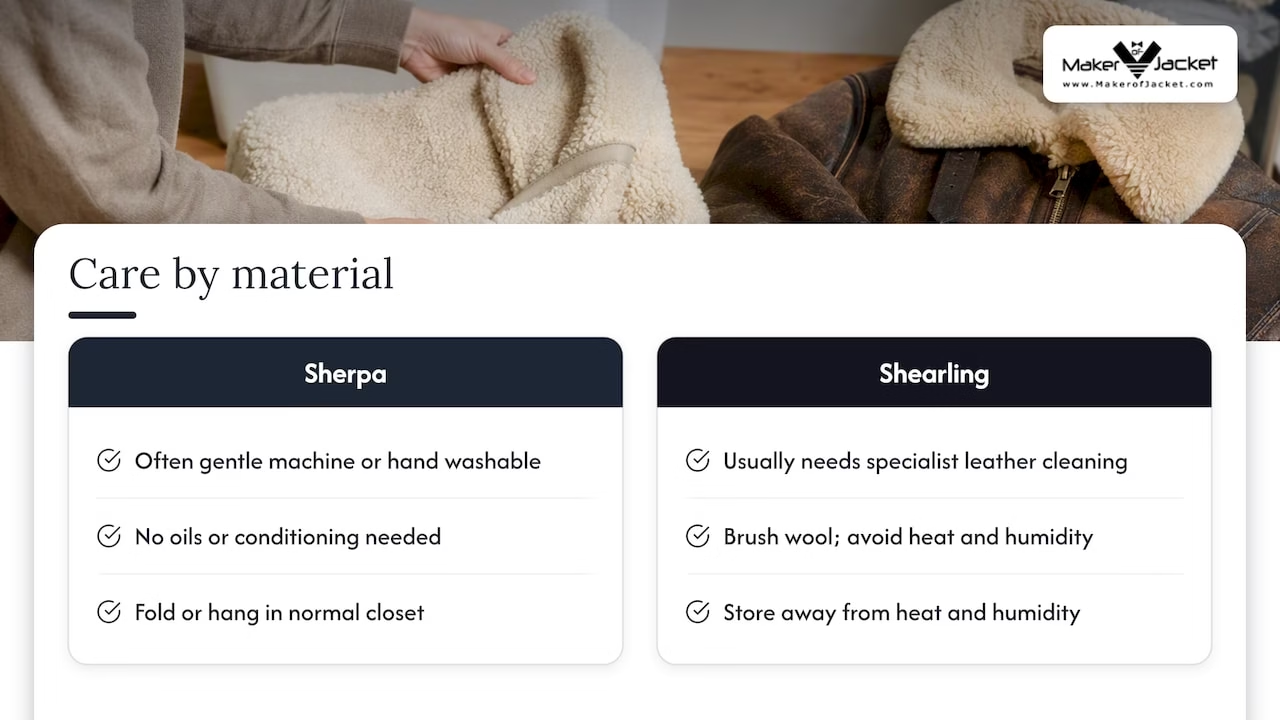
Shearling almost always calls for specialist cleaning. Home washing, harsh solvents, and high heat can stiffen the leather, crack the hide, or strip its natural oils, so professional leather cleaning is the safer route for anything beyond spot treatment. Sherpa is far more forgiving and often tolerates gentle machine washing or hand washing, though the fabric blend and construction of any individual garment still determine what is safe.
This is where the garment tag earns its keep. Under the FTC Care Labeling Rule, manufacturers and importers must state a reliable care method on the label, and a claim like “dry clean only” has to rest on a reasonable basis rather than a guess. The regulatory text covering textile wearing apparel spells out exactly what washing, drying, and drycleaning instructions should look like on the tag, so reading the label is not optional guesswork, it is the manufacturer’s legal disclosure.
Between cleanings, store shearling away from direct heat and humidity to protect the leather, and brush the wool side occasionally to keep it from matting. Sherpa holds up fine folded or hung in a normal closet, with no special oils or conditioning needed. Treat stains on either material quickly, and air both out after wear in wet or snowy conditions before storing them away.
Price ranges and sustainability considerations
Shearling garments typically sit at a higher price point than sherpa-lined pieces, and that gap widens once you factor in ongoing professional cleaning costs over the life of the jacket. Sherpa costs less upfront and less to maintain, but a shorter usable lifespan can offset some of that savings if you end up replacing it more often.
Sustainability trade-offs run in different directions. Shearling is generally sourced as a byproduct of the sheepskin and wool industries, and leather and wool are both biodegradable, which appeals to buyers weighing environmental impact. Most sherpa fabric is petroleum-based polyester, which does not biodegrade on the same timeline. If sustainability signals matter to your decision, look for disclosed sourcing on shearling and recycled-content claims on synthetic linings, since neither material is automatically the “green” choice without those specifics.
When Maker of Jacket recommends shearling or sherpa
The right material depends on who is wearing it and how. A daily commuter facing real winter wind is better served by shearling’s wind-blocking hide. A rider who needs a jacket that layers easily and dries fast after a wet ride often does better with sherpa. A fashion-forward buyer chasing texture for a statement piece may lean shearling for the look, while a low-maintenance shopper who wants warmth without upkeep will likely prefer sherpa.
Picking wrong is a common and avoidable mistake, which is why we built our customization tools, product galleries, and size guides to help you match the lining to your climate and habits before you order rather than after. If you are unsure which material suits your use case, our support team can walk through fit, lining, and care questions before you commit to a custom order.
— Maker
Order your custom shearling or sherpa-lined jacket
We build every jacket to the materials and measurements you choose, which means you are not stuck picking between a generic shearling coat and a generic sherpa pullover off a rack. Start a custom jacket order and select your lining, trim, and fit, or browse our custom jacket landing page for bespoke builds designed around your sizing and style.

Pick your shell style first, then choose shearling for maximum warmth or sherpa for easy care, with size guides available to help account for layering underneath. Support teams are available for guidance on lining weight, leather grade, or fit adjustments before placing any order.
FAQ
Is sherpa fabric made from wool?
No, sherpa is a synthetic fabric, typically made from polyester, engineered to mimic the texture and look of sheep’s wool. It contains no natural wool fiber or animal hide, which is part of why it costs less and washes more easily than shearling.
What is the difference between polar fleece and sherpa fleece?
Both are knit synthetic fabrics designed for warmth, but sherpa has a thicker, looped pile that resembles wool, while polar fleece is typically a flatter, brushed surface. Sherpa tends to feel bulkier and warmer per layer, while polar fleece is lighter and dries faster, making it better suited to active wear.
Are shearling jackets in style in 2026?
Yes, shearling remains a visible trend in fall 2026 outerwear, with runway and fashion coverage repeatedly citing it as a key texture for the season. Its continued presence on runways and in seasonal collections reflects renewed demand for texture-rich, natural outerwear materials.
Are shearling coats warm?
Yes, shearling coats are among the warmer options in winter outerwear because the leather hide blocks wind while the attached wool fleece traps heat close to the body. The combination also allows some moisture vapor to escape, which helps regulate warmth during activity rather than trapping dampness against the skin.
How do I know if a jacket’s care label is accurate?
Under the FTC Care Labeling Rule, manufacturers and importers are required to provide a reliable care method on the garment tag, and claims such as “dry clean only” must have a reasonable basis behind them. Checking the label is the most reliable way to know whether a jacket needs professional cleaning or can be washed at home.
Sources
- Sexy shearling to wear now
- Fall 2026 Runway-to-Street Outerwear Trends | Marie Claire
- Trade Regulation Rule on Care Labeling of Textile Wearing Apparel and Certain Piece Goods
- § 423.6 Textile wearing apparel.


