

Bomber vs Varsity Jackets: Military Roots, Campus Style, Custom Builds

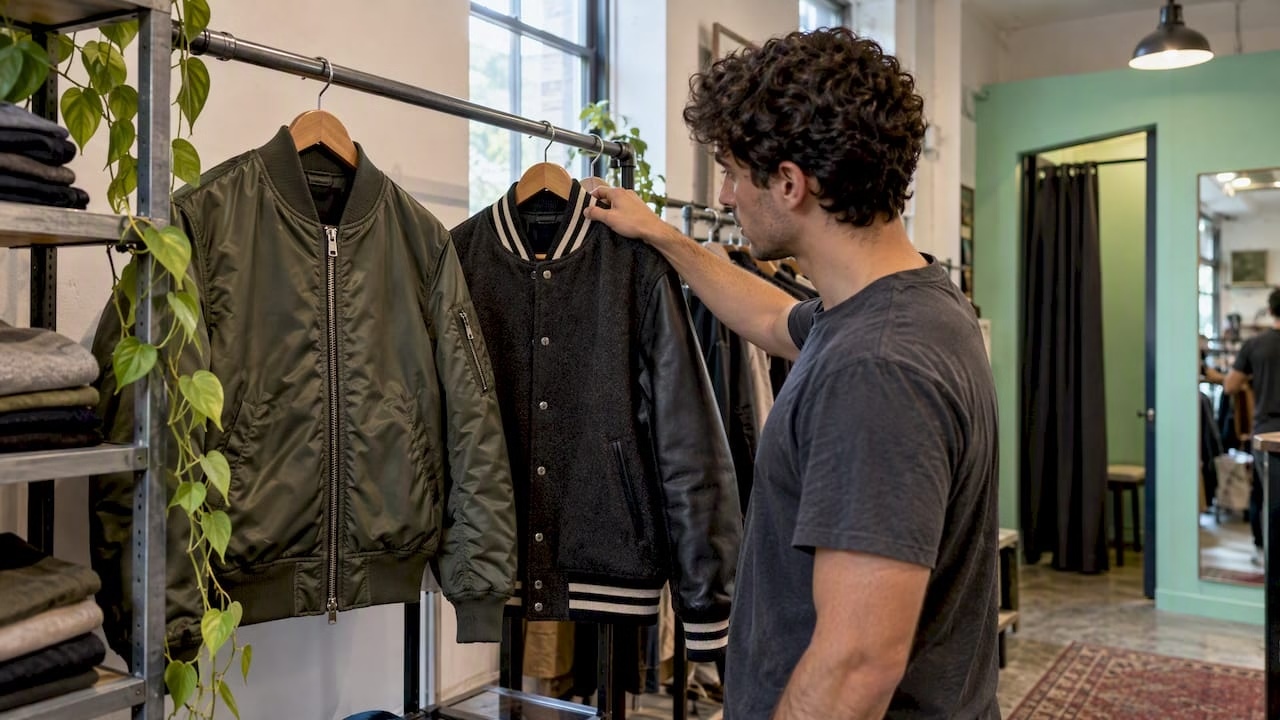
A bomber jacket comes from military flight gear: short, zipped, and built to seal out wind at the waist and wrists. A varsity jacket comes from U.S. collegiate sports: boxier, snap-front, and built in wool and leather to show off team pride. Pick a bomber for a slim, wind-blocking layer you can wear daily, and pick a varsity when you want a sportier, retro silhouette with room to layer underneath.
TL;DR:
- For windy commutes, choose a zip front bomber with a ribbed waist and cuffs; a similar weight varsity jacket lets more drafts through.
- Warmth depends on lining and seals, not silhouette: a quilted bomber can outwarm an unlined varsity, and both need a base layer in strong wind.
- Care differs by material: nylon shells often tolerate gentle machine washing, but leather needs conditioning and wool varsity bodies generally require dry cleaning.
- Check chest, shoulder, and sleeve measurements against the size chart: a loose bomber leaks wind, while a snug varsity leaves little room for layers.
- Custom bomber and varsity orders are each listed at $249, with options to change shell, lining, closure, sleeves, and fit.
Table of Contents
- Side-by-side design differences between bomber and varsity jackets
- Materials and construction: what goes into each jacket
- How the bomber and varsity jacket came to look the way they do
- Getting the fit right before you buy
- Which jacket actually keeps you warmer
- Styling ideas for bombers and varsity jackets
- Keeping either jacket in good shape for years
- How we build jackets that borrow from both styles
- Choosing by how you actually live
- Start your custom bomber or varsity jacket build
- FAQ
- Sources
Side-by-side design differences between bomber and varsity jackets
Set the two jackets next to each other and the silhouette tells the story first. A bomber sits close to the body and stops right at the waistband, which keeps cold air from sneaking up underneath. A varsity jacket runs boxier and often a touch longer, cut loose enough to go over a sweater without pulling across the shoulders.
Closures matter just as much as cut. Bombers use a zipper, almost always backed by a ribbed or banded hem that cinches snug against the body. Varsity jackets use snap buttons down the front, a detail inherited from athletic wear where quick removal mattered more than a tight seal. That single difference changes how each jacket performs in wind, since a zipper paired with a ribbed hem closes more completely than a row of snaps ever will.
Sleeves separate the two just as clearly:
- Bomber sleeves usually match the body fabric, giving a uniform look and full range of motion for the arms.
- Varsity sleeves are traditionally leather while the body stays in wool, a contrast that is as much decoration as it is construction.
- Bomber cuffs are ribbed knit, which grips the wrist and blocks drafts.
- Varsity cuffs are also ribbed but sit looser, built more for the look than a tight seal.
- Bomber pockets tend to be zippered or flapped and set low on the body.
- Varsity pockets are usually simple slash pockets at the hip, often snap-trimmed to match the placket.
Hardware finishes the picture. A bomber’s zipper pull, ribbed collar, and snap cuffs read as utilitarian. A varsity jacket’s snap placket, knit collar, and chenille patches read as decorative, built for display rather than defense against the weather. Our bomber jacket versatility guide breaks down how these fit details play out across different bomber builds.
Materials and construction: what goes into each jacket
The materials tell you almost everything about how a jacket will feel, insulate, and age. Bomber jackets traditionally use tightly woven nylon shells, satin finishes on classic MA-1 styles, or quilted linings for added warmth, and leather or shearling versions exist for a heavier, more rugged alternative. Varsity jackets stick to a formula that has barely changed in decades: a Melton wool body paired with leather sleeves, finished with chenille lettering and snap hardware.
- Bomber shells range from lightweight nylon to quilted or shearling-lined versions, each suited to a different climate.
- Varsity bodies use heavy Melton wool, while the sleeves are genuine leather on higher-end builds and PU on budget versions.
- Chenille patches and embroidered lettering add bulk and texture to varsity jackets but do not affect warmth.
- Snap hardware on varsity jackets should feel solid and resist loosening after repeated use.
Warmth comes down to lining, quilting, and sleeve material far more than silhouette. A slim bomber with a quilted lining can outperform a boxier, unlined varsity jacket in real cold, even though the varsity looks heavier on a hanger. Our guide to leather bomber variants covers how shell and lining choices change the way a bomber performs season to season.
Care routines diverge sharply between the two. Nylon bomber shells often tolerate a gentle machine wash, while leather sleeves and bodies need conditioning and occasional professional cleaning. Wool varsity bodies generally require dry cleaning to avoid matting or shrinkage.
Pro Tip: Check the care label before you buy if you want a low-maintenance jacket; a full-nylon bomber is far easier to live with than a wool-and-leather varsity.
How the bomber and varsity jacket came to look the way they do
The bomber jacket’s lineage runs straight through World War II aviation. Flight crews needed protection from brutal cold at altitude, and that need produced a line of specialized gear, from the early A-1 and A-2 flight jackets to the later MA-1, which became the template for the modern bomber. Air Force historical records describe crews relying on shearling jackets and electrically heated suits on high-altitude missions, gear that shaped the ribbed cuffs and sealed closures still found on bombers today.
The varsity jacket has a very different origin. It grew out of U.S. high school and collegiate athletics, where wool-bodied, leather-sleeved jackets became a wearable trophy. A letterman jacket preserved at the Smithsonian’s National Museum of American History shows the wool-and-leather construction and lettering that marked athletic achievement for decades.
Both jackets are form following function. Aviators needed warmth and a wind seal at altitude. Athletes needed a durable, visible symbol of team membership. The materials and hardware each group settled on are still the defining features of the jackets today.
Getting the fit right before you buy
Fit separates a jacket that looks sharp from one that just looks bought off a rack, and bombers and varsity jackets have opposite fit goals.
- A bomber should sit at your natural waist with the ribbed hem gently hugging your body, since a looser fit lets wind in and ruins the silhouette.
- Shoulders on a bomber need enough room to move your arms without the fabric pulling across your back.
- Sleeve length should land right at the wrist bone, letting the ribbed cuff do its job of sealing out drafts.
- A varsity jacket is meant to run boxier, with enough room through the body to layer a sweater or hoodie underneath.
- Varsity sleeves taper slightly but should never feel tight, since the leather needs a little give to avoid cracking at the elbow.
- Measure chest, shoulder width, and sleeve length against the brand’s size chart rather than guessing from your normal shirt size, since cuts vary between styles.
Stylist notes on varsity fit point out that fit is the most common mistake buyers make: a bomber sized too loose loses its wind seal, and a varsity sized too snug loses its signature boxy look. Minor alterations, like taking in a bomber’s side seams or shortening varsity sleeves, can fix small sizing issues without changing the jacket’s intended silhouette.
Which jacket actually keeps you warmer
Warmth comes from trapped air, not from the jacket’s outline. Official cold-weather guidance points to tightly woven, water-repellent outer layers with snug seals at the wrists and waist as the real driver of insulation, since trapped air between layers does the work of keeping heat in.
A ribbed hem and a closed zipper block wind more completely than snap buttons do, which is why a slim bomber often feels warmer in gusty conditions than a boxier varsity jacket with the same lining weight. NWS wind-chill guidance treats a tight wrist and waist seal as essential to staying warm outdoors.
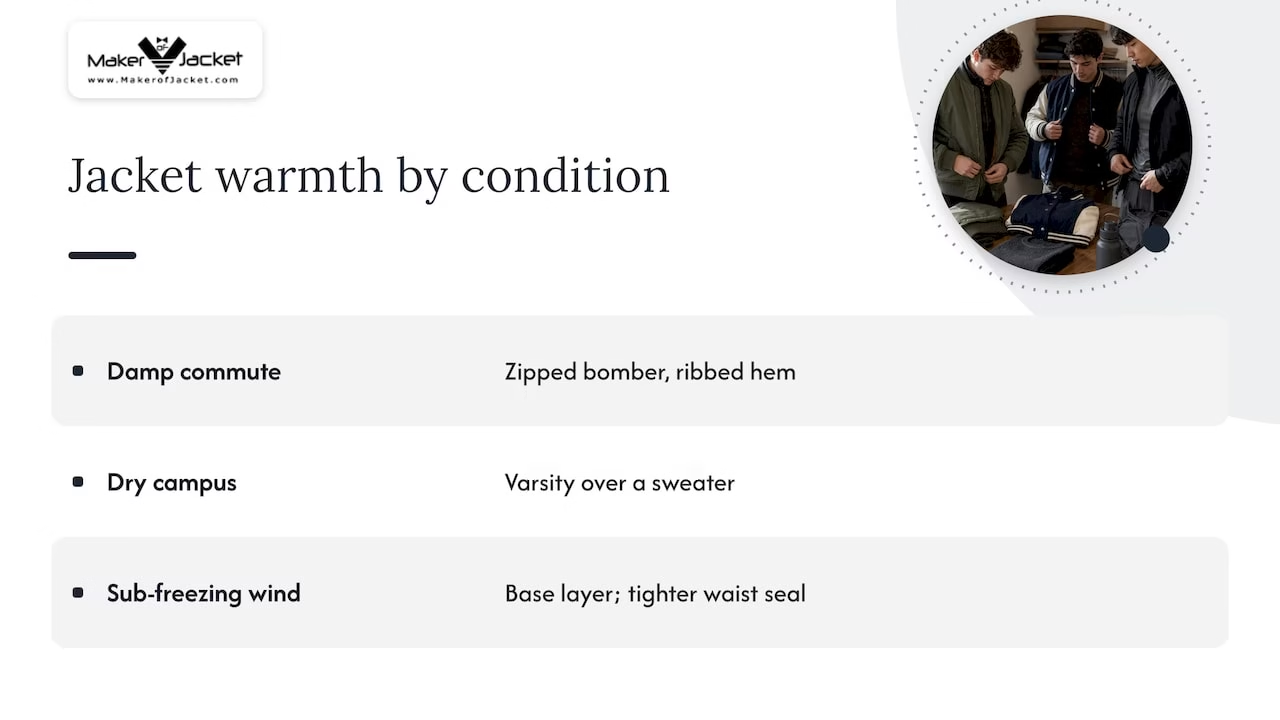
On a damp, windy commute, a nylon or leather bomber with a ribbed hem will outperform an open-front varsity jacket of similar weight. On a dry, cold campus day where you are moving between heated buildings, a varsity jacket layered over a sweater holds up fine, since you are not fighting sustained wind. For sub-freezing days with real wind exposure, add a base layer under either jacket and favor the one with the tighter seal at the waist.
Styling ideas for bombers and varsity jackets
Each jacket pulls toward a different look, and knowing which vibe you are going for makes shopping much easier.
- A black or olive bomber over slim jeans and boots reads as clean, slightly military-inspired streetwear.
- Layering a bomber over a fine-gauge sweater and dressing it up with chinos works for travel or a casual evening out.
- A classic wool-and-leather varsity jacket over a button-up and chinos leans retro-collegiate without looking costume-like.
- Pairing a varsity jacket with a skirt or straight-leg denim softens the sporty edge for a more everyday look.
- Contrast-sleeve varsity jackets read louder and more casual, while tonal, patch-free versions dress up more easily.
- A bomber in a quilted or shearling finish transitions into deep winter, while a lightweight nylon version covers spring and fall.
Color and patching shift the formality of both jackets. A plain, dark bomber without hardware details can pass as smart-casual, while a bright satin bomber with embroidery reads as pure streetwear. Varsity jackets follow a similar rule: fewer patches and a tonal sleeve read more polished, while heavy chenille lettering leans into the collegiate, retro-sport look. Our styling guide for bombers and our gallery of bomber examples show how small material and color choices change the overall vibe.
Keeping either jacket in good shape for years
Longevity depends on how you treat the materials, not just how well the jacket was built. Nylon bomber shells generally hold up to gentle washing, while leather sleeves and bodies need periodic conditioning to prevent cracking. Wool varsity bodies almost always call for dry cleaning rather than a washing machine.
- Store leather jackets on a padded hanger away from direct heat or sunlight to prevent cracking.
- Keep wool varsity bodies in a breathable garment bag to avoid matting or moisture damage.
- Replace a worn zipper pull or snap button early rather than waiting for the whole closure to fail.
- Condition leather sleeves every few months if you wear the jacket regularly.
Pro Tip: Inspect stitching at the collar and cuffs before buying a used jacket. Loose threads there usually signal more wear throughout the garment.
Heavy Melton wool and full-grain leather sleeves tend to outlast thinner wool blends and bonded leather, just as dense woven nylon and a solid lining outlast thin, unlined bomber shells.
How we build jackets that borrow from both styles
Bombers and varsity jackets can be made to match the fit, material, and hardware choices each buyer wants, rather than locking anyone into one fixed design. A rider who wants the varsity look but needs a real wind seal can request a wool body with a zip closure instead of snaps. A buyer who loves the sleek bomber shape but wants the symbolism of leather sleeves can get that combination built to size.
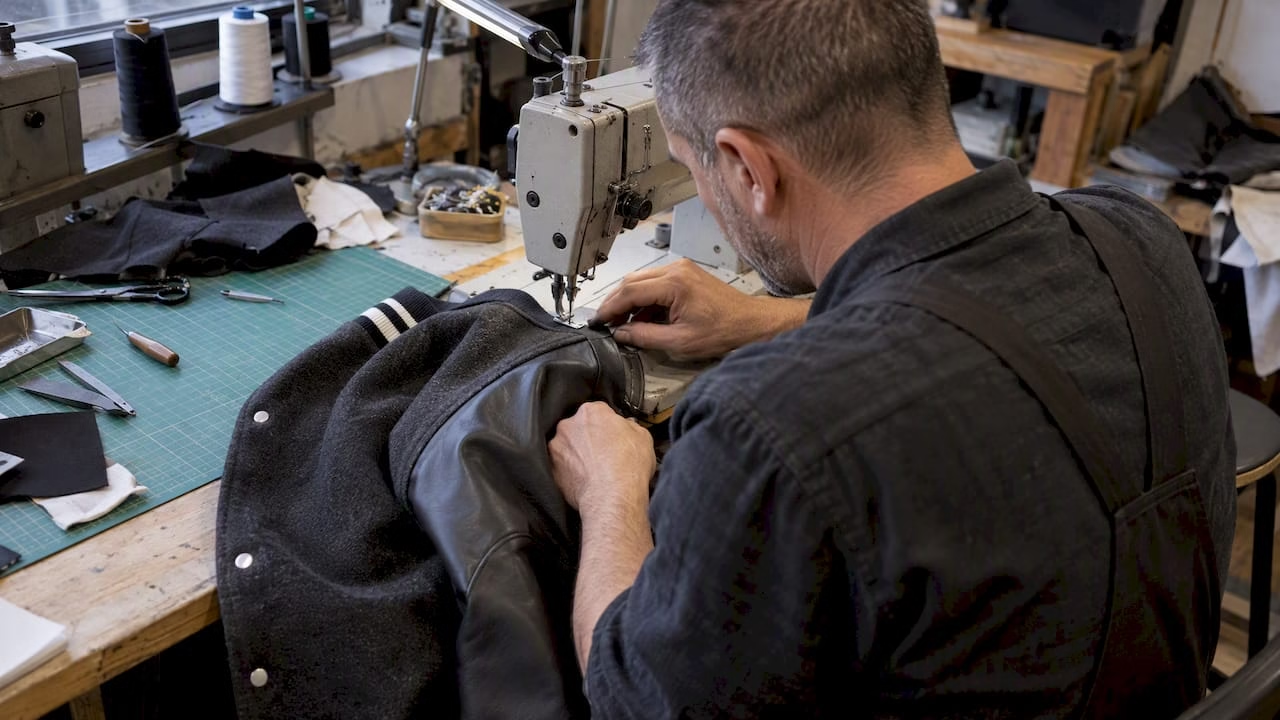
Size guides and photo galleries help you check fit and finish before ordering, which cuts down on the guesswork that usually comes with buying outerwear online. Common requests we see include swapping a bomber’s standard nylon shell for shearling, adding leather sleeves to a varsity body for extra durability, and adjusting hem ribbing for a tighter wind seal. Our piece on bomber customization trends and our black Y2K college bomber-varsity hybrid show how a single jacket can borrow hardware and materials from both traditions.
Choosing by how you actually live
A daily commuter or rider usually does better in a bomber, since the ribbed hem and zipper handle wind better than snaps. A student or someone chasing a retro look leans toward a varsity jacket for the boxy fit and patchwork. A style-first buyer who wants both worlds does not have to choose. Combining a wool body with a zip front, or leather sleeves on a slim bomber cut, gets you the warmth and the look in one piece.
— Maker
Start your custom bomber or varsity jacket build
Once you know which silhouette fits your life, building it to your exact size and material preference is a straightforward next step. We handcraft every piece to order, which means you are not stuck choosing between a stock bomber or a stock varsity when a hybrid would suit you better.

- Pick your base style, then adjust shell, lining, and closure to match your climate and daily routine.
- Use our size guide to confirm chest, shoulder, and sleeve measurements before you submit an order.
- Browse the photo gallery for real finished examples, including hybrid bomber-varsity builds.
- Request leather sleeves, chenille patches, or a zip front on any base style during checkout.
Start a build on our customize jacket order page, where a Custom Bomber Jacket and a Customize Varsity Jacket Order are both listed at $249 one-off. If you want to browse ready-made styles first, our varsity jacket category has options ready to adapt to your size.
FAQ
Are military bomber jackets warm?
Military bomber jackets were built specifically to keep flight crews warm at high altitude, using shearling, quilted linings, or electrically heated suits depending on the era. Air Force historical records describe this gear as essential protection against the extreme cold of unpressurized flight.
Is a varsity jacket the same as a letterman jacket?
Yes, varsity jacket and letterman jacket refer to the same garment. Both terms describe the wool-bodied, leather-sleeved jacket that originated in U.S. collegiate athletics and traditionally carries chenille letters or patches marking team achievement.
What’s the difference between a bomber jacket and a puffer jacket?
A bomber jacket is a fitted, zip-front style with ribbed cuffs and hem, originally designed for flight crews rather than heavy insulation. A puffer jacket uses quilted baffles packed with down or synthetic fill specifically for maximum warmth, making it bulkier and generally warmer in extreme cold than a standard bomber.
Can you wear a bomber jacket on a motorcycle?
A bomber jacket’s snug waist and wind-blocking zipper closure make it a reasonable choice for short rides in mild weather, though it lacks the abrasion resistance of dedicated motorcycle gear. Riders who want more protection typically choose a jacket built specifically for motorcycle use, with reinforced panels and a more technical fit.
Sources
- The history of the bomber jacket
- Varsity Jacket worn by William Tarpai | National Museum of American History
- A look back: Mae Wests and electric suits—outfitting the masters of the air
- Wind chill brochure (National Weather Service)


