

Leather Jacket Alterations Start With Rider Fit Before Cutting

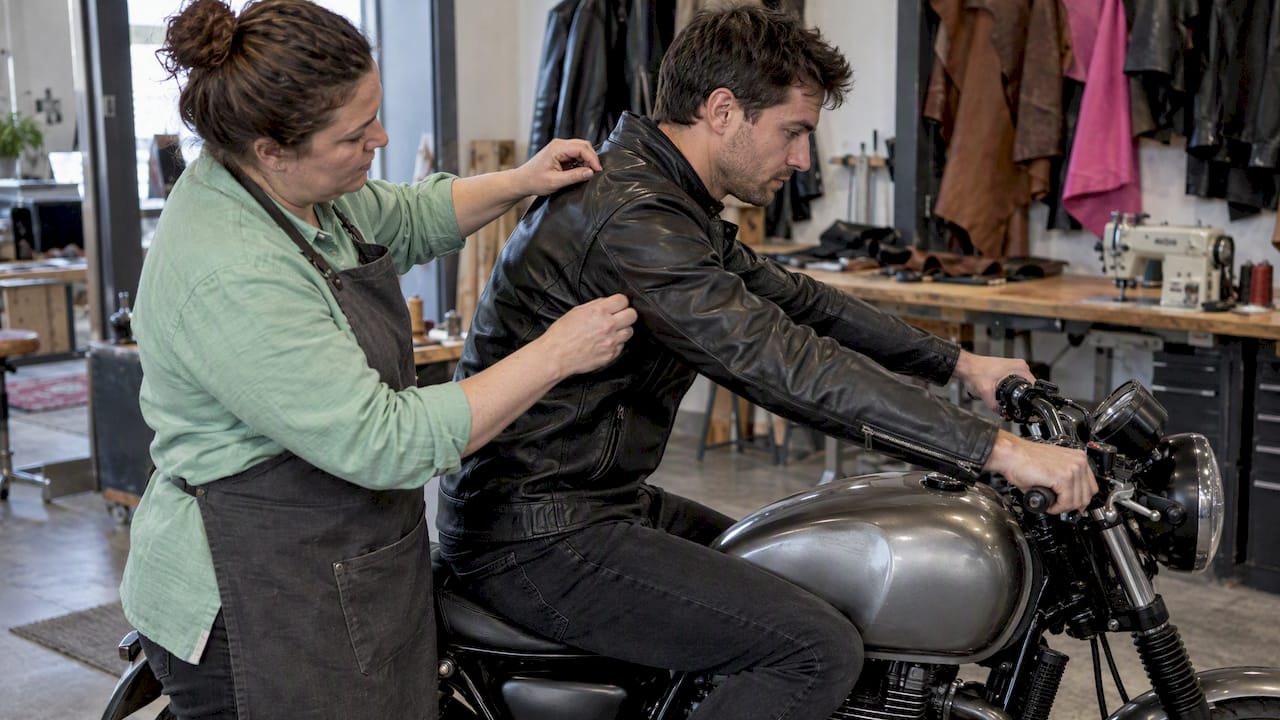
Yes, you can order a made-to-measure leather jacket that combines a tailored fit with bespoke styling. We build each piece around your measurements and design choices, covering fit and personalization. Our size guide and ordering page walk you through the whole process before you commit to a design.
TL;DR:
- Riders should send sleeve measurements with their arms reaching forward and include riding posture photos, because standing measurements can leave shoulders binding or the back panel short.
- Sheep nappa averages a 45% to 54% drape coefficient, while cowhide is thicker and more durable, so hide choice changes fit and riding suitability.
- Request a pattern proof before cutting, since natural hide marks, seams, and panel stiffness can limit logo placement or make oversized hardware distort soft leather.
- The standard custom order starts at $199, while motorcycle specific builds start at $299; hide grade, hardware, lining, and design complexity affect the final price.
- Custom jackets have different return terms from stock sizes, so verify every measurement and finalize reference images, hardware, and finish choices before ordering.
Table of Contents
- What happens when you order a bespoke leather jacket
- Choosing leather and construction: how hide and build shape fit
- Measurements and fit: streetwear versus riding posture
- Customization options that work with real hides
- Timeline, cost drivers, and what to prepare before ordering
- Why bespoke patterning matters more than post-purchase fixes
- How to start your custom order with Maker of Jacket
- FAQ
- Sources
What happens when you order a bespoke leather jacket
Ordering a custom leather jacket follows a clear sequence, and knowing it ahead of time means you show up with the right information instead of guessing at specs.
- Pick a base style: Browse the gallery and reference images to settle on a silhouette, whether that’s a biker cut, bomber, or trench.
- Choose leather and construction: Select hide type, lining, and hardware, then we confirm whether the combination is workable.
- Submit measurements: Send your numbers plus riding-posture photos if the jacket needs to perform on a bike.
- Review the pattern proof: We draft the pattern and may send mock-up images or a muslin sample before cutting real leather.
- Production and finishing: Cutting, stitching, hardware installation, and a final quality check happen before shipping.
Each stage is a checkpoint. A proof caught at step four is a quick fix; the same issue caught after the jacket is finished means a remake. That’s why we build in a review step before any leather gets cut.
Choosing leather and construction: how hide and build shape fit
The hide you choose does more than set the price. It decides how the jacket moves with you.
- Lambskin or nappa: soft, light, and quick to break in, best for a relaxed streetwear drape.
- Goatskin: a medium hand that balances flexibility with some structure.
- Cowhide: the thickest and most durable option, favored for riding jackets that need abrasion resistance.
Softer leathers drape closer to the body, while stiffer hides hold their shape and stand away from seams. A drape study published in JALCA found that sheep nappa leathers averaged a drape coefficient of 45 to 54 percent, and that flexural rigidity, softness, weight, and tensile modulus all influence how a panel falls once it’s sewn into a garment.
Statistic Callout: Sheep nappa leather showed a drape coefficient of 45-54%, meaning softer, more flexible hides hang closer to the body than stiffer ones. That’s the mechanical reason a lambskin bomber falls differently than a cowhide biker jacket even when cut from the same pattern.
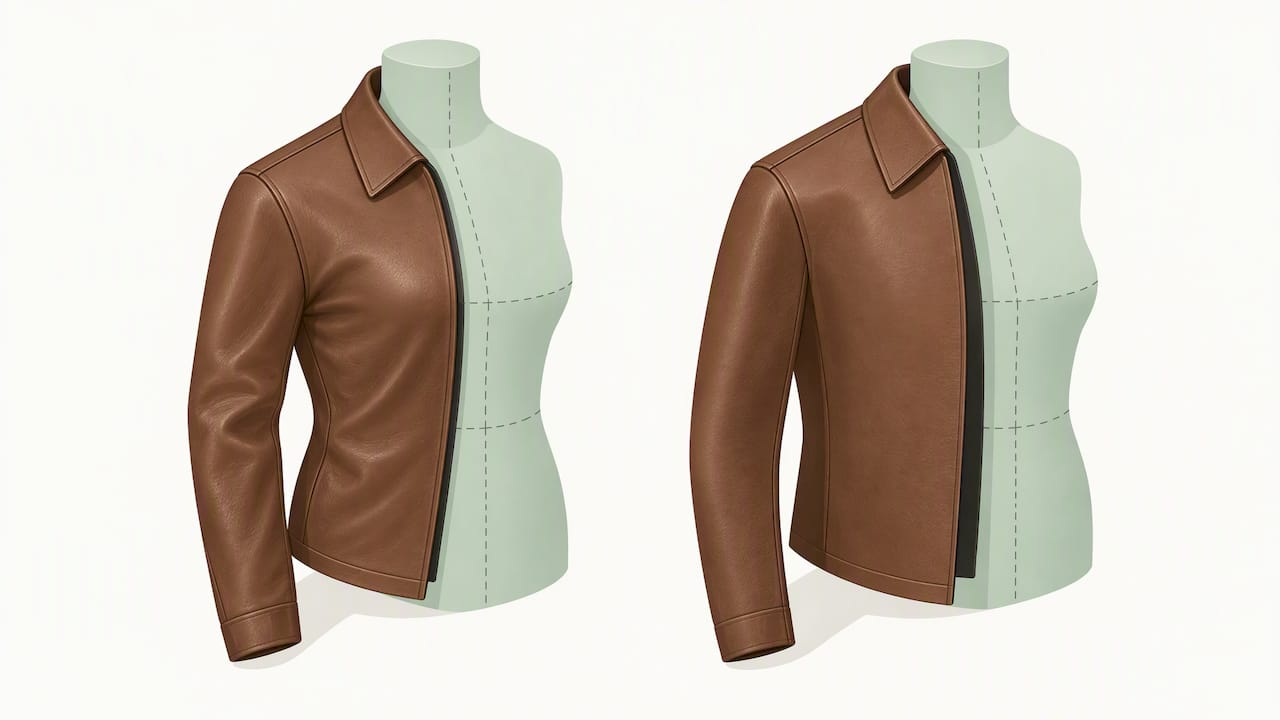
Grain direction and hide imperfections also dictate where panels land. According to University of Nebraska Extension guidance, patternmakers have to work around natural marks and plan simpler lines because stitching leaves permanent holes in leather, so nothing gets re-cut casually. Stitch choice, seam reinforcement, and lining all factor into how long the jacket lasts and how it looks after years of wear.
Measurements and fit: streetwear versus riding posture
Getting the numbers right the first time saves a remake. Here’s what we ask for and why each one matters.
- Chest and waist: taken at the fullest point, these set the overall body shape.
- Shoulder width: measured seam to seam across the back, this anchors sleeve placement.
- Sleeve length in riding reach: measured with arms extended forward, not hanging at your sides.
- Back length: longer for riders to cover the lower back when leaning over handlebars.
- Neck, hip, and bicep: these fine-tune collar closure and arm mobility.
Riding posture changes everything about where fabric needs to sit. NHTSA guidance on protective clothing stresses that gear should cover the arms and legs completely while fitting snugly enough to avoid dangerous flapping at speed. The New York DMV motorcycle manual echoes this: clothing should sit close enough to avoid flapping in the wind but never restrict movement at the neck, wrists, or waist.
A jacket cut for standing still often binds across the shoulders the moment you lean forward over a tank. That’s why we ask riders to send a photo in riding position, arms forward, torso angled, so the pattern accounts for that stretch before cutting.
Pro Tip: Take your sleeve measurement with your arm bent and reaching forward, not relaxed at your side, since that’s the position you’ll actually hold while riding.
If your torso shape is unusual or you’re converting a streetwear design into a riding jacket, ask for a mock-up before production. Our fitting workflow guide details how proofs work and what to check at each stage, and our sizing guide breaks down posture-specific measurements in more depth.
Customization options that work with real hides
Decorative and structural details both have to respect how leather actually behaves, not just how a design looks on screen.
- Structural features: reinforced panels and armor pockets add protection without changing the drape much, since they’re built into the construction itself.
- Decorative features: embroidered patches, printed motifs, and contrast panels sit on top of the leather and interact with seams and grain direction.
- Placement limits: large logos or busy prints need big, defect-free panel areas, which is why simpler lines often outperform intricate ones on natural hide.
- Hardware and panel scale: oversized zippers or heavy studs can pull at soft leathers and distort how a panel hangs if they’re not sized to the hide’s stiffness.
University of Nebraska Extension material notes that patches, contrast panels, and hardware should be planned with the maker early, since they interact directly with grain, seams, and the zones that flex most during wear, as described in guidance on working with leather. Asking for a proof image or a physical swatch before production starts is the simplest way to confirm a design choice will translate the way you picture it.
Timeline, cost drivers, and what to prepare before ordering
Lead time depends on how much hand finishing and custom work the jacket requires. Simple styles move faster through patterning and production, while custom panels, specialty hides, or heavy hardware add time at each stage.
- Cost drivers: hide grade, design complexity, hardware quality, lining choice, and any armor accommodations all affect the final price.
- Rush production: expedited timelines typically cost more because they compress hand-finishing steps.
- Before you order: gather final reference images, confirmed measurements, riding-posture photos if relevant, and your chosen hardware and finish options.
- Shipping and returns: because each jacket is cut to your measurements, double-check every number before submitting, since custom pieces have different return terms than stock sizes.
Confirming measurements carefully at the start avoids most post-delivery issues entirely.
Why bespoke patterning matters more than post-purchase fixes
A jacket cut to your actual riding posture solves problems that a tailor can’t fix after the fact. Shoulder binding, a too-short back panel, or sleeves that pull taut mid-reach are pattern-level issues, not hemming jobs. We provide size guides, product galleries, and an ordering workflow to help you catch those details before production. The buyers who get the best results are the ones who send clear measurements and ask for a proof before production starts.
— Maker
How to start your custom order with Maker of Jacket
We handcraft every order from premium-grade hides, and each jacket is cut to your measurements rather than pulled from standard sizing, giving you a personalized fit. We offer worldwide free shipping and customer support during the week.
Starting is simple:
- Browse our custom jacket order page and choose your base style.
- Submit measurements and any riding-posture photos through the order form.
- Review your pattern proof before we move to production.
If you’re building something rider-specific, our custom motorcycle jacket category shows construction options built for bike use. Pricing starts at $199 for a standard Customize Jacket Order, with motorcycle-specific builds like the Customize Motorcycle Jacket Order at $299.
FAQ
Can you really tailor a leather jacket to your exact measurements?
A made-to-measure leather jacket is patterned from your own measurements rather than adjusted from a stock size, giving a closer fit through the shoulders, sleeves, and back.
How much does leather jacket tailoring cost?
Pricing depends on the style and customization level you choose. Our Customize Jacket Order starts at $199, while a fully custom Customize Motorcycle Suit Order runs $575.
How heavy is a leather jacket, and does weight affect fit?
Weight varies by hide type and lining: lambskin runs lighter while cowhide is noticeably heavier and stiffer. Heavier hides hold their shape more and drape less closely to the body, which is worth factoring into your style choice.
What measurements should I send for a motorcycle-specific fit?
Send chest, shoulder width, sleeve length measured in riding reach, back length, neck, waist, hip, and bicep. A photo taken in riding posture, arms extended forward, helps confirm the jacket won’t bind once you’re on the bike, a point emphasized in NHTSA protective clothing guidance.
Can I request specific patches, panels, or hardware placement?
Yes, you can specify patches, contrast panels, and hardware when placing your order. Keep designs simpler over large panel areas, since placement depends on seam lines and natural hide grain, and requesting a proof first confirms the final look before production.
Sources
- NHTSA — Motorcycle safety countermeasures and protective clothing
- Working with Leather — University of Nebraska–Lincoln Extension
- Mechanical properties of sheep nappa leather influencing drape — JALCA
- NY DMV — Motorcycle manual: Preparing to ride


