

Gum on a Leather Jacket? Freeze and Lift, Backed by Museum Guidance

Harden the gum with ice, lift the bulk with a dull plastic edge, clean the leftover residue with mild-soap foam, rinse, dry, and finish with a leather conditioner. This mechanical-first sequence follows university extension guidance and matches the restraint that National Park Service conservation guidance recommends for leather. If the jacket is vintage, aniline-dyed, light-colored, or already damaged, stop and get a professional opinion before you touch it.
TL;DR:
- Seal ice in a plastic bag and hold it against the gum for three to five minutes; if it remains tacky, refreeze it.
- Once the gum feels brittle, lift it from the outer edge toward the center with a dull plastic card, then vacuum crumbs instead of brushing.
- For residue, apply only mild soap foam with a soft cloth; dab gently, repeat up to three times, then blot with a barely damp cloth.
- Blot moisture with a dry cloth, air dry the jacket away from sunlight and heat, then apply conditioner sparingly once it is fully dry.
- Leave vintage, suede, aniline dyed, light colored, or damaged jackets to a leather specialist, since pressure and moisture can harm sensitive finishes.
Table of Contents
- Quick Steps to Remove Gum From a Leather Jacket
- How to Freeze and Lift Gum Without Damaging the Leather
- Cleaning Sticky Residue Without Staining the Leather
- How to Dry and Condition the Leather After Cleaning
- When to Stop and Call a Leather Specialist
- Why We Favor the Conservative, Mechanical-First Method
- When It’s Time for a New Jacket Instead
- FAQ
- Sources
Quick Steps to Remove Gum From a Leather Jacket
Follow these steps in order. Skipping the freezing stage is the most common reason gum ends up smeared deeper into the grain instead of lifted off it.
- Seal a small ice cube in a plastic bag and hold it against the gum for a few minutes until the gum turns hard and brittle.
- Check the gum by pressing it gently. If it still feels tacky, refreeze rather than forcing it off.
- Use a dull plastic card or the blunt edge of a table knife to lift or shatter the hardened gum, working from the outer edge toward the center.
- Vacuum any loose crumbs with a small nozzle instead of brushing them, which can grind residue into the leather.
- Whip a small amount of mild soap in lukewarm water into foam and wipe it over the remaining sticky residue, never pouring liquid directly on the leather.
- Rinse the foam away with a barely damp cloth, blot dry, and let the jacket air-dry before applying conditioner.
Each step matters on its own. Rushing the lift stage or soaking the leather at the residue stage is where most gum-removal attempts go wrong.
How to Freeze and Lift Gum Without Damaging the Leather
Gum spreads the moment it warms up, which is why pressing, rubbing, or picking at a soft wad almost always pushes it deeper into the grain. Freezing it first solves that problem by making the gum brittle enough to snap off in pieces rather than smear. This mechanical approach also limits how much solvent or moisture ever touches the leather, which extension guidance treats as the safer first move.
Work through it like this:
- Seal a small ice cube inside a sandwich bag so no water drips onto the jacket, then hold it against the gum for three to five minutes.
- Test the gum’s hardness by tapping it lightly; it should feel brittle, almost glass-like, before you try to remove it.
- Slide a dull plastic card, an old gift card works well, under the edge of the hardened gum and lift upward rather than scraping sideways.
- If the knife or card meets resistance, stop and refreeze instead of pressing harder, since force is what tears the leather’s finish.
- Vacuum loose crumbs with a small nozzle attachment rather than brushing, which can drag grit across the surface.
A short tools list keeps this simple: small ice cubes, a resealable plastic bag, a dull plastic card or table knife, a couple of soft cloths, and a vacuum with a narrow nozzle. Before working on a visible panel, test your lifting technique on a hidden seam or underarm section to confirm the leather’s finish holds up.
Pro Tip: Work the hardened gum from its thinnest edge inward, since that’s where it separates from the leather most easily.
Cleaning Sticky Residue Without Staining the Leather
Once the bulk of the gum is gone, a thin sticky film usually remains, and this is where the next mistake happens. Pouring water or liquid soap directly onto leather oversaturates the fibers, so the fix is foam, not liquid. Whip a small amount of mild soap into lukewarm water until it turns frothy, then apply only the foam to the residue with a soft cloth.
- Dab the foam onto the sticky area and let it sit for a few seconds rather than scrubbing right away.
- Rub gently in small circles, checking often instead of pressing harder when residue seems stubborn.
- Blot with a clean, barely damp cloth to lift the loosened residue and soap away.
- Repeat the foam application two or three times if a faint tackiness remains, rather than switching to a stronger cleaner.
One practical reminder carries real weight here: treat the stain as soon as possible, since gum residue that sits for days becomes noticeably harder to lift than a fresh spot.
For stubborn cases, state extension stain guidance lists citrus-based solvents as a measured alternative, and dry-cleaning solvent is sometimes mentioned in similar stain guides. Test either one on a hidden seam first and wait to see how the leather reacts before using it on a visible area. Avoid soaking the jacket, scrubbing with an abrasive pad, or pouring any solvent directly onto the surface without testing, since those shortcuts are what turn a sticky spot into a permanent mark.
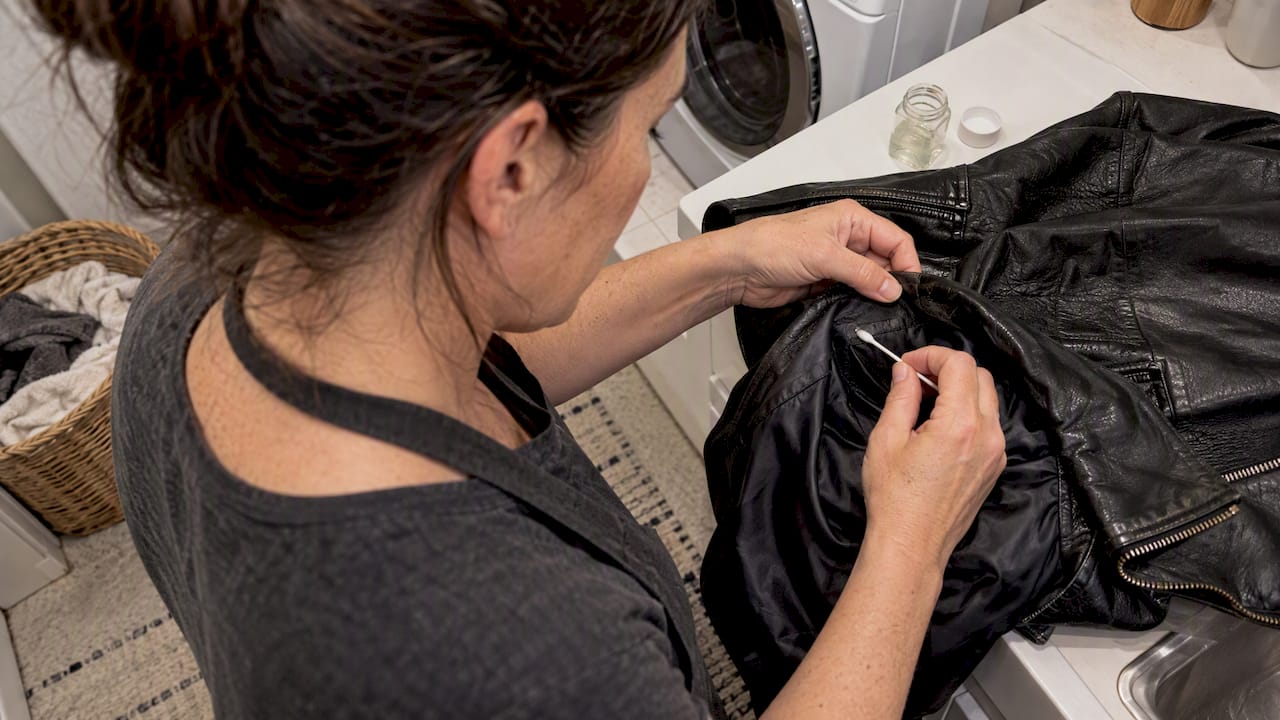
How to Dry and Condition the Leather After Cleaning
Leather that’s just been cleaned is more vulnerable to drying damage than leather that’s never been touched, so the drying step deserves the same care as the cleaning itself.
- Blot excess moisture with a dry cloth immediately after rinsing, pressing rather than wiping.
- Let the jacket air-dry on a padded hanger away from direct sunlight, radiators, or other heat sources.
- Skip the hair dryer, since high heat pulls natural oils out of leather and accelerates cracking.
- Once fully dry, apply a commercial leather conditioner sparingly with a soft cloth, following the product’s instructions.
Conditioning replenishes the oils that cleaning strips away, which keeps the leather supple and helps the finish resist future cracking. Our guide to leather conditioner walks through how to pick a conditioner suited to your jacket’s finish, and if the leather still feels stiff afterward, our piece on softening a leather jacket covers the next steps.
When to Stop and Call a Leather Specialist
Some jackets are too risky to treat at home, and knowing which ones matters more than knowing the cleaning steps themselves.
- Vintage jackets, aniline-dyed leather, suede, and light-colored or already-damaged leather are the clearest candidates for professional help.
- Conservation guidance recommends restraint on fragile or valuable leather because chemical reagents, dressings, and waxes can introduce changes that can’t be undone later.
- Before handing the jacket off, photograph the stain, write down exactly what you already tried, and keep any care label visible for the specialist.
- Ask for a written assessment before any treatment begins, especially if the jacket has sentimental or resale value.
Why We Favor the Conservative, Mechanical-First Method
Cleaning leather jackets carelessly can undo months of craftsmanship on a single piece. That experience is why we favor freezing and lifting gum before ever reaching for a cleaner: it protects the grain and the finish instead of risking both to save a few minutes. Our leather jacket cleaning guide covers the same restraint for broader stains and everyday upkeep, and it pairs well with the conditioning routine described above once a stain is gone.
— Maker
When It’s Time for a New Jacket Instead
Sometimes gum removal leaves a faint mark, a stiff patch, or a finish that never looks quite right again, and that’s a reasonable point to consider a replacement rather than a repair. We build each order around your size and style preferences, using premium-grade materials handcrafted by skilled craftsmen, so a damaged favorite can be recreated rather than just patched up.

- Our custom jacket order page covers biker, bomber, trench, and varsity styles, among others, each built to your measurements.
- Riders looking to protect future leather gear from road grime can also check this partner motorcycle wash routine for a gentler cleaning approach between rides.
- Maker of Jacket offers worldwide shipping and customer support during most business hours.
If your jacket is past saving, start a custom order and tell us the style, color, and details you want, and we’ll handcraft a replacement built to last.
FAQ
Will toothpaste or peanut butter remove gum from leather?
These household tricks are common for gum in hair or fabric, but leather’s finish reacts differently to oils and abrasives than skin or cloth does. The freeze-and-lift method followed by mild-soap foam, as described by extension guidance, is the safer, tested approach for leather specifically.
Can I use rubbing alcohol to remove gum residue from leather?
Alcohol-based solvents can strip dye and dry out leather’s natural oils, so they carry more risk than the mild-soap foam method. Test any solvent on a hidden seam first, and favor the gentler foam-and-rinse approach before reaching for stronger chemicals.
Does freezing gum work on all types of leather?
Freezing and lifting works well on most finished leather, but suede, aniline-dyed, and very light-colored leather are more sensitive to pressure and moisture. On those finishes, conservation guidance recommends extra caution or a professional opinion before attempting any home method.
How long does it take for ice to harden gum on a leather jacket?
A few minutes of steady contact with a sealed ice cube is usually enough to make the gum brittle and easy to lift. If it still feels tacky after that, reseal the ice and give it a little more time rather than forcing the gum off early.
What should I do if gum removal leaves a stain or stiff patch?
Condition the area once it’s fully dry, since a conditioner often restores suppleness and evens out the look of a treated spot. If the mark or stiffness persists, a leather specialist can assess whether further treatment or a professional clean is worth pursuing.
Sources
- Remove Stains From Chewing Gum | Textiles (UGA Extension)
- Appendix S: Curatorial care of objects made from leather and skin products (National Park Service)


