

Why Choose Cowhide Leather for Style and Durability


TL;DR:
- Cowhide leather offers unmatched durability, develops a rich patina over time, and is a sustainable, long-lasting investment. Its tight fiber structure provides strength, breathability, and versatility across fashion and functional uses. Proper minimal maintenance ensures it remains in excellent condition for decades, making it a superior choice over synthetic and lower-quality leathers.
If you’ve ever held a genuine cowhide leather jacket and felt that immediate sense of substance, you already understand why choose cowhide leather is a question with an obvious answer. Cowhide stands apart from the crowded field of materials competing for your wardrobe. It outlasts synthetic alternatives, develops personality over time, and performs across every climate and occasion. This article unpacks the real qualities that make cowhide leather worth every dollar, compares it honestly against other materials, and gives you the maintenance knowledge to protect your investment for decades.
Table of Contents
- Key takeaways
- Why choose cowhide leather: the qualities that set it apart
- Cowhide leather vs other materials: an honest comparison
- Practical advantages of cowhide in fashion and accessories
- How to care for cowhide leather properly
- My take on why cowhide leather is worth the investment
- Build something worth keeping with Makerofjacket
- FAQ
Key takeaways
| Point | Details |
|---|---|
| Exceptional fiber structure | Cowhide’s tight fiber construction resists stretching and tearing better than most other leathers. |
| Patina adds value over time | Unlike synthetic materials that degrade, full-grain cowhide develops a richer appearance with age. |
| Smarter long-term investment | A quality cowhide piece can last 10+ years, making it more cost-effective than cheaper alternatives. |
| Maintenance is simpler than expected | Conditioning every 3 to 6 months and avoiding heat is enough to preserve most cowhide items. |
| Sustainability matters here | Cowhide is a byproduct of the meat industry and biodegrades naturally, unlike petroleum-based faux leather. |
Why choose cowhide leather: the qualities that set it apart
Not all leather is created equal, and cowhide sits at the top of the hierarchy for good reason. The material’s strength comes directly from its tight fiber structure, which resists stretching, tearing, and surface abrasion better than thinner hides like sheepskin or goatskin. That density is what gives a cowhide jacket its structured silhouette even after years of regular wear.
Cowhide leather also breathes naturally. Your skin can regulate temperature through it, unlike synthetic materials that trap heat and moisture against your body. This makes cowhide genuinely more comfortable across varying climates, whether you’re layering up in winter or wearing a lightweight moto jacket in spring.
Then there’s patina. This is the gradual darkening, softening, and tonal shift that cowhide develops through use. It’s not wear and tear in the negative sense. It’s the material recording your life, and it only happens with real leather. A five-year-old full-grain cowhide belt looks more interesting than the day you bought it. That never happens with faux leather.
Full-grain vs. top-grain: which grade should you choose?
Understanding cowhide leather grades matters before you buy anything.
- Full-grain cowhide retains the entire outer fiber layer of the hide, giving it superior strength and aging qualities compared to processed alternatives. This is the grade used in premium bags, belts, and jackets built to last decades.
- Top-grain cowhide is sanded lightly to remove surface imperfections, then coated for a more uniform look. It’s still durable and high quality, but it won’t develop the same rich patina as full-grain.
- Split or bonded leather uses lower layers of the hide, often bonded with adhesives. These are prone to peeling within a few years and should be avoided for anything you want to keep long-term.
Pro Tip: When buying a cowhide jacket or bag, always ask which grain level the leather is. If a seller can’t answer, that’s your answer.
Cowhide leather vs other materials: an honest comparison
Choosing cowhide becomes much clearer when you place it next to the alternatives directly.
| Material | Durability | Breathability | Aging quality | Environmental impact | Typical lifespan |
|---|---|---|---|---|---|
| Full-grain cowhide | Excellent | High | Develops patina | Byproduct; biodegradable | 15 to 30+ years |
| Goatskin leather | Good | High | Moderate patina | Byproduct; biodegradable | 10 to 15 years |
| Sheepskin leather | Moderate | Very high | Minimal patina | Byproduct; biodegradable | 5 to 10 years |
| Faux/synthetic leather | Low to moderate | Very low | Peels and cracks | Petroleum-based; not biodegradable | 2 to 5 years |
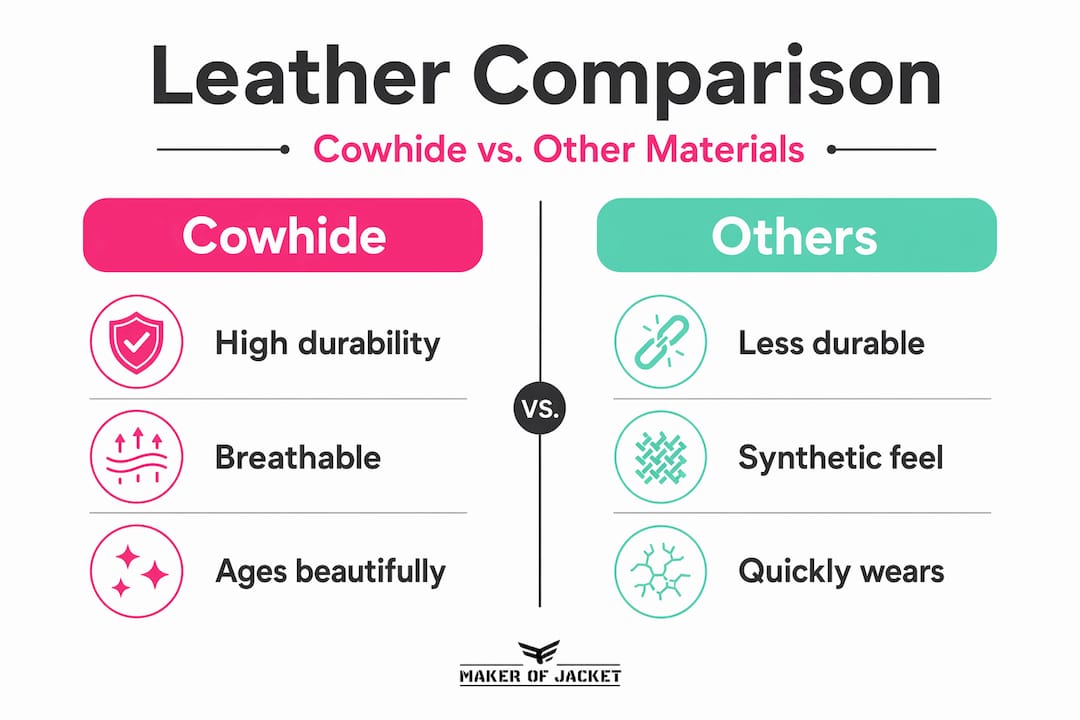
Sheepskin is soft and light, which appeals to buyers who prioritize comfort. But it sacrifices structural integrity. Sheepskin jackets dent under bag straps, scuff easily, and rarely hold their shape after a few seasons. Goatskin splits the difference, offering decent durability with a finer grain texture, but it still can’t match cowhide’s raw resistance to mechanical stress.
Faux leather is the comparison most worth addressing directly. It has improved cosmetically, and some versions feel convincing to the touch. But real leather breathes naturally while synthetic alternatives trap heat and moisture, creating discomfort over extended wear. Beyond comfort, the sustainability math doesn’t favor faux leather. Synthetic leather is petroleum-based, doesn’t biodegrade, and typically ends up in landfill within a few years of purchase. Cowhide, by contrast, is a byproduct of the meat industry and biodegrades naturally, with high-quality products lasting over a decade before replacement becomes necessary.
The cost per year of use almost always favors cowhide. A $400 cowhide jacket that lasts 20 years costs $20 per year. A $120 faux leather jacket that degrades in three years costs $40 per year, and looks considerably worse by year two.
For a deeper look at how cowhide compares to other leather types in real-world products, Makerofjacket has a thorough breakdown worth reading before you make a purchase.
Practical advantages of cowhide in fashion and accessories
The advantages of cowhide leather become most obvious when you think about how your gear actually gets used. Here’s where cowhide pulls ahead in practical, everyday terms:
- Shape retention under load. Cowhide bags don’t sag the way softer leathers do when you load them with essentials. The fiber density means a full-grain tote or messenger bag holds its structure even when packed, protecting both its contents and its appearance.
- Natural water and stain resistance. Cowhide has inherent resistance to light spills and rain when treated with a quality conditioner or protectant. It’s not waterproof, but it handles incidental moisture far better than fabric or synthetic alternatives without special treatments.
- Patina as a style asset. Designers and stylists actively seek worn-in cowhide pieces because the aging process creates texture and depth that can’t be replicated artificially. A vintage cowhide biker jacket tells a story. A three-year-old faux leather jacket just looks old.
- Versatility across dress codes. Full-grain cowhide sits comfortably in multiple fashion registers. A well-cut cowhide jacket reads as sharp over a button-down or relaxed over a plain tee. Few other materials carry that range.
- Professional trust. Fashion designers, motorcycle gear manufacturers, and accessory makers default to cowhide for load-bearing items because the material consistently performs where others fail. When something needs to last and look good doing it, cowhide is the choice.
Pro Tip: If you want to accelerate your cowhide’s patina development naturally, wear it in dry conditions regularly rather than storing it. Contact and use build character. Hiding it in a closet slows the process.
For riders specifically, cowhide’s seasonal performance across temperature changes makes it the go-to material for protective jackets.

How to care for cowhide leather properly
Good news: cowhide leather maintenance is far simpler than most people assume. The mistakes happen when people either do too little or, more commonly, too much.
- Clean only when necessary. Wiping your jacket down after every wear is overkill and can strip natural oils over time. Regular but minimal cleaning is the right approach. Use a lightly damp cloth for surface dust and a pH-neutral leather cleaner for actual dirt or grime.
- Condition on feel, not schedule. The single most common cowhide care mistake is conditioning too often. Condition only when the leather feels dry or stiff, roughly every 3 to 6 months depending on your climate and how often you wear the piece.
- Never over-condition. This is worth repeating because it runs counter to intuition. Over-conditioning clogs pores, reduces breathability, attracts dirt, and actually accelerates damage rather than preventing it.
- Avoid heat drying. If your jacket gets soaked, don’t use a hair dryer or place it near a radiator. Forced drying causes permanent brittleness because the rapid heat strips oils that can’t be restored through later conditioning. Let it air dry at room temperature.
- Store away from direct sunlight and humidity extremes. UV exposure fades and dries out cowhide. Excessive humidity encourages mold. A cool, dry space with good airflow is ideal. Use a breathable garment bag rather than plastic.
The best cowhide leather maintenance plan is a restrained one. Clean less than you think you need to. Condition less than you think you need to. Protect from the things that matter: heat, water saturation, and prolonged UV exposure. That’s the entire playbook.
For a full walkthrough of leather cleaning techniques that won’t damage your cowhide, the Makerofjacket guide covers every scenario step by step.
My take on why cowhide leather is worth the investment
I’ve handled enough leather goods over the years to have a clear, maybe unpopular opinion: most people buy cheap and regret it. Not because they can’t afford better, but because they underestimate how long a quality cowhide piece actually lasts.
Here’s what I’ve noticed consistently. The buyers who spend more on full-grain cowhide upfront stop thinking about replacing that item. They wear it for a decade and it still looks better than the synthetic alternatives their friends replaced twice in that same period. The long-term cost comparison is obvious when you’ve seen it play out in real wardrobes.
I also think the maintenance anxiety around leather is wildly overstated. People avoid cowhide because they think it demands constant attention. It doesn’t. The real mistake is overdoing it. Leave your jacket alone most of the time, give it a good conditioning a couple times a year, and keep it away from sustained heat and water. That’s it.
What genuinely surprises people who make the switch to quality cowhide is the emotional connection that develops as the material ages. Synthetic materials just degrade. Cowhide becomes more yours over time. That’s a difference worth paying for.
— Maker
Build something worth keeping with Makerofjacket
If this article has clarified why cowhide leather deserves a place in your wardrobe, the next step is finding a piece made to your exact specifications.
Makerofjacket specializes in high-quality cowhide leather jackets built for people who want gear that lasts. Every piece is available with full customization options, from cut and color to hardware and lining, so you get a jacket that fits both your body and your style. The custom jacket builder makes the process straightforward: choose your base style, dial in your preferences, and Makerofjacket handles the rest with worldwide free shipping included. If you want to understand the full personalization process before committing, the customization journey page walks through every step. For consumers who want to invest in cowhide leather the right way, Makerofjacket is where quality and personalization meet.
FAQ
What makes cowhide leather more durable than other leathers?
Cowhide leather’s tight fiber structure resists stretching and tearing better than thinner hides like sheepskin or goatskin, and full-grain cowhide products can last decades with normal use and care.
How often should I condition cowhide leather?
Condition cowhide leather every 3 to 6 months, based on feel rather than a fixed schedule. If the leather feels dry or stiff, it’s time to condition. If it feels supple, leave it alone.
Is cowhide leather a sustainable choice?
Yes. Cowhide is a byproduct of the meat industry, biodegrades naturally, and high-quality cowhide products have a lifespan of 10 or more years, which significantly reduces waste compared to synthetic alternatives.
What is the difference between full-grain and top-grain cowhide?
Full-grain cowhide retains the entire outer fiber layer for maximum strength and patina development. Top-grain is sanded and coated for a more uniform surface, making it slightly less durable but still a high-quality option.
Can cowhide leather handle rain and spills?
Cowhide has natural resistance to light moisture and minor spills, especially when treated with a conditioner or protectant. It isn’t fully waterproof, but it handles incidental water exposure better than most fabrics or synthetic alternatives.


