

What Is Vegan Leather? Benefits, Types, and Uses


TL;DR:
- Vegan leather encompasses a variety of materials made without animal hides, ranging from plastics to plant-based fibers. Its sustainability and durability vary greatly depending on the material type, with synthetic options often lasting only a few years and plant-based leathers needing plastic backing for strength. Consumers should scrutinize material labels and longevity factors to choose products aligning with their values and environmental impact.
Vegan leather gets more attention every season, but a lot of the conversation misses the fine print. What is vegan leather, exactly? The short answer is any leather-like material made without animal hides. The longer answer is more complicated, because the category includes everything from petroleum-based plastics to mushroom fibers to cactus pulp, and not all of them deliver the same performance, sustainability, or lifespan. If you are researching sustainable fashion options and trying to separate fact from marketing, this article gives you the honest breakdown.
Table of Contents
- Key takeaways
- What is vegan leather and how is it made
- Comparing vegan leather vs traditional leather
- How vegan leather is used in fashion and beyond
- How to choose and care for vegan leather products
- My honest take on vegan leather and sustainability
- Build your ideal jacket with Makerofjacket
- FAQ
Key takeaways
| Point | Details |
|---|---|
| Vegan leather is not one material | It covers PU, PVC, and multiple plant-based bio-leathers, each with different properties. |
| Sustainability is not guaranteed | Many vegan leathers are petroleum-derived and contribute to microplastic pollution, offsetting eco benefits. |
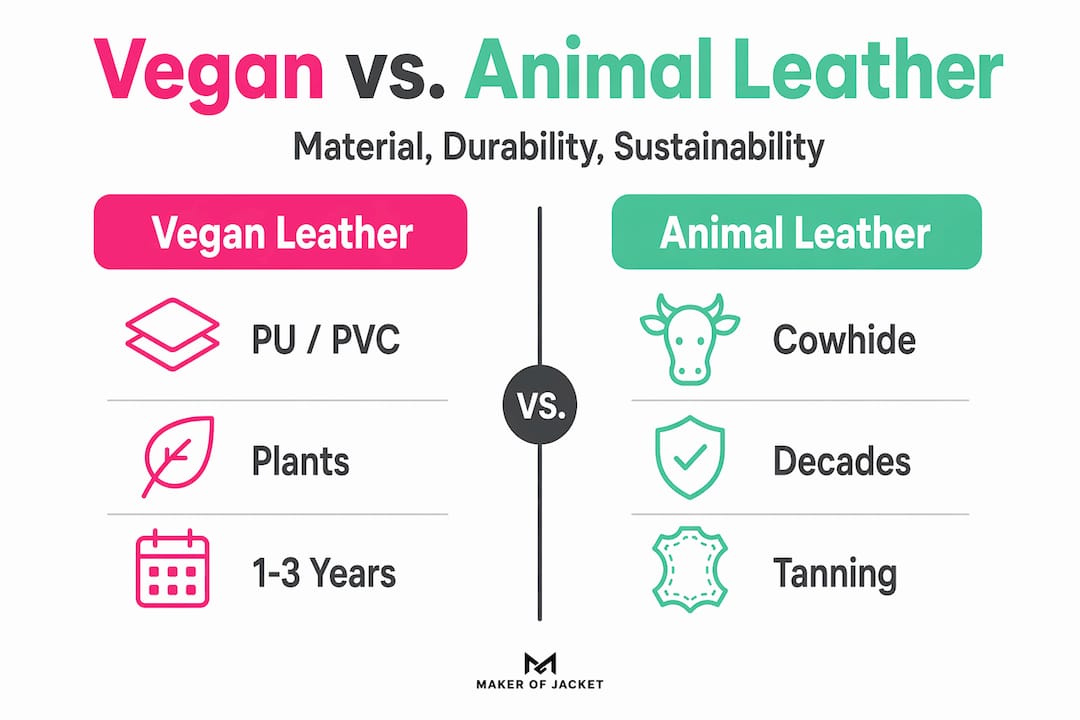
| Durability gap is real | Standard synthetic vegan leathers last 1 to 3 years versus decades for quality animal leather. |
| Plant-based options have limits | Most still require plastic backing for durability, making them only partially biodegradable. |
| Informed buying matters most | Knowing your material type helps you choose products that actually match your values and lifestyle. |
What is vegan leather and how is it made
Vegan leather is any material engineered to look and feel like animal leather without using hides, skins, or byproducts from livestock. The term covers a broad spectrum of materials, so understanding what goes into each type is the first step to making a genuinely informed choice.
The two main categories: synthetic and plant-based
The most common form you will encounter is synthetic vegan leather, specifically PU leather, short for polyurethane leather. It is made by applying a polyurethane coating to a fabric backing, usually polyester, to create a flexible surface that mimics the look and feel of real leather. PVC (polyvinyl chloride) leather is the older, stiffer version of this process and is generally considered less breathable and less environmentally sound. Both are petroleum-derived materials, which is a fact that often gets buried in product descriptions.
Plant-based vegan leather alternatives are the newer category and the one driving the most excitement in sustainable fashion circles. These materials use agricultural waste or crops as a base layer, including:
- Piñatex (pineapple leaf fibers from pineapple harvesting waste)
- Mylo (mycelium, the root network of mushrooms)
- Desserto (nopal cactus pads harvested without destroying the plant)
- Apple leather (apple pomace waste from juice production)
- Cork leather (harvested from cork oak bark)
Here is where the nuance gets important. Plant-based leathers almost always require a polymer backing or coating to reach usable durability levels. That means they are composite materials, not purely natural ones, and that mixed construction makes recycling difficult.
You should also know the difference between vegan leather and bonded leather. Bonded leather contains animal scraps ground up and bonded together with polyurethane. It is neither vegan nor particularly durable, yet it is frequently mislabeled or misunderstood. If a product just says “leather” without specifying the source, always dig deeper.
The global faux leather market was valued at $38.6 billion in 2026 and is projected to reach $64.5 billion by 2033. That growth reflects rising consumer demand, but also an expanding range of material options worth understanding before you buy.
Pro Tip: When shopping for vegan leather products, check the material tag for “PU,” “polyurethane,” “microfiber,” or a plant-based material name. If it just says “man-made material” with no specification, that is usually a red flag for low-quality PVC or bonded leather.
Comparing vegan leather vs traditional leather
The comparison between vegan leather and traditional leather is not as simple as “one is better.” Both have real advantages and real costs, and where you land depends on what you prioritize.
Where vegan leather wins
Vegan leather is cruelty-free, which matters to a growing number of consumers. It is also produced with visual consistency. Synthetic leather appeals to manufacturers because it delivers uniform color, texture, and thickness across large production runs. That is genuinely useful in mass production, where matching hides from batch to batch is expensive and time-consuming. Vegan leather is also typically lower cost at the point of purchase, waterproof in most synthetic forms, and available in a wider range of colors and textures.

Where traditional leather wins
The durability gap is significant. Standard synthetic vegan leathers last 1 to 3 years before cracking and peeling, while full-grain animal leather, properly cared for, can last decades. Real leather also develops a patina over time, can be conditioned and repaired, and holds structural integrity under regular stress. Vegan leathers cannot be conditioned or repaired the way animal leather can. When they crack, your options are limited.
The sustainability trade-off
This is where the conversation gets genuinely complicated. The table below shows how material types stack up on key sustainability factors:
| Attribute | PU/PVC Vegan Leather | Plant-Based Vegan Leather | Full-Grain Animal Leather |
|---|---|---|---|
| Animal-free | Yes | Yes | No |
| Biodegradable | No | Partially | Yes (untreated) |
| Lifespan | 1 to 3 years | 2 to 5 years | 20 to 30 years |
| Petroleum-derived | Yes | Partially | No |
| Repairable | No | No | Yes |
| Microplastic risk | High | Medium | Low |
The vegan doesn’t automatically mean sustainable point deserves emphasis. A PU jacket that cracks and ends up in a landfill after two years has a heavier environmental footprint than a well-made leather jacket worn for 15 years. Greenwashing is real in this space. A 2025 German court ruled that marketing plastic-based products as “leather” is misleading, which signals that regulatory pressure on honest labeling is increasing.
- Look for certifications like OEKO-TEX or Bluesign on synthetic options
- Prioritize plant-based materials from brands that disclose their exact polymer content
- Consider longevity as part of your sustainability math, not just material origin
Pro Tip: A shorter-lived vegan jacket that you replace every two years likely has a worse environmental footprint than a quality traditional leather jacket that lasts decades. Factor lifespan into your sustainability calculation, not just material source.
How vegan leather is used in fashion and beyond
Vegan leather has moved well beyond the niche ethical fashion corner. Today it shows up across a wide range of product categories, and its growth is being pushed by both consumer demand and manufacturing convenience.
The most popular categories in fashion include jackets, bags, footwear, belts, and wallets. Jackets made from PU leather are especially popular because synthetic materials can be designed for manufacturing consistency, meaning factories can replicate the same biker or bomber silhouette in dozens of colorways without worrying about variation between hides. That scalability has made vegan leather a default choice for fast fashion and mid-tier brands alike.
At the premium end, plant-based bio-leathers are gaining traction. Stella McCartney has used Mylo mycelium leather in limited collections. Adidas has incorporated Desserto cactus leather into footwear. These are still small-scale, often boutique applications, but they signal where the material science is heading.
Beyond fashion, market growth is being driven by ethical consumerism in the automotive sector, electronics accessories, and home upholstery. Car interiors have long used synthetic leather for seating, dashboards, and steering wheels. Phone cases, laptop sleeves, and even furniture are increasingly made with vegan leather alternatives. You can also check out 2025 fashion trends to see how vegan leather fits into broader style movements.
- Jackets and outerwear account for the largest share of vegan leather in apparel
- Bags and accessories use PU leather for its weight advantage over animal hides
- Footwear benefits from synthetic leather’s waterproofing and consistent sizing
- Automotive interiors represent a major industrial application, especially in electric vehicle brands positioning themselves as eco-forward
- Home goods like sofas and accent chairs increasingly use high-quality PU or plant-based leather for vegan household options
Consumer motivation is a mix of ethics, aesthetics, and practicality. Many buyers simply prefer not to use animal products. Others are drawn to the price point or the color range. And a growing segment is genuinely researching the environmental footprint. Knowing what you are actually buying, rather than what the marketing says, puts you in a much stronger position.
How to choose and care for vegan leather products
Quality varies enormously in this category. A well-made PU leather jacket can hold up for several years with proper care, while a cheap PVC item may start peeling within months. Here is how to shop and maintain vegan leather products with confidence.
- Check the material specification. Look for “polyurethane” or a named plant-based material rather than vague terms like “eco leather” or “man-made material.” The latter often signals low-grade PVC or bonded leather.
- Test the flexibility. Quality vegan leather should flex without cracking or stiffness when you bend it. Stiff, plasticky feel at room temperature usually means low-quality PVC construction.
- Inspect the backing. Turn the product over or check inside a seam. A textile backing (usually visible as a fabric weave) is a sign of PU construction. Peeling or paper-thin feel signals bonded material.
- Research the brand’s transparency. Brands that specify their exact material composition, manufacturing location, and durability expectations are far more trustworthy than those relying on vague “sustainable” claims.
- Clean with the right products. For PU vegan leather, use a damp cloth with mild soap. Avoid alcohol-based cleaners, which degrade the polyurethane coating over time. For plant-based materials, follow the brand’s specific guidance.
- Store it correctly. Keep vegan leather away from direct sunlight and heat, which accelerate cracking. Hanging jackets on wide hangers prevents crease stress at the shoulders.
For more on extending the life of your jacket, the leather maintenance guide at Makerofjacket covers practical care steps that apply to both traditional and synthetic materials.
Pro Tip: Applying a PU leather conditioner or protector spray every few months slows the degradation of the surface coating and significantly extends the lifespan of synthetic vegan leather products. Most standard leather care products are NOT suitable for vegan leather, so always check compatibility.
My honest take on vegan leather and sustainability
I have spent years working with leather and leather alternatives, and the thing that frustrates me most about this category is how confidently people on both sides of the debate miss the point.
The vegan leather boosters act like choosing PU over cowhide is automatically the sustainable choice. It is not. A jacket made from petroleum-based plastic that cracks after two years and ends up in a landfill is not an environmental win, regardless of what the product page says. Vegan does not mean sustainable. Lifespan and utility are the measures that matter, and most synthetic vegan leathers fail badly on both when you compare them honestly to quality animal leather.
That said, I find the plant-based bio-leather space genuinely promising. Cactus and mushroom-based materials are getting better every season. The durability problem, which comes from plant-based leathers needing polymer backing to hold up under real-world use, is a materials science challenge being actively worked on. I think within the next decade, we will see fully biodegradable options that do not compromise on performance.
For now, my advice is to stop treating “vegan leather” as a single category. Ask what material it actually is. Ask how long it will realistically last. Read more about ethical leather considerations before you decide which material genuinely aligns with your values. The answers might surprise you.
— Maker
Build your ideal jacket with Makerofjacket
At Makerofjacket, we work with customers who care about what goes into their jackets, not just what they look like. Whether you want a classic biker silhouette, a bomber with custom detailing, or a fashion-forward piece with a specific material preference, we let you drive the design. Our team sources materials with durability and quality in mind, and our customization process means you get exactly what you are looking for rather than settling for something off the shelf. Explore your options and design your custom jacket today. You can also learn more about our customization process to see how we build pieces that actually last.
FAQ
What is vegan leather made from?
Vegan leather is made from materials that do not use animal hides. The most common type is polyurethane (PU) leather, made by coating a fabric backing with a polymer layer. Plant-based options include cactus, pineapple fibers, mushroom mycelium, and apple pomace, though most still require a plastic backing layer for durability.
Is vegan leather durable enough for everyday use?
Standard PU vegan leather lasts roughly 1 to 3 years with regular use before cracking or peeling, compared to decades for quality animal leather. Higher-grade PU and newer plant-based options can extend that lifespan, but no current vegan leather fully matches the longevity of full-grain animal leather.
Is vegan leather actually better for the environment?
Not automatically. Petroleum-based vegan leathers contribute to microplastic pollution and landfill waste when they degrade. A longer-lasting animal leather product often has a smaller environmental footprint than a synthetic alternative replaced every few years. Sustainability depends on material type, longevity, and how the product is made.
What is the difference between vegan leather and faux leather?
The terms are used interchangeably in most contexts. Both refer to non-animal leather alternatives, usually PU or PVC-based synthetics. For a deeper look at how these labels differ in practice, the faux vs vegan leather breakdown at Makerofjacket covers the distinctions clearly.
How do I know if a product is real vegan leather or bonded leather?
Check the material label for “polyurethane,” “PU,” or a named plant-based material. Bonded leather contains ground-up animal hide scraps and is not vegan. It also tends to peel and crack faster than true vegan leather. If a product is labeled only as “leather” or “reconstituted leather,” it is likely bonded and should be avoided if vegan or durability is a priority.


