

How to Prevent Leather From Fading: A Practical Guide

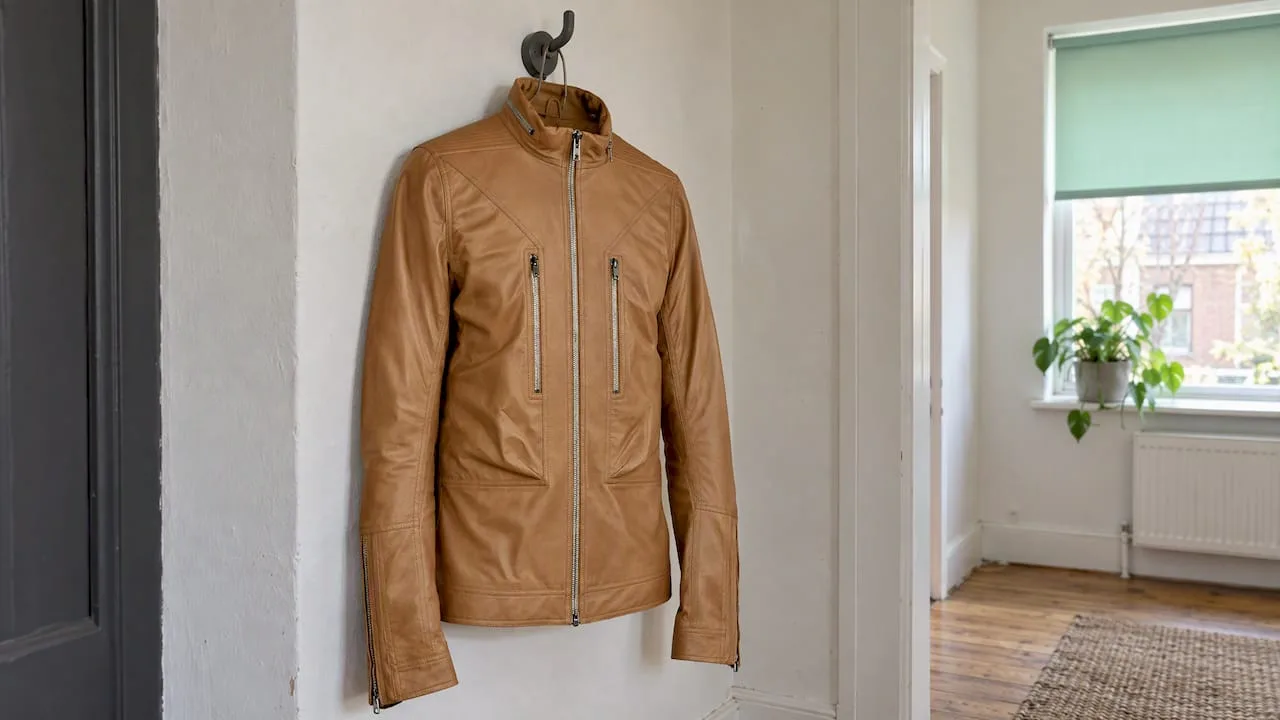
The only dependable way to stop leather from fading is to limit how much light it sees, especially ultraviolet (UV) light, and to keep it away from heat, sweat and harsh chemicals. Light damage adds up over time and can’t be reversed, so what you do before the color shifts matters far more than any product you use afterward. This guide covers how leather fades, how to protect a jacket, vest or riding gear day to day, how to store it, and what to do when fading has already started.
TL;DR
- Sunlight and strong indoor light fade dyed leather, and the damage is cumulative and irreversible, so prevention beats repair.
- Keep leather out of direct sun, filter UV where you can, and rotate what you wear and display.
- Store leather in the dark or under a breathable cover, in a cool, ventilated space, never in a plastic bag.
- Sweat, spills, heat and dry or damp air also strip color, so clean gently and dry wet leather away from heat.
- Conditioning keeps leather supple but won’t bring back lost color. Faded leather is a job for a specialist.
Table of Contents
- Why leather fades
- Not all leather fades the same way
- How to protect leather from the sun
- Everyday habits that keep color in
- Storing leather so it keeps its color
- What cleaning and conditioning can and can’t do
- Can faded leather be restored?
- Our perspective: choose the color and the care together
- Build in the care from the start
- A simple fade-prevention routine
- FAQ
- Sources
Why leather fades
Leather gets its color from dyes, and dyes are not permanent. The Canadian Conservation Institute states that visible light and UV can fade dyes and colored leather, and that long exposure can also cause irreversible photochemical degradation and physically weaken the material. So fading is not only a cosmetic issue. The same light that dulls the color is slowly wearing down the hide.
Light is the main culprit, but not the only one. Iowa State University Extension notes that dyes can oxidize from exposure to light and atmospheric gases, that perspiration can cause color loss, and that liquid spills can leave rings where dye has migrated. For a jacket you actually wear, that adds up to a list of everyday threats:
- Sunlight through windows. Glass doesn’t make a jacket safe. A coat on a hook beside a sunny window gets the same slow bleaching every day.
- Strong indoor light. Spotlights and bright display lighting count too. The Canadian Conservation Institute’s guidance on leather care says to avoid direct sunlight, daylight and spotlights because they can cause discoloration, drying out and photochemical degradation.
- Sweat. Collars, cuffs and the lining line take it first, which is why those areas often look different before the rest of the jacket does.
- Water and spills. A wet patch that dries unevenly can leave a visible ring.
- Heat. Radiators, hair dryers and a hot car all dry leather out and make it more vulnerable.
Not all leather fades the same way
Two jackets left in the same spot can age very differently. The footwear and leather testing body SATRA reports that lightfastness varies by leather type, finish and color. Its guidance is that suede and nubuck deserve particular attention, since strong sunlight can fade deep colors and yellow lighter ones, and that even finished black, navy and brown leathers can still fade. Never assume that dark or coated leather is fade-proof.
Here is how that plays out in practice:
| Leather type | What to watch for | What helps most |
|---|---|---|
| Smooth finished leather (most biker and bomber jackets) | Gradual dulling, uneven color on shoulders and sleeves that see the most light | Rotate jackets, keep out of direct sun, wipe with a damp cloth |
| Suede and nubuck | Deep colors fade and pale colors can yellow in strong sun | Store in the dark, brush with a soft brush, avoid moisture |
| Light or white leather | Yellowing and visible dirt | Gentle cleaning, covered storage, see our white leather jacket guide |
| Faux leather | Care needs differ and some fabrics can’t take dry cleaning | Follow the care label |
That last row matters if you own imitation leather. Iowa State advises checking care labels on imitation leather and suede, because some fabrics cannot withstand dry cleaning. Don’t apply real-leather treatments to a synthetic piece without checking.
How to protect leather from the sun
The Canadian Conservation Institute’s preventive guidance boils down to a few moves: keep leather out of direct sunlight and strong light, eliminate or filter UV where practical, and use blinds, curtains, rotation, timers or opaque storage. Here is how that translates for a wardrobe.

At home
Don’t hang your favorite jacket where a window throws sun on it for hours. A closet, or a hook on an interior wall, is a better home. If a room has bright windows, curtains or blinds cut the exposure. The same institute also recommends cutting down the total time leather spends in light, through shorter display periods, rotation and timers, which is easy to apply: if a jacket is on a mannequin or wall display, give it breaks in the dark and swap pieces in turn.
On the road
Cars concentrate sun and heat. Leave a jacket draped over a seat or on a rear shelf and it takes a long dose of light and heat through the glass. Take it with you, or fold it away from the windows in a bag. This is common-sense advice rather than a lab figure, but it follows directly from the principle that exposure to light and heat accumulates.
On the bike
Riders face the harshest case: hours of open sun, sweat and weather. You can’t ride in a closet, so reduce the damage around the ride instead. Hang your gear in the shade afterward, let sweat dry naturally, and rotate between two jackets if you ride often. If you’re deciding on gear, our custom motorcycle jacket is built around the size and style you choose, so you can wear it comfortably without the urge to leave it in the sun between rides.
Everyday habits that keep color in
Sun is only one part of the story. These habits cost nothing and make a visible difference over a few seasons.
- Wipe, don’t soak. Iowa State recommends wiping smooth leather with a damp cloth and brushing suede with a soft brush. Skip soaking and scrubbing.
- Deal with sweat quickly. After a warm day or a ride, let the jacket air out before you put it away. Sweat left in the lining and collar is a known cause of color loss.
- Dry wet leather slowly. The same guidance says to air-dry wet leather away from heat. A radiator or hair dryer will do more harm than the rain did. Our walkthrough on drying a wet leather jacket covers it step by step.
- Avoid harsh chemicals. Household cleaners, solvents and strong stain removers can lift dye. If you get a stain, take it promptly to a professional leather cleaner, as Iowa State advises, rather than trying several products in a row. For grease specifically, see how to remove grease and oil stains with a careful approach.
- Rotate. Wearing the same jacket every day concentrates sun, sweat and friction on the same panels. Alternating two pieces spreads the load.
Storing leather so it keeps its color
When you’re not wearing it, storage decides how the jacket ages. The conservation advice is clear and simple: keep leather in darkness. The Canadian Conservation Institute adds that dyed or painted leather should go in boxes or closed containers if the room is lit.
For clothing, Iowa State University Extension recommends a cool, ventilated area, never a plastic bag, and keeping garments away from dry heat and hot, humid conditions. Plastic traps moisture and can lead to trouble that has nothing to do with light. A breathable garment bag, or a cotton cover, is the safer choice.
A few more details:
- Use a wide, padded hanger. A thin wire hanger pulls on the shoulders over months.
- Leave room. Packed closets squeeze leather and block airflow.
- Mind the climate. For conservation of alum, vegetable and mineral-tanned leather, the institute recommends stable relative humidity of 45% to 55% and a temperature of 18 to 20°C (roughly 64 to 68°F), and warns that below 30% humidity leather turns brittle, while above 65% mold becomes a risk. You don’t need museum conditions at home, but avoid attics, basements and sunlit rooms.
- Keep the inside fresh. Clothing storage habits like storing garments inside out and checking them every couple of months are worth borrowing for any wardrobe piece you rarely wear.
We go deeper on seasonal storage in our guide to storing leather jackets.
What cleaning and conditioning can and can’t do
A lot of articles suggest a conditioner or a UV spray will “lock in” color. Be careful with that idea. The conservation view is that preventing fading depends mainly on reducing cumulative light exposure, especially UV, rather than relying on a topical product to undo light damage.
Conditioning still has a role. Supple leather resists cracking and looks richer, and a clean surface shows color more evenly. Do it sensibly:
- Clean first, with a gentle method. Our leather jacket cleaning process and the step-by-step natural cleaning guide show how.
- Test any product on a hidden spot, such as an inside hem, and wait for it to dry before you use it on a visible panel.
- Use less than you think. Heavy layers can darken leather unevenly.
- Don’t treat suede or nubuck like smooth leather. Brush it, and ask a specialist before using any product.
For a broader routine, our leather jacket care basics and the guide to maintaining your leather jacket put the whole schedule in one place.
Can faded leather be restored?
Partly, and it depends on what you mean. Moving the jacket out of light, heat, humidity and harsh chemicals can slow further fading. But the Canadian Conservation Institute states that light damage is cumulative and irreversible. Ordinary cleaning and conditioning will not reliably bring lost color back.
If a favorite piece has faded, your realistic options are:
- Stop the exposure now. Everything you do after that point protects what color remains.
- Even it out. Slightly faded patches can look less obvious once the jacket is clean and supple.
- Consult a professional. Recoloring or refinishing is specialist work. Take the garment to a leather repair or refinishing professional instead of experimenting with dyes at home, which can leave stains that are harder to fix.
- Embrace it. Some riders and collectors like the worn-in look. Fading that is even can read as character. Patchy fading rarely does.
Our perspective: choose the color and the care together
We make and sell leather jackets and motorcycle gear, and most fading questions we hear come down to the same thing: people treat color as a one-time decision and care as an afterthought. We see them as a pair. A jacket made to your size and style, from premium-grade materials and by skilled craftsmen, is something you’ll wear for years, and how it looks in year five depends on where it hangs in year one.
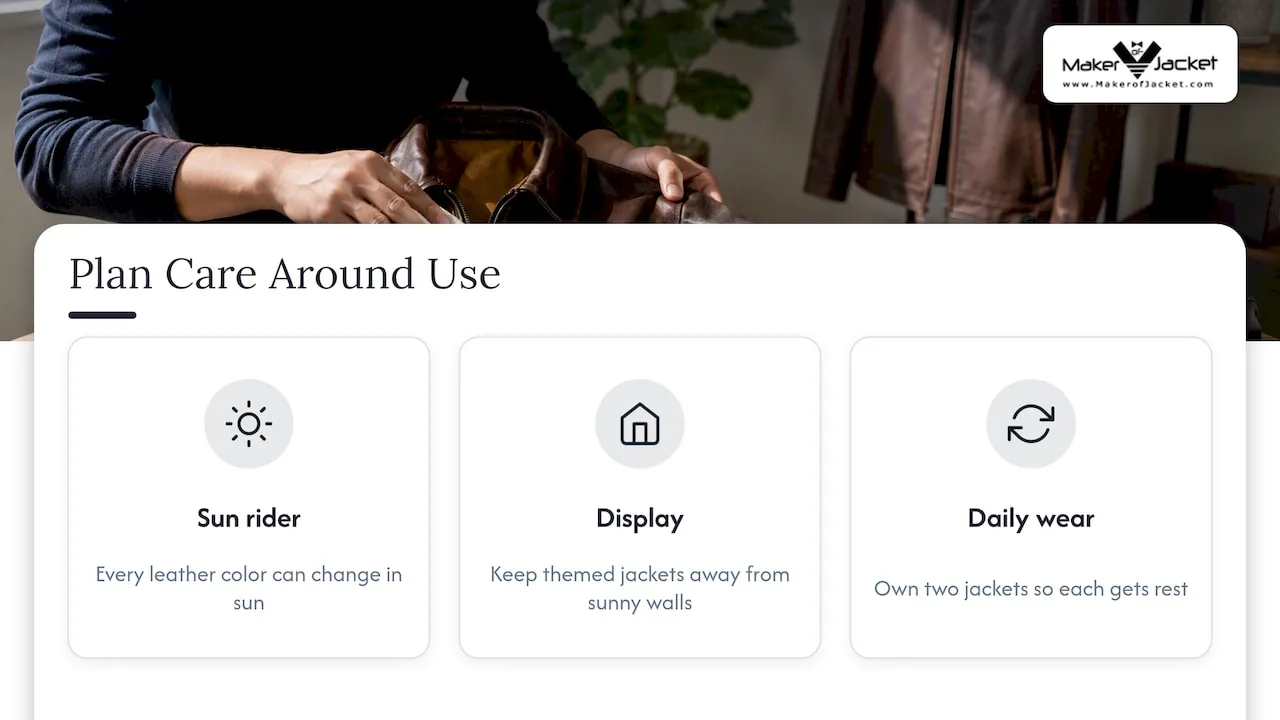
So when you customize a piece with us, think about how you’ll use it. A rider who spends weekends in full sun should know that every leather color, dark or light, can change with exposure, as testing bodies note. A collector who keeps a themed or celebrity-inspired jacket on display should plan for darkness, not a sunny wall. And if your jacket will be your daily driver, consider owning two so each gets rest.
We would rather tell you that plainly than sell you a miracle spray. Light damage can’t be undone, but it is easy to avoid with a bit of planning, and our 24/5 support team is happy to talk through care for the piece you pick.
— Maker
Build in the care from the start
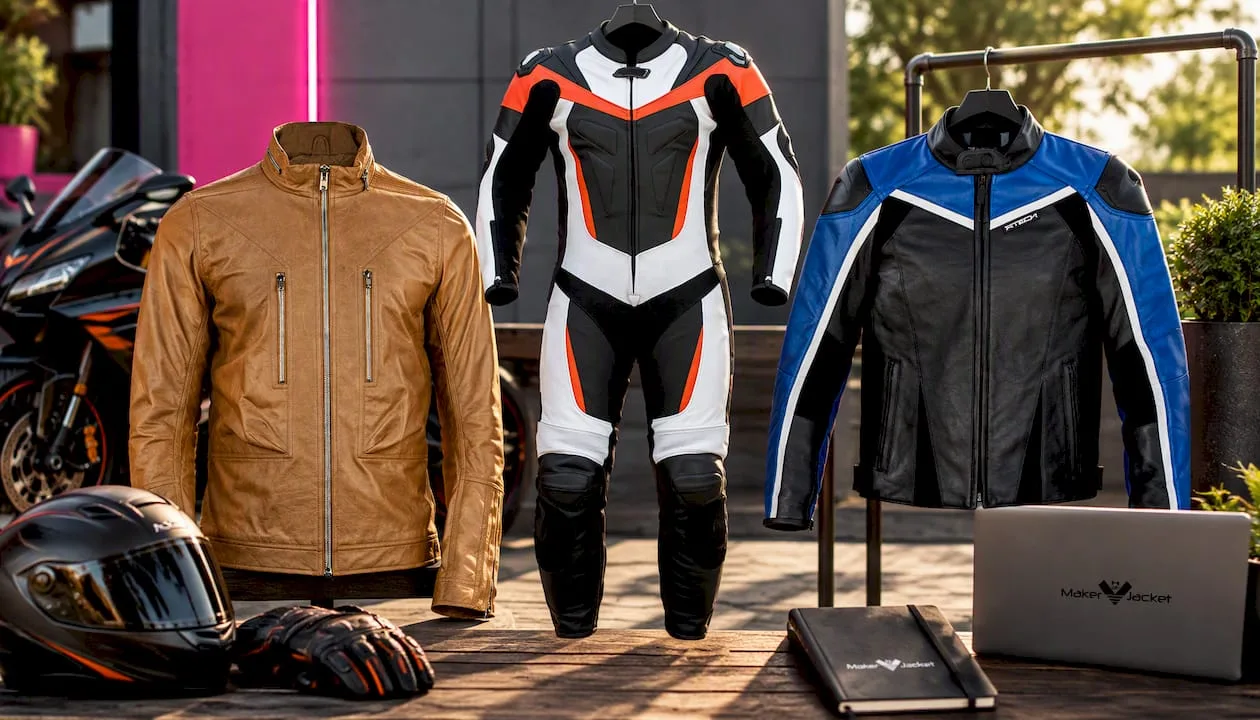
If you’re ordering a new jacket, you can decide on color, cut and fit up front. Our custom orders start at $199 for a Customize Jacket Order, with a Custom Biker Jacket at $249, a Custom Bomber Jacket at $249, a Customize Motorcycle Jacket Order at $299 and a Customize Motorcycle Suit Order at $575. Every order ships free worldwide. Browse the custom order range to pick a style, or look at the ready-made tan leather biker jacket if you want to see how a finished piece looks before you customize your own.
A simple fade-prevention routine
If you want one routine to follow, this is it:
- Every wear: let the jacket air out, wipe off dirt with a damp cloth (brush suede), and hang it on a wide hanger away from windows.
- Every few weeks: check collars, cuffs and shoulders for early color change, and rotate if you have a second jacket.
- Each season: clean gently, condition if the leather feels dry, and store off-season pieces in the dark under a breathable cover.
- Whenever it gets wet or stained: dry it slowly away from heat, and take stubborn stains to a professional leather cleaner.
FAQ
Can leather fade in sunlight?
Yes. Visible light and UV can fade dyes and colored leather, and long exposure can also weaken the material, according to the Canadian Conservation Institute. The damage builds up over time and can’t be reversed. Even finished dark leathers can fade, so keep every color out of direct sun.
How do I protect a leather jacket from the sun?
Keep it out of direct sunlight and strong indoor light, and use curtains or blinds near bright windows. Rotate your jackets so one doesn’t take all the exposure, and store it in a closet or breathable cover when you’re not wearing it. Don’t leave it in a parked car.
Does leather conditioner stop fading?
Not on its own. Conditioner helps keep leather supple, but the conservation approach to fading is to reduce cumulative light exposure rather than rely on a topical product. Use conditioner for softness and care, and use shade and dark storage for color.
Can I bring back faded color myself?
Ordinary cleaning and conditioning won’t reliably restore color that light has already removed. Recoloring is specialist work, so take the piece to a leather repair or refinishing professional rather than trying household dyes. Stopping further exposure is the step that always helps.


