

Shearling vs Sherpa: Which Jacket Lining Should You Buy?


Shearling and sherpa look alike and are not the same thing. Shearling is a sheep or lamb hide, tanned with the wool still attached. Sherpa is a synthetic pile fabric, usually polyester, made to imitate it. Shearling is warmer, regulates moisture better and can last for decades. Sherpa is lighter, cheaper and goes in the washing machine. Which one is right depends on how cold your winters are, how much you want to spend and how much care you are willing to give a coat.
Below we cover how each material is made, how they compare on warmth, weight, durability and upkeep, how to tell them apart in a store, and which one suits which kind of wearer.
TL;DR
- Shearling is real sheepskin with the wool on. It is the warmer, longer-lasting option, and it costs more and needs careful care.
- Sherpa is a synthetic pile, typically polyester, built to look like shearling. It is lighter, cheaper and usually machine washable.
- Faux shearling, faux sheepskin and high-pile fleece are mostly marketing names for the same synthetic family. Check the fiber-content label rather than trusting the product name.
- Choose shearling for deep-cold winters and a coat you plan to keep for years. Choose sherpa for mild-to-cold days, layering and easy care.
Table of Contents
- What shearling actually is
- What sherpa actually is
- Shearling vs sherpa at a glance
- Warmth: which keeps you warmer?
- Weight and feel
- Durability and care
- Cost: what you are paying for
- Faux shearling, faux sheepskin and high-pile fleece
- How to tell what you are buying
- Which one should you choose?
- Our view at Maker of Jacket
- Shop shearling and sherpa styles at Maker of Jacket
- Practical tips for wearing and keeping either material
- FAQ
- Sources
What shearling actually is
Shearling is the tanned skin of a sheep or lamb that was recently shorn, with the wool left on the hide, as Wikipedia’s entry on shearling describes it. The fleece side faces in toward your body. The skin side is finished as suede or smooth leather and faces out. That is why a shearling coat can be worn as the whole garment and not just as a lining.
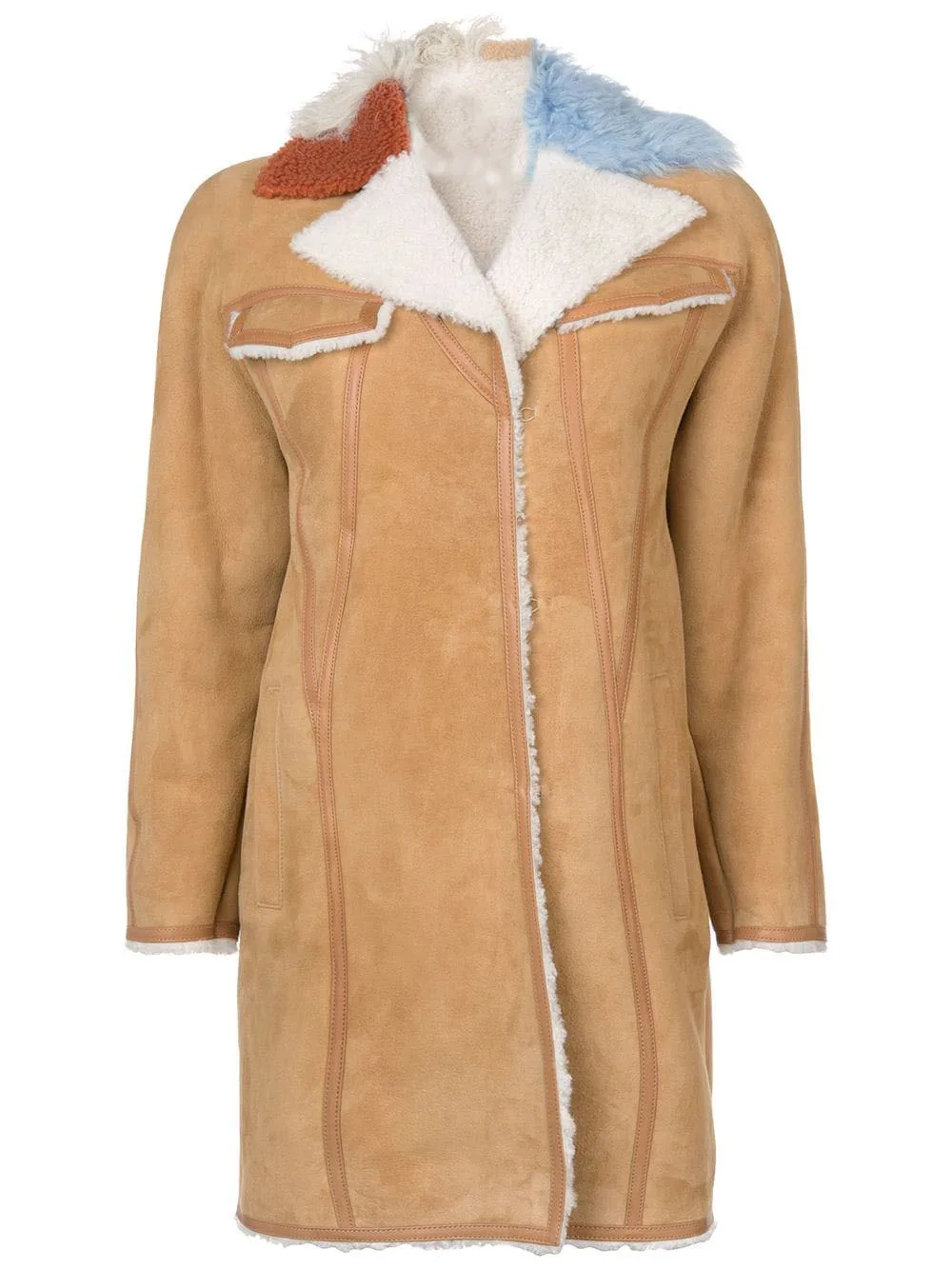
A lamb that has been shorn only once produces the fine, dense wool most prized in clothing, according to the Merchology fabric guide. Because the wool grows from a real hide, shearling is heavy and flexible, and it has a density that is hard to fake.
You will see shearling in aviator and bomber jackets, collars and cuffs on leather coats, boots and mittens. If you want a closer look at how the style works, our guide to shearling jackets, their style, warmth and versatility goes through the main cuts.
What sherpa actually is
The Cambridge Dictionary defines sherpa, in clothing, as a thick, soft artificial material that looks similar to sheepskin. It is a knit or woven pile, typically with a nubby, curly face on one side and a flatter knit on the other.
On fiber content, Popular Mechanics notes that sherpa is made exclusively from polyester, while authentic shearling includes a layer of skin. Other sources describe blends that include acrylic or cotton, so the exact mix varies from garment to garment.
No animal is involved, so sherpa is the vegan-friendly choice, though polyester is a petroleum-based plastic and sheds microfibers in the wash. That is a trade-off worth knowing, not a reason to rule it out.
Where the name comes from
The word borrows from the Sherpa people of the Himalayas, who are associated with mountain clothing. The fabric itself has no direct link to them. It is simply a name the apparel trade adopted for a fuzzy pile that suggests warm, rugged outerwear.
Shearling vs sherpa at a glance
| Feature | Shearling | Sherpa |
|---|---|---|
| Material | Tanned sheep or lamb hide with the wool attached | Synthetic pile, typically polyester |
| Warmth | Higher, and it regulates temperature | Good for moderate cold, less heat retention |
| Weight | Heavy and dense | Light and less bulky |
| Moisture | Wool absorbs and releases vapor | Does not absorb water; can feel clammy |
| Care | Careful, specialist cleaning if soaked | Machine washable and quick drying |
| Price | Expensive | Much lower |
| Lifespan | Many years with proper care | Can flatten or pill over time |
| Animal-free | No | Yes |
Warmth: which keeps you warmer?
Shearling wins on warmth, and the reason is mostly about moisture. Wool fibers absorb and release moisture vapor, which helps regulate temperature, according to a comparison of shearling and fleece linings. Synthetic fibers do not absorb moisture the same way. If you sweat heavily, a synthetic lining may feel clammy and can hold on to odors.
Sherpa is still a capable insulator. The pile traps air, and it adds real warmth over a plain knit. The same comparison notes that fleece-type fabrics are lighter and dry faster. For a commute, a walk with the dog or a fall evening, sherpa is plenty. For standing at a bus stop in a northern winter, or riding in near-freezing wind, a real shearling layer holds up better.
One caution on claims you may read online. Calling synthetic fleece “breathable” or “moisture-wicking” can blur two different ideas: air permeability and moisture management. Synthetic fibers do not absorb water, so what a label calls breathable describes airflow through the fabric, not how the fiber handles sweat.
Warmth for activity
If you are active outdoors, think about what you are doing. Heavy shearling can overheat you during a brisk walk, and once you stop it feels wonderful. Sherpa is easier to layer under a shell or over a sweater because it is less bulky. Most wearers who live somewhere with real winter end up with one of each: a lighter sherpa piece for daily use and shearling for the coldest weeks.
Weight and feel
Shearling is noticeably heavier. A full shearling coat can weigh several pounds because you are wearing a hide. Popular Mechanics lists sherpa as lighter, less bulky and less costly, and shearling as natural and potentially expensive. That heft is part of why shearling feels substantial and why some people find it too much for travel or office wear.
In feel, sherpa is soft right away and has a plush, teddy-bear texture. Shearling is soft in a different way: the wool is denser and more springy, and the suede face has a grain that sherpa cannot match.
Durability and care
This is where the two diverge most in daily life.
Caring for shearling
The American Fur Council says rain, sleet or snow will not damage shearling if it is treated properly. Its advice is simple: shake off light moisture and hang the coat to dry away from heat in a well-ventilated space. If the leather becomes saturated, take it to an Authorized Furcare Specialist or a leather specialist rather than trying to fix it yourself.
For storage at home, the same source says to hang shearling on a broad hanger, never in a bag or covered, and keep it away from cedar closets, mothballs, direct light and heat. So the answer to “can you wear shearling in snow?” is yes, with sensible drying afterward. Never put it near a radiator or use a hair dryer.
The general leather rules in our guides help here too: see how to store leather jackets so they keep looking new and how to clean a leather jacket lining. Do not use a home recipe on the wool side of a shearling coat. When in doubt, a specialist is cheaper than a ruined hide.
Caring for sherpa
Sherpa is low-maintenance. It can be machine washed and dried, and it is quick drying. Always read the garment’s care label first, since a sherpa lining sewn into a leather or wool jacket may not be washable on its own. Use a gentle cycle and low heat for a standalone sherpa jacket.
The weak spot is wear. Synthetic pile can pill, mat and flatten over time, particularly at cuffs, collars and under the arms where it rubs. Once it has matted, it rarely recovers. Real shearling, by contrast, may last many years with proper care, according to the shearling and fleece comparison.
Cost: what you are paying for
Shearling costs more because it is a tanned hide that needs skilled cutting and sewing, and because the supply of suitable skins is limited. Sherpa costs far less because it is mass-produced fabric. Expect a real shearling coat to be a major purchase, and a sherpa jacket to be a modest one.
The useful way to compare is cost per winter. A shearling coat that you wear for fifteen years can come out cheaper per season than a sherpa jacket that mats after three. But that math only works if you will really wear it for that long, in a climate that justifies it. If you live in a mild area and only need warmth a few weeks a year, sherpa is the more sensible spend.
Faux shearling, faux sheepskin and high-pile fleece
This is where shoppers get confused. Product descriptions use sherpa interchangeably with faux shearling, faux sheepskin and high-pile fleece. In practice, faux shearling is polyester made to look and feel like shearling, and real shearling is a lamb or sheep hide with the wool left on. High-pile fleece usually describes the whole jacket body, not only the lining.
So “shearling vs fleece” is really “natural hide vs synthetic pile” again. Fleece is light and dries quickly. Shearling is heavier, warmer and more demanding. And when a listing says “shearling-style” or “sherpa-lined”, it is describing a look, not a material.
Leather jacket with sherpa lining vs a sherpa jacket
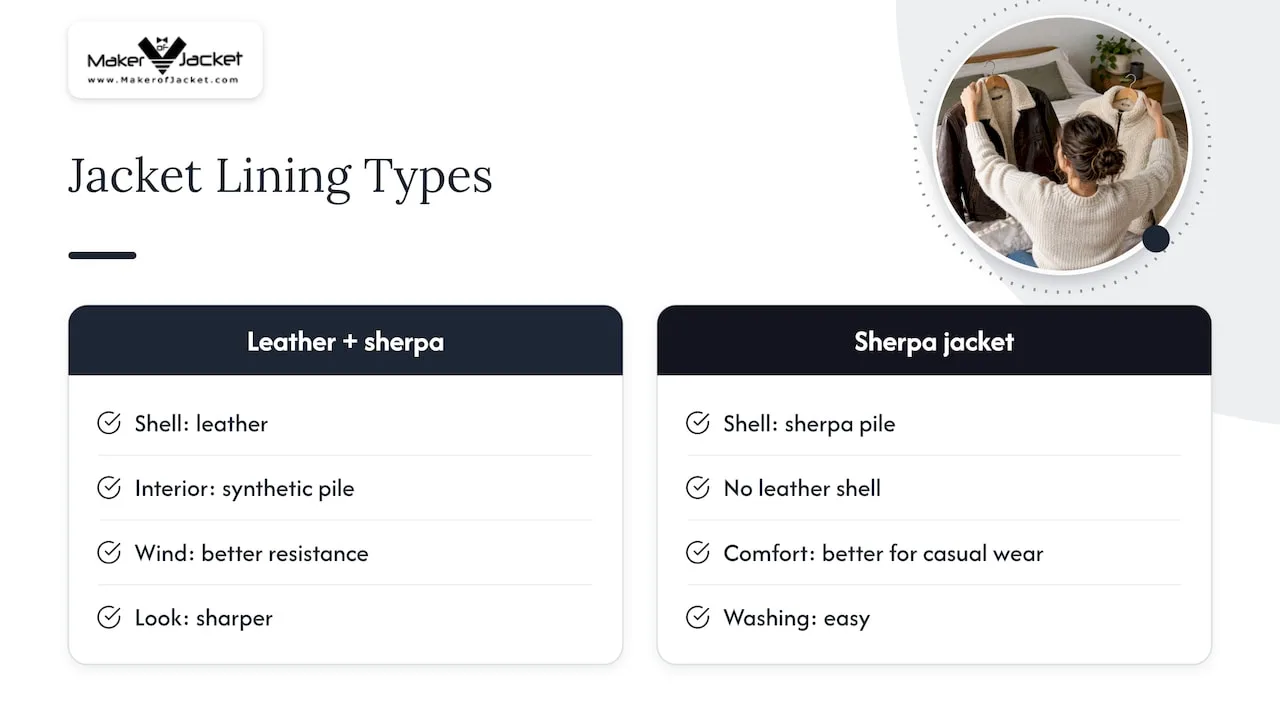
These are different products. A leather jacket with a sherpa lining is a leather shell with a synthetic pile inside, which gives you the wind resistance of leather and a warm, soft interior at a moderate price. A sherpa jacket is made of the pile itself, with no leather shell. The first is better for wind and a sharper look. The second is better for casual comfort and easy washing.
How to tell what you are buying
A name will not tell you the fiber. Fuzzy fabric names such as sherpa, teddy and borg describe construction, not fiber content. So read the label.
In the United States, federal rules enforced by the FTC require most textile and wool products to carry a label showing fiber content, country of origin and the business responsible for the item. Generic fiber names and percentages are listed in descending order, for example “65% rayon 35% polyester”. Care labels on clothing are required under a separate rule.
A quick checklist in the store or when reading a listing:
- Check the fiber label. “100% polyester” on the pile means sherpa or faux shearling.
- Look at the back of the pile. Real shearling has a skin side, suede or leather, to which the wool is attached. Sherpa has a knit or woven backing.
- Part the fibers. On real shearling, the wool grows out of a hide. On sherpa, you see knit loops or fabric at the base.
- Consider the weight and price. A very light, very cheap piece sold as “shearling” deserves questions.
- Ask the seller to confirm the material in writing if the listing is vague.
Which one should you choose?
Choose shearling if:
- You live where winter stays well below freezing for weeks.
- You want one coat to keep for many years.
- You are willing to hang it properly and take it to a specialist if it gets soaked.
- You like the look of an aged, supple hide.
Choose sherpa if:
- You want warmth for fall, mild winters or layering.
- You prefer throwing a jacket in the wash.
- You avoid animal products.
- Your budget is tight, or you like to change styles often.
If you are still torn, a leather jacket with a removable or built-in sherpa lining is a middle path.
Our view at Maker of Jacket
We sell both looks, and we do not think one material beats the other for everybody. What matters is matching the lining to how the jacket will really be used. A rider who spends an hour on the road in cold wind needs different things from a student who wants a cozy layer for campus.
What we see in custom orders is that people choose a lining by look first and discover weight and care later. So we suggest deciding three things before you pick: the lowest temperature you will wear it in, how often you will wear it, and whether you want to wash it at home. If the answers are “cold, often, no”, shearling earns its price. If they are “cool, sometimes, yes”, sherpa is the smarter pick. And in either case, check the fiber label and ask us for the material details on any piece before you order.
— Maker
Shop shearling and sherpa styles at Maker of Jacket
If you want a jacket built around the lining you have chosen, start with our shearling and faux fur jacket collection. You can see real shearling pieces such as the Contrast Collar Shearling Fur Coat and the Contrast Pocket Shearling Lamb Fur Jacket, alongside a synthetic option like the Cropped Faux Fur Sherpa Style Hoodie.
Want something made to your size and style? Our custom jacket orders start at $199 for the Customize Jacket Order, with the Custom Biker Jacket at $249, the Customize Motorcycle Jacket Order at $299 and the Custom Suede Leather Jacket at $299. Shipping is free worldwide, and our team is available 24/5 if you have questions about materials or fit.

Practical tips for wearing and keeping either material
- Rotate your coats. Giving a shearling or sherpa piece a day to air out between wears keeps the pile fresher.
- Brush gently. A soft brush lifts matted sherpa and removes surface dirt from shearling’s suede face. Do not scrub.
- Spot clean early. Fresh marks on a suede or leather face are easier to deal with than old ones. For leather exteriors, our step-by-step leather jacket cleaning guide covers the basics.
- Pack carefully. Do not crush a shearling coat into a tight bag. Our tips on packing a leather jacket apply here, too.
- Keep heat away. Radiators, dryers and hair dryers can stiffen a hide and melt synthetic fibers.
If you want our own side-by-side take focused on care and long-term wear, see our page on sherpa vs shearling jackets.
FAQ
Is sherpa the same as shearling?
No. Shearling is a real sheep or lamb hide with the wool attached, while sherpa is a synthetic fabric, usually polyester, made to resemble it. The two look similar, but they differ in warmth, weight, care and price. Many product listings use the terms loosely, so check the fiber label.
Is shearling fake fur?
No, shearling is real: it is sheepskin with the wool still on the hide. What people call fake shearling is sherpa or faux shearling, which is a synthetic pile. If you want an animal-free coat, look for 100% polyester or similar on the fiber-content label.
What is warmer, fleece or shearling?
Shearling is generally the warmer of the two, because wool absorbs and releases moisture vapor and helps regulate temperature. Fleece is lighter and dries faster, which makes it better for active use and easy washing. Sherpa sits between plain fleece and shearling in look and warmth.
Can you wear shearling in the snow?
Yes. The American Fur Council says properly treated shearling will not be damaged by rain, sleet or snow. Shake off light moisture and hang the coat to dry in a ventilated space away from heat. If the leather becomes saturated, take it to a furcare or leather specialist.
Can you machine wash a sherpa jacket?
Often yes, since sherpa is quick drying and low-maintenance. Always follow the care label, though, because a sherpa lining attached to a leather or wool shell usually cannot be washed with the garment. Use a gentle cycle and low heat.


