

How to Stop Leather From Squeaking: Jackets and Gear

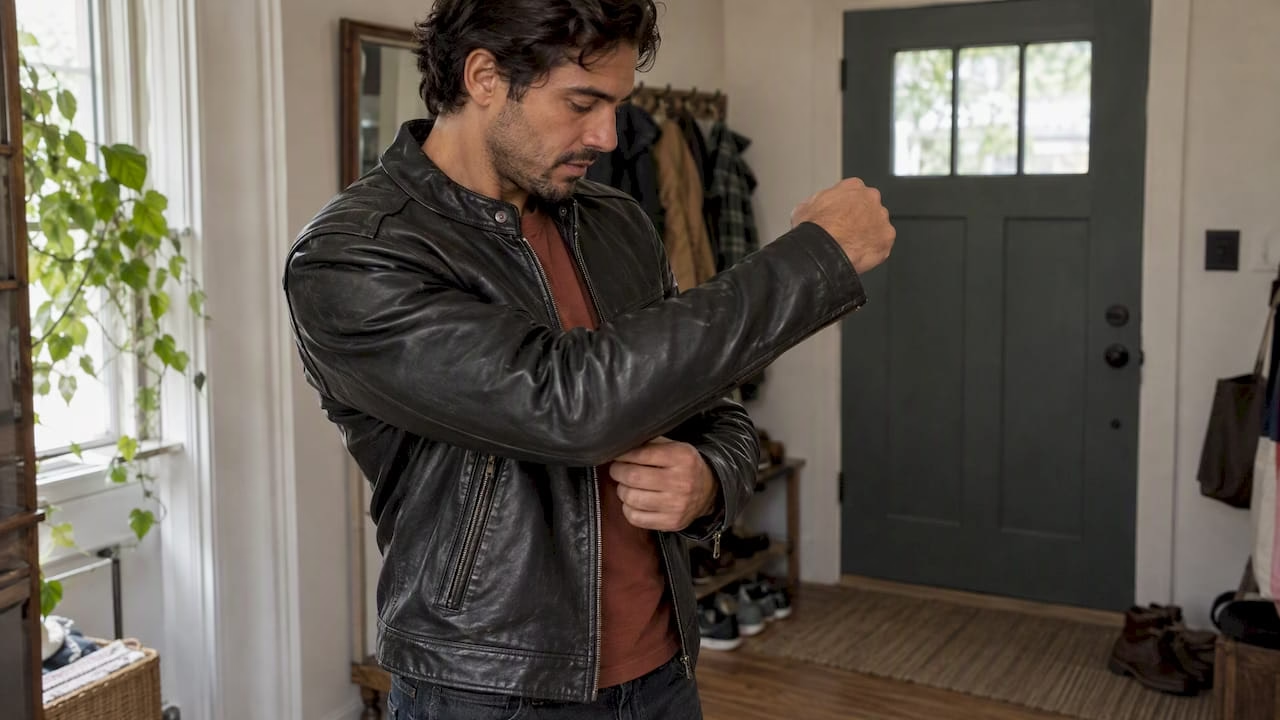
Most squeaky leather jackets are not broken. The noise comes from one of four places: stiff new hide, dry fibers, a slippery lining rubbing on itself, or moisture trapped in the layers. Find which one you have, fix that one, and leave the rest alone. Skip the quick fixes that coat the leather in oil or lubricant, because they trade a few quiet days for lasting damage.
This guide is written for jacket wearers and riders, with notes for boots and other leather gear, since the physics is the same.
TL;DR
- Squeaking is friction. Work out whether it comes from the leather, the seams, the lining or moisture before you treat anything.
- New, stiff leather usually quiets down with wear. Bending, wearing and a light conditioning do most of the work.
- Use conditioner sparingly. Conservators warn that heavy dressings only give temporary relief and can cause long-term problems.
- Keep leather dry and stored with airflow. Damp is a cause of noise and of damage.
- If the noise is a structural problem, such as separating layers or loose hardware, take it to a leather repair specialist.
Table of Contents
- Why leather squeaks in the first place
- Pinpoint the squeak before you treat it
- Fix 1: Break it in, deliberately
- Fix 2: Condition lightly, only where it is dry
- Fix 3: Deal with the lining
- Fix 4: Manage moisture
- Fix 5: Quiet the hardware and seams
- Boots, gloves and other leather gear
- When to see a professional
- Our view: a quiet jacket starts with how it is made
- If you want a jacket cut for your body
- A simple maintenance plan to keep leather quiet
- FAQ
- Sources
Why leather squeaks in the first place
A squeak is two surfaces sticking and slipping against each other, many times a second. Researchers at Harvard’s engineering school studied this in soft-on-rigid contact and found the sound is driven by rapid pulses at the interface, with the pitch set by how often those pulses repeat. You do not need the equations. The practical lesson is that the noise lives where a soft, grippy material meets something firmer or slicker, and that is exactly what happens at a jacket’s seams, elbows, cuffs and lining.
In leather goods, the common causes line up like this:
- Stiff new material. A new leather piece has not yet molded to your body. Think, a footwear maker, notes that new leather uppers squeak because the leather is still relatively stiff and will mold over time. The same is true of a jacket’s shoulders and elbows.
- Dry fibers. Leather that has lost its natural oils and moisture is stiffer and grabs against itself.
- Moisture. Sweat or rain trapped between layers changes how surfaces slide. A Reader’s Digest piece on squeaky shoes quotes a specialist who names materials as the number one reason, with moisture a frequent second.
- Friction between components. In a jacket that means the lining against the shell, a zipper tape against a seam, or a belt buckle against a snap.
The Reddit advice that tops the search results, that squeaky leather is often good leather and goes away with wear, is partly right. Thick, full-bodied hides do tend to be noisier when new. But “wear it and wait” is only the answer for one of the four causes.
Pinpoint the squeak before you treat it
Treating the wrong source wastes time and can harm the leather. Spend five minutes on this test.
- Stand in a quiet room and move one joint at a time. Bend an elbow, roll a shoulder, twist your torso. Note which movement makes the noise.
- Turn the jacket inside out and repeat. If the sound is still there with the shell folded away from the lining, the lining is rubbing on itself or on your clothes.
- Wear it over a different layer. A smooth nylon shirt under a slick lining can produce a squeak that disappears over a cotton tee.
- Press on seams and panels with your hand. If a seam creaks when you flex it by hand, the leather there is stiff or dry. If a panel crackles or feels like it is separating, that is a structural issue.
- Check the hardware. Hold zipper pulls, snaps and buckles still while you move. Metal on leather chirps too.
Write down what you found. The table below maps symptoms to fixes.
| What you notice | Likely cause | First thing to try |
|---|---|---|
| Squeak at elbows, shoulders, new jacket | Stiff hide | Wear it, flex it, light conditioning |
| Squeak on seams, dull or dry look | Dry fibers | Thin coat of leather conditioner |
| Noise gone when worn over cotton | Slick lining on slick layer | Change layers, treat lining |
| Noise after rain or a sweaty ride | Trapped moisture | Dry slowly with airflow |
| Chirp near zipper or snaps | Hardware rubbing | Isolate and lubricate the hardware only |
| Crackle with a sense of layers shifting | Adhesive or structure failing | Professional repair |
Fix 1: Break it in, deliberately
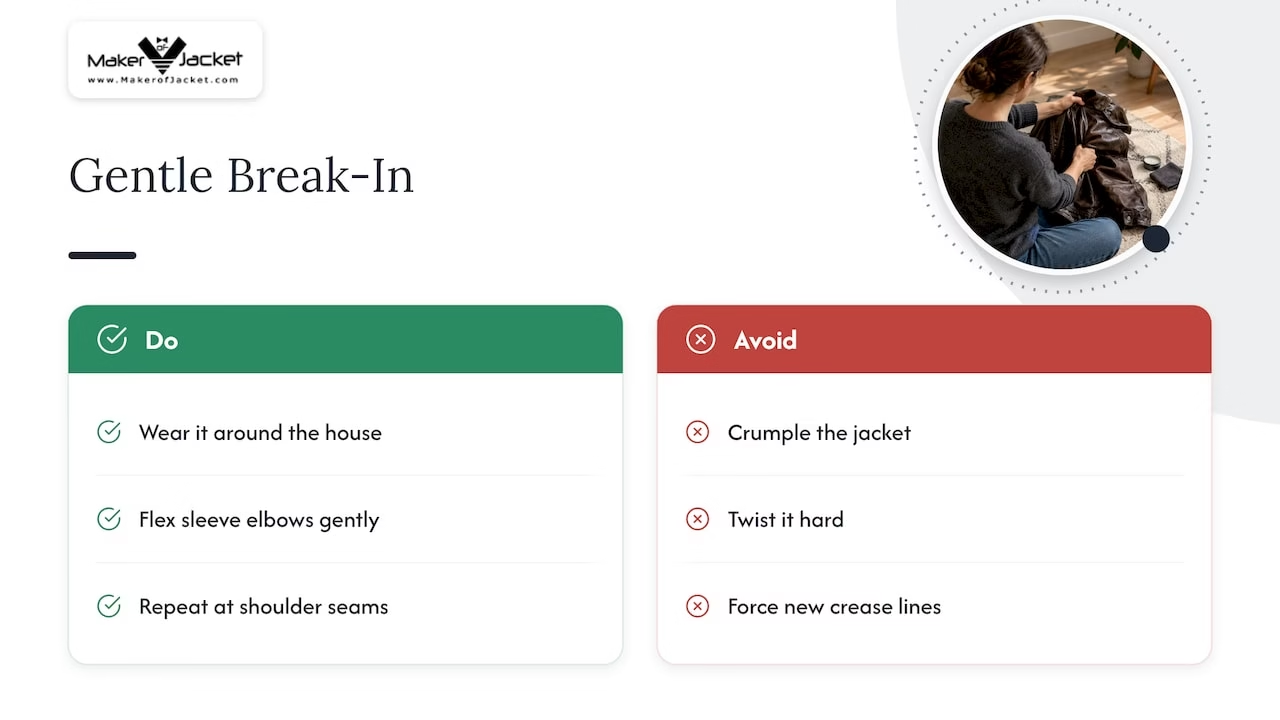
If your jacket is new and the squeak shows up at the joints, time and movement are the cheapest cure. Wear it around the house. Reach, bend, drive in it, carry a bag with it. Leather softens where it flexes, and the noise typically fades as the fibers relax.
You can speed this up without products. Fold the sleeves at the elbows and gently work them back and forth in your hands for a few minutes, then do the same at the shoulder seams. Do not crumple the jacket or twist it hard, and never force a fold into a crease line that was not there. Our guide on how to soften your leather jacket goes through the gentle methods in more detail.
If the squeak is still there after a few weeks of regular wear, move to the next fix.
Fix 2: Condition lightly, only where it is dry
Dry leather is noisier leather. A light conditioner can restore suppleness, and it is the standard first step for a stiff jacket. The key word is light.
The U.S. National Park Service’s conservation guidance on leather dressings explains that dressings are animal fats, oils or waxes meant to penetrate the fiber network and act as a lubricant. The same document warns that overuse can leave a white, waxy bloom called fatty acid spew, easily mistaken for mold, and can speed the deterioration of stitching and fibers. That is the downside of the “just keep oiling it” approach.
A careful routine looks like this:
- Clean the jacket first with a soft, slightly damp cloth. Conditioner pushed over dirt traps it. Our step-by-step cleaning guide covers it.
- Test the conditioner on a hidden spot, such as the inside of a hem, and wait a day to see how the color reacts.
- Apply a pea-sized amount to a clean cloth and work it into the squeaky area in thin circles.
- Wait several hours, then buff off any surface residue with a dry cloth.
- Wear the jacket and re-test. If the noise is lower but not gone, repeat after a few weeks rather than the same day.
We go deeper on product types in our leather conditioner guide. One rule holds for any product: more is not better. Leather that is saturated becomes limp, darker and can attract dirt.
Skip these quick fixes
Search results are full of shortcuts. Be careful with them.
- WD-40 and similar lubricants. They are not made for leather. The Reader’s Digest article notes that specialists caution against quick fixes like WD-40 or heavy oiling, which may quiet a squeak for a while but can harm the leather’s surface.
- Cooking oils and petroleum jelly. They can stain, darken and go rancid or leave a greasy film that picks up lint.
- Heat. A hair dryer or radiator dries leather out, which makes the squeak worse and can crack the surface.
Fix 3: Deal with the lining
Many “squeaky leather” complaints are not the leather at all. A synthetic lining sliding against the shell, or against a synthetic shirt, can sound much like a squeak. The sound often disappears when you change what you wear underneath.
What you can do:
- Try a cotton or wool base layer for a week and see if the noise stops.
- Look at the lining at the underarm and along the side seams. If it is bunched or twisted, smooth it and let the jacket hang on a wide-shouldered hanger so the lining settles.
- Clean the lining if it is damp or has built-up sweat. Body oils and salt change how fabric slides. Our guide to cleaning a leather jacket lining walks through it.
- If the lining is stiff, slick and rubs against itself, a tailor or a leather repair shop can often replace it with a softer fabric. That is a cleaner fix than spraying anything on it.
If some of your gear mixes real leather with synthetic panels, treat the two differently. Conditioners meant for hide are not always right for coated materials, and fixes designed for vegan leather squeaking steer clear of products that harm synthetics.
Fix 4: Manage moisture
Moisture does two things. It changes how surfaces slide, and it slowly damages leather. A jacket soaked in rain or damp from a sweaty ride can squeak as it dries, because the fibers stiffen unevenly.
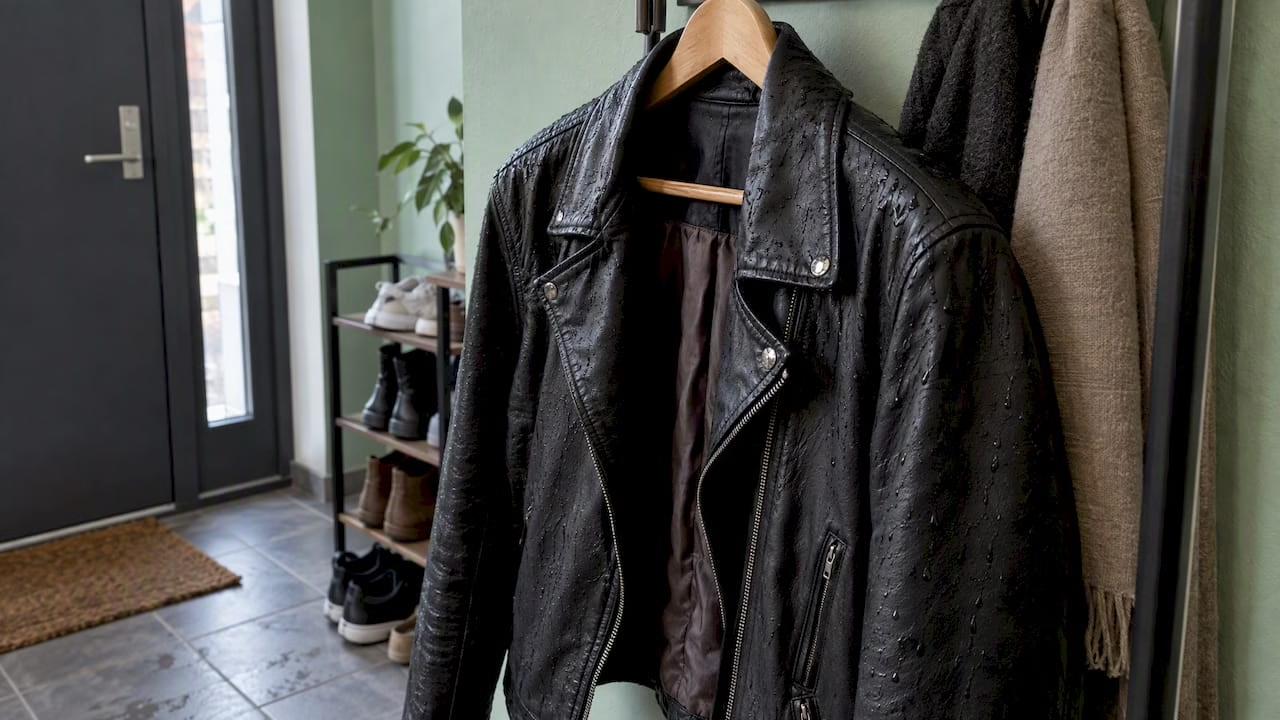
For guidance from conservators, the National Park Service’s care guide for leather and skin objects advises keeping hide materials dry and protected from exposure to relative humidity above 65%. That is written for museum collections, but the principle carries over to your closet.
Practical steps:
- Let a wet jacket dry slowly at room temperature on a padded hanger, away from heaters and sun. Our page on drying a wet leather jacket has the full method.
- Stuffing a damp shoe with newspaper is a standard trick for footwear. Think suggests leaving the shoe stuffed for around 12 hours in a ventilated spot. For a jacket, use a wide hanger and let air circulate instead of packing it.
- Store the jacket in a breathable garment bag, not plastic. Plastic traps humidity.
- In a humid climate or a hot, sweaty season, rotate jackets so each one can dry fully between wears.
The University of Florida’s extension service makes the same point for leather tack in hot, humid climates: keep leather clean and wipe sweat off after use. Sweat is mild but persistent, and it works into stitching and fibers.
Fix 5: Quiet the hardware and seams
If the squeak is a chirp that stays in one spot, look at the metal. A zipper pull that taps the shell, a snap that rubs its leather tab, or a buckle that grinds on a strap can all make a sound you will blame on the leather.
- Hold the hardware still while you move. If the noise stops, you have found it.
- Put a dab of beeswax or a clear zipper lubricant on the hardware itself, using a cotton swab so nothing touches the leather around it.
- Wipe off excess. Never let lubricant migrate onto the hide.
Seams are different. The Harvard work suggests friction points such as tight-fitting joints are more prone to noise, which matches experience: the loudest part of a stiff jacket is usually a shoulder or elbow seam. Conditioning the leather on either side of the seam, and wearing the jacket in, usually helps. A seam that sounds like it is tearing is something else, and belongs with a repair shop.
Boots, gloves and other leather gear
People searching for this problem often have shoes or riding boots in mind. The principles are the same, with a few specific tweaks.
- Squeak from inside the boot. Pull the insole and sprinkle a little baby powder or talc on both sides. Think recommends this to absorb moisture and cut friction between insole and base.
- Squeak from the sole on smooth floors. Lightly roughening the rubber outsole with fine sandpaper can reduce the grip that causes it, according to the same source.
- Squeak at the flex point of the upper. A thin coat of conditioner, as above.
- Squeak that keeps coming back. The Reader’s Digest article notes that powder is a temporary fix and does not address structural problems such as separating glue or a broken shank. That needs a cobbler.
For leather gloves, chaps and pants, flex the stiff spots by hand and condition lightly. A new pair of chaps or riding pants will often squeak where the thigh meets the saddle, and it fades with ride time.
When to see a professional
Some squeaks are symptoms. Take the piece to a leather repair specialist or a good tailor if:
- You can feel layers shifting or hear crackling inside a panel.
- A seam is opening or the stitching is fraying.
- The lining is torn or the interlining has bunched.
- You see a white, waxy residue and are not sure if it is mold or conditioner buildup. Do not keep applying product until someone has looked at it.
- The jacket has gotten soaked and squeaks and smells musty. Mold needs proper treatment.
Ask the shop to confirm what they will use before they treat the jacket, and ask for a test on a hidden area.
Our view: a quiet jacket starts with how it is made
We make and sell leather jackets for a living, so we hear this question often. Here is our honest take.
First, a little noise from a new, well-made leather jacket is normal. Thick hide has body, and body takes time to relax. A jacket that is silent on day one may be thin or heavily treated, which is not always a good sign.
Second, fit matters more than people think. A jacket that is too tight pulls at the seams and the lining and squeaks at every joint. A jacket that is too loose lets the shell slide and the lining bunch. The fix is not a product, it is a better fit. That is one reason we offer made-to-measure work, so the shoulders, sleeves and torso match your body rather than a standard size chart.
Third, the lining is a choice. If you ride, sweat or live somewhere humid, tell us what you plan to wear underneath and how you use the jacket, so the lining can suit it. That is a conversation we are happy to have before an order is placed.
Fourth, less is more with care. We would rather you clean gently, condition once or twice a season and hang the jacket properly than reach for whatever is in the garage. Our general care tips cover the routine.
— Maker
If you want a jacket cut for your body
If a squeaky jacket turns out to be a poor fit, a custom piece can solve the cause. We build jackets to your measurements and preferences. Our custom jacket page is the place to start, and prices for the made-to-order range are published on the custom order category. A Custom Biker Jacket is 249 USD, a Customize Motorcycle Jacket Order is 299 USD, and a Custom Leather Vest is 229 USD. Our site also lists worldwide free shipping.
A simple maintenance plan to keep leather quiet
Prevention beats repair, as conservators keep saying. A routine that takes ten minutes a season:
- After wear: hang the jacket on a wide, padded hanger. Do not fold it or leave it in a car.
- Monthly in heavy use: wipe with a soft, slightly damp cloth, then let it dry in open air.
- Each season: check the lining, seams and hardware. Condition lightly if the leather looks dull or feels stiff.
- Before storage: clean, dry fully and store in a breathable bag in a cool, dry closet.
- After rain or heavy sweat: dry slowly, away from heat, and wait until it is fully dry before conditioning.
White and light leather needs extra attention because dirt and conditioner show more. Our guide on caring for a white leather jacket covers it.
FAQ
Will a squeaky leather jacket stop squeaking on its own?
Often, yes, if the cause is stiff new leather. Regular wear softens the fibers at the elbows and shoulders, and the noise usually fades. If it persists for weeks, look at the lining, moisture or dry leather instead.
Can I use WD-40 or oil to stop leather squeaking?
We would not. Specialists cited by Reader’s Digest warn that these quick fixes can harm the leather’s surface, and National Park Service conservators note heavy dressings can cause fatty acid spew and weaken stitching. A small amount of purpose-made leather conditioner is the safer choice.
Why does my leather squeak more in summer or after rain?
Moisture from sweat, humidity or rain changes how surfaces slide against each other, and uneven drying can stiffen fibers. Dry the jacket slowly on a wide hanger, away from heat, and store it somewhere with airflow.
Is it the leather or the lining that is squeaking?
Turn the jacket inside out and flex the same joint. If the noise remains, the lining is the likely cause. Wearing the jacket over a cotton layer instead of a slick synthetic one also tells you quickly.
How do I stop leather boots from squeaking?
Find where the sound starts. Baby powder under the insole helps with internal squeaks, and light sanding of a rubber sole helps with floor squeaks. If the squeak returns, a cobbler should check for separating glue or a broken shank


