

What Is Eco-Friendly Leather? a Buyer’s Guide


TL;DR:
- Eco-friendly leather encompasses animal, plant-based, and synthetic materials with varying environmental impacts, not a single product. Tanning methods, especially vegetable tanning, significantly influence sustainability by reducing toxicity and ensuring biodegradability. Genuine eco-friendly choices require detailed material identification, third-party certifications, and long-lasting durability for true environmental benefits.
The term “eco-friendly leather” gets used to sell everything from a $20 belt to a $500 jacket, which makes it nearly impossible to know what you’re actually buying. What is eco-friendly leather, really? It’s not one material. It’s a broad category covering vegetable-tanned animal hides, plant-based alternatives like cactus and mushroom leather, and synthetic faux leathers, each with a completely different environmental footprint. This guide breaks down exactly what separates the categories, where the marketing language misleads, and how to shop with your values intact.
Table of Contents
- Key takeaways
- What is eco-friendly leather, exactly?
- Tanning methods and their environmental impact
- Plant-based eco-leathers: the real pros and cons
- Synthetic and lab-grown leather alternatives
- How to identify truly eco-friendly leather products
- My honest take on eco leather’s complexity
- Build your own eco-conscious leather jacket
- FAQ
Key takeaways
| Point | Details |
|---|---|
| Eco leather isn’t one material | The term covers animal, plant-based, and synthetic leather with very different environmental profiles. |
| Tanning method matters most | Vegetable-tanned leather is biodegradable and far cleaner than chrome-tanned animal hides. |
| Plant-based isn’t plastic-free | Many plant-based leathers include synthetic coatings that reduce biodegradability. |
| Certifications signal honesty | Look for verified certifications and supply chain transparency, not just marketing claims. |
| Durability equals lower impact | A long-lasting leather product reduces consumption and waste more than a short-lived “green” alternative. |
What is eco-friendly leather, exactly?
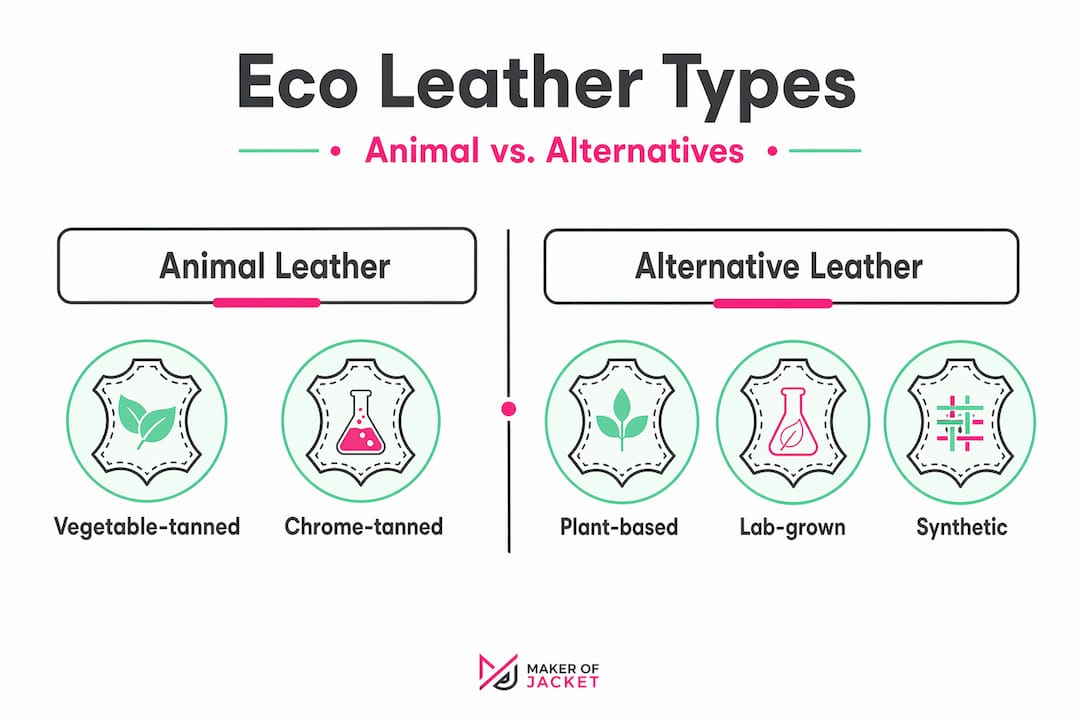
The phrase “eco-friendly leather” is an umbrella marketing term covering a wide range of materials: animal hides tanned with low-impact methods, bio-based materials grown from plants or fungi, and synthetic textiles made from recycled or petroleum-based sources. There is no single regulated definition. That’s the first thing worth understanding.
The three main categories break down like this:
- Vegetable-tanned genuine leather. Animal hide tanned using natural plant extracts like bark, leaves, and roots. The process is slow, artisanal, and produces leather that ages beautifully over decades.
- Plant-based leather alternatives. Materials like Piñatex (from pineapple leaf fiber), Desserto (from cactus), Mylo (from mycelium), and apple leather. These use agricultural byproducts or renewable plant sources as the base material.
- Synthetic and lab-grown leathers. Polyurethane (PU) and PVC faux leathers, plus emerging cultivated bio-leathers grown from animal cells in a lab environment.
Each category has a different relationship with animals, petrochemicals, water use, and end-of-life biodegradability. Treating them all as equally “eco-friendly” because they share a label is where most shoppers go wrong.
Pro Tip: When you see “eco leather” on a product tag, search the brand’s website for the specific material name and tanning or production method. If that information isn’t available, that tells you something important about the brand’s transparency.
Tanning methods and their environmental impact
The most overlooked factor in genuine leather sustainability is not whether the hide comes from an animal. It’s what happens during tanning. Conventional chrome tanning, which accounts for the vast majority of global leather production, relies on chromium salts. Tanning operations contribute 70% of chromium pollution in textile manufacturing, and roughly 30% of effluents from these operations contain hexavalent chromium, one of the most toxic industrial compounds in existence.
Vegetable tanning is the older and far cleaner alternative. Tanneries use tannins extracted from tree bark, oak galls, and other plant matter to cure the hide. The process takes weeks instead of hours, which is part of why vegetable-tanned leather costs more. But the result is biodegradable, free from heavy metals, and develops a unique patina over time that chrome-tanned leather never achieves.
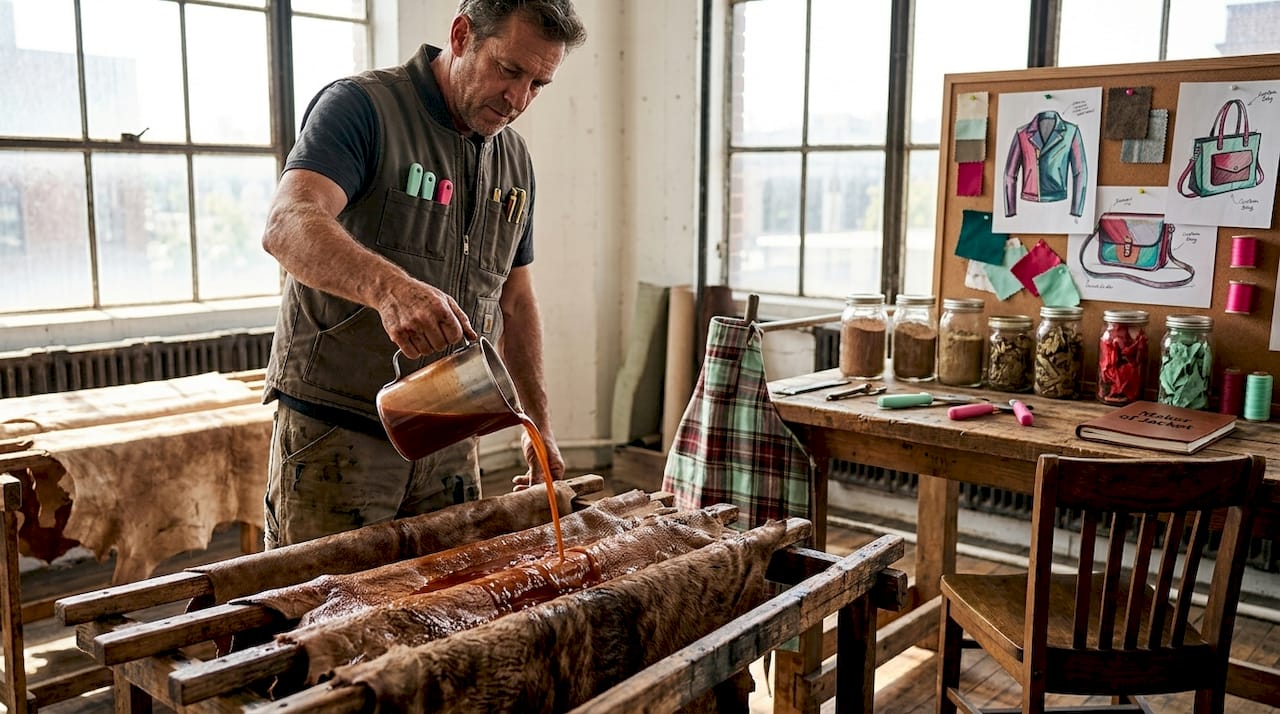
Here’s a direct comparison of the two approaches:
| Factor | Vegetable tanning | Chrome tanning |
|---|---|---|
| Chemicals used | Natural plant tannins | Chromium salts |
| Processing time | 30 to 60 days | 1 to 2 days |
| Biodegradability | Yes, fully | No |
| Toxicity risk | Very low | High (Cr VI hazard) |
| Cost | Higher | Lower |
| Patina development | Rich and unique | Minimal |
There’s also a growing legal dimension to this. The EU’s EUDR regulation now requires brands selling into the European market to prove their leather supply chains are deforestation-free, with mandatory due diligence, risk assessments, and digital traceability records. Non-compliance means fines and market blocks. This is pushing more brands toward transparent sourcing, which is ultimately good for consumers everywhere.
“Animal leather can be eco-friendly if sourced as a by-product of the food industry and tanned naturally. The key is the process, not the animal.” This framing changes how most people think about genuine leather’s place in sustainable fashion.
Plant-based eco-leathers: the real pros and cons
Plant-based leathers have attracted enormous press coverage, and for good reason. They avoid animal slaughter, often use agricultural waste as raw material, and emit lower carbon during production compared to conventional leather. But the full picture is more complex than most marketing copy lets on.
Here are the most commercially available options and what you actually need to know about each:
- Piñatex. Made from pineapple leaf fibers, a genuine agricultural waste product from pineapple farming in the Philippines. The base material is natural, but Piñatex uses a PU coating to achieve durability, which limits biodegradability and introduces some petroleum chemistry.
- Desserto. Grown from nopal cactus in Mexico with no irrigation needed. The finished product uses some polymer content to maintain structure. Partly biodegradable under the right conditions.
- Mylo. Grown from mycelium (mushroom roots), backed by Bolt Threads. One of the more promising materials in terms of natural composition, though production at scale remains limited and expensive.
- Apple leather. Made from apple pomace (the pulp and skin left over from juice production), blended with PU and applied to a fabric backing. Lightweight and soft, but durability over years of wear is still an open question.
Not all plant-based leathers are plastic-free. Some use bioplastics like PLA, others use traditional PU. Unless a brand publishes specific composition data, you cannot assume a product labeled “plant-based leather” is fully biodegradable or zero-plastic.
Pro Tip: Ask specifically what percentage of the material is bio-based versus synthetic binder or coating. Some products marketed as plant leather are as little as 30% plant-derived by weight.
If you want a deeper breakdown of how these materials compare in retail products, the faux vs. vegan leather breakdown from Makerofjacket is worth reading alongside this guide.
Synthetic and lab-grown leather alternatives
Synthetic faux leather has been around since the 1960s, and it dominates the budget end of the market under names like vegan leather, faux leather, or pleather. The two most common types are PU leather and PVC leather. PU leather is softer and less toxic than PVC, which releases harmful dioxins during production and disposal. Neither is renewable, and both shed microplastics with wear and washing, contributing to plastic pollution in waterways.
The environmental trade-offs for synthetic options include:
- Petrochemical dependence. Both PU and PVC are derived from fossil fuels, meaning their production carries a carbon cost that isn’t offset by avoiding animal agriculture.
- Microplastic shedding. As synthetic leather wears down, it releases microplastic particles into the environment, a concern that biodegradable alternatives don’t share.
- Short product lifespan. Faux leathers typically crack and degrade within a few years, creating more waste than a quality animal leather product that can last decades.
Lab-grown leather sits in a different category. Companies are developing methods to grow leather from animal skin cells in bioreactors, producing genuine collagen-based material without slaughtering an animal. The theoretical sustainability case is strong. The practical challenges are substantial: the process is energy-intensive, scaling is unproven, and cost-per-square-foot remains far above any commercial alternative. This is a technology to watch, not yet one to shop for.
How to identify truly eco-friendly leather products
Cutting through greenwashing requires asking specific questions, not just reading labels. Here’s a practical checklist for evaluating any eco leather product before you buy:
- Ask for the material name, not just the category. “Eco leather” tells you nothing. “Vegetable-tanned full-grain cowhide” or “Desserto cactus leather with 20% PU binder” tells you something real.
- Look for third-party certifications. Leather Working Group (LWG) certification audits tanneries for environmental performance. OEKO-TEX and Global Organic Textile Standard (GOTS) are useful for blended materials.
- Check for supply chain transparency. Brands using blockchain or Digital Product Passports to document sourcing are making a real commitment, not a marketing one.
- Factor in durability. Leather sourced as a food industry by-product and tanned naturally can last 20 or 30 years with basic care. That longevity matters more than a lower-impact material that falls apart in three years.
- Clarify end-of-life options. Can the product be repaired? Resoled? Composted? Recycled? The best eco leather products are designed for the long term, not disposal.
- Consider your personal priorities. Someone primarily concerned with animal welfare will prioritize differently than someone whose main concern is plastic pollution or carbon footprint. There’s no single right answer. What matters is making the decision based on real information.
For more guidance on reading leather quality signals, Makerofjacket’s leather quality guide breaks down material grades in a way that connects directly to jacket longevity and value.
My honest take on eco leather’s complexity
I’ve watched the eco leather conversation evolve for years, and the part that still frustrates me is how rarely brands are honest about trade-offs. A cactus leather jacket marketed as sustainable is not a lie exactly. But if it contains 40% PU and degrades after three years, calling it eco-friendly stretches the truth in ways that matter.
What I’ve found is that the most genuinely sustainable leather products are often the ones with the least marketing noise around them. A small tannery using vegetable tanning and sourcing hide from a single verified region rarely has the budget for a slick sustainability campaign. The brands with the biggest “eco” graphics on their websites sometimes have the least documentation behind those claims.
My personal position is this: durability is the single most underrated sustainability factor. A well-made ethically sourced leather jacket that you wear for 20 years is more environmentally responsible than four “sustainable” alternatives you cycle through in the same period. The most eco-friendly thing you can do with any material is not replace it.
The future I’m optimistic about is better traceability, not just better materials. When consumers can scan a jacket and see the specific tannery, the hide source, and the chemical audit report, the market will self-correct fast.
— Maker
Build your own eco-conscious leather jacket
Understanding what goes into eco-friendly leather is only half the equation. The other half is finding a brand that applies those standards to real products. At Makerofjacket, every custom jacket starts with your choice of material, cut, and construction. You can work directly with the team to specify the leather type, discuss sourcing, and build a piece designed to last decades rather than seasons. That’s the opposite of fast fashion. Browse the custom jacket options to see how far customization can go, or explore the customization journey to understand exactly how a bespoke leather jacket comes together from concept to finished product.
FAQ
What does “eco-friendly leather” actually mean?
Eco-friendly leather is not a regulated term. It covers vegetable-tanned animal leather, plant-based materials like pineapple and cactus leather, and synthetic alternatives, each with a different environmental footprint.
Is vegetable-tanned leather better for the environment?
Yes. Vegetable-tanned leather avoids chromium chemicals, is biodegradable, and can last decades. Chrome tanning contributes 70% of chromium pollution in leather manufacturing, making it far more damaging.
Are plant-based leathers completely plastic-free?
Not always. Many plant-based leathers, including Piñatex and apple leather, incorporate polyurethane coatings or binders to improve durability, which limits their biodegradability and introduces some plastic content.
How can I tell if an eco leather product is genuinely sustainable?
Look for the specific material name and tanning method, third-party certifications like LWG or OEKO-TEX, and documented supply chain transparency. Vague terms like “eco leather” without supporting detail are a red flag.
Is synthetic faux leather a good eco-friendly choice?
PU faux leather is less toxic than PVC, but both are petroleum-based, shed microplastics over time, and typically degrade within a few years. For most consumers prioritizing long-term environmental impact, a durable natural leather or verified plant-based option outperforms synthetic alternatives.


