

Jacket Sizing Guide for Fashion and Motorcycle Fit

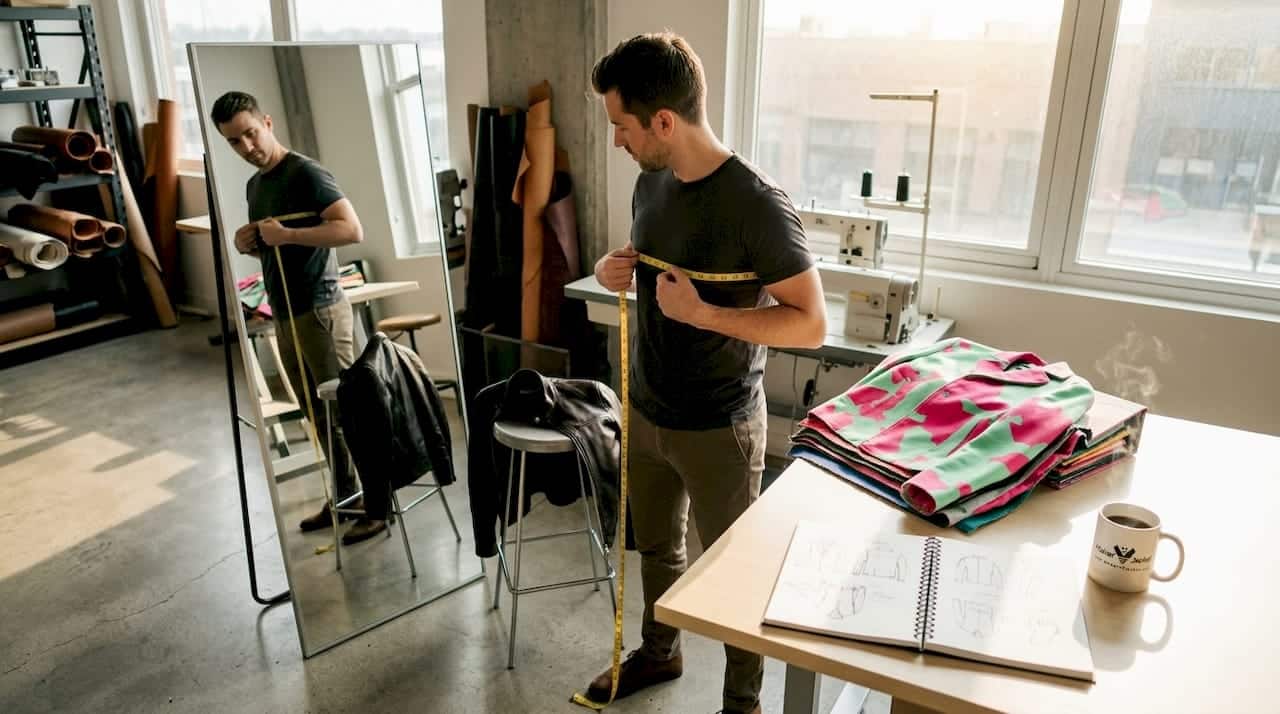
TL;DR:
- Getting jacket sizing wrong causes frustration because shoulders pinch and sleeves are too short.
- Always measure chest, shoulders, sleeve, and torso accurately, and size for layered comfort, not just the label.
Getting jacket sizing wrong is one of the most frustrating shopping experiences out there. You order what looks like your size, it arrives, and the shoulders pinch, the chest pulls, or the sleeves stop two inches short of your wrist. This jacket sizing guide exists to fix exactly that. Whether you’re buying a leather biker jacket, a sleek fashion bomber, or a motorcycle touring shell, your fit depends on more than just picking a number from a tag. Measurements, layering needs, and activity type all change what “the right size” actually means for you.
Table of Contents
- Key takeaways
- 1. How to take the right measurements for jacket sizing
- 2. How layering changes your jacket size
- 3. Understanding jacket sizing systems and size charts
- 4. Fit checks to run before you commit to a size
- 5. Sizing comparison by jacket type and use case
- 6. Women’s jacket sizing and kids’ jacket sizing considerations
- My take on jacket sizing after years of seeing it go wrong
- Get your perfect fit with Makerofjacket
- FAQ
Key takeaways
| Point | Details |
|---|---|
| Measure before you order | Chest, shoulders, and sleeve length are the three measurements that determine fit more than any label size. |
| Layer thickness changes your size | If you plan to wear a fleece underneath, you may need to size up one full size to preserve warmth and mobility. |
| Shoulders come first | Always fit the shoulders first. A jacket tight in the shoulders cannot be tailored and will restrict movement permanently. |
| Size charts vary by brand | US, UK, and EU sizing systems differ, so always compare your body measurements to the brand’s actual garment chart. |
| Custom fit eliminates guesswork | Bespoke jacket ordering removes sizing uncertainty entirely, especially for structured leather and motorcycle jackets. |
1. How to take the right measurements for jacket sizing
Before you look at a single size chart, you need accurate numbers. Key measurements to capture are chest circumference, shoulder width, sleeve length, and torso length. Everything flows from those four data points.
Chest: Wrap a tape measure around the fullest part of your chest, just under your armpits. Keep the tape parallel to the floor and do not suck in. Record in both inches and centimeters because brands use both.
Shoulder width: Measure from the edge of one shoulder across the back to the edge of the other. This measurement is often ignored and it is the most expensive one to get wrong.
Sleeve length: Measure sleeve length from your shoulder point down to your wrist bone with your elbow slightly bent. A bent elbow prevents sleeves from riding up every time you reach forward.
Torso length: Measure from the top of your shoulder straight down to where you want the jacket hem to fall. This matters most for fashion jackets and structured leather styles where proportion is everything.
- Write every measurement down before opening a size chart.
- Measure over the clothes you plan to wear under the jacket.
- Have someone else take the measurement if you can. Self-measuring your own shoulders rarely produces accurate results.
Pro Tip: Take measurements twice and use the average. A single measurement taken in a hurry is almost always slightly off, and a half-inch error can mean the difference between two sizes on some brands.
2. How layering changes your jacket size
This is where most people go wrong. They measure their bare chest, match it to a chart, and then wonder why their mid-season jacket feels strangled when they throw a hoodie underneath.

Chest ease requirements scale directly with what you layer underneath: a base layer needs 2 to 3 inches of ease, a mid-layer fleece needs 3 to 4 inches, and a heavy down or synthetic puffy needs 4 to 6 inches to preserve insulation loft. Buy a shell jacket without accounting for this, and you will compress the very insulation that keeps you warm.
For motorcycle riding, the layering math gets even more specific. You are often wearing a thermal base layer plus a vest or a mid-layer fleece, all under a structured abrasion-resistant shell. That combination needs real room. A motorcycle apparel layering guide will show you exactly how much ease you need for riding seasons in different climates.
A jacket that fits snug over a T-shirt is already one size too small for three-season riding. Size for your thickest realistic layer, not your thinnest. — outerwear.top
The grab test is the fastest way to confirm your layering fit in person. Zip the jacket over your thickest planned mid-layer, then pinch the shell fabric at your chest. 2 to 3 inches of fabric is the target. Less than an inch means you are compressing the insulation underneath, which kills warmth and restricts breathing.
- Casual fashion jackets worn over a thin shirt need minimal ease.
- Outdoor and motorcycle jackets worn over layered insulation need maximum ease.
- Articulated sleeves and dropped hems make a jacket more functional when layered because they move with your body instead of fighting it.
Pro Tip: When shopping online for a shell jacket you plan to layer under, add your heaviest mid-layer measurement to your bare chest measurement before comparing it to the size chart. This gives you the “layered chest size” you actually need.
3. Understanding jacket sizing systems and size charts
Here is the part that confuses even experienced shoppers. Men’s jacket sizes increment in 2-inch chest measurements, so a size 38 corresponds to a 38-inch chest, a 40 to a 40-inch chest, and so on. Size 42 is statistically the median in North America and Western Europe. Alpha sizes like S, M, and L are mapped to these chest ranges, but the exact mapping varies by brand.
| System | Size label | Chest range (inches) | Chest range (cm) |
|---|---|---|---|
| US Alpha | S | 35–37 | 89–94 |
| US Alpha | M | 38–40 | 97–102 |
| US Alpha | L | 41–43 | 104–109 |
| EU Numeric | 48 | 38 | 96–98 |
| EU Numeric | 50 | 39–40 | 99–102 |
| EU Numeric | 52 | 41–42 | 104–107 |
The US and UK numeric systems align closely, but EU numeric sizing runs about 10 numbers higher for an equivalent chest size. A US 40 is roughly equivalent to an EU 50. Converting between size systems requires matching body measurements to each brand’s garment specs, not guessing at equivalency.
The biggest mistake shoppers make is relying on label size instead of reading the actual garment measurements on the product page. Two brands can both call something a “Large” and mean completely different things. Garment measurements tell you the actual chest width, body length, and sleeve length of the physical jacket. Those numbers are what you compare to your body measurements.
Pro Tip: For leather jackets specifically, always use the brand’s garment measurement chart rather than the size label. Leather does not stretch like a cotton hoodie. What you buy is what you wear.
4. Fit checks to run before you commit to a size
Even with perfect measurements, you still need to verify the fit before finalizing your order or walking out of a store. Use these checks:
- Shoulder seam placement. Put the jacket on and check that the shoulder seam sits exactly at the edge of your shoulder bone. If it hangs off your shoulder, the jacket is too large. If it pulls up toward your neck, it is too small. Shoulders are the hardest part to alter, so get this right first.
- The overhead reach test. Raise both arms straight above your head. The jacket hem should not pull up so far that your lower back is exposed. If it does, either the torso is too short or the jacket needs a larger size.
- The seated forward reach. Sit down and reach forward as if grabbing handlebars or a steering wheel. For motorcycle jackets, this is non-negotiable. The shoulders and arms need to move without fighting the jacket structure.
- Chest room check. Button or zip the jacket fully. You should be able to slide a flat hand between the jacket and your chest. Two hands means too big; no hand at all means too small.
- Sleeve length confirmation. With arms at your sides, jacket sleeves should end at your wrist bone. For motorcycle jackets, they should end slightly past the wrist to prevent riding up.
When you are between sizes, fit the shoulders first and go with the larger size. A tailor can take in a too-loose chest or shorten sleeves. Nobody can widen a shoulder seam without destroying the jacket’s structure.
Pro Tip: For online purchases, print the brand’s size chart and use a fabric tape measure, not a metal one. Metal tape measures flex awkwardly around body curves and produce inaccurate readings.
5. Sizing comparison by jacket type and use case
Different jackets have fundamentally different fit goals. Here is how to think about sizing depending on what you are buying.
| Jacket type | Fit priority | Size strategy |
|---|---|---|
| Fashion leather jacket | Silhouette, shoulder definition | Fit to measurements, slim where needed |
| Motorcycle jacket | Mobility, armor placement, layering | Size up for mid-layer; armor must align |
| Rain or outdoor shell | Weather seal, layering ease | Size for heaviest intended mid-layer |
| Bomber or varsity | Relaxed street style | True to size or one up for comfort |
| Insulated winter jacket | Warmth, bulk management | Size up if wearing over a sweater |
Fashion jackets reward a tighter, more tailored profile. The shoulder line and chest fit define the whole silhouette, so getting them exact matters more than leaving room for layers. For a bomber or varsity style, a more relaxed fit is actually correct. Sizing up one step often looks better and feels more comfortable for everyday wear.
Motorcycle jackets operate by completely different rules. The jacket needs to hold armor in place at the shoulders, elbows, and back. If the jacket is too large, the armor shifts position during a fall and protection fails exactly when you need it. Check the armor pocket placement against your actual shoulder and elbow positions, not just the chest measurement.
- If you ride in three seasons, size for your spring or fall layering. You can always wear less in summer.
- Adjustable straps at the waist, cuffs, and hem let one size work across more body shapes.
- Jacket insulation type affects how much bulk you are adding inside the jacket, which changes the ease you need on the outside shell.
6. Women’s jacket sizing and kids’ jacket sizing considerations
Women’s jacket sizing charts follow the same measurement logic as men’s but map to different numeric or alpha scales. A women’s jacket size chart typically starts from chest measurements rather than waist, though some fashion brands use UK dress sizing as their reference. The safest approach is always to use a brand’s own women’s jacket size chart and compare your actual chest, shoulder, and sleeve measurements against the listed garment dimensions.
Women’s jackets often have narrower shoulder widths, shorter torso lengths, and more defined waist shaping than men’s styles. If you have broader shoulders or a longer torso, check both the women’s and unisex size charts before ordering.
For kids’ jacket sizing, the system shifts entirely to age and height ranges rather than chest measurements in many brands. That said, kids grow at different rates, so measuring their actual chest circumference and comparing it to the size chart produces better results than trusting the age label alone. For motorcycle gear and powersports apparel for kids and teens, getting the right fit is a safety consideration, not just a style one. Oversized protective gear shifts during impact and fails to protect the way it was designed to.
My take on jacket sizing after years of seeing it go wrong
I’ve seen hundreds of fit issues that all trace back to the same root cause: people shop by label, not by measurement. Someone who has always worn a Medium picks a Medium without reading the chart, and then is genuinely surprised when a structured leather jacket fits nothing like their cotton hoodie Medium does.
What I’ve learned from years of working with custom jacket customers is that the snug fit misconception causes the most damage. People think a jacket should feel tight to look good. It should not. Wearing ease is not optional. A fitted jacket still has room to move. If you cannot comfortably roll your shoulders forward, the jacket is already too small.
My contrarian view is this: for a first leather jacket, size for comfort over silhouette. You can always get a jacket tailored in at the waist to create shape after the fact. You cannot un-shrink a shoulder seam. Start with a proper step-by-step self-measurement before you order anything, and commit to reading the garment measurements on the product page rather than trusting a size letter.
The customers who get great fit consistently are the ones who treat sizing like a process, not a guess.
— Maker
Get your perfect fit with Makerofjacket
Sizing uncertainty is exactly why Makerofjacket built a custom jacket ordering process. Instead of hoping a standard size works for your body, you submit your actual measurements and Makerofjacket builds the jacket to fit you. That means your chest, shoulder width, sleeve length, and torso length are all accounted for before a single stitch is placed.
You can explore custom jacket options across every style Makerofjacket carries, from biker and bomber to fashion leather and motorcycle touring. If you want to understand the process before you commit, the customization journey page walks through how bespoke sizing works from measurement to delivery. For anyone who has ever received a jacket that almost fits, this is the better way to shop.
FAQ
What measurements do I need for jacket sizing?
You need chest circumference, shoulder width, sleeve length, and torso length. Measure over the base layer you plan to wear under the jacket for the most accurate result.
What size jacket should I wear if I’m between sizes?
Go with the larger size and fit the shoulders first. Shoulder seams are almost impossible to alter correctly, while a loose chest or long sleeves can be taken in by a tailor.
How does layering affect what jacket size I need?
A base layer requires 2 to 3 inches of chest ease, a mid-layer fleece needs 3 to 4 inches, and a heavy insulated jacket underneath needs 4 to 6 inches. Size your outer jacket for your thickest intended layer, not your bare chest.
Are women’s jacket sizes different from men’s?
Yes. Women’s jackets use separate size charts with narrower shoulder widths and shorter torso proportions. Always use the brand’s women’s jacket size chart and compare actual garment measurements to your body measurements rather than converting from a men’s size.
Why do different brands’ size charts give different results?
Because sizing is not standardized across brands or regions. US, UK, and EU systems all use different numeric scales, and each brand cuts their patterns differently. The only reliable method is comparing your body measurements to each brand’s specific garment dimensions.


