

What is suede leather: your complete jacket guide


TL;DR:
- Suede is genuine leather made from the soft underside of animal hides, prized for its texture and appearance. Unlike faux suede, it requires careful maintenance due to its delicate nap and vulnerability to moisture and stains. Proper care and understanding of its properties enhance its longevity, making it a versatile choice in fashion and motorcycle jackets.
Suede gets a bad reputation it doesn’t deserve. A lot of people assume it’s either synthetic or somehow a lesser form of leather, something softer and more delicate than the “real thing.” That’s a misconception worth correcting. What is suede leather, exactly? It’s genuine leather, made from the underside of animal hides, and it’s been prized by fashion designers and craftspeople for centuries. Whether you’re building a custom motorcycle jacket or selecting a premium fashion piece, understanding suede’s true nature changes how you shop, style, and care for what you wear.
Table of Contents
- What suede leather really is: origins and characteristics
- Differences between suede, smooth leather, and faux suede
- Why suede’s delicate nature matters for jacket wear and customization
- How suede leather jackets fit into fashion and motorcycle style
- Essential care tips for suede to preserve your jacket’s style and longevity
- The suede leather truth nobody tells you about customization and durability
- Explore premium suede jackets at Maker of Jacket
- Frequently asked questions
What suede leather really is: origins and characteristics
The suede leather definition starts beneath the surface, literally. When a hide is processed, tanners can split it into layers. The outer side, with its tougher grain layer, becomes what most people picture when they think of leather. The inner side, the corium, is softer and more fibrous. That’s the part used to make suede.
Suede is genuine leather made from the underside of an animal hide, finished through sanding and buffing to raise a soft, napped, velvety surface rather than the smooth outer grain used for typical leather goods. That buffing step is what gives suede its signature texture.
Common animal sources for suede include:
- Lamb: The most popular source, prized for its fine, soft nap
- Goat: Slightly more textured; common in workwear and casual pieces
- Deer: A premium, thicker suede with excellent drape
- Calf: Firm structure with a consistent nap; often used in dress shoes and tailored jackets
The nap, meaning the small raised fibers on the surface, is what makes suede visually alive. Run your hand one way and the leather looks light and smooth. Flip it the other direction and it deepens in color. That directional light behavior is something no smooth leather can replicate, and it’s a major reason suede remains a go-to material for expressive fashion pieces. You can learn more about softening suede leather if you want to understand how the material responds to conditioning over time.

Differences between suede, smooth leather, and faux suede
Not all soft, velvety materials are suede. This is where a lot of buyers get confused, especially when shopping online.
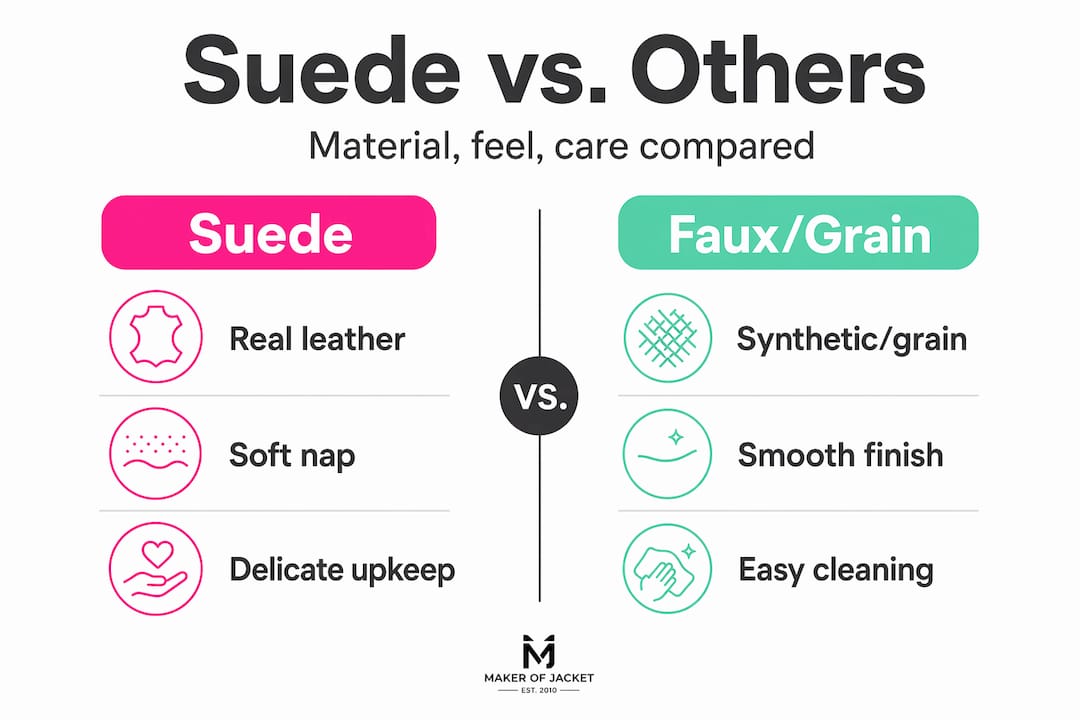
Suede is real leather, not synthetic by default. Faux suede is a separate product made from synthetic fibers, typically polyester, designed to mimic the look and feel of genuine suede. The price difference is usually the first clue, but the texture gives it away up close. Faux suede feels uniform and slightly plastic-like. Real suede has subtle variation and a warmer, more organic hand feel.
| Material | Source | Durability | Maintenance | Feel |
|---|---|---|---|---|
| Suede | Hide underside (corium) | Moderate | High | Soft, velvety, organic |
| Smooth leather | Hide outer grain | High | Low to moderate | Firm, smooth, polished |
| Nubuck | Outer grain, lightly sanded | High | Moderate | Fine nap, more structured |
| Faux suede | Synthetic fibers (polyester) | Moderate | Low | Uniform, slightly synthetic |
One material that often gets conflated with suede is nubuck. They look similar but come from opposite sides of the hide. Nubuck uses the outer grain layer, lightly sanded to produce a fine surface texture. That means nubuck retains more of the hide’s natural toughness. You can explore the full nubuck vs suede differences to understand which suits your build better.
Compared with smooth, grain-side leather, suede is more delicate and requires more careful maintenance because the surface is made from softer fibers rather than the protective outer grain layer. This isn’t a flaw. It’s a trade-off you make consciously when you choose suede for its look and feel.
Pro Tip: When buying a suede jacket, check the back of a seam allowance or collar edge. Real suede shows consistent, short fibers throughout. Faux suede often shows a woven backing or frays differently under the surface.
Understanding the difference matters for caring for suede leather, since each material requires a different approach to cleaning and conditioning.
Why suede’s delicate nature matters for jacket wear and customization
Suede’s softness is its appeal and its vulnerability at the same time. That’s not a warning to avoid it. It’s information you need to use it well.
Suede’s surface is built from loose fibers, which means it’s more easily affected by stains and moisture than grain-side leathers. Your customization plan should include how you’ll protect and maintain the nap, and you should accept that patina and wear marks will become part of the jacket’s character over time.
Here’s how to approach suede jacket wear realistically:
- Apply a suede protector spray before first wear. This creates a barrier against moisture and light staining without changing the texture or color significantly.
- Avoid wearing suede in rain or heavy humidity. Water leaves visible marks on the nap that can be difficult to reverse without professional attention.
- Expect wear patterns to develop at high-contact zones. Elbows, cuffs, and collar edges will show wear first. This is part of the material’s natural character, not a sign of low quality.
- Plan your color choice based on your lifestyle. Darker suede hides wear and staining better than lighter tones. Tan and sand suede looks stunning but demands more attention.
- For motorcycle use, layer strategically. Suede can be used for panels, sleeves, or accents on a jacket without compromising protection, as long as impact-resistant materials handle the structural zones.
Pro Tip: If you’re building a motorcycle jacket with suede panels, concentrate the suede on the chest, back, and upper arm areas. These zones get the most visual attention and the least abrasion risk in a fall. Keep grain leather or reinforced panels at the elbows and shoulders.
How suede leather jackets fit into fashion and motorcycle style
Suede occupies a unique position in both fashion and riding culture. It’s neither the most rugged material nor the most formal. That middle space is exactly why it works so well for expressive, personalized jacket builds.
The suede leather characteristics that make it desirable for fashion, specifically its velvety texture, rich depth of color, and the way it catches light differently at different angles, are the same qualities that make it memorable on a motorcycle jacket. A tan suede biker jacket with a straight collar hits differently than one in smooth cowhide. The material adds a tactile richness that photographs well, wears comfortably, and ages with personality.
Why riders and fashion enthusiasts both gravitate toward suede:
- The nap creates a naturally matte surface that pairs well with both casual and dressed-up looks
- Color depth varies with movement, giving each jacket a dynamic, almost living quality
- Suede’s softness means the jacket moves with you, not against you
- It accepts dye variations beautifully, so custom colorwork appears richer than on smooth leather
- The material signals craftsmanship and intentionality without being loud about it
“Suede’s defining factor isn’t just softness. It’s the underside of the hide plus the napped finishing step, so it looks different depending on nap direction and reflects light uniquely.”
This visual dynamism is hard to replicate with other materials. If you’re exploring fashion jacket types or researching motorcycle gear essentials, suede will appear across both categories for exactly this reason. It bridges the gap between form and function without forcing you to sacrifice one for the other.
Essential care tips for suede to preserve your jacket’s style and longevity
The benefits of suede leather are only fully realized when you maintain it properly. The material lacks the protective outer covering of grain-side leathers, which means specialized care isn’t optional. It’s the price you pay for the texture.
Follow this care routine to keep your suede jacket looking sharp:
- Brush the nap regularly with a suede brush. Use back-and-forth strokes to lift the fibers and remove surface dust. Do this after each wear if the jacket sees heavy use.
- Apply a protective spray at the start of each season. Products designed specifically for suede create a water and stain-resistant barrier. Reapply every few months depending on how often you wear the jacket.
- Treat stains immediately. Fresh stains are far easier to remove than dried, set-in ones. Blot liquid stains with a clean cloth without rubbing. For dry debris, a suede eraser works before reaching for any chemical cleaner.
- Store correctly. Keep the jacket in a breathable garment bag away from direct sunlight. UV exposure fades suede color faster than almost anything else. Avoid plastic covers that trap moisture and lead to mildew.
- Use professional cleaning for serious damage. Deep stains, oil marks, or significant discoloration should go to a leather specialist, not a standard dry cleaner. The wrong solvents can permanently mat the nap.
Pro Tip: A white or light-colored pencil eraser works surprisingly well on small scuff marks and dried mud spots on suede. Rub gently in one direction, then brush the nap back into place afterward.
Your suede care guide is your best investment alongside the jacket itself. The same attention you give to cleaning suede jackets pays dividends in how long the material holds its color and texture.
The suede leather truth nobody tells you about customization and durability
Here’s what most articles skip over: the reason so many people are disappointed by suede isn’t the material itself. It’s that they expected it to behave like smooth leather.
Smooth, grain-side leather is forgiving. You can wipe it down, condition it, and it shrugs off minor abuse. Suede doesn’t work that way. The nap holds onto everything, dust, moisture, accidental brush contact with an oily surface. That’s not a manufacturing flaw. It’s the physics of the material. When you choose suede, you’re choosing something that records its history on the surface.
For motorcycle customization, this is actually an argument in favor of suede when you use it correctly. A jacket that develops patina and wear marks specific to your riding style is a more personal object than one that stays static and pristine. The marks tell a story. The color shift at the elbows, the subtle darkening around the collar, these are signs of a jacket that’s been lived in.
Suede comes from the underside split, while nubuck comes from the outer grain side lightly sanded. That distinction explains everything about durability expectations. Nubuck holds up better under repeated abrasion. Suede delivers a softer, more dramatic aesthetic but requires protective measures if you want it to last beyond a few seasons of serious wear. Knowing the difference before you commit to a build saves frustration later.
The practical wisdom here: treat suede as an aesthetic-forward material that requires a maintenance commitment, not as an alternative to smooth leather that happens to feel nicer. Explore the nubuck vs suede insights side by side if you’re still weighing options for your next jacket. The right material for you depends entirely on how much texture drama you want versus how much maintenance you’re willing to accept.
Explore premium suede jackets at Maker of Jacket
You’ve got the knowledge. Now comes the part where material understanding turns into a jacket you’ll actually wear for years.
At Maker of Jacket, you can order custom suede jackets built to your exact specifications, whether you’re after a fashion-forward piece or a riding jacket where suede plays a key aesthetic role. Every detail, from hide selection to panel placement, is part of the customization journey we guide you through. We also back that craftsmanship with resources to help you maintain it. Our suede care resources give you everything you need to protect your investment from day one. Worldwide free shipping included.
Frequently asked questions
Is suede real leather or synthetic?
Suede is genuine leather made from the underside of animal hides, not a synthetic product. Faux suede is a separate synthetic alternative made from polyester fibers that mimics suede’s appearance.
What animals is suede typically made from?
Suede is commonly sourced from lamb skin for its fine texture, but goat, deer, and calf hides are also used, each producing a slightly different nap weight and feel.
How does suede differ from nubuck leather?
Suede uses the hide’s underside and has a softer, more pronounced nap, while nubuck is made from the outer grain layer lightly sanded, resulting in a finer texture and better durability under daily wear.
Is suede suitable for motorcycle jackets?
Suede works well in motorcycle jackets as an aesthetic material, but it’s more easily affected by stains and moisture than grain leather, so it performs best as accent panels combined with more protective materials at impact zones.
How should I care for a suede jacket to keep it looking good?
Suede requires specialized care because it lacks the protective outer grain layer. Brush regularly, apply protective spray each season, treat stains immediately, and use a professional leather cleaner for anything beyond surface-level maintenance.


