

Must-have biker accessories for safety and style

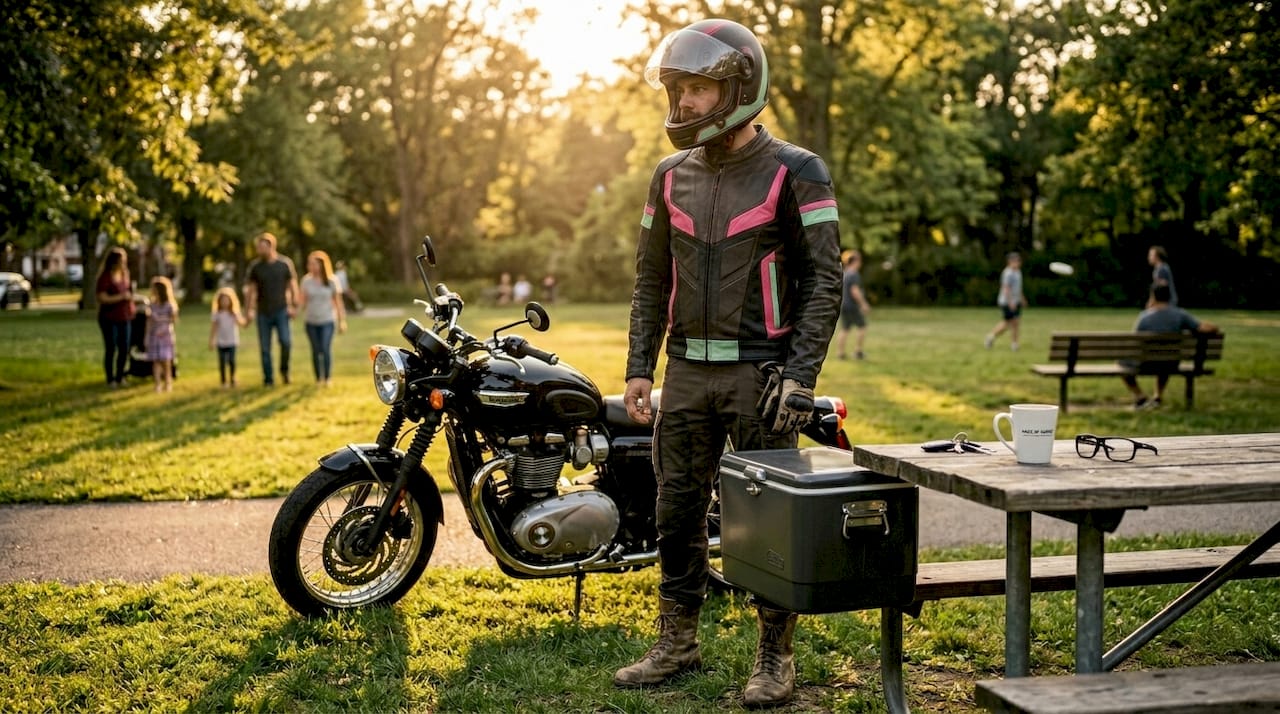
TL;DR:
- Choosing appropriate, certified gear is crucial for rider safety, comfort, and style on every ride. Upgrading and customizing helmets, jackets, gloves, and lights enhance protection and promote consistent use. Investing in high-quality, personalized accessories fosters safer riding habits and better overall rider confidence.
Choosing the wrong gear is one of the costliest mistakes a rider can make, and most people don’t realize it until something goes wrong. The must-have biker accessories you choose affect everything: how protected you are in a crash, how comfortable you feel on a three-hour ride, and whether you actually look like yourself when you throw a leg over the bike. This guide cuts through the noise. We cover what to prioritize, how to evaluate quality, and which specific upgrades are worth your money, so every ride feels as sharp as it looks.
Table of Contents
- How to evaluate must-have biker accessories
- Essential helmet accessories for safety and technology
- Premium riding jackets: protection and personalization
- Hand and foot protection: gloves and boots that save limbs
- Lighting upgrades for enhanced visibility and safety
- Comparison table: essential biker accessories at a glance
- Why investing in premium customizable accessories transforms your ride
- Explore custom biker jackets and gear to match your style and safety needs
- Frequently asked questions
Key Takeaways
| Point | Details |
|---|---|
| Helmet safety first | Always prioritize a DOT or ECE certified full-face helmet, replacing it every five years or after any crash. |
| Armor protection matters | Choose jackets, gloves, and boots with CE Level 2 armor for superior impact absorption and injury prevention. |
| Lighting enhances visibility | Smart helmet brake lights and LED auxiliary lights significantly increase your visibility to others on the road. |
| Customization boosts use | Premium customizable gear helps you express personal style and motivates consistent protective wear. |
| Replace armor regularly | Update your protective armor every five years or immediately after a serious impact to maintain effectiveness. |
How to evaluate must-have biker accessories
Not all gear is built the same, and the marketing rarely tells you the full story. Before you spend money on motorcycle gear essentials, here is a practical framework for assessing any accessory you are considering.
- Check safety certifications first. DOT (Department of Transportation), ECE 22.06, and CE ratings are the benchmarks that actually matter. A beautiful helmet without DOT certification is a decorative item, not a safety tool. For armor in jackets and gloves, CE Level 1 is the baseline and CE Level 2 is the standard worth reaching for.
- Map protection to high-impact zones. When you go down, your head, spine, shoulders, elbows, knees, hands, and ankles take the hit. Any accessory that covers one of those zones needs to meet or exceed current safety standards, not just look the part.
- Assess comfort features seriously. Gear you find uncomfortable gets left on the hook. Look for adjustable ventilation, moisture-wicking liners, and ergonomic fits that match your riding position. A sport rider needs different cut geometry than a cruiser rider.
- Evaluate long-term durability. Quality materials like full-grain leather and high-denier textiles wear differently than budget alternatives. Check whether armor is replaceable, because foam and plastics degrade over time even without a crash.
- Look at customization options. Riders with gear that reflects their personality wear it more consistently. Knowing the jacket safety features available to you helps you build a setup that does not force a trade-off between protection and personal style.
Essential helmet accessories for safety and technology
The helmet is the single most important piece of biker safety accessories you own. Full stop. Helmet use reduces rider deaths by 37% and brain injuries by 67%, and those numbers have held consistent across multiple decades of NHTSA data.
Here is what separates a solid helmet setup from a basic one:
- Full-face design with dual certification. Seek helmets carrying both DOT and ECE 22.06 ratings. ECE 22.06 is the more recent and more demanding standard, requiring rotational impact testing that older certifications do not cover.
- Fit, not just size. A helmet that shifts under braking or in crosswinds is not doing its job. Try it on, wear it for 15 minutes, and check for pressure points.
- Adjustable vents and removable liners. These features make the difference on hot days and long touring routes. Liners that detach for washing also extend the helmet’s usable life.
- Replacement schedule. Replace your helmet every 5 years from manufacture date, and immediately after any impact, even if you see no visible damage. EPS foam (expanded polystyrene, the inner energy-absorbing layer) compresses permanently on impact and cannot return to full protection capacity.
- Smart brake light add-ons. Devices like Brake Free smart lights attach to the back of your helmet and activate automatically when you decelerate. They require no wiring and dramatically improve your visibility to following traffic.
Pro Tip: When mounting any smart light or camera to your helmet, check that the mount does not interfere with the shell integrity or block ventilation. A misplaced mount can create a lever-arm effect in a crash.
The most underrated helmet upgrade is actually the fit and safety checklist riders skip during purchase. Five extra minutes in the store can mean the difference between a helmet that works and one that fails at the moment you need it most.
Premium riding jackets: protection and personalization
A great riding jacket is where motorcycle protective wear gets personal. It is also where most riders either get it right or spend years compromising. Here is what the best options look like:
- CE Level 2 armor at impact zones. Look for Level 2 rated inserts at the shoulders, elbows, and back. Premium jackets with CE AA/AAA ratings and Level 2 armor protect against up to 20 kN impact force and provide abrasion resistance for several seconds of road contact.
- Material choice matters. Full-grain leather remains the gold standard for abrasion resistance and longevity. High-denier textiles (600D and above) offer flexibility and weather resistance that leather cannot match in rain or cold. Both are valid; the question is what kind of riding you do most.
- Removable spine armor. Not all jackets include back protection by default. If yours does not, buy a CE Level 2 back insert separately and install it before your first ride.
- Ventilation systems. Zippered vents at the chest and underarms are a comfort feature that directly affects how long you wear the jacket on warm days. More ventilation means less temptation to ride without it.
- Customization as a safety motivator. Riders who own gear they feel genuinely proud of wear it on every single ride. Bespoke color, finish, or stitching on a premium padded motorcycle jacket is not vanity. It is one of the most practical safety investments you can make.
Pro Tip: Check the jacket’s safety feature breakdown before buying. Some manufacturers market “armor pockets” without including actual armor, leaving you to source CE-rated inserts separately.
Replace armor inserts every 5 years or immediately after a significant impact. The outer jacket can last a decade with proper care, but the foam inside the armor is on its own timeline.
Hand and foot protection: gloves and boots that save limbs
Hands and feet are reflex zones. In a crash, your hands hit the ground before your brain registers what is happening. Your feet take crush forces that street shoes cannot absorb. This is not an area to treat as optional equipment within your biker riding essentials.
Key features to prioritize:
- Gloves with CE Level 2 knuckle and palm armor. The knuckles are an obvious impact zone, but palm sliders are often overlooked. CE Level 2 armor in gloves and boots limits transmitted force to under 20 kN, preventing crush injuries in common low-speed drops.
- Palm sliders specifically. These are small inserts or reinforced zones on the heel of the palm that reduce friction and wrist rotation on impact, which directly lowers the rate of wrist fractures.
- Boots with reinforced toe boxes and ankle support. Shifter abrasion, foot crush in a low-side, and ankle roll on gravel are all real risks. A proper riding boot addresses all three. Street shoes address none.
- Non-slip soles. When you stop at a light on a wet road, your foot is the only thing between you and the asphalt. Grippy soles are not a luxury; they are functional safety equipment.
- Match boots to your riding style. Sport boots prioritize ankle stiffness and toe protection. Touring boots add waterproofing and all-day comfort. Cruiser boots lean toward aesthetics but still need ankle reinforcement. A complete gear guide breaks this down by riding category.
Never ride in canvas sneakers, flip-flops, or low-top shoes. The energy of even a 15 mph low-side drop transmitted through unprotected feet can cause injuries that take years to recover from.
Lighting upgrades for enhanced visibility and safety
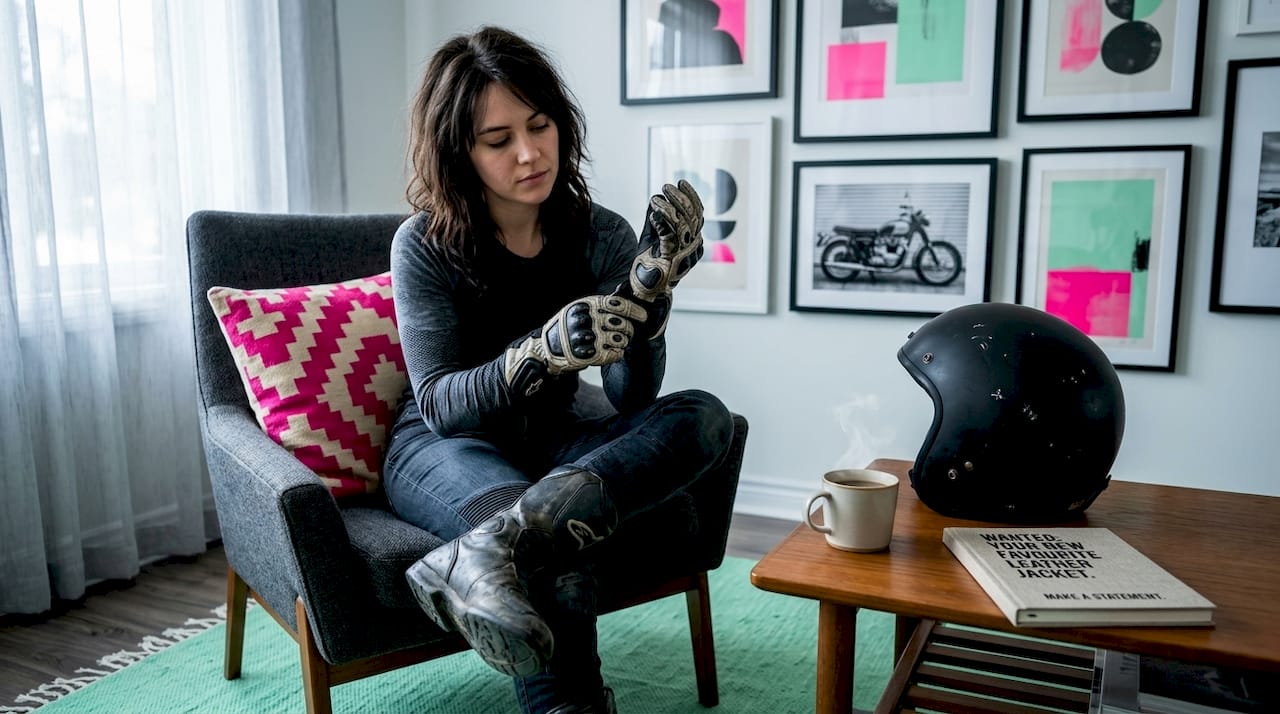
Here is where top biker gadgets overlap with genuine safety engineering. Protective wear keeps you intact if you crash. Lighting upgrades help you avoid the crash entirely by making you visible when it matters most.
Consider these options:
- Auxiliary LED lights. LED auxiliary lights like Squadron 2.0 provide 35% more brightness than older models and 6x stock visibility, starting around $300 with a lifetime warranty. They are especially valuable on unlit rural roads and in poor weather.
- Smart helmet brake lights. The Brake Free helmet light increases your visibility by alerting drivers 50% further back during braking, without any wiring. It fits helmets from XS to 4XL with standard and XL mounts for irregular shapes.
- Auto-activation on deceleration. The best smart lights respond to your physics, not a button press. They activate when your speed drops, which is exactly when rear-end collision risk spikes.
- Mount compatibility. Before purchasing any lighting add-on, confirm your helmet shape supports the mount system. Round helmets and aero-style helmets often require different mounting plates.
Pro Tip: Pair auxiliary LED lights with reflective strip accents on your jacket and panniers. The combination of active lighting and passive reflection creates a visibility profile that drivers notice from multiple angles simultaneously.
Comparison table: essential biker accessories at a glance
To put it all together, here is a concise table comparing these must-have biker accessories side by side.
| Accessory | Safety standard | Cost range | Key feature | Replace every |
|---|---|---|---|---|
| Full-face helmet | DOT + ECE 22.06 | $150 to $800+ | Rotational impact protection | 5 years or after crash |
| Riding jacket | CE AA/AAA + Level 2 | $200 to $1,200+ | Abrasion resistance + removable armor | Armor every 5 years |
| Riding gloves | CE Level 2 | $80 to $300 | Knuckle armor + palm sliders | Inspect annually |
| Riding boots | CE Level 2 ankle | $120 to $500 | Reinforced toe + non-slip sole | Inspect annually |
| Auxiliary LED lights | N/A (brightness standard) | $300+ | 6x stock visibility, lifetime warranty | Replace bulb on failure |
| Smart helmet brake light | N/A | $100 to $150 | Wire-free, auto-activates on decel | Battery replacement cycle |
Why investing in premium customizable accessories transforms your ride
Most gear guides stop at “buy the certified option.” That is the floor, not the ceiling, and here is where the real conversation starts.
Riders who invest in premium gear overwhelmingly report wearing it more consistently. That is not a coincidence. When a jacket fits precisely, vents properly, and genuinely reflects your aesthetic, you do not leave it behind on short rides or warm days. And the rides where you skip gear are statistically the rides where things go wrong.
Customization is underestimated as a safety driver. A generic piece of equipment feels like a burden. A jacket you chose the color, liner, and hardware for feels like part of your identity. That emotional connection translates into habitual use, and habitual use is what protection actually requires.
From a pure physics standpoint, the gap between CE Level 2 and Level 1 armor is not trivial. Level 2 limits transmitted force to under 20 kN. Level 1 allows up to 35 kN. That gap represents the difference between a bruise and a fracture in a real impact scenario.
The other overlooked factor is rider confidence. Knowing your gear is genuinely built to protect you changes how you ride. You are calmer in traffic, more deliberate in corners, and less distracted by anxiety. Premium gear is not just physical protection. It is mental infrastructure for better decision-making on the road.
Here is the position we have arrived at after watching riders make these choices: the riders who treat gear as a personal investment rather than a regulatory checkbox are the ones who build truly consistent safety habits. And consistent habits are what keep you riding for decades. For a full breakdown of how gear and style intersect, see our guide on moto gear protection and style.
Explore custom biker jackets and gear to match your style and safety needs
Ready to upgrade your gear? At Maker of Jacket, we design custom biker jackets that combine CE-rated armor with premium leather and textile construction, and every jacket can be tailored to your exact specifications. Choose your color, hardware, liner, and fit, and you get protection you will actually want to wear.
Our jackets include removable CE Level 2 armor pockets at the shoulders, elbows, and back so you can upgrade inserts as standards evolve, without replacing the whole jacket. We use ethically sourced leather and durable synthetic options, with worldwide free shipping on every order. If you want to understand how each safety feature works before you buy, our gear protection guide walks you through everything. Great gear should feel like yours. We make sure it does.
Frequently asked questions
What are the most critical biker accessories for rider safety?
A DOT or ECE certified full-face helmet, CE Level 2 armored jacket, gloves, and boots are the essential protective gear that significantly reduce injury risks. Helmets alone reduce rider deaths by 37% and brain injuries by 67%.
How often should I replace my motorcycle helmet?
Replace your helmet every 5 years from purchase or immediately after any crash. Invisible EPS foam damage and UV degradation compromise protection even when the shell looks fine.
What does CE Level 2 armor mean for my riding jacket?
CE Level 2 armor passes stricter impact tests and limits transmitted force to your body. Level 2 limits impact force to under 20 kN, nearly half the threshold allowed under Level 1, which means meaningfully less energy reaching your body in a crash.
Can I install smart helmet brake lights on any helmet?
Most helmets from XS to 4XL accommodate Brake Free smart lights using standard or XL mounts. Universal and XL mount options cover most helmet shapes, though unusually contoured helmets may need to verify compatibility before purchase.
Recommended
- Motorcycle Gear Essentials 2025: Style, Safety, and Comfort – Maker of Jacket
- 7 Advantages of Biker Jackets for Stylish Motorcycle Riders – Maker of Jacket
- Role of Motorcycle Apparel: Safety, Style, and Law – Maker of Jacket
- 7 Essential Types of Biker Apparel Every Rider Should Know – Maker of Jacket


