

Top motorcycle apparel trends for 2026: Ride safe and stay stylish


TL;DR:
- In 2026, motorcycle gear combines advanced protective technology with bold new aesthetic styles, emphasizing safety and personal expression. CE certification and proper armor placement remain the key standards for evaluating gear, with smart jackets and airbags offering superior crash protection. Style trends include retro, color blocking, reflective detailing, and sport-street convergence, while custom gear ensures optimal fit and safety for individual riders.
Every rider knows the feeling: you want gear that turns heads in the parking lot and actually keeps you in one piece when the unexpected happens. In 2025, that balance is harder and more exciting to strike than ever before. Protective tech has leveled up dramatically, CE certification standards have tightened, and the fashion side of the industry is delivering bold new aesthetics at the same time. Whether you ride city streets, canyon roads, or track days, understanding how to evaluate modern motorcycle apparel gives you a real edge when buying gear that works as hard as it looks good.
Table of Contents
- How to evaluate motorcycle apparel in 2025: Style meets safety
- Cutting-edge protective technology: Smart jackets, airbag systems, and more
- Trendsetting styles: Retro, sport, color blocking, and reflective designs
- Comparison guide: Choosing the right gear for your ride
- Why following trends without safety standards is a mistake
- Customize your 2025 ride: Style and safety in perfect sync
- Frequently asked questions
Key Takeaways
| Point | Details |
|---|---|
| Safety comes first | Always prioritize CE ratings and armor placement over pure aesthetics when choosing 2025 gear. |
| Tech leads protection | Smart jackets and airbag systems now provide instant, advanced safety for riders. |
| Style meets function | Trendsetting designs now integrate bold visuals, retro cues, and high-visibility features with certified protection. |
| Customization matters | Customizing your gear allows for a unique look as long as safety standards are maintained. |
| Beware of hype | Don’t be misled by marketing—demand real certifications and fit for true protection. |
How to evaluate motorcycle apparel in 2025: Style meets safety
Fashion grabs attention, but the framework you use to evaluate gear will determine whether your investment actually protects you. The market is flooded with options, and without a clear set of criteria, it’s easy to spend serious money on something that looks aggressive but underperforms in a real crash.
The single most important benchmark to understand right now is the CE certification system. CE certification is the objective baseline for PPE testing for motorcycle clothing, operating under EN 17092 standards for leisure purpose gear. EN 17092 grades jackets, pants, and suits on a scale from Class AAA (highest protection, track use) down to Class C (urban casual). When a jacket carries a verifiable CE label, it has passed impact abrasion, seam strength, and ergonomic assessment tests — not just a manufacturer’s internal claim.
Here’s what the class levels mean in plain terms:
- Class AAA: Maximum protection for high-speed riding and track use
- Class AA: High performance on the road, suitable for most aggressive street riders
- Class A: General road use, everyday commuting at moderate speeds
- Class B: Supplemental protection, usually layering systems or visibility vests
- Class C: Urban use at lower speeds, light abrasion resistance only
Beyond ratings, fit and armor placement matter as much as ratings, and marketing claims can overstate protection without certification. Armor that sits two inches off your shoulder does little good in an impact. Always check that CE-rated inserts sit flush at your elbows, shoulders, and back before you ride.
“A jacket that looks race-ready isn’t race-ready unless the armor is certified and positioned correctly for your body, not a mannequin’s.”
For anyone building their knowledge base, exploring motorcycle gear essentials for 2026 gives a practical breakdown of what to prioritize across every category of riding gear.
Pro Tip: Use CE rating plus armor placement and fit as your core selection filter. If a jacket can’t tell you its EN 17092 class or show you where the armor sits, move on.
Once you understand the evaluation criteria, studying the range of jacket types and trends helps you match protection levels to the specific riding you actually do.
Cutting-edge protective technology: Smart jackets, airbag systems, and more
The most significant shift in 2025 gear is the mainstream arrival of technology that was considered premium-exotic just a few years ago. Smart motorcycle jackets are now available at mid-range price points, and their capabilities are genuinely impressive.
A “smart” jacket in 2025 is defined by a few core features: integrated accelerometers and gyroscopes that detect sudden deceleration consistent with a crash, a CO2-powered or mechanical airbag system, and in some cases a connected app for diagnostics and alerts. These systems have moved beyond prototype stage and into regular production runs from multiple manufacturers.
The performance figures are striking. Smart summer motorcycle jackets can detect accidents and inflate airbags within 20 to 60 milliseconds. For context, a human blink takes approximately 150 to 400 milliseconds. The airbag deploys and provides protection before you are even aware of the impact, cushioning your neck, collarbone, and thoracic spine — areas where traditional hard armor struggles to perform.
Key features separating smart jacket tiers in 2025:
- Sensor quality: Multi-axis accelerometers provide more accurate crash detection than single-axis alternatives
- Inflation system: Electronic CO2 systems reset more easily than mechanical tethered systems
- Battery life: Rated ride time between charges varies from 8 hours to over 24 hours depending on the brand
- CE integration: The best units combine airbag function with traditional CE-rated hard armor at elbows and shoulders
- Connectivity: App-based diagnostics let you confirm the system is armed before each ride
The honest conversation is about price and practicality. A quality airbag jacket starts around $500 and climbs well above $1,000 for top-tier models. For daily commuters and weekend canyon riders, the added protection is compelling. For short urban trips under 30 mph, a well-fitted Class A jacket with solid armor placement offers strong protection at a fraction of the cost.
For riders interested in how these innovations intersect with suit design for safety, the same airbag technology is now being built into one-piece racing suits, giving track riders full-body coverage that simply wasn’t available five years ago.
Pro Tip: Look for CE-certified smart gear rather than buying based on feature lists alone. A jacket with impressive sensors but no EN 17092 certification hasn’t been independently tested for abrasion or seam strength.
Trendsetting styles: Retro, sport, color blocking, and reflective designs
Protection standards set the floor. Style sets the ceiling. And in 2025, the ceiling has gotten dramatically more interesting.
Four major aesthetic directions are defining what motorcycle apparel looks like this year. Each carries its own visual language and aligns with different riding communities.
Retro and cafe racer influenced cuts are pulling heavily from 1960s and 1970s British and Italian moto culture. Shorter jacket lengths, clean lapel lines, minimal external branding, and brown or cognac leather tones are everywhere. The appeal is that these pieces look equally good on and off the bike, a priority for riders who commute or use their motorcycle as a primary transport.
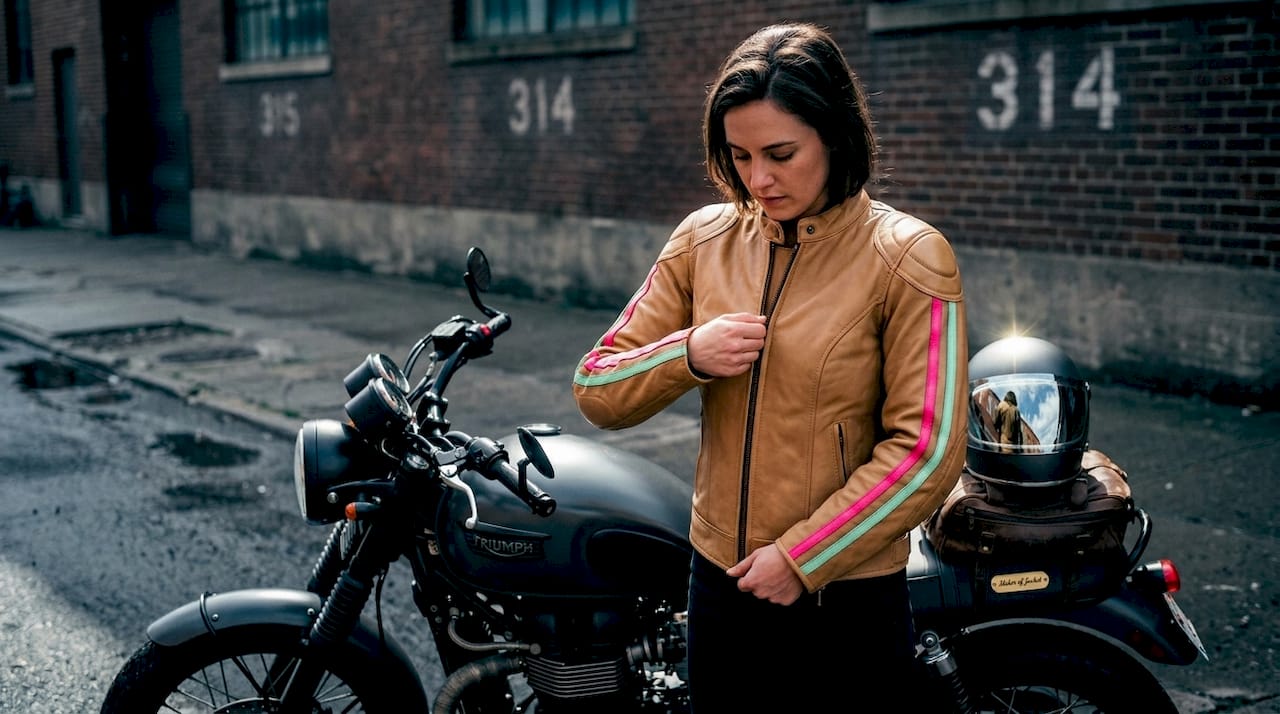
Color blocking brings bold geometry into riding gear. Two or three contrasting panels in colors like matte black paired with neon yellow, cobalt blue with white, or burgundy with tan create visual impact while also improving on-road visibility. It’s a smart aesthetic choice: you look distinctive and you’re easier for other drivers to track.
Reflective detailing has evolved from clunky safety vests into genuinely stylish design elements. Reflective piping along seam lines, reflective logos, and dual-purpose panels that appear matte gray in daylight but blaze silver at night are being integrated into jackets at every price point.
Sport and street convergence is arguably the most significant style shift. Sport styling and protection are continuing to converge in certified gear like racing suits with EN 17092 AAA standards and specific armor locations. What this means practically is that gear designed for track performance now looks and moves naturally in casual riding situations.
“The best 2025 gear doesn’t announce itself as safety equipment. It looks like a considered fashion choice that happens to protect you at highway speed.”
For riders tracking 2026 style and customization trends or digging into leather jacket trends, the direction is clear: protection and personal expression are no longer competing priorities.
| Style trend | Visual impact | Protection integration | Best riding use |
|---|---|---|---|
| Retro/cafe racer | High off-bike appeal | CE-A to CE-AA available | Commuting, leisure |
| Color blocking | High visibility | CE-A to CE-AAA | Street, touring |
| Reflective design | Safety-focused look | CE-A standard | Urban, night riding |
| Sport/street crossover | Race-inspired aesthetic | CE-AA to CE-AAA | Sport street, track days |
Comparison guide: Choosing the right gear for your ride
With both the technology landscape and the style trends mapped out, the practical question is: which combination serves your riding life best?
| Feature | Smart jacket | Classic CE-AA leather | Sport crossover suit | Retro styled jacket |
|---|---|---|---|---|
| Protection level | Very high | High | Very high | Medium to high |
| Comfort on bike | High | Medium | High | High |
| Off-bike wearability | Medium | High | Low | Very high |
| Customization options | Limited | Extensive | Moderate | Extensive |
| Price range | $500 to $1,500+ | $200 to $800 | $400 to $1,200 | $200 to $700 |
| Tech features | Airbag, sensors, app | Standard armor | Hard/soft CE armor | Standard armor |
Making the final call comes down to your honest riding profile. Here is a numbered process that cuts the confusion:
- Define your primary riding type: Daily commuting, weekend sport, touring, or track days each have different protection and comfort requirements.
- Set your CE class minimum: For anything above 40 mph sustained, CE-AA should be your floor. For track days, CE-AAA is non-negotiable.
- Try before you buy: Armor placement only works if the jacket fits correctly. Size guides help, but an in-person fit check matters.
- Match style to context: Choose gear that you will actually wear consistently. The safest jacket is the one you put on every single ride.
- Check customization options: Bespoke gear that fits your exact proportions keeps armor in the right place longer term.
CE certification and actual armor placement and fit should be your primary purchase filter, with aesthetics layered on top of that baseline, not the other way around.
For riders exploring benefits of custom motorcycle suits, the data consistently shows that tailored gear keeps protective inserts properly positioned across a wider range of movement than off-the-rack alternatives. It’s also worth checking women’s gear trends since purpose-built women’s cuts address armor placement geometry that unisex sizing often misses entirely.
Why following trends without safety standards is a mistake
Here’s the uncomfortable truth: the motorcycle apparel industry has a marketing problem. Brands routinely use language like “military-grade materials,” “ultra-impact resistant construction,” and “advanced protection systems” without a single independent test result to back those claims up.
We’ve seen it across dozens of product categories. A jacket with beautiful stitching, a dramatic silhouette, and an aggressive price point sells well on visuals alone. But marketing-heavy material claims do not replace verifiable CE certification plus good armor placement and fit. That gap between marketing language and tested performance is where riders get hurt.
The fashion-first mindset isn’t entirely wrong. Gear you love to wear is gear you’ll actually put on. The mistake is letting aesthetics override certification as the primary decision filter. We’ve spoken with enough riders who’ve gone down to know that a jacket that looks like a CE-AA but performs like a CE-C is worse than useless — it creates a false sense of security.
True customization, the kind that matters long-term, means demanding that your bespoke or personalized gear meets the same standards as any other certified product. Style and safety aren’t a trade-off when you know what to look for. For deeper insights on trending jackets that balance both priorities, the pattern is consistent: the gear that holds its value and reputation is always the gear that was built to protect first.
Pro Tip: Always check the label and ask for real test data before you buy. If a retailer can’t produce the EN 17092 class rating in writing, treat that as a red flag.
Customize your 2025 ride: Style and safety in perfect sync
You’ve done the research, you understand what separates trend-forward gear from genuinely protective apparel, and you know your riding profile. The next step is finding gear that checks every box on your personal list.

At Maker of Jacket, we build custom motorcycle jackets and suits to your exact specifications, including CE-rated armor placement, your choice of leather grade, color combinations, and design details from retro classic to sport-street crossover. Whether you want to customize your jacket from the ground up or start from one of our trending base designs, you control every variable. Every piece we produce incorporates the motorcycle jacket safety features that matter most: certified armor, reinforced impact zones, and a fit tailored to your measurements. Browse our full range of top styles and customization options and see exactly how your 2025 riding look comes together.
Frequently asked questions
What is the most important safety rating for motorcycle apparel in 2025?
The most important safety rating is CE certification under EN 17092, which sets verified protective performance standards across classes from AAA to C. CE certification is the objective baseline for PPE testing for motorcycle clothing.
Are airbag jackets worth investing in for everyday riders?
For riders who spend significant time at highway speeds, airbag jackets provide meaningful protection that standard armor can’t match. Smart jackets with airbags can inflate in 20 to 60 milliseconds, covering impact scenarios before the body has time to react.
How can I spot marketing hype vs. real protection claims?
Ask for the EN 17092 class rating in writing and check that armor placement matches your body geometry when the jacket is worn. CE is the objective baseline, while marketing claims can exaggerate real-world protection without independent verification.
What are the hottest style trends for motorcycle gear in 2025?
Retro-influenced cuts with clean lines, color-blocked panels for visibility and style, and reflective detailing integrated into seam design are leading the aesthetic direction this year alongside the sport and street crossover look.
Is customized motorcycle gear as safe as off-the-rack gear?
Customized gear can match or exceed standard options when it carries proper CE ratings and armor fit specifications. The advantage of custom gear is that armor sits exactly where your body needs it, which off-the-shelf sizing can’t always guarantee.


