

Men’s vs Women’s Sizing for Jackets

Women’s US shoe sizes typically run about 1.5 to 2 sizes higher than men’s for the same foot length, so a men’s 7 is roughly a women’s 8.5 or 9. That conversion only covers length. Width, volume, jacket shoulders and chest are a separate story, so measure your body and compare it to the product’s chart before you buy.
TL;DR:
- For jackets, compare chest and shoulder measurements first, then check sleeve, torso, and hip fit because gendered patterns distribute these dimensions differently.
- Choose jacket size for your thickest planned layer; leather has little give, while knits stretch, and back tightness or a rising hem signals insufficient room.
- For online jackets, distinguish body measurements from finished garment dimensions, compare chest and shoulders first, and confirm the return policy before ordering.
Table of Contents
- Why men’s and women’s clothing sizes aren’t interchangeable
- How do you measure for shoes and jackets?
- Why do separate men’s and women’s sizes exist?
- How do you decide between men’s, women’s and unisex sizing?
- How do you customize jacket measurements for male and female proportions?
- What are the common fit issues in men’s and women’s jackets?
- Which jacket styles suit typical men’s and women’s body shapes?
- How does layering change your size?
- How do you read a size chart when ordering a customizable jacket online?
- Our view: measure first, then pick the label
- Get a jacket that fits your measurements
- FAQ
- Sources
Why men’s and women’s clothing sizes aren’t interchangeable
Shoes at least share one dimension, foot length. Jackets don’t. A jacket’s fit depends on chest girth, shoulder breadth, sleeve length and torso length, and men’s and women’s patterns distribute those four measurements differently. A women’s medium and a men’s small can have similar chest measurements while differing in shoulder fit.
Industry baselines explain part of this. ASTM publishes separate body measurement tables, D5585 for adult women and D6240 for adult men, which pattern makers use as starting references. You can browse the ASTM D6240 listing to see how formal these tables are. Each brand then applies its own grading, which is why one label never means the same thing twice.
Fit also differs from size. As Utah State University’s apparel education materials note, garment design and intended ease shape which measurement you should prioritize, not just the label. Wearing ease is the extra room built in so you can move. Key points to carry with you:
- Leather and woven shells have little give, so they need more built-in ease than a stretch knit.
- Knits stretch and recover, so the same body can wear a smaller size, as Utah State’s knit fabric guidance explains.
- Chest and shoulder drive jacket fit; sleeve and length are easier to alter.
How do you measure for jackets?
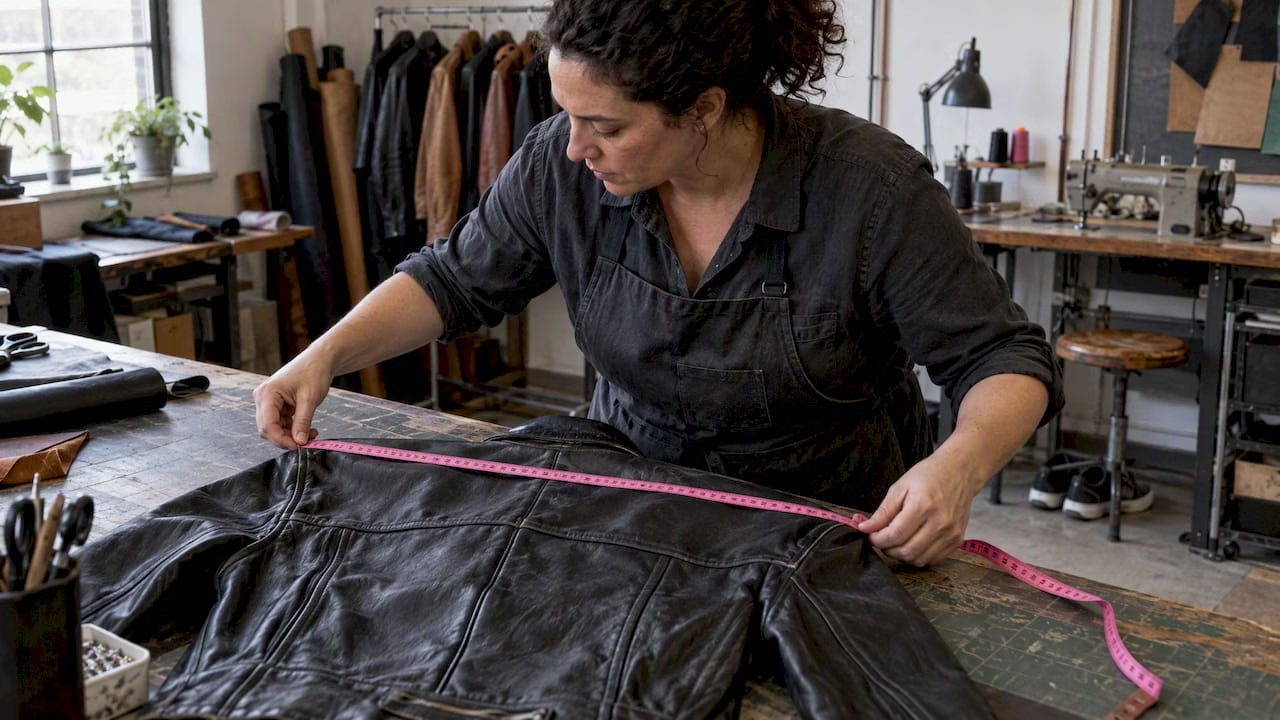
Good measurements beat any conversion chart. Follow these steps in order:
- Time it right. Measure your feet at the end of the day. Feet change with age, weight shifts and pregnancy, which is why Cleveland Clinic guidance says previous shoe sizes may no longer be accurate.
- Measure both feet. Trace each foot on paper or use a tape, and record the longest length and the widest point. Use the larger foot.
- Measure your chest. Wrap the tape around the fullest part, under the arms, keeping it level.
- Measure shoulders. Go seam to seam across the back, from one shoulder point to the other.
- Measure sleeves and torso. Take the sleeve with your arm slightly bent, and measure torso length from the base of the neck to where you want the jacket to end.
Then run quick fit checks. You should have about a thumb’s width of room beyond your longest toe. The shoulder seam should sit at the edge of your shoulder, and you should be able to layer a sweater underneath without strain.
Pro Tip: Prefer brands that publish flat-pattern garment measurements, and confirm the return or exchange policy before you order. Our own guide to choosing a jacket size covers the four dimensions in more detail.
Why do separate men’s and women’s sizes exist?
Because feet and bodies aren’t scaled copies of each other. A podiatry study comparing male and female foot shape reported that men in its sample had a longer heel-to-ball length (181.5 mm vs. 165.0 mm for women) and larger normalized widths and circumferences, while women’s feet showed relatively higher toe-region and instep heights. Different proportions mean a straight numeric swap leaves something off.
Retail data points the same direction. A 2023 study of running-shoe shoppers found a wide range of foot lengths among people who bought the same size, and only about 1% of shoppers followed the size chart exactly. Even within one gender and one size label, real feet vary a lot.
Men’s and women’s feet differ in morphology, and women are the vast majority of those who develop neuromas, often linked to narrow shoe fit.
That finding comes from published foot research on PubMed. The takeaway: conversion is a pragmatic shortcut, not a guarantee. Use it to narrow your search, then let measurements and a try-on make the final call.
How do you decide between men’s, women’s and unisex sizing?
Work through this checklist in order:
- Put measurements first. Buy the label whose chart matches your body, whatever gender the label carries.
- Convert shoes only as a fallback. Apply the 1.5 to 2 size rule, then check width and toe-box room, and try them on if you can.
- Judge jackets by chest and shoulders. Then factor in fabric and how much you plan to layer.
- Read the unisex label carefully. Check whether the brand maps it to a men’s or women’s scale. A unisex hoodie example shows how a single garment lists one size run for everyone.
- Online, lean on product measurements. Read fit notes and confirm returns before you pay.
How do you customize jacket measurements for male and female proportions?
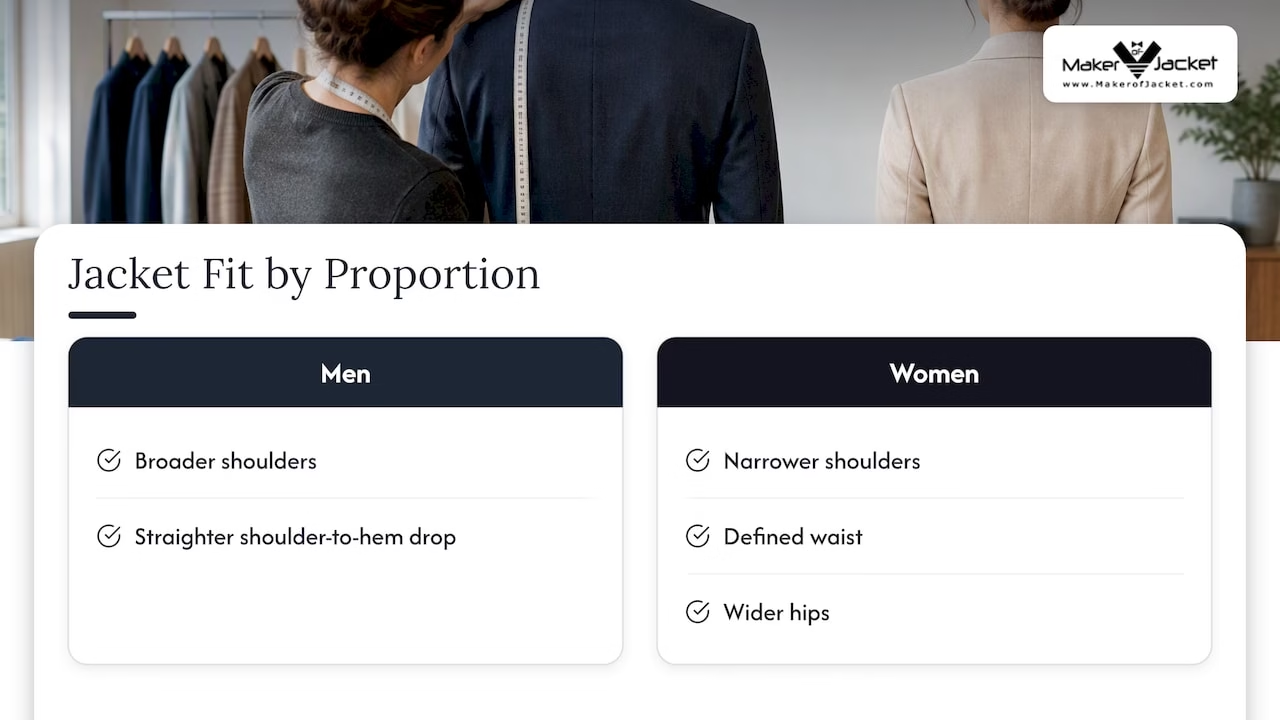
Start with the proportions that differ most. Men’s frames typically carry broader shoulders relative to the waist, so a jacket cut for men tends to have a straighter drop from shoulder to hem. Women’s frames more often show a narrower shoulder, a defined waist and wider hips, so women’s cuts nip in at the waist and give room through the hip.
When you customize, give your own numbers for the dimensions that matter most: chest, shoulder width, sleeve length, waist and torso length. If your shoulders run broad and your waist narrow, say so, even if your label size sits in the other gender’s range. Pattern selection should follow the largest part of your body, as Utah State’s wearing ease guidance puts it, because a jacket you can’t close or move in fails faster than one that’s slightly loose at the waist.
Leather is less forgiving than fabric, so decide your ease up front. A fitted biker jacket needs only enough room for a thin layer. A relaxed bomber can go a size larger. Mention how you’ll wear it and what you’ll wear beneath it, and the pattern can be adjusted accordingly.
What are the common fit issues in men’s and women’s jackets?
Some problems show up again and again, and most have a measurement behind them.
- Tight shoulders in women’s cuts. If you have broad shoulders, a women’s jacket sized to your chest may bind across the back. Go up a size and have the waist taken in, or choose a men’s cut.
- Boxy waist in men’s cuts. A men’s jacket that fits the shoulders can balloon at the waist. Look for adjustable side tabs, or ask for a custom waist measurement.
- Short sleeves or long sleeves. Check the sleeve with your arm slightly bent. Sleeves are among the easier edits on most jackets.
- Tight hips. A jacket that closes at the chest but pulls at the hem needs more room through the hip or a longer cut.
- Collar gap. Space behind the neck often signals a shoulder or torso length mismatch.
If a jacket fits in three places and misses in one, change the one. Chasing a perfect label is slower than fixing the specific measurement that’s off.
Which jacket styles suit typical men’s and women’s body shapes?
Style choice can work with your proportions instead of against them. For broader shoulders and a straighter torso, structured options such as a classic biker, a varsity jacket or a trench add shape at the waist and keep lines clean. For narrower shoulders with fuller hips, cropped cuts and bombers sit at the waist and balance the silhouette.
Length matters as much as cut. A jacket ending at the hip suits most frames. Longer styles like trench coats elongate a frame but need accurate torso and sleeve measurements, since errors show more over a longer line. Details also change how a shape reads: padded shoulders add width, a belt creates a waist, and set-in sleeves look sharper than dropped ones.
None of this is gendered. A woman with broad shoulders can wear a men’s-cut biker, and a slim man can wear a cropped bomber. Pick the silhouette that matches your measurements and how you want the jacket to look, then check sizing against the chart.
How does layering change your size?
Layering is where many correct sizes go wrong. A jacket sized for a T-shirt will feel tight over a sweater, and one sized for a heavy knit will swim on a summer day. Decide your thickest realistic layer before you choose a size.
For jackets worn over light layers, take your measured chest and add the ease the cut calls for. For jackets worn over thick sweaters, add more room through the chest and sleeves, and check that the sleeves still reach your wrist when your arms are bent. In leather, extra room matters because the shell won’t stretch to meet you, which is why fabric type changes the size you should choose.
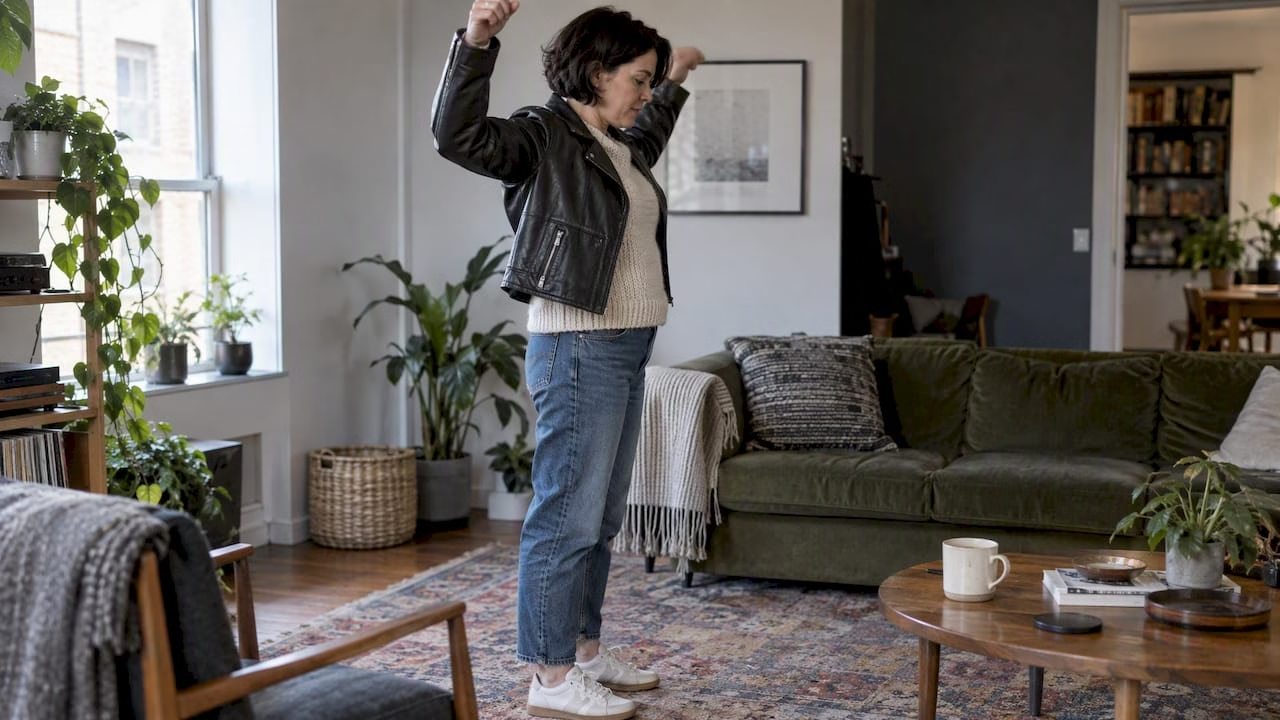
Men and women often face different trade-offs. Women’s cuts, being shaped at the waist, can leave less room for bulk through the midsection, so layering may call for a size up or a looser style. Men’s cuts typically have more straight room, so bulk fits more easily, but shoulder width becomes the limit. Test by putting on your thickest layer and raising both arms. If the hem rides up or the back pulls, size up.
How do you read a size chart when ordering a customizable jacket online?
Read the chart as a table of garment dimensions, not as a list of labels. First, find out whether the numbers are body measurements or finished jacket measurements. Body measurements describe the person the size is meant to fit, and garment measurements describe the jacket itself. Ease is the gap between the two. Our guide to reading size charts for leather fashion explains the difference with examples.
Next, open the right chart. Use our men’s size guide or women’s size guide and compare your chest, shoulder, sleeve and torso numbers line by line. If your measurements land between two sizes, base the decision on chest and shoulder, then adjust the rest through customization. You can also check the combined size chart and sizing guide for pants, suits and chaps.
Finally, use the notes field. For a custom order, add your measurements, your intended layers and any fit concerns. Include what you want changed, such as shorter sleeves or more room at the hip. The more specific the request, the closer the first jacket comes to right.
Our view: measure first, then pick the label
We think the label is the least useful number on a jacket. The people who end up happiest are the ones who measured their chest, shoulders, sleeves and torso, then picked whichever chart matched, men’s, women’s or custom. That’s why we publish detailed size guides and why we encourage you to reach out if you want a second opinion on a measurement before you order.
— Maker
Get a jacket that fits your measurements
We carry men’s jackets and women’s jackets, plus custom sizing for readers who want a made-to-measure or modified fit. If a standard size misses on the shoulders or waist, tell us your numbers and we’ll build the jacket around them. Custom orders start with our customize jacket order page, where the Customize Jacket Order is $199. Pair it with the size guides above, send your measurements, and order the fit you actually measured.
FAQ
Is it better to size up or down in shoes?
Go by your measured foot length and width rather than a fixed rule. If you’re between sizes, choose the larger one, and leave about a thumb’s width beyond your longest toe. Measure at the end of the day, since feet change over the day and over time, according to Cleveland Clinic guidance.
What is a unisex shoe size?
A unisex size is one number meant to fit everyone, and most brands base it on the men’s scale. If you normally buy women’s sizes, convert by adding 1.5 to 2. Check the product page to confirm which scale the brand follows.
What is a men’s size 10 for a woman?
A men’s 10 is roughly a women’s 11.5 to 12. Use that as a starting point, then check width and toe room. Differences in foot shape, shown in a male and female foot shape comparison, mean the converted pair may still feel narrow or loose.
Can I wear a men’s jacket if I’m a woman?
Yes, if the chest and shoulder measurements match your body. Women with broader shoulders often find men’s cuts fit better across the back. Check the waist and hip, and ask for those to be adjusted if you want a closer fit.


