

Measure These 4 Dimensions to Choose the Right Jacket Size, S/R/L & Ease

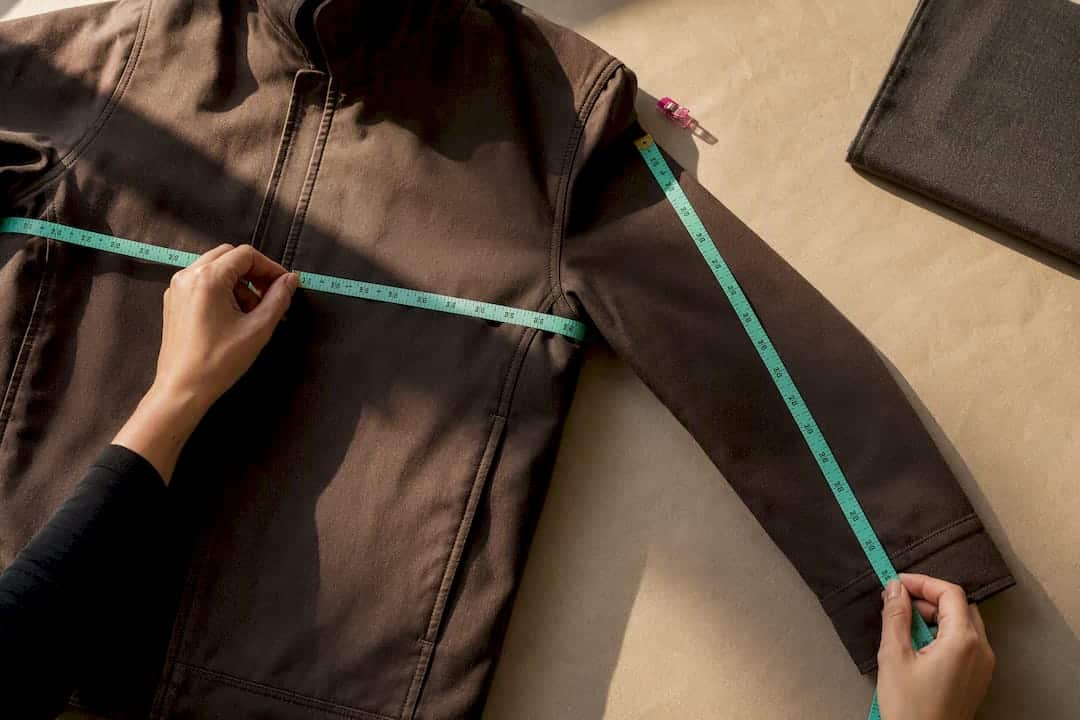
Start with your chest, not the label. Measure around the fullest part of your chest, add a standard amount of ease for comfort, and that number is your jacket size, so a 40-inch chest usually lands you in a size 42 jacket in a standard cut. From there, check the length code (S, R, or L) against your height, then confirm shoulders and sleeve length before you commit. Measure your chest right now using the steps below, and you’ll have real numbers instead of a guess.
TL;DR:
- Use the full chest measurement around the nipple level, add proper ease, and compare it against the jacket size chart for accurate sizing.
- Sleeves and shoulder width should be measured carefully, with shoulder seam to seam being the most critical, as these are less adjustable.
- When choosing a fit, consider intended layering—extra ease for heavy layers and less for slim, stylish wear—plus prioritize shoulder fit over other adjustments.
- Old jackets provide reliable sizing references if measured flat and compared to new product measurements with about half an inch tolerance.
- Custom sizing is ideal for bodies or use cases outside standard charts, especially for layered or protective jackets, but requires precise measurements and consultation.
Table of Contents
- How Do You Measure Chest, Shoulders, Sleeves, and Length?
- What Do the Size Numbers and S/R/L Codes Actually Mean?
- Which Fit Problems Can a Tailor Actually Fix?
- Can You Use an Old Jacket to Pick a New Size?
- When Does Custom Sizing Beat Off-the-Rack?
- Get a Jacket Built Around Your Exact Measurements
- Where to Double-Check Your Measurements
- Sources
How Do You Measure Chest, Shoulders, Sleeves, and Length?
Grab a soft tape measure, put on a thin shirt (not a hoodie, not a sweater), and if you can rope in a friend to hold the tape steady, do it. Measuring alone against a mirror works, but it’s the reason most people’s numbers are off by an inch or two.
- Chest. Wrap the tape around the fullest part of your chest, across your nipples and pectorals, keeping it parallel to the floor. Breathe normally, don’t puff up, and write down the number in inches.
- Shoulders. Measure seam to seam across your upper back, from the edge of one shoulder to the other. If you have a jacket that already fits the way you want, lay it flat and measure that instead. It’s more accurate than measuring a moving human body.
- Sleeve length. Start at the base of your neck where a collar seam would sit, run the tape down your arm to your wrist, and keep your hand resting on your hip so your shoulder sits naturally. If you’re comparing to a garment instead, measure from the shoulder seam to the cuff along the outside of the arm.
- Jacket length. Measure from the high point of your shoulder down to wherever you want the hem to hit, whether that’s the top of your thigh for a cropped bomber or mid-thigh for a longer trench.
Do every measurement twice. If the two numbers don’t match, take a third and go with the average.
- Note whether you measured over skin or over a thin shirt, and stay consistent.
- Keep the tape snug but not tight enough to dent the skin.
- Round to the nearest half inch rather than eyeballing between lines.
Pro Tip: Measure at the end of the day rather than right after waking up. Posture and minor swelling shift your numbers slightly, and evening measurements tend to match how you’ll actually feel wearing the jacket out.
This approach mirrors the step-by-step measuring method used by most sizing calculators and retailers, and it’s worth following closely rather than improvising your own shortcuts.
What Do the Size Numbers and S/R/L Codes Actually Mean?
A jacket labeled “42R” is telling you two separate things: the number reflects chest size plus built-in ease, and the letter tells you the length proportion. That ease is not padding for error. It’s intentional room for movement and light layering, built into the sizing system on purpose.
- S (short) typically fits people under about 5’7″, with shorter sleeves and a shorter torso.
- R (regular) is built for roughly 5’8″ to 6’0″, the most common bracket on most size charts.
- L (long) covers roughly 6’1″ and up, with extra length in both the sleeve and the body.
If you’re buying an insulated parka or anything you plan to layer heavily under, size up and look for 3 to 5 inches of ease instead of the standard 2 to 4. A slim wool blazer you’ll wear over a T shirt calls for the opposite: stay as close to your true chest measurement as the chart allows, because extra fabric there just looks sloppy.
Women’s jacket sizing shifts the priority toward bust and hip shaping rather than a flat chest number, so a size that fits the chest can still pull at the hips if the cut runs narrow. Brand charts vary enough that the same “size 8” can differ by an inch or more between labels, which is exactly why comparing your numbers to each retailer’s own chart matters more than memorizing a universal conversion.
Which Fit Problems Can a Tailor Actually Fix?
Shoulders are the one measurement you cannot compromise on. A tailor can shorten sleeves, take in a waist, or hem a jacket in an afternoon, but reworking shoulder width means tearing apart the whole upper body of the garment, and most tailors will tell you it’s not worth attempting.
Easy fixes: sleeve length, hem length, taking in the sides, adjusting buttons.
Hard or impossible fixes: shoulder width, moving the armhole, changing the overall chest size by more than an inch or two.
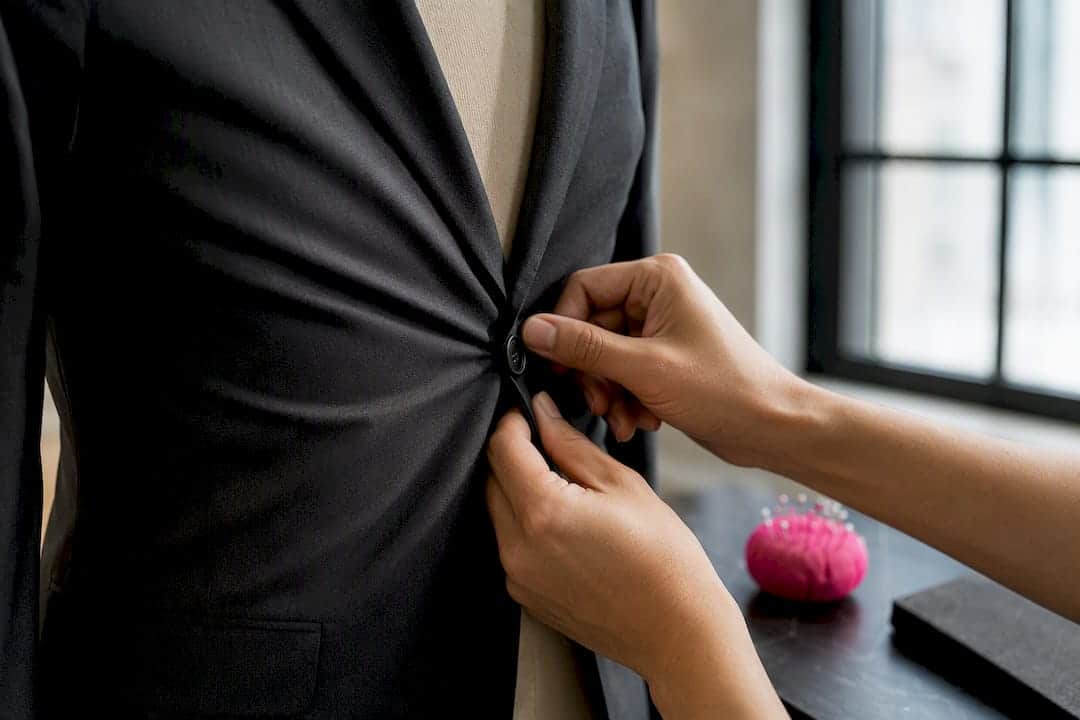
Run the button test before you buy. Button the jacket and look at the front. If you see an “X” of fabric pulling from the buttons toward your armpits, it’s too tight through the chest or shoulders, no matter how good the length looks. A jacket that fits should close without strain and let you raise your arms without the whole back riding up.
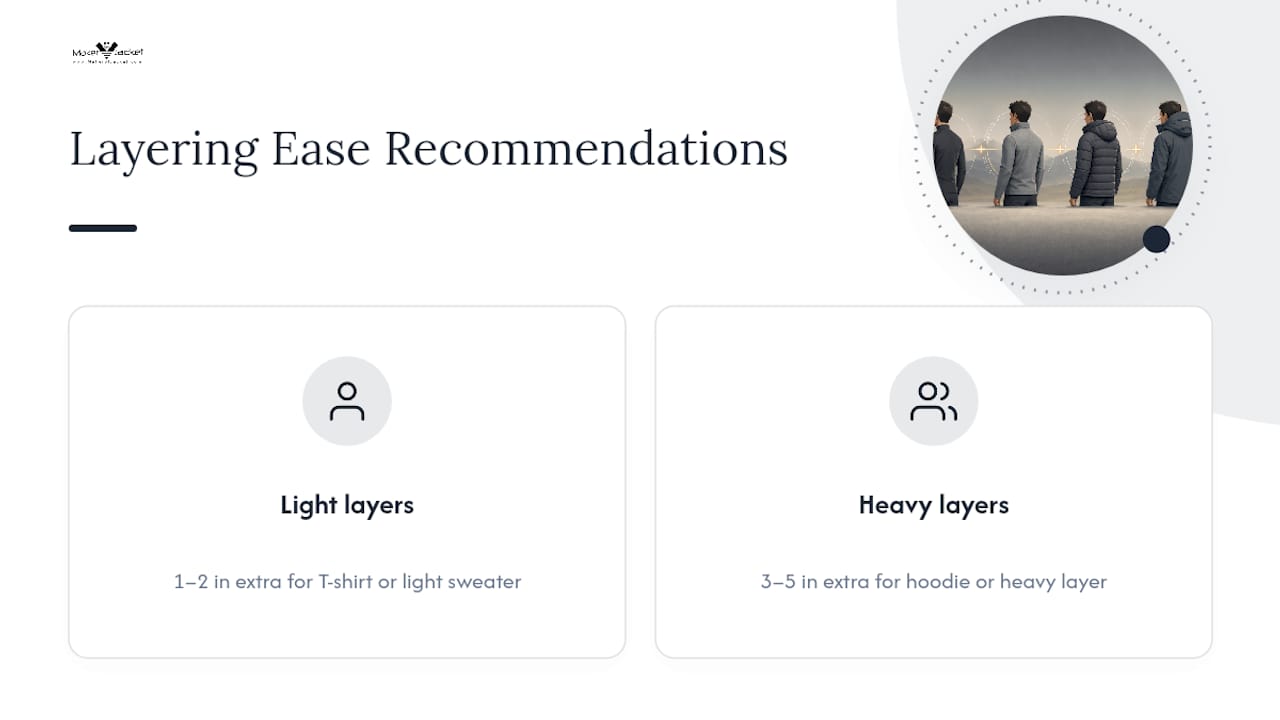
For layering, keep it simple: 1 to 2 inches of extra ease covers a T shirt or light sweater underneath, while 3 to 5 inches handles a hoodie or heavier layer without pulling at the seams.
Pro Tip: If you’re stuck between two sizes, size up on the chest and have the sleeves shortened. Sleeves are cheap to fix. A too-tight chest is not.
Can You Use an Old Jacket to Pick a New Size?
Yes, and it’s often the most reliable method available, because it accounts for the exact cut and ease you already know you like, not just a body measurement in isolation.
Lay the jacket flat on a bed or table, buttoned, and smooth out any wrinkles before you measure. Take these four numbers:
- Chest across, measured flat from armpit to armpit, then multiply by two for the equivalent body chest measurement.
- Shoulder seam to seam, across the back panel.
- Sleeve length, from the shoulder seam to the cuff.
- Center back length, from the collar seam down to the hem.
Compare those four numbers against the flat product measurements listed on a retailer’s page, allowing about half an inch of tolerance either way. If three of the four line up closely, you’re safe to order. If the chest and shoulders both come in short, go up a size rather than hoping alterations will save it.
When Does Custom Sizing Beat Off-the-Rack?
Standard size charts work fine for average proportions, but they break down fast for broader shoulders, a longer torso, or the layered fit a motorcycle jacket needs for real protection. That’s the gap custom sizing exists to close.
Maker of Jacket builds every custom order around your own measurements rather than a fixed chart, which matters most for riders who need a jacket that stays snug over armor without restricting movement, or anyone who has been stuck between two sizes on every chart they’ve tried. Off-the-rack still makes sense for most fashion jackets on a standard build. Custom earns its cost when your body or your use case sits outside that standard.
— Maker
Get a Jacket Built Around Your Exact Measurements
Chest, shoulders, sleeve, and length numbers only get you so close with a standard size chart. Custom jacket makers can remove the guesswork entirely by building the jacket to the measurements you submit, so there’s no rounding to the nearest S/R/L and no gambling on how one brand’s “42” compares to another’s.
During checkout for a custom order, you’ll be asked for the same core numbers covered above: chest, shoulder width, sleeve length, and jacket length, plus any notes on fit preference or layering needs. Riders ordering protective gear can flag that up front so the cut allows for armor without bagging out everywhere else. If any measurement feels uncertain, our sizing team can walk you through it before production starts. Start your custom jacket order today and skip the exchange process entirely.
Where to Double-Check Your Measurements
Run your numbers through the jacket size calculator for a quick sanity check, and cross-reference sleeve and shoulder technique against this couture measuring guide for finer detail on precise flat measuring.
Sources
- How to Measure Chest: Complete Guide for Suit & Shirt Fit (Nathan Tailors)
- How to Measure Jacket Size (WikiHow)
- Jacket Size Calculator (Omni Calculator)
- How To Measure for a Suit: Jacket and Trouser Fit Guide (Men’s Wearhouse)


