

Temperature Ratings in Jackets Explained for Outdoor Use

TL;DR:
- Jacket temperature ratings lack a universal standard and are often unreliable without considering fill power, fill weight, and construction. Fill weight determines absolute warmth, while fill power influences insulation efficiency; both should be evaluated together for an accurate estimate. Factors such as baffle design, fit, shell material, and activity level significantly impact actual warmth beyond insulation specifications.
Temperature ratings in jackets indicate how well a jacket insulates your body and signal its suitability for specific weather conditions and activity levels. Unlike sleeping bags, which follow EN/ISO standardized testing, jacket temperature ratings have no universal benchmark. Brands like Arc’teryx, Patagonia, and Rab each publish warmth claims using their own internal systems, making direct comparisons unreliable. Understanding temperature ratings in jackets explained through the lens of fill power, fill weight, and construction gives you a far more accurate picture than any single number on a hangtag. This guide breaks down every metric that actually matters.
How fill power and fill weight determine jacket warmth
Fill power and fill weight are the two core specifications behind every down jacket’s warmth claim, and confusing them is the most common mistake buyers make.
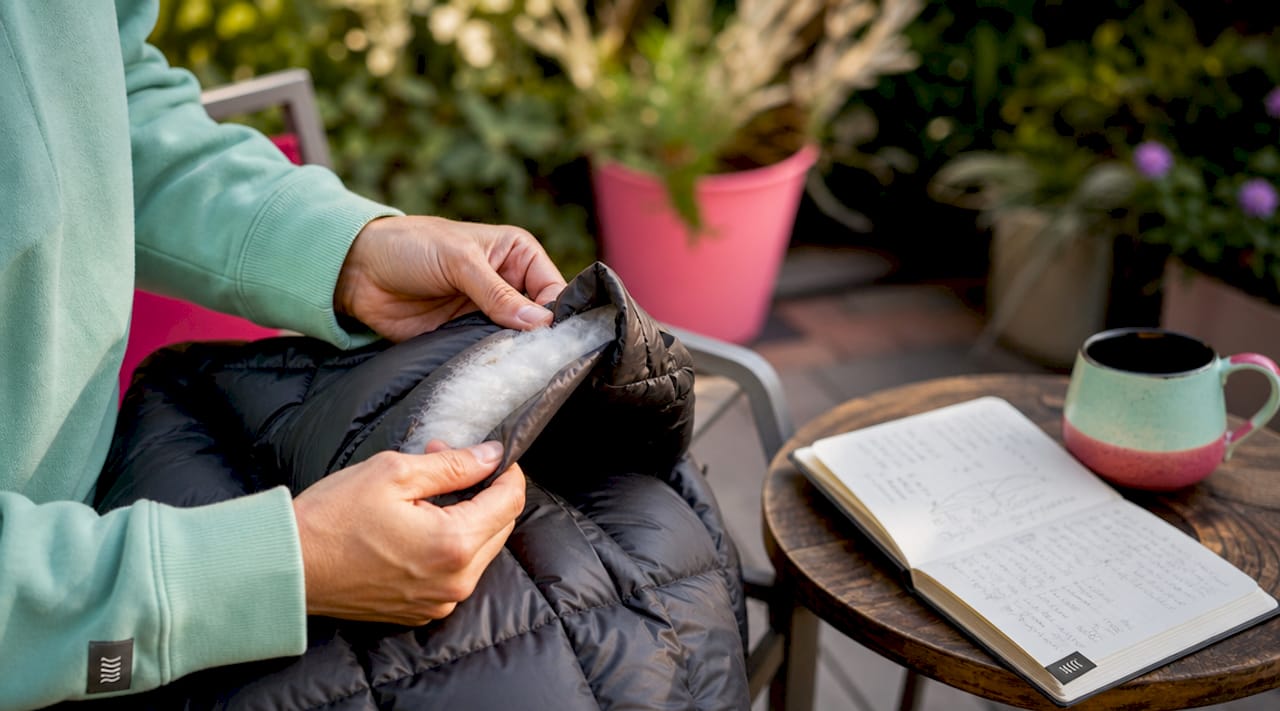
Fill power measures the loft of down. Specifically, it describes how many cubic inches one ounce of down occupies when fully expanded. Higher fill power means fluffier, lighter down that traps more air per ounce. A 700 fill power jacket delivers sufficient warmth at moderate weight, making it ideal for ski and snowboard use. An 800+ fill power jacket reduces overall weight by roughly 10 to 15 percent compared to lower-rated equivalents, but the primary benefit applies to backcountry and alpine contexts where pack weight is critical.
Fill weight is the total amount of down inside the jacket, measured in ounces. This number determines absolute warmth. Fill weight drives actual warmth more directly than fill power alone, yet many brands omit it from product listings entirely. A jacket with 700 fill power and 4 oz of down will be noticeably cooler than a jacket with 600 fill power and 7 oz of down, even though the first jacket has “better” down by the marketing metric.
GearJunkie’s testing categorizes down jackets by fill weight into three practical tiers. Lightweight jackets carry 3 to 4 oz of fill and suit three-season use above freezing. Moderate jackets carry 5 to 6 oz and handle sub-freezing conditions. Heavyweight jackets exceed 6 oz and are built for extreme cold. These categories give you a reliable warmth framework when a brand’s temperature claim is vague or absent.
You can also estimate insulation loft by multiplying fill power by fill weight to get total loft volume in cubic inches. A 700 FP jacket with 5 oz of fill produces 3,500 cubic inches of loft. That number lets you compare two jackets on a common scale even when their marketing language differs.
One durability factor worth knowing: down loses fill power at roughly 2 to 4 percent annually with regular use. Premium 700+ FP jackets typically last 8 to 12 years with proper care, while mid-grade 500 to 600 FP jackets last 5 to 8 years. This means the warmth rating you buy today will gradually shift over the jacket’s lifespan.
Pro Tip: When comparing two jackets, always ask for both fill power and fill weight. If a brand only lists fill power, treat the warmth claim as incomplete and contact them directly for the fill weight spec before purchasing.
| Fill weight | Warmth tier | Best use case |
|---|---|---|
| 3 to 4 oz | Lightweight | Three-season, above freezing |
| 5 to 6 oz | Moderate | Sub-freezing conditions |
| 6+ oz | Heavyweight | Extreme cold, static use |
Why jacket temperature ratings aren’t standardized
No official EN or ISO standard exists for jacket temperature ratings, unlike the regulated testing protocols applied to sleeping bags. This is the single most important fact to understand before trusting any warmth claim on a jacket label.
Because each brand defines its own rating methodology, a jacket labeled “rated to 20°F” from one manufacturer may perform very differently from another jacket carrying the same claim. Some brands test in controlled lab conditions. Others rely on wearer feedback or internal estimates. The result is a market where warmth numbers are marketing tools as much as technical specifications.
Several practical strategies help you navigate this ambiguity:
- Apply the 10°F buffer rule. Cold sleepers and those with low cold tolerance should select a jacket rated at least 10°F below the coldest temperature they expect to face. This compensates for individual variation and optimistic brand claims.
- Cross-reference fill weight and fill power. Use the loft volume calculation described above to create your own warmth estimate independent of the brand’s label.
- Check baffle construction. Box baffle jackets trap more air and reduce cold spots compared to sewn-through construction, which compresses insulation at the seams.
- Factor in fit. A jacket that fits too loosely allows warm air to escape and cold air to enter, reducing effective warmth regardless of the insulation spec.
- Account for activity level. A jacket rated for 20°F at rest may feel warm at 35°F during a strenuous hike. Activity intensity changes your effective temperature range significantly.
The absence of standardization means you are always combining multiple data points to estimate real-world warmth. Brands like Enlightened Equipment acknowledge this directly, advising buyers to treat temperature ratings as general guides rather than precise thresholds.
Down vs. synthetic insulation: what the difference means for warmth ratings
The insulation type inside a jacket shapes how its warmth rating translates to real conditions, particularly when weather turns wet or activity levels change.
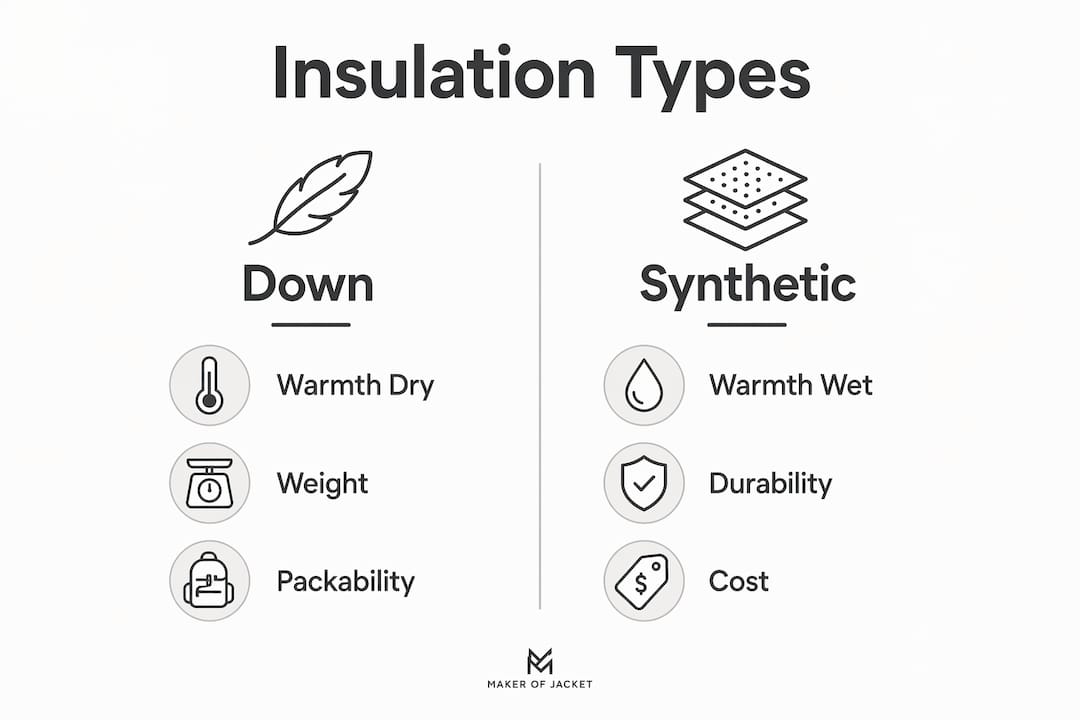
Down insulation delivers the best warmth-to-weight ratio in dry conditions. It compresses tightly for packability and lofts fully when deployed. The limitation is moisture. Wet down clusters together, losing its loft and most of its insulating ability. Hydrophobic down treatments, used by brands like Arc’teryx and Rab, partially address this by coating individual clusters to resist moisture absorption, but no treatment makes down fully waterproof.
Synthetic insulation retains warmth better when wet and dries faster than down. It also costs less and works well for buyers who prioritize reliability over weight savings. The trade-off is bulk and weight. Synthetic jackets are heavier and less compressible than down equivalents at the same warmth level, which matters for backpacking and alpine use.
| Insulation type | Warmth when dry | Warmth when wet | Weight | Packability |
|---|---|---|---|---|
| Down (standard) | Excellent | Poor | Light | High |
| Down (hydrophobic) | Excellent | Moderate | Light | High |
| Synthetic | Good | Good | Heavier | Moderate |
| Hybrid blend | Very good | Good | Moderate | Moderate |
Some jackets blend down and synthetic insulation, placing synthetic panels in high-moisture zones like underarms and shoulders while using down across the torso and back. This approach optimizes warmth, weight, and moisture management simultaneously. Patagonia’s DAS Parka and Arc’teryx’s Cerium series both use strategic insulation placement to address the limitations of each material type.
Other critical factors that affect how warm a jacket actually feels
Insulation specs tell only part of the story. Jacket design directly affects warmth retention, and two jackets with identical fill specs can perform very differently based on construction.
Baffle construction and cold spots
Box baffles create three-dimensional chambers that allow down to loft fully in all directions. Sewn-through construction stitches the outer and inner shell together, compressing insulation at every seam and creating thin cold spots across the jacket. For cold weather use, box baffle construction is the more reliable choice.
Fit, closures, and heat retention
A well-fitted jacket with a cinchable hem, adjustable cuffs, and a high collar retains significantly more body heat than a loosely cut jacket with open hems. Hoods add measurable warmth, particularly in wind. Brands like Montbell and Western Mountaineering design their hoods to seal around the face without requiring a separate balaclava in moderate cold.
Shell fabric and windproofing
The outer shell fabric determines how much wind penetrates the insulation layer. A windproof shell, such as Gore-Tex Infinium or a DWR-treated ripstop nylon, blocks convective heat loss. Without windproofing, even a high-fill-power jacket loses warmth rapidly in exposed conditions.
Pro Tip: Test windproofing by blowing sharply through the outer fabric of a jacket before buying. If air passes through easily, the jacket will underperform its temperature rating in any wind above 10 mph.
Breathability and layering for active use
Heavier jackets cause overheating during movement, which leads to sweat buildup that then chills you when you stop. Active insulation jackets, designed with more breathable fabrics and lighter fill, solve this by venting excess heat during exertion. For skiing, trail running, or fast-packing, active insulation outperforms a high-fill belay jacket in real comfort.
How to choose jacket warmth for your specific activities
Selecting the right jacket requires matching warmth specs to your actual use case, not just the coldest temperature you might encounter.
- Assess your cold tolerance honestly. People who run cold should add 10 to 15°F to any temperature rating as a personal buffer. Those who run warm can trust ratings more closely or size down in fill weight.
- Define your primary activity. Static use such as belaying, watching outdoor events, or commuting demands maximum insulation. Active use such as skiing, hiking, or cycling demands breathable, lighter insulation to prevent overheating.
- Check the jacket insulation specs together. Read fill power and fill weight as a pair. Calculate loft volume. Compare that number across jackets rather than relying on brand temperature claims.
- Plan your layering system. A midlayer jacket rated to 30°F worn over a thermal base layer performs differently than the same jacket worn over a t-shirt. Factor in your full system when evaluating warmth.
- Account for precipitation. If you expect wet conditions, prioritize hydrophobic down or synthetic insulation over standard down regardless of fill power ratings.
- Match jacket weight to pack requirements. For backpacking or alpine climbing, a lighter high-fill-power jacket with moderate fill weight often outperforms a heavier jacket when total pack weight matters.
Consulting a seasonal jacket guide helps map these variables to specific temperature zones and activities, giving you a structured framework rather than guesswork.
Key takeaways
Jacket warmth is determined by fill weight, fill power, construction, and fit together. No single number tells the full story.
| Point | Details |
|---|---|
| Fill weight drives absolute warmth | A jacket with more fill weight but lower fill power can outperform a lighter high-FP jacket. |
| No industry standard exists | Brands set their own ratings; apply a 10°F personal buffer for cold-weather safety. |
| Construction shapes performance | Box baffles, windproof shells, and sealed closures add measurable warmth beyond insulation specs. |
| Insulation type matters in wet conditions | Synthetic holds warmth when wet; down excels in dry conditions with superior warmth-to-weight ratio. |
| Activity level changes warmth needs | Static use demands heavy insulation; active use requires breathable, lighter fill to prevent overheating. |
What I’ve learned from years of evaluating jacket warmth claims
The outdoor industry has a fill power obsession, and it misleads buyers constantly. Brands plaster “800 fill power” on hangtags because it sounds impressive, but that number tells you nothing about how warm the jacket actually is. Fill weight is the number that matters, and it is frequently buried in spec sheets or omitted entirely. That is not an accident.
My honest recommendation: ignore temperature ratings printed on labels until you have verified the fill weight, confirmed the baffle construction, and understood the intended use case. A 600 FP jacket with 7 oz of fill in a box baffle construction will keep you warmer on a cold belay than a 900 FP jacket with 3 oz of fill designed for fast-and-light movement. The numbers only make sense in context.
The other thing buyers consistently underestimate is fit. I have tested jackets with excellent specs that performed poorly because the hem sat open at the waist or the cuffs allowed cold air to funnel up the sleeve. Warmth is a system. The insulation is only one component of that system.
Use temperature ratings as a starting point, not a verdict. Combine them with fill weight, construction details, and an honest assessment of how you will actually use the jacket. That process takes five extra minutes and saves you from buying the wrong gear entirely.
— Maker
Find your perfect jacket at Makerofjacket
At Makerofjacket, you can specify exactly what you need in a jacket, from insulation level and lining material to fit, closures, and shell fabric. Whether you need a heavyweight winter jacket for static cold-weather use or a lighter layer for active outdoor pursuits, the custom jacket builder lets you configure warmth and design features to match your specific conditions. Every jacket is built to your specifications, with worldwide free shipping included. Stop guessing at temperature ratings and start with a jacket designed around your actual warmth requirements.
FAQ
What do temperature ratings in jackets actually mean?
Temperature ratings in jackets indicate the approximate lowest temperature at which the jacket provides adequate insulation for most wearers. Because no universal standard exists for jackets, these ratings vary by brand and should be treated as general guidance rather than precise thresholds.
Is fill power or fill weight more important for warmth?
Fill weight is more important for absolute warmth. Fill power measures warmth-to-weight efficiency, but total fill weight determines how much insulation is actually present in the jacket.
How do I compare warmth across different jacket brands?
Calculate loft volume by multiplying fill power by fill weight in ounces. This gives you a cubic-inch figure that allows direct comparison across brands regardless of their individual temperature rating systems.
Does down or synthetic insulation perform better in cold weather?
Down outperforms synthetic in dry cold conditions due to its superior warmth-to-weight ratio. Synthetic insulation performs better in wet or humid conditions because it retains warmth when damp and dries faster than down.
How should I adjust a jacket’s temperature rating for my personal cold tolerance?
If you run cold, select a jacket rated at least 10°F below the coldest temperature you expect to encounter. This buffer accounts for individual variation, wind exposure, and the tendency of brands to publish optimistic warmth claims.


