

What Is Aniline Leather? Characteristics and Care Guide

TL;DR:
- Aniline leather is full-grain leather dyed with transparent dyes and no surface coatings, preserving natural marks and open pores. It offers unmatched softness, breathability, and develops a unique patina over time, but requires careful maintenance due to its low stain and scratch resistance. It is best suited for low-traffic, adult environments where its natural characteristics can be appreciated and properly cared for.
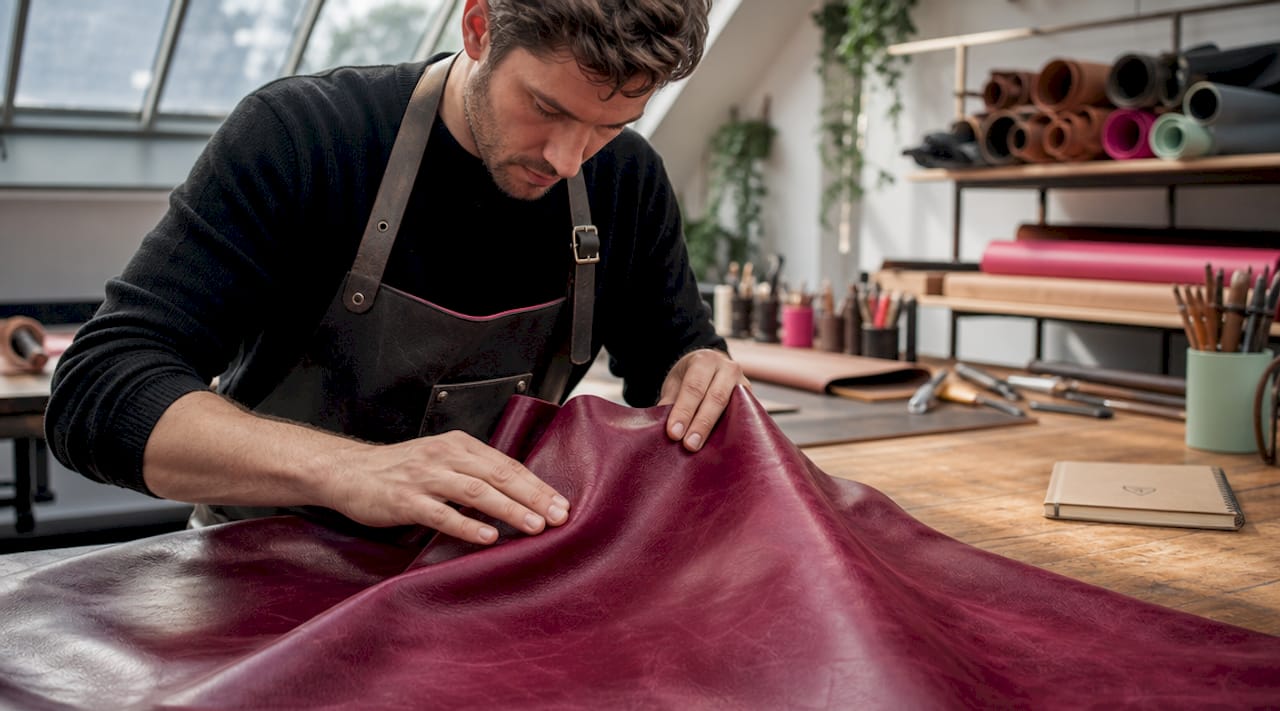
Aniline leather is full-grain leather finished exclusively with transparent soluble dyes, with no surface pigment or protective topcoat applied at any stage. This finishing method preserves the hide’s original grain, natural markings, and open-pore structure in a way no other leather type can replicate. Because only the top 5% of hides with minimal surface defects qualify for aniline finishing, the material commands a significant price premium over semi-aniline and pigmented alternatives. If you are shopping for leather furniture, a jacket, or automotive upholstery and keep encountering this term, understanding what separates aniline from every other finish will save you from a costly mistake.
What is aniline leather and how is it made?
Aniline leather is not a hide grade. It is a finishing method exclusive to top-quality full-grain leather, where the hide receives no surface concealment whatsoever. The dye used is aniline, a transparent, soluble colorant that penetrates the leather fibers without forming a film on the surface. The result is leather that looks and feels like skin because, structurally, it still behaves like it.
The dyeing process, known in the industry as what is leather dyeing at its most natural form, involves submerging the hide in a drum of aniline dye solution. Color saturates the fiber uniformly from the inside out. No pigment paste, no polymer topcoat, no wax finish is added afterward. Every scar, wrinkle, and natural marking on the original hide remains fully visible, which is exactly why near-flawless raw hides are required.
This stands in direct contrast to pigmented leather, where a heavy surface coating conceals the hide’s natural character entirely. Understanding the distinction between finish and hide grade matters here. Full-grain leather is the grade. Aniline is the finish. Not all full-grain leather is aniline finished, and confusing finish with hide quality is one of the most common mistakes buyers make when evaluating premium leather goods.
How does aniline leather compare to semi-aniline and pigmented leather?
The three main leather finishes sit on a spectrum from most natural to most protected. Aniline leather occupies one end, pigmented leather the other, with semi-aniline sitting in the middle as a practical compromise.
Semi-aniline leather carries a light polymer topcoat and a small amount of added pigment for protection. That coating is typically 0.05 to 0.15 mm thick, thin enough to preserve most of the grain’s visual character while providing meaningful resistance to stains and fading. Pigmented leather coatings reach up to 0.5 mm, effectively masking the hide beneath a uniform surface film. Semi-aniline balances natural appearance with durability, making it the most widely used finish in commercial upholstery.
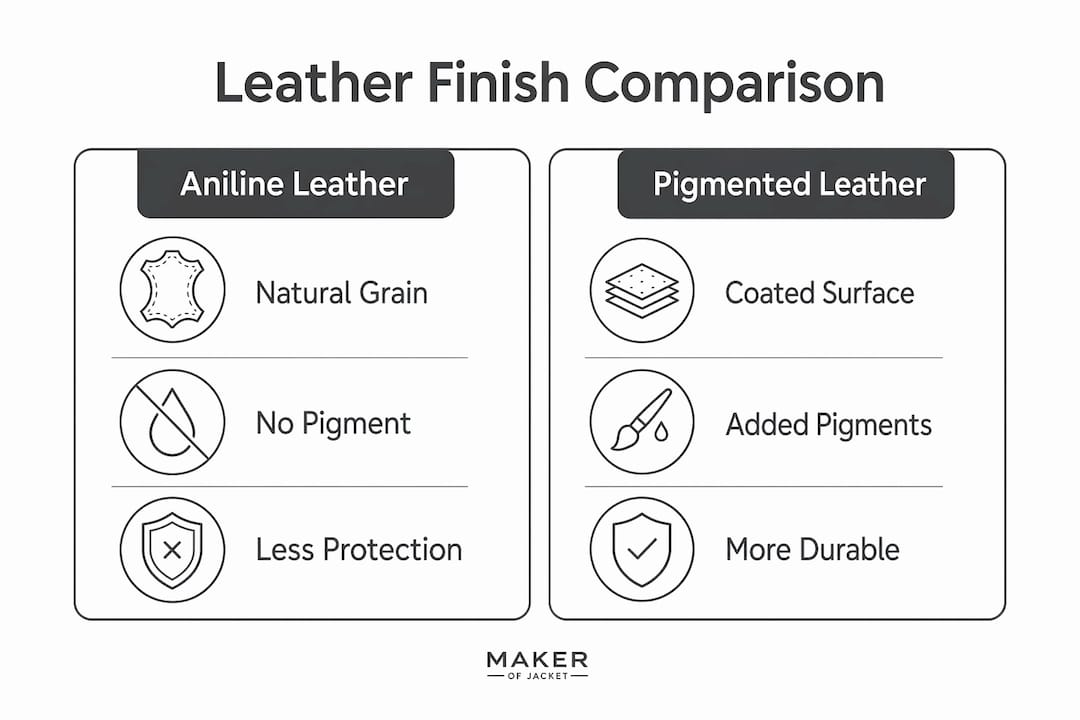
The table below shows how the three finishes compare across the factors that matter most to buyers.
| Feature | Aniline | Semi-aniline | Pigmented |
|---|---|---|---|
| Appearance | Natural grain fully visible | Grain visible, slight uniformity | Uniform, surface-coated look |
| Protective coating | None | Thin polymer layer (0.05–0.15 mm) | Heavy coating (up to 0.5 mm) |
| Stain resistance | Very low | Moderate | High |
| Natural aging and patina | Pronounced and desirable | Moderate | Minimal |
| Best use | Low-traffic, adult settings | General home and commercial use | High-traffic, family, or pet environments |
| Cost | Highest | Mid-range | Most affordable |
The practical takeaway from this comparison is straightforward. Aniline leather rewards buyers who prioritize authenticity and are willing to invest in careful maintenance. Semi-aniline suits most households looking for a natural appearance without the vulnerability. Pigmented leather is the right call for anyone with children, pets, or high daily use.
Aniline leather characteristics and benefits
The qualities that make aniline leather desirable are direct consequences of having no surface coating. Every benefit flows from that single fact.
- Exceptional softness. Without a polymer film stiffening the surface, aniline leather feels buttery and warm to the touch from the first day of use. This tactile quality is immediately noticeable compared to pigmented alternatives.
- Superior breathability. The open-pored structure allows air and moisture to pass through the surface, making aniline leather significantly more comfortable during prolonged contact. This is why it remains a preferred choice for high-end automotive seating and luxury furniture.
- Natural patina development. Aniline leather develops a natural patina over time, including color deepening and surface softening that enhances its character. This aging is most pronounced in the first years of use and is considered a mark of quality by collectors and design professionals alike.
- Authentic grain and markings. Healed scars, insect bites, and natural wrinkles remain visible on the surface. Design consultants treat these as signs of authenticity, not flaws, encouraging owners to appreciate the lived-in aesthetic rather than expecting a flawless uniform surface.
- Unique character per piece. No two aniline leather items look identical. The natural variation between hides means your jacket, sofa, or car seat is genuinely one of a kind.
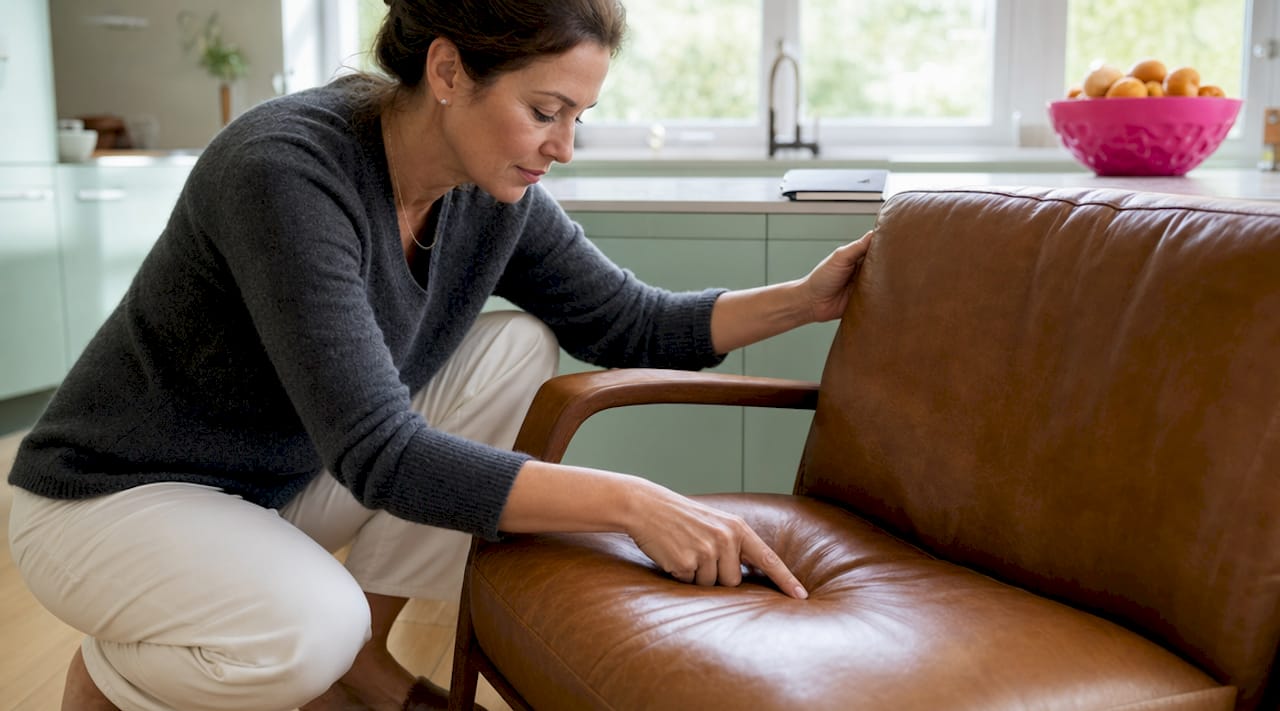
Pro Tip: When evaluating aniline leather in person, press your fingertip lightly against the surface and hold it for three seconds. A faint, temporary mark from body heat confirms the open-pore structure of genuine aniline leather. Pigmented leather will show no such response.
The rarity of qualifying hides drives the cost premium, but it also means you are purchasing material that cannot be faked or replicated with synthetic alternatives. That exclusivity is part of what you pay for.
Aniline leather durability, drawbacks, and where it works best
Aniline leather’s greatest strength is also its primary vulnerability. The absence of a protective coating that creates its natural beauty leaves it fully exposed to the environment. Buyers who understand this going in make far better purchasing decisions than those who discover it after a spill.
The core drawbacks are:
- Stain absorption. The open-pored surface absorbs liquids almost instantly. Water, oils, and food leave visible marks that are difficult to reverse without professional intervention.
- Scratch visibility. Surface scratches show clearly on aniline leather because there is no coating layer to absorb or hide them. Light scratches can sometimes be buffed out, but deeper marks are permanent.
- UV fading. Without a UV-resistant topcoat, prolonged sun exposure causes noticeable color fading. Positioning aniline leather furniture away from direct sunlight is not optional. It is necessary.
- Higher maintenance demand. Aniline leather requires more frequent and more careful attention than semi-aniline or pigmented alternatives to maintain its appearance over time.
Pro Tip: If you are considering aniline leather for a sofa in a room with large south-facing windows, either invest in UV-filtering window film or choose semi-aniline instead. The cost of fading is irreversible.
Aniline leather furniture works best in formal living rooms, private studies, and adult-only environments with low daily traffic. For deeply buttoned furniture like Chesterfield sofas, professional upholstery practitioners caution against aniline leather specifically because dirt settles into the crevices and cleaning becomes extremely difficult. Semi-aniline is the practical choice for those styles. In fashion, aniline leather jackets and accessories suit buyers who wear them selectively and store them properly. For automotive applications, it appears in luxury vehicles where the cabin environment is controlled and the seats receive adult use only.
You can check leather grade differences to understand how hide quality interacts with finish choice before committing to a purchase.
How to care for aniline leather and maintain its appearance
Caring for aniline leather is less about products and more about discipline. The wrong cleaner does more damage than a stain. Follow these steps to protect your investment.
- Wipe spills immediately. Blot, never rub, with a clean dry cloth. Rubbing spreads the liquid and drives it deeper into the fibers. Speed is the only defense against staining on uncoated leather.
- Clean periodically with a damp cloth. Use a clean, slightly damp cloth to wipe the surface every few weeks. No soap, no detergent, no household cleaner. Plain water removes surface dust without damaging the fiber structure.
- Avoid oils, saddle soaps, and abrasives. Harsh substances damage leather fibers and alter the surface color permanently. Products designed for pigmented leather often contain conditioners or solvents that are too aggressive for aniline surfaces.
- Condition with a product formulated for aniline leather. A dedicated leather conditioner replenishes moisture in the fibers without leaving a surface residue. Apply sparingly two to three times per year, or more frequently in dry climates.
- Rotate usage where possible. If you have an aniline leather sofa, rotate cushions and vary seating positions to distribute wear and patina development evenly across the surface.
- Keep away from direct sunlight and heat sources. Position furniture at least three feet from windows and away from radiators or vents. UV exposure and heat both accelerate fading and drying.
- Seek professional cleaning for stubborn stains. A leather restoration specialist has access to pH-balanced aniline-safe cleaners and can address deep stains without causing further damage. Attempting aggressive home remedies on aniline leather almost always makes the problem worse.
For a full breakdown of home cleaning methods that work safely on natural leather, the step-by-step cleaning guide at Makerofjacket covers the process in practical detail.
Key takeaways
Aniline leather is the most natural leather finish available, defined by transparent dyeing with no protective coating, which produces unmatched softness and authentic aging but demands careful, consistent maintenance.
| Point | Details |
|---|---|
| Definition of aniline leather | Full-grain leather dyed with transparent aniline dyes and no surface coating or pigment. |
| Hide quality requirement | Only the top 5% of hides qualify, making aniline leather rare and expensive. |
| Aniline vs semi-aniline | Semi-aniline adds a thin protective topcoat for stain resistance while retaining most natural appearance. |
| Primary vulnerability | No coating means instant stain absorption, UV fading, and visible scratches without regular care. |
| Best use environments | Low-traffic, adult-only settings in fashion, formal furniture, and controlled automotive interiors. |
Why most people buy aniline leather for the wrong reasons
Most buyers discover aniline leather through a showroom tag or a product description and assume the premium price means it will last longer. That assumption is exactly backward. Aniline leather costs more because it requires better raw material and reveals more of the hide’s natural character. It does not cost more because it is tougher.
What I find genuinely interesting about aniline leather is that it rewards a different kind of ownership. You are not buying a surface that resists the world. You are buying a material that records it. The patina that develops on a well-used aniline leather jacket or armchair tells a real story, and that is something no pigmented leather product can replicate regardless of price.
The misconception I see most often is treating natural markings as defects. A healed scar on an aniline hide is not a quality failure. It is proof the leather was never corrected or concealed. If you want a perfectly uniform surface, aniline leather is genuinely not the right choice, and there is no shame in that. Semi-aniline delivers a beautiful, durable result for most households.
The buyers who get the most from aniline leather are those who understand they are choosing a living material. They accept the maintenance, embrace the aging, and recognize that a ten-year-old aniline leather piece with a developed patina is worth more aesthetically than a new one. That mindset shift is what separates satisfied owners from disappointed ones.
— Maker
Explore premium leather jackets at Makerofjacket
At Makerofjacket, premium leather is not a marketing claim. It is the starting point for every jacket in the catalog. Whether you are drawn to the natural character of full-grain leather or want to understand exactly what finish suits your lifestyle, the team builds each piece with material transparency and craftsmanship as the baseline. The customization options let you specify cut, color, and style so the finished jacket reflects your preferences precisely. For buyers who already own leather apparel and want to protect their investment, the leather care resource at Makerofjacket covers maintenance from daily habits to seasonal conditioning in practical, actionable terms.
FAQ
What is aniline leather in simple terms?
Aniline leather is full-grain leather dyed with transparent aniline dyes and no surface coating, leaving the natural grain and markings fully visible. It is the purest and most natural leather finish available.
Is aniline leather more durable than semi-aniline?
No. Semi-aniline leather is more durable because its thin protective topcoat resists stains, scratches, and UV fading. Aniline leather offers superior softness and natural aging but requires more careful maintenance.
What are the best uses for aniline leather furniture?
Aniline leather furniture works best in low-traffic, adult-only settings such as formal living rooms or private studies. It is not recommended for deeply buttoned furniture styles or homes with children and pets.
How do you clean aniline leather safely?
Blot spills immediately with a dry cloth, wipe the surface periodically with a slightly damp cloth, and avoid oils, saddle soaps, and household cleaners. Use a conditioner formulated specifically for aniline leather two to three times per year.
Why is aniline leather so expensive?
Only the top 5% of hides with minimal surface defects qualify for aniline finishing, since no pigment or coating can conceal imperfections. That rarity in raw material selection drives the significant price premium over other leather types.
Recommended
- Ultimate Guide to Leather Conditioner – Maker of Jacket
- How to Care for Leather: Maintain Your Gear and Fashion – Maker of Jacket
- Understanding Synthetic vs Real Leather: A Comprehensive Guide – Maker of Jacket
- Ultimate Guide on Cowhide Leather: Origins, Characteristics, Benefits, Care, and Applications – Maker of Jacket


