

Jacket warranties: protect your custom leather investment


TL;DR:
- Jacket warranties mostly cover manufacturing defects, not normal wear or accidental damage.
- Always ask for written warranty details and understand exclusions before purchasing.
- Proper registration and documentation are essential for making warranty claims effectively.
Most riders and fashion buyers assume that spending big on a custom leather jacket means they’re automatically covered if something goes wrong. That assumption can be costly. Jacket warranties vary dramatically from one brand to the next, and the fine print often tells a very different story than the sales pitch. Whether you’re investing in a bespoke motorcycle jacket or a one-of-a-kind fashion piece, knowing exactly what your warranty covers, what it excludes, and how to actually use it can save you serious money and frustration. This guide walks you through every layer of jacket warranty protection so you can buy with confidence.
Table of Contents
- What does a jacket warranty really cover?
- Common exclusions: What your warranty won’t cover
- Types of jacket warranties: Comparing manufacturer and retailer options
- How to register and make a warranty claim
- Why understanding jacket warranties is crucial for custom buyers
- Protect your investment with a custom jacket that fits your needs
- Frequently asked questions
Key Takeaways
| Point | Details |
|---|---|
| Know what’s covered | Check exactly what your jacket warranty includes, as coverage may be limited. |
| Mind common exclusions | Most warranties exclude accidental damage, improper care, and normal wear. |
| Register and document | Register your jacket and keep receipts and photos to ease any future claims. |
| Manufacturer vs retailer | Both offer warranties, but coverage length and rules differ—compare before deciding. |
What does a jacket warranty really cover?
A jacket warranty is a written promise from the manufacturer or retailer that they’ll fix or replace your jacket if specific problems show up. Sounds simple. But the details matter more than most buyers realize.
Most standard warranties for leather and custom jackets cover defects in materials and workmanship, meaning problems that were present from the factory. Think stitching that unravels within weeks, zippers that fail under normal use, or seams that split without any rough treatment. As noted in jacket maintenance tips, warranties typically cover defects in materials and workmanship, but not normal wear and tear or accidental damage. That distinction is everything.
For custom leather jackets, the coverage can look a little different. Here’s what a typical warranty might include:
- Manufacturing defects in stitching, lining, or hardware
- Material failures like leather delamination or coating peeling within a set period
- Zipper and snap malfunctions caused by faulty installation
- Lining tears that result from poor construction, not use
For motorcycle jackets specifically, some brands add coverage for protective armor pockets or reflective panel integrity. Fashion custom jackets may cover embroidery or patch adhesion. These specifics are rarely advertised upfront.
Now, about those “lifetime” warranties. They sound incredible. But in practice, a lifetime warranty often means the lifetime of the product as defined by the manufacturer, not your actual lifetime. Some brands define this as two to five years. Others tie it to production runs. Always ask what “lifetime” actually means in writing before you buy.
“A warranty is only as strong as the clarity behind it. Vague language almost always favors the seller, not the buyer.”
Common exclusions: What your warranty won’t cover
With the basics of coverage defined, it’s critical to understand what falls outside your warranty’s safety net. This is where most buyers get caught off guard.
The list of typical warranty exclusions is longer than most people expect. Here are the most common ones:
- Normal wear and tear such as fading, softening, or minor scuffs from regular use
- Accidental damage including tears, burns, or punctures
- Stains from rain, oil, food, or cleaning products
- Lost or broken hardware caused by impact or rough handling
- Alterations made by anyone other than the original manufacturer
- Improper cleaning using wrong products or methods
- Color fading due to sun exposure or environmental factors
As leather jacket care tips confirm, most retailer warranties exclude accidental damage, misuse, and improper cleaning. That third one trips up a lot of buyers. Using the wrong conditioner or a harsh chemical cleaner can void your warranty entirely, even if the damage looks minor.
Maintenance habits matter more than most people think. If you store your jacket in a damp closet, fold it under heavy objects, or skip conditioning for years, a manufacturer may argue the damage resulted from neglect rather than a defect. That argument usually holds up.
“Your warranty is not insurance. It protects against factory mistakes, not life’s accidents.”
This is one of the most common misconceptions we see. Buyers assume their warranty will function like a protection plan or insurance policy. It won’t. If your jacket gets scraped in a fall or soaked in a rainstorm, that’s on you unless you’ve purchased a separate protection plan.
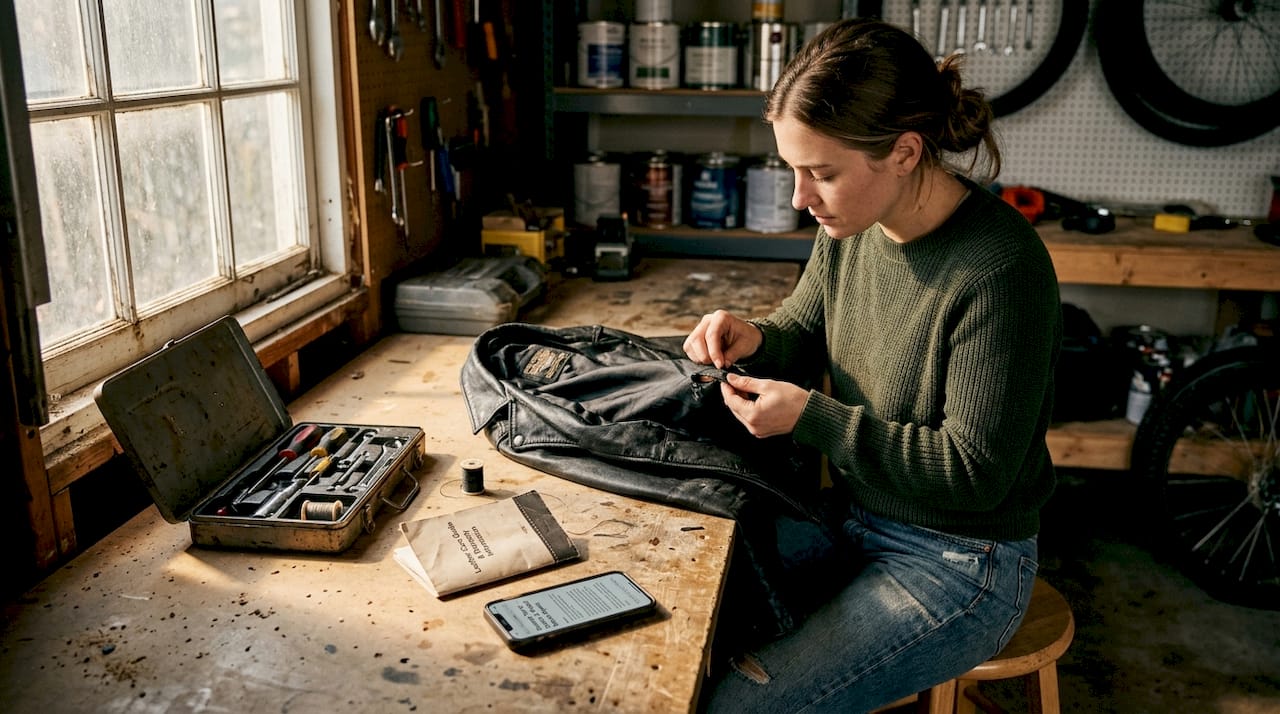
Following warranty best practices from day one keeps your coverage intact and your jacket in better shape overall.
Pro Tip: Take detailed photos of your jacket the day it arrives. Capture the stitching, zippers, lining, and any hardware. Time-stamped photos are powerful evidence if you ever need to file a claim.
Types of jacket warranties: Comparing manufacturer and retailer options
Once you know what’s included and excluded, the next step is to choose the right type of warranty for your needs. Not all warranties come from the same source, and that source matters.
The two main types are manufacturer warranties and retailer warranties. They work differently, cover different things, and involve different processes when something goes wrong.
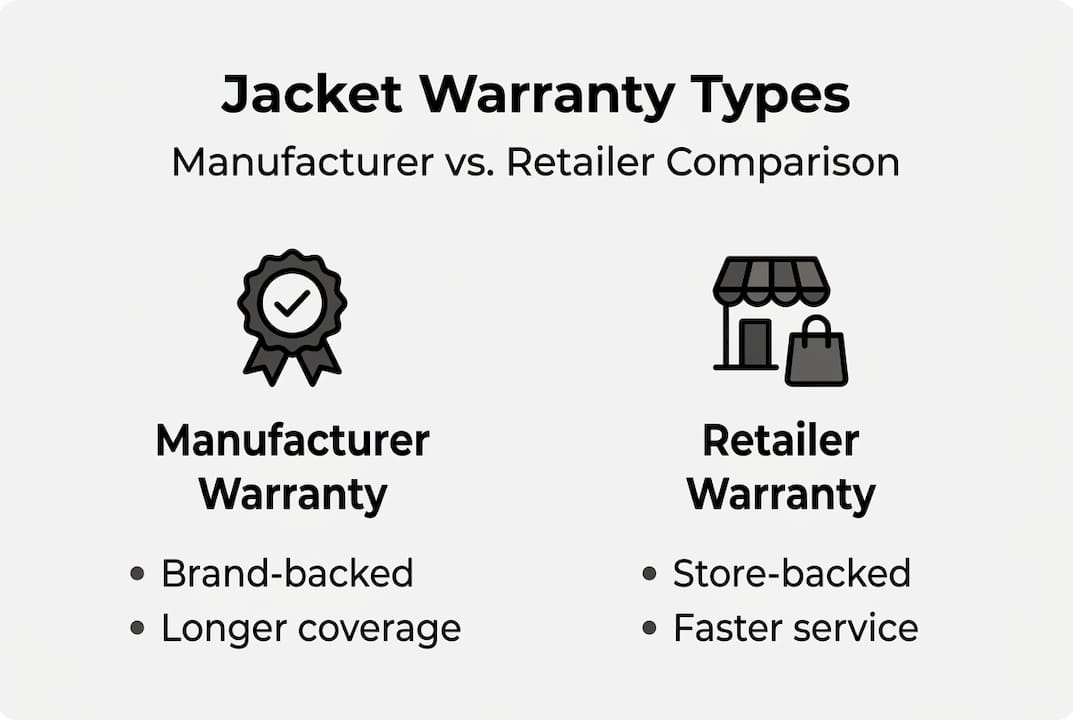
| Feature | Manufacturer warranty | Retailer warranty |
|---|---|---|
| Who backs it | The brand that made the jacket | The store where you bought it |
| Typical duration | 1 to 3 years | 30 to 365 days |
| Coverage scope | Defects in production | Varies, sometimes broader |
| Claim process | Contact brand directly | Contact retailer first |
| Custom jacket support | Often limited | May offer more flexibility |
| Documentation needed | Serial number, proof of purchase | Receipt, photos |
As jacket reviews data shows, manufacturer warranties often differ from retailer warranties in duration and process. For motorcycle jackets, manufacturer warranties tend to be more detailed because safety-critical components like armor and reflective panels need clear coverage terms. For high-fashion custom pieces, retailer warranties sometimes offer more flexibility because the retailer has a direct relationship with the buyer.
Here’s what to look for when reviewing either type:
- Exact duration stated in months or years, not vague language
- Named exclusions listed clearly
- Claim contact information with response time commitments
- Transfer terms if you ever sell the jacket
When you how to order custom jackets, always request the warranty certificate as part of your order confirmation. And revisit jacket care basics to make sure your habits align with the manufacturer’s care requirements from day one.
How to register and make a warranty claim
Having chosen your preferred warranty type, here’s exactly how to register your jacket and make a claim if needed. Many buyers skip registration entirely, which can make the claim process much harder later.
Follow these steps to register your jacket properly:
- Locate your warranty card or email included with your jacket or order confirmation
- Visit the brand’s registration page or complete the retailer’s form within the required timeframe
- Enter your product details including model name, color, and any serial or batch number
- Upload or attach proof of purchase such as your receipt or order confirmation email
- Save your confirmation of registration in a dedicated folder, digital or physical
As the how to order process confirms, registration is usually required to activate coverage and is often completed online or via retailer forms. Missing the registration window is one of the most common reasons claims get denied.
Here’s what you’ll typically need to file a claim:
| Document | Why it’s needed |
|---|---|
| Proof of purchase | Confirms you bought from an authorized source |
| Registration confirmation | Proves coverage is active |
| Photos of the defect | Shows the issue clearly |
| Description of the problem | Helps the team assess the claim |
| Serial or batch number | Identifies your specific product |
Once you submit a claim, most brands respond within 5 to 14 business days. Some require you to ship the jacket for inspection. Others resolve claims remotely based on photos alone. Keep all communication in writing so there’s a clear record.
If you’re customizing jacket online, ask your provider upfront how custom modifications affect warranty terms. Some alterations made during the order process are covered, while post-purchase changes almost never are. You can also verify jacket quality upon arrival to catch any defects before the registration window closes.
Why understanding jacket warranties is crucial for custom buyers
Here’s something most jacket guides won’t tell you: warranty knowledge is actually a design decision. When you’re choosing materials, hardware, and custom details, you’re also choosing your level of risk. A fully bespoke jacket with rare materials and hand-stitched embroidery might look stunning, but it could fall outside the coverage of any standard warranty.
We’ve heard from buyers who spent over a thousand dollars on a custom piece, only to find out the warranty was limited to 90 days and excluded the very stitching that failed. They focused entirely on the design and skipped the fine print. That’s an expensive lesson.
The jacket reviews we see from satisfied customers almost always mention one thing in common: they asked questions before buying. They confirmed what was covered, got it in writing, and registered immediately. That small effort made a big difference when issues came up.
Your custom jacket is a long-term investment. Treat the warranty as part of that investment, not an afterthought. The best-looking jacket in the world loses its value fast if you have no recourse when something goes wrong.
Protect your investment with a custom jacket that fits your needs
You’ve done the research. Now it’s time to put that knowledge to work with a jacket built to last.
At Maker of Jacket, every custom jacket option is crafted with longevity in mind, using premium materials and construction methods that stand behind the warranty terms. Our team is available to answer your warranty and care questions directly, so you’re never left guessing. Explore our leather care guide to keep your jacket in warranty-compliant condition from day one. And if you want to see exactly how we bring your vision to life, our customization journey walks you through every step of the process with full transparency.
Frequently asked questions
Do all custom leather jackets come with a warranty?
No, warranty terms vary widely between brands, so always ask for written details before purchasing any custom piece.
What is needed to file a jacket warranty claim?
You’ll typically need your proof of purchase, registration details, and clear photos of the issue, as most claims require complete documentation to be processed.
Does cleaning my jacket incorrectly void the warranty?
Yes, using improper cleaning methods or chemicals can void most warranties, since improper cleaning is a standard exclusion in leather jacket warranty terms.
Is accidental damage covered under a typical warranty?
No, accidental damage like tears or stains is generally excluded, as most retailer warranties specifically list accidental damage as a non-covered event.
Recommended
- Jacket Maintenance 2026: 50% Longer Life & Style – Maker of Jacket
- Why Buy Premium Leather: Lasting Value and Protection – Maker of Jacket
- Jacket care basics explained: preserve style and durability
- Why jacket care matters: preserve style, safety & durability
- Role of Weatherproof Apparel – Enhancing Family Adventures


