

Custom Fit Zip Out Liner Jackets for Riders, Commuters, and Workers

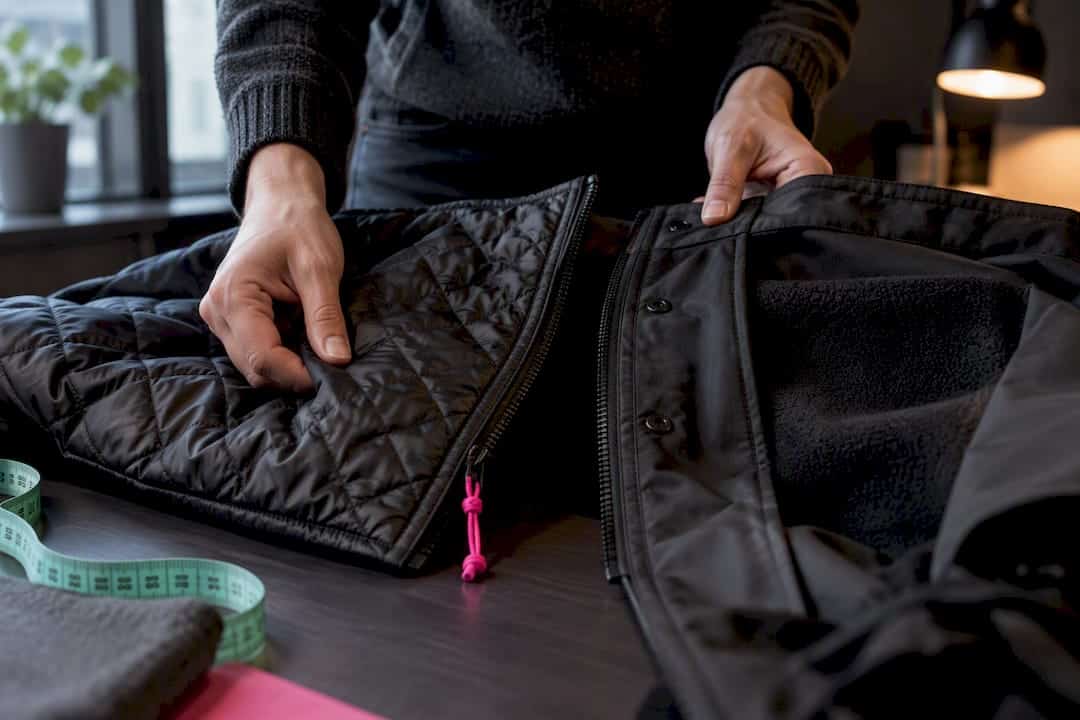
A zip out liner jacket is a shell with a separate insulating layer that zips in and out, letting you adjust warmth without owning two coats. The main payoff is modular protection: swap between a light shell in fall and a fully insulated jacket in deep winter. It suits commuters, riders, and outdoor workers who face changing weather in a single day.
TL;DR:
- Full perimeter zippers provide the best seal against cold air and prevent shifting during activity, making them ideal for high-intensity outdoor work and riding.
- Synthetic liners are more suitable for wet conditions because they retain insulation properties when damp, whereas down liners offer superior warmth-to-weight ratios in dry, cold weather.
- Layering space must accommodate both the liner and a base layer; a snug fit with just a T-shirt may become uncomfortable with a thermal underneath.
- Regular, careful washing and drying prolong liner life, with down liners requiring gentle cleaning and low heat, and synthetic or fleece liners drying faster and more forgiving.
- Custom-built jackets with removable liners allow precise adjustments in material, color, and fit, ideal for users with specific climate or activity needs.
Table of Contents
- Checklist for comparing removable-liner jackets
- Which jacket styles use zip-out liners
- Liner materials compared by climate and activity
- How removable liners change fit and sizing
- Washing, drying, and storing your liner
- Tips from riders and field workers on stowing liners
- Why we favor removable-liner construction
- Build your own zip-out liner jacket with Maker of Jacket
- Sources
- FAQ
Checklist for comparing removable-liner jackets
Before you buy, check how the liner attaches and whether that method matches how you actually plan to use the jacket. A full perimeter zipper holds the liner most securely and keeps cold air out at the seams, while partial zips or snap systems are faster to remove but can shift or gap during activity.
- Attachment method: full zip, partial zip, or snaps, each trading security for speed of removal.
- Liner insulation type: synthetic, down, fleece, or pile, chosen to match your climate.
- Shell features: waterproof rating, pit vents, an adjustable hood, and a dedicated pocket for storing the liner when it is out.
- Fit with the liner in: enough room in the sleeves and torso for a base layer underneath, explained further in layering strategy for jackets.
- Care and packability: how easily the liner washes and compresses for travel.
Skipping any one of these often means discovering the problem after the jacket arrives, not before.
Which jacket styles use zip-out liners
The role a liner plays changes with the type of jacket it comes with. A hi-vis work jacket asks the liner to add bulk warmth for long outdoor shifts, while a leather jacket needs a liner thin enough not to ruin the cut.
- Hi-vis and work jackets: quilted or puffy liners built for standing or moving outdoors for hours, often paired with a shell meeting ANSI/ISEA visibility standards referenced by OSHA for roadside and construction work.
- Motorcycle jackets: thermal or waterproof liners designed for highway wind chill, with storage worked into the jacket’s own pocket system, as reviewed in the Spidi 4 Season H2Out Evo Jacket.
- Leather jackets: low-profile pile or thin insulated liners that add warmth without changing the jacket’s silhouette, a common request on Maker of Jacket’s leather jacket lines.
- 3-in-1 systems: a shell and a removable midlayer sold as one unit, built to cover the widest seasonal range from a single jacket.
Knowing which category you fall into narrows the liner material decision considerably.
Liner materials compared by climate and activity
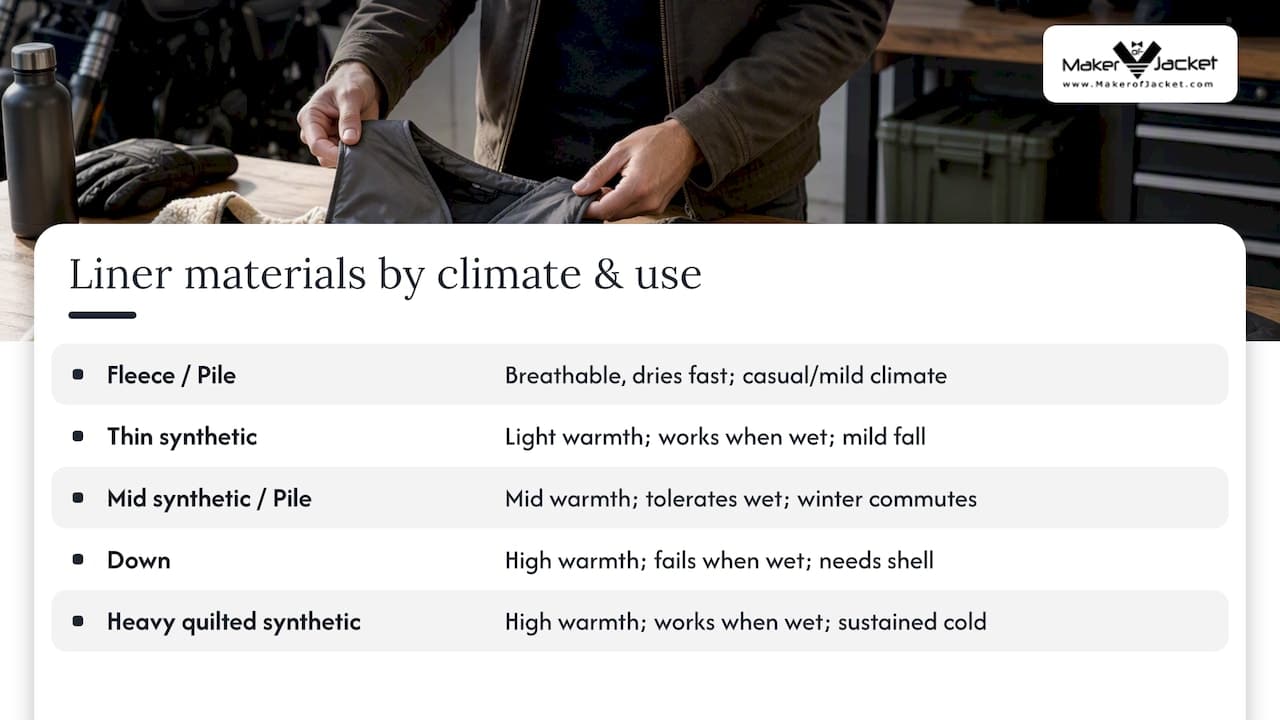
The material inside the liner decides how the jacket performs once the weather turns. According to REI’s layering guidance, synthetic insulation keeps working even when wet, while down loses loft and warmth as soon as it gets damp. That single fact should drive most of your decision.
Synthetic liners hold up well in rain and slush, machine wash easily, and suit workwear or daily commuting where the jacket takes a beating. Down liners give the best warmth for their weight but need dry conditions or a protective shell, plus more careful washing, a trade REI covers in its guide to insulated outerwear. Fleece and pile liners breathe well, dry fast, and feel comfortable against skin, making them a common choice for casual leather jackets or mild-climate layering, a point covered in choosing the right jacket lining.
Shells built for wet climates often pair better with synthetic liners for exactly this reason: the insulation keeps working when the outer fabric gets soaked through at the seams. As a rough guide, lighter fleece or thin synthetic fill suits mild fall days, mid-weight synthetic or pile handles most winter commutes, and down or heavy quilted synthetic is for sustained cold, a scale explained further in temperature ratings explained for outdoor jackets.
How removable liners change fit and sizing
Adding or removing a liner changes how a jacket sits on your shoulders, arms, and torso, sometimes more than shoppers expect. Try the jacket both ways when you can: with the liner zipped in and with it out, paying attention to sleeve length and whether the shoulders still move freely.
Leave enough room for a base layer under the liner if you plan to wear it during active winter use, since a jacket that fits perfectly with just a T-shirt underneath will feel tight once you add a thermal top. Liner construction matters here too: a quilted liner lies flatter and adds less bulk than a baffled, high-loft down liner, which changes how the outer shell drapes.
Because these differences are hard to judge from a photo alone, use Maker of Jacket’s size guide and product gallery to check sleeve and chest measurements against your own before ordering, particularly for a custom build.
Washing, drying, and storing your liner
Wash it separately to avoid abrasion from zippers or buttons on other garments.
- Check the care label first, since fill type changes the wash and dry settings.
- Wash down liners with a down-specific cleaner on a gentle cycle, then dry on low heat with clean tennis or dryer balls if the label allows it, following the approach in REI’s guide to washing a down jacket.
- Wash synthetic liners in warm or cold water and either tumble dry on low or air dry, since synthetic fill is more forgiving and dries faster than down.
- Wash fleece or pile liners on a gentle cycle without fabric softener, then air dry to protect the nap.
- Make sure the liner is completely dry before storing it in a breathable bag, and avoid compressing down liners for long stretches, which flattens the fill.
Pro Tip: Repair a torn liner seam or replaced zipper pull yourself; once the insulation itself is compressed or matted beyond recovery, replacing the liner is usually cheaper than trying to restore it.
Tips from riders and field workers on stowing liners
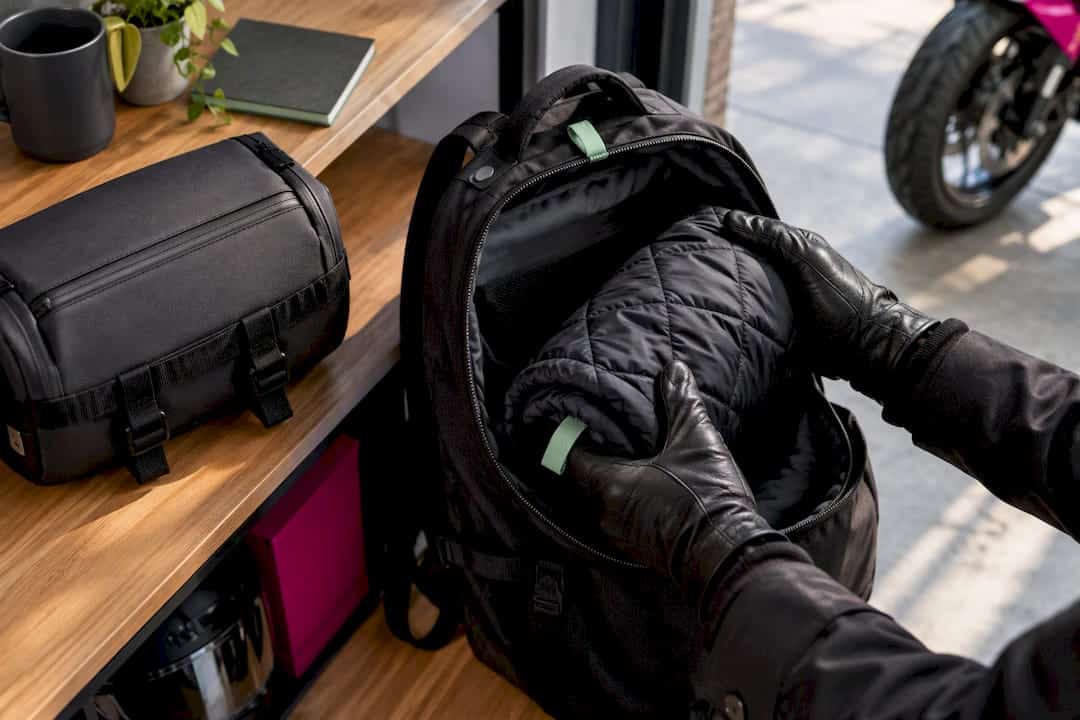
People who wear these jackets daily have worked out shortcuts that save time and frustration. Riders whose jackets lack a built-in liner pocket often stow the liner in a backpack, saddlebag, or rolled inside the jacket’s own hood, a workaround noted in reviews of the Spidi 4 Season H2Out Evo Jacket.
For quick changes in the cold, unzip the liner from the bottom up while keeping gloves on, rather than fighting the top zipper pull first. Keep the liner attached during frequent temperature swings, such as an outdoor shift that moves between a warm truck cab and open air, and remove it only for stable, predictable cold. Commuters tend to keep liners in through the whole cold season, while touring riders and construction crews often swap liners in and out more than once a day.
Why we favor removable-liner construction
We build jackets with zip-out liners because a single shell that adapts to more weather solves a real problem for our customers, from bikers who ride through temperature swings to workers who need one jacket for a whole shift. Our size guides and product gallery show exactly how a given liner sits inside a specific shell before you commit to a custom order. Common requests we see include swapping liner material for a specific climate, changing liner color, and adjusting quilt pattern for a closer fit under a leather or biker jacket. Readers weighing these choices are welcome to check the size guide and reach out to customer support for a fit tailored to their own measurements.
— Maker
Build your own zip-out liner jacket with Maker of Jacket
If you know the liner material and fit you want, you do not have to settle for whatever a standard size run happens to offer. Jackets with removable liners can be built to your own measurements, from the shell fabric down to the liner’s quilt pattern and color, with a size guide on hand to check fit before you order.

- Browse the custom-order category to see current liner and shell options.
- Start a custom jacket order once you know your preferred liner material and fit.
Sources
The layering advice in this guide draws on REI’s layering basics and its guide to insulated outerwear, along with down-care steps from REI’s down jacket washing guide. Rider storage tips come from a review of the Spidi 4 Season H2Out Evo Jacket, and hi-vis workwear standards reference OSHA’s interpretation on visibility requirements.
- Layering basics | REI Expert Advice
- Motorcycle
- Safety vest requirements to protect flaggers from traffic hazards during construction work. | OSHA
FAQ
What does a zip-out liner do in a jacket?
A zip-out liner is the insulating middle piece that zips into a jacket’s shell, adding warmth when it is in and turning the jacket into a lighter shell when removed. It lets one jacket cover a wider range of temperatures than a single fixed-insulation coat.
Is a removable liner as warm as a fixed one?
A removable liner can match a fixed liner’s warmth if the fill and thickness are similar, but the zip seam itself can let in slightly more cold air than a liner sewn permanently into the shell. Choosing a full perimeter zip attachment, rather than partial zips or snaps, helps minimize that gap.
Should I choose down or synthetic for my liner?
Down offers a better warmth-to-weight ratio but loses insulating power when wet, per REI’s layering guidance, while synthetic fill keeps insulating even in damp conditions and is easier to wash. Riders, workers, and commuters in wet climates are usually better served by synthetic liners.
Can I get a custom-fit zip-out liner jacket?
Yes, Maker of Jacket builds jackets with removable liners to custom measurements, letting you choose the liner material, color, and quilt pattern alongside the shell. Check the custom order page to start specifying your fit.
How do I wash a jacket liner without damaging the insulation?
Always check the care label first, then wash the liner separately from other garments to avoid abrasion. Down liners need a down-specific cleaner and low-heat drying, while synthetic and fleece liners can typically be washed on a gentle cycle and air dried or tumble dried on low.


