

For Jacket Buyers: Buffalo Leather vs Cowhide, Pore Size Proof

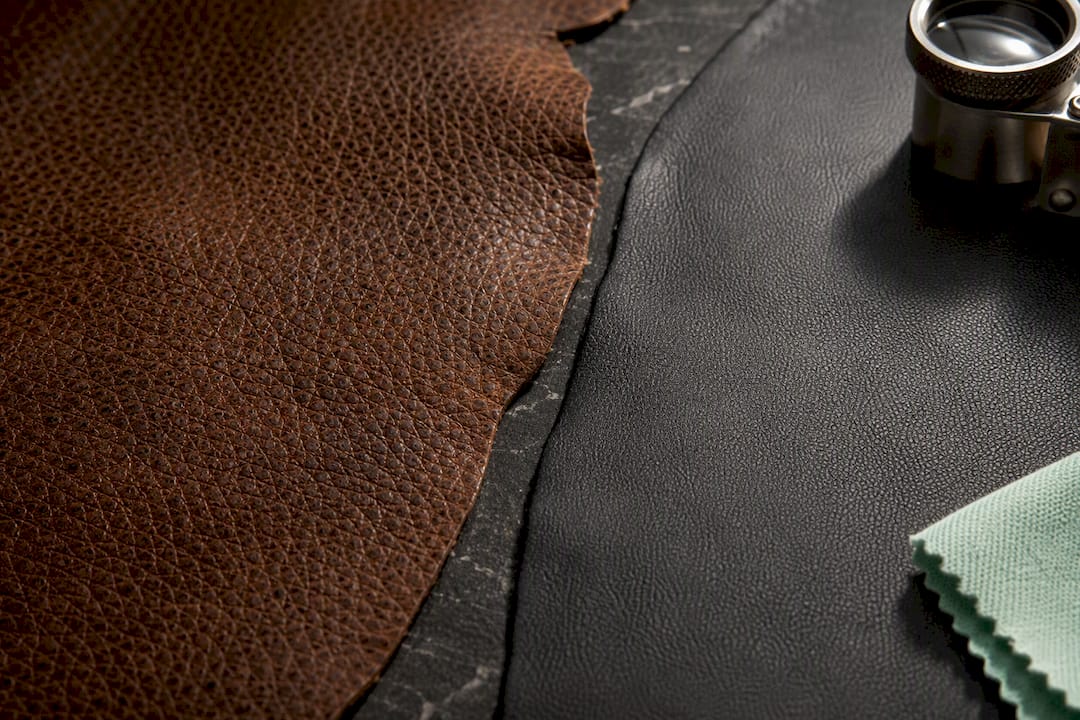
Choose buffalo or bison leather when you want rugged, heavily used gear that can take abuse: motorcycle chaps, work belts, oversized bags. Choose cowhide when you want a fitted jacket, a softer drape, or a finer fashion piece. The split comes down to grain size and thickness: buffalo hides run thicker with a bolder, pebbled surface, while cowhide stays more uniform and supple.
TL;DR:
- Buffalo leather is thicker and stiffer, making it ideal for heavy-duty gear like belts, chaps, and bags, and it often carries a higher price.
- Cowhide is more uniform, softer, and more widely available, making it better suited for fitted jackets, blazers, and fashion accessories that require flexibility.
- The visual and physical differences stem from larger pores and grain size in buffalo hide, which also influences their durability and abrasion resistance.
- Sourcing varies, with water buffalo and American bison usually costing more, and verifying species on labels helps ensure the true material is purchased.
- Routine care differs, with buffalo needing less frequent conditioning and often lasting longer under heavy use, while cowhide softens faster with regular wear.
Table of Contents
- Buffalo leather vs cowhide at a glance
- Why they look different: grain, pores, and finishing
- Measured and practical strength: thickness and wear
- What “buffalo” actually means and how to check sourcing
- Which hide is best for which product: practical matchups
- Caring for each hide and what to expect over time
- A buying checklist and red flags to watch for
- Choosing hide types for jackets: an editorial take
- Custom jackets built around the hide you want
- Sources
- FAQ
Buffalo leather vs cowhide at a glance
Buffalo and cowhide start from the same basic material, tanned animal skin, but diverge fast once you look at grain, weight, and finish. Buffalo hide tends to be thicker and heavier with a pronounced, pebbled texture. Cowhide is smoother, more consistent from hide to hide, and easier to shape into fitted garments.
- Appearance: buffalo shows a coarse, pebbled grain; cowhide shows a finer, more even grain.
- Thickness and stiffness: buffalo runs thicker and stiffer out of the box; cowhide is thinner and more pliable.
- Durability: buffalo resists abrasion and rough use better; cowhide holds up well but shows wear sooner under heavy friction.
- Price and availability: cowhide is more widely available and usually cheaper; buffalo and bison often carry a premium.
- Best for: buffalo suits belts, chaps, and heavy bags; cowhide suits jackets, blazers, and fitted accessories.
Both materials work well in apparel. The right choice depends on what the piece needs to do, not which animal sounds tougher on a tag.
Why they look different: grain, pores, and finishing
The visual gap between buffalo and cowhide starts at the microscopic level. Hair-pore analysis of hide surfaces found that buffalo leather has much larger average pore sizes and lower pore density than cow leather, which explains why buffalo grain reads as pebbled and cowhide reads as smooth. Larger, sparser pores create the pronounced texture buyers associate with buffalo hide.
Buffalo hides show a mean large pore size of roughly 11,110 square micrometers, compared with a cow hair pore density near 2,262 per square centimeter. That gap in pore geometry is measurable, not just a matter of tanning style.
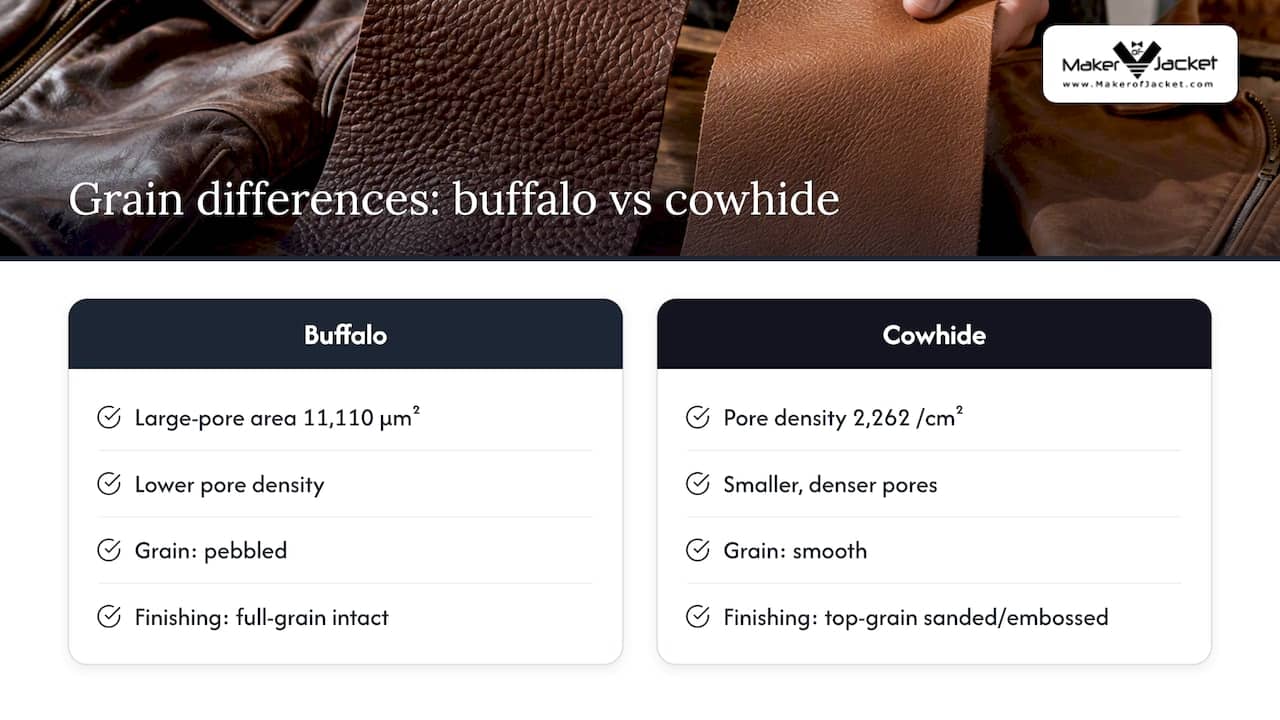
Finishing complicates the picture. Full-grain leather keeps the natural surface intact, while top-grain leather is sanded and sometimes embossed to mimic a different grain pattern, including a buffalo-style texture on cowhide. Check product photos for pore consistency and ask whether the listing states full grain or top grain.
Measured and practical strength: thickness and wear
Strength differences between species trace back to the collagen structure inside the hide. Research into the molecular composition of skins and hides points to natural collagen crosslinks as a driver of species-level strength differences, information tanners factor in when matching hides to product performance needs.
Molecular composition, specifically the types and concentrations of natural collagen crosslinks, helps explain why hides from different species show consistent strength differences.
In practice, that molecular difference shows up as thickness and stiffness on the shelf. Buffalo hide is often cut thicker, which trades some initial flexibility for stronger abrasion resistance, a fair swap for a belt or a saddlebag that takes daily friction. Cowhide, cut thinner more often, breaks in faster and drapes closer to the body, which is why it dominates fitted jacket construction. Expect a stiffer initial feel from buffalo pieces and a shorter adjustment period from cowhide ones. Neither material guarantees a stronger result on its own: tanning method and hide thickness both shape the final feel as much as species does.
What “buffalo” actually means and how to check sourcing
“Buffalo leather” is a loose trade term. It can mean American bison, Asian water buffalo, or occasionally cattle hide finished to look like buffalo grain. That distinction affects price, texture, and how the hide handles.
- Water buffalo hide is common in accessories and tends to be thick with a coarse grain.
- American bison leather is rarer in apparel and often priced higher due to limited supply.
- Cowhide comes almost entirely from cattle, giving it far more consistent supply and pricing.
- Country of origin and stated species on a product label are the fastest way to confirm what you are actually buying.
Because sourcing varies this much, ask sellers directly which animal produced the hide rather than trusting the word “buffalo” alone.
Which hide is best for which product: practical matchups
Matching hide to product starts with how the piece gets used, not which material sounds premium.
- Fitted jackets and blazers: cowhide’s finer grain and flexibility let it follow body lines without bulk.
- Motorcycle gear and chaps: buffalo’s thickness and abrasion resistance suit gear that hits pavement or brush.
- Belts and heavy bags: buffalo holds shape under constant tension and resists scuffing better than thinner hides.
- Fashion accessories and linings: cowhide’s softer hand feels better against skin and takes dye evenly.
- Hybrid builds: some jackets pair a buffalo-grain exterior panel with a cowhide lining, combining rugged looks with a softer interior feel.
A motorcycle gear comparison is worth a look if riding gear is the specific use case, since abrasion resistance matters more there than drape.
Caring for each hide and what to expect over time
Buffalo hide’s thickness means it tolerates more aggressive conditioning without losing shape, while cowhide needs lighter, more frequent care to stay supple.
- Condition buffalo leather every few months with a cream-based conditioner suited to thick hides.
- Condition cowhide more often, roughly every one to two months, with a lighter leather balm.
- Break in buffalo pieces by wearing them in shorter stretches and flexing high-stress areas by hand.
- Break in cowhide faster by wearing it regularly since it softens with normal use.
- Judge repair versus replacement by checking whether cracking has reached the grain layer or stays surface level.
Pro Tip: Work conditioner into stitched seams and fold lines first, since those spots crack before the rest of the hide does.
Buffalo pieces often outlast cowhide under heavy daily wear because of that added thickness, though both can last for years with routine care. For step-by-step softening methods, see how to soften your leather jacket.
A buying checklist and red flags to watch for
Before buying, confirm the specifics rather than relying on marketing language.
- Ask which species produced the hide: bison, water buffalo, or cattle.
- Ask whether the piece is full grain, top grain, or a lower-grade split.
- Ask for the thickness in millimeters, since that number affects both stiffness and lifespan.
- Ask which tanning method was used, since chrome, vegetable, and blended tans handle differently.
- Ask whether any lining, backing, or trim is non-leather.
Watch for vague labels that just say “genuine leather” with no species or grain listed. U.S. guidance under 16 CFR Part 24 requires sellers to disclose when a product is not wholly leather or has been processed to simulate a different grain, so a listing that dodges those details is worth skipping. For more on grading, see cowhide leather explained.
Choosing hide types for jackets: an editorial take
Fit and finish decide most jacket choices before durability even enters the conversation. A jacket that fights the body all day gets left in the closet no matter how tough the hide is, so drape and comfort tend to matter more than raw strength for most buyers. Thickness only wins out when the jacket faces real abrasion, like riding gear or work apparel. That is why cowhide covers most fashion and casual jacket needs, while buffalo grain earns its place on pieces built for rough conditions.
— Maker
Custom jackets built around the hide you want

If you already know which hide fits your needs, It is possible to specify the hide type directly rather than settling for whatever a rack happens to stock. Every piece is handcrafted to size with your choice of grain, finish, and style, from fitted cowhide jackets to heavier buffalo-style builds meant for daily wear and rough use.
- Request cowhide for a fitted, softer drape on jackets, blazers, or fashion pieces.
- Request thicker, buffalo-style grain for motorcycle jackets, vests, or gear that needs abrasion resistance.
- Ask about lining and backing materials if you want full disclosure on what is inside the piece.
Start your build on the custom jacket order page or browse men’s jacket styles for inspiration before you customize.
Sources
- Leather Species Identification Based on Surface Morphological Image Analysis (JALCA)
- PART 24—Guides for Select Leather and Imitation Leather Products (CFR / FTC guidance)
FAQ
Is buffalo leather considered a luxury material?
Buffalo leather is often priced at a premium due to limited supply, especially genuine bison, but “luxury” depends more on grain quality, tanning, and craftsmanship than on species alone. A well-finished cowhide jacket can feel just as premium as a buffalo one.
How long does buffalo leather typically last?
With routine conditioning and reasonable care, buffalo leather goods can last for many years thanks to their thickness and abrasion resistance. Lifespan depends heavily on how the piece is used and how often it gets conditioned, not on species alone.
What is the highest quality type of leather?
Full-grain leather, whether from cattle or buffalo, is generally considered the top tier since it keeps the hide’s natural surface intact rather than sanding it down. Quality within that category still depends on tanning method, thickness, and finishing, covered further in full grain vs top grain leather.
Is bison leather tougher than cowhide?
Bison leather tends to run thicker with a coarser grain, which gives it stronger abrasion resistance in heavy-use products like belts and bags. Cowhide is not weaker overall, it simply trades some of that raw toughness for flexibility and a softer drape suited to fitted garments.


