

Jacket lining types: choose the right style and material


TL;DR:
- Jacket linings influence comfort, structure, insulation, and breathability, making them essential for jacket performance.
- Coverage style (full, partial, unlined) and material choice must match climate, usage, and layering habits.
- Personal testing and experience outweigh generic advice, ensuring optimal comfort and long-term satisfaction.
Most people buying a leather or motorcycle jacket spend serious time studying the outer shell. The cut, the hardware, the color. What they rarely think about is what’s on the inside, and that’s where a lot of comfort and performance gets won or lost. The lining is the layer your body actually contacts every time you wear the jacket. It shapes how the jacket feels, how it moves with you, how much heat it traps, and whether you’ll still love it six months from now. This guide breaks down jacket lining types, materials, and construction styles so you can make a smarter call when shopping or ordering custom.
Table of Contents
- What is jacket lining and why does it matter?
- The main lining construction styles
- Key lining materials: Natural, semi-synthetic, and synthetic fibers
- How lining type impacts comfort, durability, and jacket performance
- Matching lining types to your custom or motorcycle jacket needs
- What most people miss when choosing jacket linings
- Ready for the perfect custom jacket? Connect with Maker of Jacket
- Frequently asked questions
Key Takeaways
| Point | Details |
|---|---|
| Lining matters | The right jacket lining transforms both comfort and style. |
| Three coverage types | Full, half, and unlined styles all suit different needs and climates. |
| Fiber makes a difference | Cotton, silk, viscose, and synthetics each impact breathability and feel. |
| Match lining to use | Consider where, when, and how you’ll wear your jacket before picking a lining. |
| Trust real-world testing | Try on or sample linings, as fit and comfort outweigh generic fiber recommendations. |
What is jacket lining and why does it matter?
A jacket lining is an internal fabric layer sewn into the interior of a jacket. Think of it as the jacket’s hidden infrastructure. It sits between the outer shell and your body, and it performs a surprising number of jobs at once.
Jacket linings provide structure to the garment, keeping the outer shell from collapsing or bunching. They also reduce friction so the jacket slides on and off smoothly, which matters more than people realize when you’re gearing up in a hurry. And they add a finished, polished appearance to the interior that elevates a jacket from basic to premium.
Here’s what a well-chosen lining actually does for you:
- Comfort: Soft lining materials prevent the outer fabric, especially leather, from rubbing directly against skin or a base layer.
- Structure: Lining adds body to the jacket, helping it hold its intended shape.
- Insulation: Thicker linings trap body heat; thinner ones let it escape.
- Moisture management: Some fibers wick sweat away; others hold it close.
- Breathability: The lining’s fiber type and coverage determine how much airflow reaches your body.
- Ease of wear: A smooth lining lets you slip the jacket on over a sweater or shirt without it catching or twisting.
As a general rule, jacket lining enhances comfort in ways you only truly appreciate after wearing an unlined leather jacket on a hot day. The scratchy, sticky feeling of bare leather against a thin shirt is an experience most riders and fashion buyers do not want to repeat.
“Jacket linings provide comfort, structure, and influence warmth, breathability, and overall jacket quality.”
The common misconception is that lining is just a cosmetic decision. In reality, it’s one of the most functional choices in the entire jacket build.
The main lining construction styles
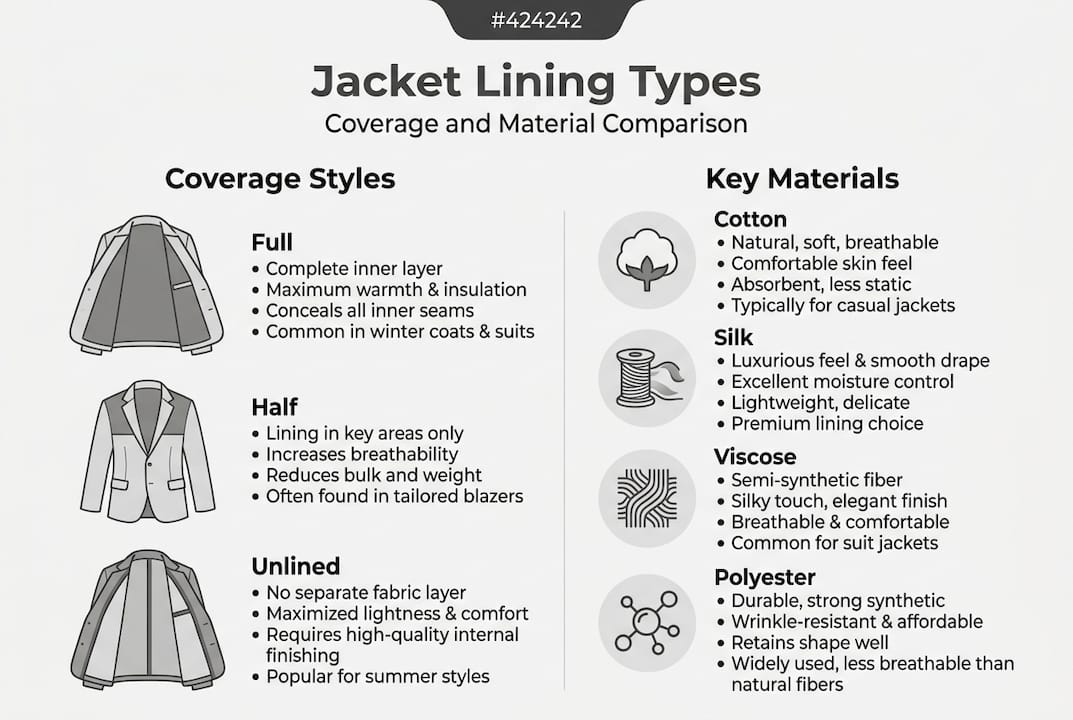
Before you pick a material, you need to pick a coverage style. Common jacket lining styles include full lining, half or partial lining, and unlined constructions. Each has a distinct purpose, and choosing the right lining style comes down to your climate, your use case, and how you plan to layer.
| Lining style | Coverage | Best for | Main tradeoff |
|---|---|---|---|
| Full lining | Entire interior | Cold climates, formal or structured jackets | Less breathable, heavier |
| Half/partial lining | Shoulders, chest, back panel | Transitional seasons, versatile wear | Moderate warmth, less drape |
| Unlined | Little to none | Hot climates, lightweight layering | Minimal structure, max breathability |
Full lining wraps the entire interior of the jacket. It adds the most warmth and gives the jacket its cleanest drape. If you’re ordering a custom leather jacket you plan to wear through fall and winter, full lining is almost always the right call. It makes the jacket feel substantial and finished.
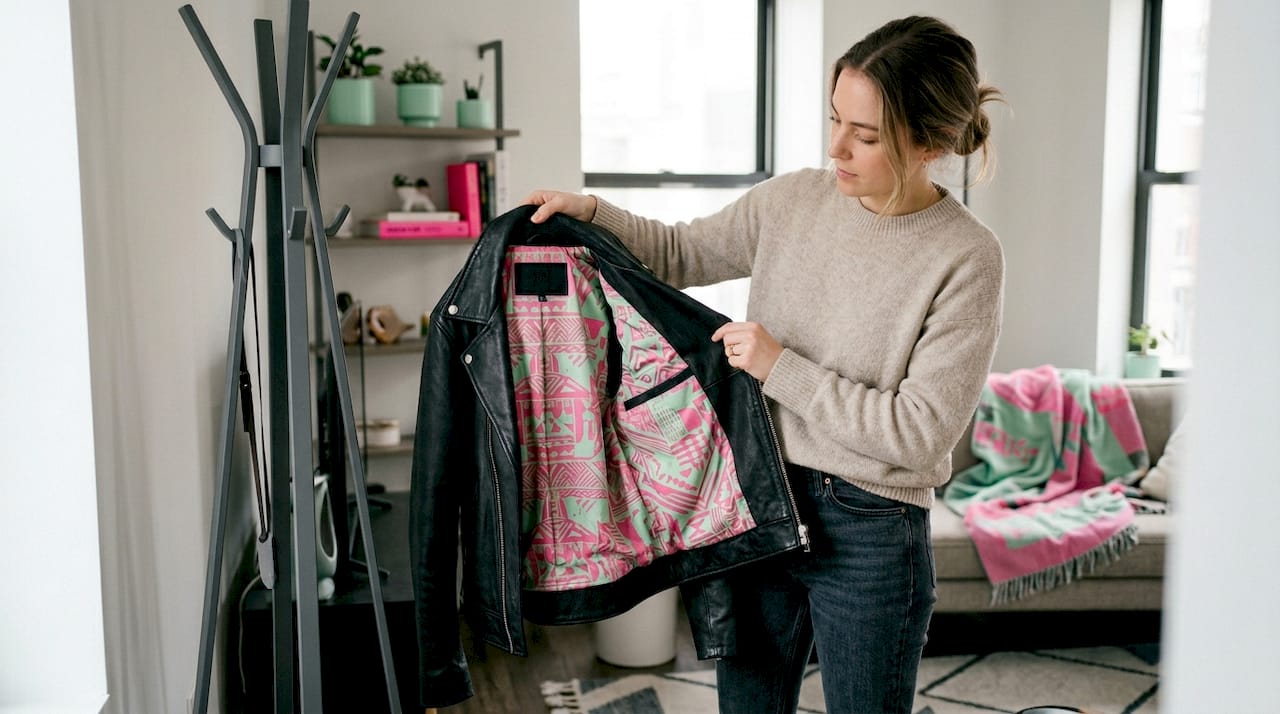
Half or partial lining covers the areas that matter most structurally, typically the shoulders, upper chest, and back, while leaving the sides and lower sections open or minimally covered. This balance is well-suited for lining choices across different seasons, especially spring and early fall when temperatures swing during the day.
Unlined jackets are the lightest and most breathable option. For riders in consistently warm climates, an unlined or minimally lined jacket allows real airflow and keeps pack weight low. The tradeoff is that the jacket has less structure and can feel rougher against the skin.
Pro Tip: When debating materials, remember that coverage style often has a bigger impact on breathability than fiber type alone. A full polyester lining will feel more stifling than a half cotton lining, even if polyester is technically moisture-wicking.
Key lining materials: Natural, semi-synthetic, and synthetic fibers
Now for the materials themselves. Popular jacket lining materials include cotton, silk, viscose or rayon, cupro, polyester, nylon, and acetate. Each falls into one of three broad categories, and each has a set of real performance tradeoffs.
| Material | Category | Breathability | Tactile feel | Durability | Care |
|---|---|---|---|---|---|
| Cotton | Natural | Excellent | Soft, casual | Good | Easy, machine washable |
| Silk | Natural | High | Luxurious, smooth | Moderate | Delicate, dry clean |
| Viscose/Rayon | Semi-synthetic | Good | Smooth, slightly cool | Moderate | Hand wash or dry clean |
| Cupro | Semi-synthetic | Very good | Silky, premium feel | Good | Dry clean recommended |
| Polyester | Synthetic | Moderate | Slick, can feel warm | Excellent | Easy, machine washable |
| Nylon | Synthetic | Low to moderate | Smooth, lightweight | Excellent | Easy |
| Acetate | Synthetic | Moderate | Silky appearance | Lower | Dry clean only |
Natural fibers like cotton and silk are the top picks for riders who prioritize feel and breathability. Cotton is affordable, widely available, and handles moisture well. Silk is a premium option that feels exceptional against the skin but requires careful maintenance. If you’re investing in a high-end custom piece and want that interior to feel as good as it looks, silk lining is hard to beat.
Semi-synthetic fibers like viscose and cupro sit in a useful middle ground. Viscose is derived from wood pulp and mimics the drape and feel of silk at a much lower cost. Cupro is made from cotton waste and is known for its breathability and eco-friendly profile. Both work well for riders or fashion buyers who want comfort beyond what polyester offers but at a more accessible price than silk.
Synthetic fibers dominate mass production because of their durability and low cost. Polyester resists wear and tear exceptionally well and is easy to clean. Nylon is lightweight and strong. Acetate has a silk-like appearance at a low price but is less durable than other synthetics. The knock on synthetics is that they can trap heat and moisture, which is a real problem in warm riding conditions or during high-activity use.
Key factors influencing your material choice include:
- Climate: Hot and humid conditions favor breathable naturals or semi-synthetics. Cold climates favor insulating, structured options.
- Sweat management: If you run warm, prioritize moisture-wicking fibers like cotton or viscose over polyester.
- Intended use: A motorcycle commuter jacket needs different performance than a fashion leather jacket worn socially.
- Care preferences: If hand-washing or dry cleaning sounds like a hassle, lean toward polyester or nylon.
Understanding how lining impacts leather jacket weight is especially relevant for motorcycle riders who are already managing the weight of full leather shells and protective gear.
How lining type impacts comfort, durability, and jacket performance
Here’s where theory meets real life. Coverage style and fiber type don’t operate independently. They interact, and that interaction shapes your actual experience in the jacket.
Follow these steps when evaluating what lining setup fits your situation:
- Identify your climate. Riders in the American Southwest need very different lining choices than those commuting through the Pacific Northwest in October.
- Define your use case. Is this a daily commuter jacket, a weekend fashion piece, or a show jacket? High-activity use demands better moisture management.
- Assess your layering habits. If you usually wear a hoodie or base layer underneath, a full lining may create too much bulk. Half lining or unlined works better over thick base layers.
- Check your sensitivity. Some people find synthetic linings itchy or clammy. If you’ve had that experience before, prioritize cotton or cupro.
- Think long-term. A polyester lining will outlast silk in heavy use, but if the jacket is more of an investment piece you’ll wear occasionally, durability is less of a deciding factor.
The breathability, weight, and performance of your jacket are shaped by the combination of fiber and coverage, not just one or the other. A breathable fiber in a full lining may still feel hot. An insulating fiber in a half lining may be the perfect blend.
“Real-world fit, layering, and climate can outweigh generic recommendations on lining performance, even within the same fiber family.”
This is the part that surprises most buyers. Community discussions, like the leather jacket Reddit threads on comfort and style and lining performance debates, consistently show that two people wearing the same fiber lining in different climates or with different layering habits will have completely opposite experiences.
Pro Tip: Before finalizing a custom order, try on similar production jackets at a physical retailer to test how full versus partial lining feels on your body. Your own experience with a sample jacket is worth more than any specification list. Also check out lining choices for seasons and safety if you’re riding year-round.
Matching lining types to your custom or motorcycle jacket needs
Let’s make this actionable. The goal is to match your lining setup to your real needs, not to chase the “best” option in the abstract. Lining selection dramatically influences both fashion and function in leather and motorcycle jackets, so the right match pays off in long-term satisfaction.
Here’s a practical map of lining choices to common rider and fashion buyer scenarios:
- Leather biker jacket for cold climates: Full lining in polyester or quilted synthetic for maximum insulation and durability. Polyester handles the high-use demands of daily riding.
- Leather biker jacket for warm climates: Half or minimal lining in cotton or viscose. Lets body heat escape while keeping the jacket comfortable against the skin.
- Custom fashion leather jacket for year-round wear: Half lining in cupro or viscose. Versatile breathability that looks premium and wears well across seasons.
- Motorcycle touring jacket: Full lining in moisture-wicking synthetic or cotton blend. Touring puts you on the bike for hours, so sweat management and comfort over time are paramount.
- Varsity or bomber jacket for fashion use: Full lining in satin acetate or polyester for that classic, polished look without added weight.
- Layering-focused jacket: Minimal or no lining. Lets you stack a thick base layer underneath without squeezing into the jacket.
When placing a custom order, ask these questions:
- What lining material do you recommend for my climate?
- Can I choose between full and half coverage for this jacket style?
- What’s the weight difference between your most popular lining options?
- How does this lining wear after regular machine washing or dry cleaning?
The answers will tell you quickly whether a maker knows their product. A retailer who can speak to specific tradeoffs rather than just listing materials is one worth working with. Choosing lining for custom jackets is one of the most personal parts of the build, and knowing how to layer jackets over your lining choice rounds out the full picture.
What most people miss when choosing jacket linings
Here’s the honest take: most lining advice focuses on fiber rankings and breathability scores, as if there’s a universally correct answer. There isn’t.
The biggest mistake buyers make is treating lining selection as a spec-matching exercise rather than a personal performance decision. Someone tells them “cotton breathes better than polyester,” and they order a cotton-lined jacket without thinking about whether they live in a high-humidity area where cotton holds moisture against the skin. Cotton absorbs sweat, yes. But it also holds onto it. In certain conditions, that makes it the worse choice.
The contrarian truth is that construction coverage matters more than fiber in most real-world situations. A half-lined polyester jacket will be more comfortable for a summer rider than a fully lined silk jacket, every single time. The fiber conversation only becomes decisive once the coverage question is settled.
Another overlooked factor: the real-world lining selection advice that experienced custom buyers rely on has little to do with brand claims about materials. It has everything to do with testing jackets in the conditions you actually ride or wear in, consulting makers who have experience fitting lining to shell type, and being honest about whether you run hot or cold.
“The jacket that feels perfect in a store fitting room may feel completely different after two hours on a highway or a summer evening out. The lining is usually the variable that shifts first.”
Trust your own data. If you’ve owned a polyester-lined jacket you loved, lean into that. If cupro felt amazing in your last piece, request it in your next one. Generic fiber hierarchies are a starting point, not a rule.
Ready for the perfect custom jacket? Connect with Maker of Jacket
You’ve just built real knowledge about lining materials, coverage styles, and how they interact. Now put it to work.
At Maker of Jacket, every custom order is built around your specific needs. That includes your lining. Whether you want a fully insulated touring jacket with quilted synthetic lining or a sleek fashion leather with a breathable cupro interior, you get to make that call. Visit us to order your perfect custom jacket with the lining spec that fits your life. Walk through our customization process to see exactly how we handle each build, or start exploring styles in the fashion leather jacket guide to match your vision to a real jacket.
Frequently asked questions
What is the warmest jacket lining material?
Thick silk or quilted polyester linings are typically the warmest options; full linings in insulating fibers trap the most body heat and work best for cold climates.
How do I choose between full, half, and unlined jackets?
Pick full linings for structure and warmth, half linings for moderate seasons with more breathability, and unlined styles when maximum airflow and lightweight layering are the priority; full, half, and unlined styles suit genuinely different climates and use cases.
Is viscose a good lining material?
Yes, viscose is breathable and moisture-wicking, making it a strong mid-range choice that delivers comfort close to silk at a more accessible price point.
Which lining is best for leather motorcycle jackets?
A breathable, moisture-wicking option like cotton or viscose suits year-round riding best; cotton and viscose support breathability under leather while managing sweat during longer rides or warmer conditions.
Are synthetic linings worse than natural ones?
Not automatically; comfort in synthetic linings depends heavily on climate, use case, and personal preference, and a well-chosen synthetic in the right context can outperform a natural fiber that doesn’t suit the conditions.


