

Jacket icons and symbols: Culture, meaning, and style


TL;DR:
- Jacket symbols carry deep cultural and personal meanings, reflecting identity, achievement, and community. Understanding these icons ensures respectful wear and authentic storytelling through fashion. Careful selection and research help create personalized jackets that honor tradition while expressing individuality.
A single patch on the back of a leather jacket can say more about you than a ten-minute conversation ever could. That’s not an exaggeration. For motorcycle riders, fashion enthusiasts, and anyone who’s ever paused to study the embroidery on a stranger’s jacket, those icons carry layered meaning rooted in history, community, and personal identity. Understanding what those symbols actually represent changes how you wear them, how you read them on others, and ultimately how you make choices that reflect your truest self. This guide breaks it all down, from the deep cultural roots of motorcycle club patches to the way modern designers borrow and reinvent these visual codes.
Table of Contents
- What jacket icons mean: More than just decoration
- Motorcycle club patches and their symbolism
- Global perspectives: Cultural symbolism in jacket design
- Modern fashion: How jacket icons drive personal style today
- How to choose and wear jacket icons respectfully
- Why jacket symbolism remains powerful—and why most people miss its meaning
- Find your next iconic jacket with us
- Frequently asked questions
Key Takeaways
| Point | Details |
|---|---|
| Jacket icons have meaning | Symbols and patches on jackets are signals of identity, culture, or affiliation—not just decoration. |
| Context is crucial | Placement, tradition, and group codes affect what an icon on a jacket says about its wearer. |
| Symbols evolve in fashion | Designers adapt classic motifs to new styles, letting you express heritage or creativity. |
| Choose icons with awareness | Select symbols that fit your story but avoid misusing those tied to specific groups or history. |
| Personalization invites storytelling | Adding your own icons lets you share values and experiences while creating a standout jacket. |
What jacket icons mean: More than just decoration
Most people see patches or embroidered symbols and think: style choice. But the meaning behind jacket icons runs much deeper than surface aesthetics. Every icon on a jacket is a form of compressed communication, carrying group status, personal history, achievement, or even territorial identity in a small embroidered package.
Placement matters just as much as the image itself. A chest patch often signals personal identity or brand loyalty. A sleeve patch can indicate rank or chapter. A full back patch is the most significant real estate on any jacket, especially in motorcycle culture, where it communicates the wearer’s complete club affiliation. This is not decorative logic, it is social language.
Context is everything, too. The same skull design means something entirely different on a fashion runway jacket compared to the vest of a club rider. As experts in embroidery and MC tradition note, MC iconography is heavily dependent on context, including placement and whether an emblem is part of a recognized patch structure such as a one-piece versus a three-piece layout.
Here’s what icons typically communicate:
- Group membership: Signaling you belong to a club, subculture, or movement
- Rank or achievement: Marking progression or a milestone earned
- Territorial identity: Defining where a club or chapter operates
- Personal rebellion or values: Expressing a worldview through imagery
- Heritage and pride: Honoring lineage, nationality, or cultural roots
Fashion designers have long drawn from this well. Brands adapt biker insignia, military crests, and cultural imagery for statement fashion collections, sometimes respectfully and sometimes without much awareness of the original codes. Knowing the difference matters if you want your jacket to tell a story you actually intend to tell.
“A jacket covered in icons is a living document. Each symbol is a word, and together they form sentences only the initiated can fully read.” This is how riders and culturally aware style leaders approach iconography.
Motorcycle club patches and their symbolism
Motorcycle club culture has developed one of the most structured and nuanced visual languages in any subculture. Understanding it respects the community and helps you avoid costly, sometimes dangerous, mistakes if you’re building a jacket inspired by this tradition.
The basic architecture of an MC jacket centers on the back patch, which is the primary identifier. Three-piece MC patch setups consist of a top rocker (club name), a center patch (club logo or emblem), and a bottom rocker (territory or chapter). This three-piece structure signals full membership in a chartered club. It conveys the wearer’s name, allegiance, and geographic claim simultaneously.
Here’s how the core MC patch structure breaks down:
| Patch Component | Location | What It Communicates |
|---|---|---|
| Top rocker | Upper back arc | Club name |
| Center patch | Middle of back | Club logo or emblem |
| Bottom rocker | Lower back arc | Territory or chapter location |
| MC diamond | Small, right front | Confirms “motorcycle club” status |
| Prospect patch | Front or back | Indicates trial membership |
Officer ranks are often marked by additional front patches. A Sergeant at Arms, Road Captain, or President patch tells other riders exactly who they’re dealing with before a word is spoken. Colors also carry coded meaning: certain color combinations are associated with specific clubs and should never be reproduced casually.
How to read an MC jacket respectfully:
- Identify the patch count. One-piece patches usually mean recreational or brand-affiliated riding groups. Three-piece patches signal a formally chartered club with hierarchy.
- Note the bottom rocker. This is territory information. It matters a great deal in the MC world.
- Look for rank indicators. Front patches or small specialty patches reveal officer positions.
- Check for support patches. Some riders wear patches supporting allied clubs, which adds another layer of relationship information.
- Avoid touching or commenting dismissively. These are earned symbols, not costume pieces.
Pro Tip: If you’re building a custom motorcycle jacket patch for personal style, use a one-piece design or original artwork to make it clear you’re not claiming club affiliation. Originality protects both your reputation and your safety.
When choosing motorcycle jackets inspired by MC culture, understand that borrowing visual language carelessly can signal something you never intended. Study before you style.
Global perspectives: Cultural symbolism in jacket design
MC culture is one of the most visible traditions, but jacket symbolism is a truly global phenomenon. Across history and continents, people have used outerwear as a canvas for identity, protection, and storytelling in ways that remain stunning today.

Consider the fireman’s jacket from Edo and Meiji period Japan. While firemen of that era wore protective cotton coats during active duty, the inside of their jackets told a completely different story. Hidden from view during work, the interiors were covered in vivid mythological artwork. According to the Metropolitan Museum of Art’s collection, these jackets featured mythic imagery such as Susanoo-no-mikoto fighting a serpent, demonstrating cultural storytelling woven directly into functional gear. The artwork was a private statement, revealed only in celebration after fires were extinguished.
That inside-out philosophy represents something remarkable: symbolism as personal truth, not public performance. It stands in sharp contrast to the outward-facing patch culture of MC riders or the front-and-center crests on military jackets.
Here’s a quick comparison of jacket symbolism traditions worldwide:
| Tradition | Symbol Type | Primary Purpose |
|---|---|---|
| Japanese fireman’s coat | Mythological interior art | Personal identity and cultural pride |
| MC back patch | Structured multi-piece design | Group membership and territory |
| Military jacket | Insignia, medals, rank bars | Hierarchy and achievement |
| Varsity jacket | Chenille letters and sport patches | Academic and athletic achievement |
| Punk leather jacket | Studs, hand-painted bands, slogans | Anti-establishment rebellion |
Jackets as cultural artifacts reveal something consistent across all these traditions: people have always used this garment as a form of identity broadcast. The medium changes, the desire to be seen and understood does not.
Modern fashion individuality often pulls from these rich traditions. A varsity jacket worn by someone who never played a sport is borrowing the visual language of athletic achievement for aesthetic purposes. A jacket with Japanese-inspired embroidery is engaging with a centuries-old storytelling tradition. These borrowings can be respectful and artful, or shallow and careless, depending entirely on whether the wearer understands and acknowledges the source.
Modern fashion: How jacket icons drive personal style today
Today’s jacket landscape is extraordinarily varied, and themed jackets and expression have never been more accessible. Patches, embroidery, color-blocking, and printed motifs let you broadcast who you are before you say a single word. That’s powerful, and it’s worth using intentionally.
Designers regularly reinterpret historical icons for new audiences through custom embroidery, patches, and motifs lifted from military, cultural, and subcultural traditions. A fashion house might take the structured look of an MC vest and render it in silk with abstract embroidery. A streetwear brand might adapt Japanese sashiko stitching patterns for a modern bomber. These reinterpretations carry creative energy, but they carry weight too.
Here’s how to approach jacket icons in modern style with both confidence and awareness:
- Tell your actual story. Choose icons, colors, and patches that connect to your real interests, cultural background, or personal milestones. Authenticity reads immediately.
- Research the source. If a symbol’s origin isn’t clear to you, take ten minutes to learn it. You’ll wear it differently once you understand what it means.
- Mix intentionally. Combining cultural elements from different traditions can be striking, but each piece should be chosen deliberately rather than randomly assembled.
- Work with craftspeople. Custom embroidery artists and patch makers can help you translate a concept into something genuinely original.
- Support authentic makers. Buying from brands that care about quality and meaning, rather than mass-producing generic patches, raises the value of what you wear.
Pro Tip: Before adding patches to your jacket, lay them all out on a flat surface first. Visual planning before you commit to placement saves a lot of regret and a lot of seam ripping.
Personalization in fashion is at an all-time high, and the best jacket iconography goes beyond trends. It creates something wearable that still means something five years from now because it was built on real meaning, not just a moment’s aesthetic.
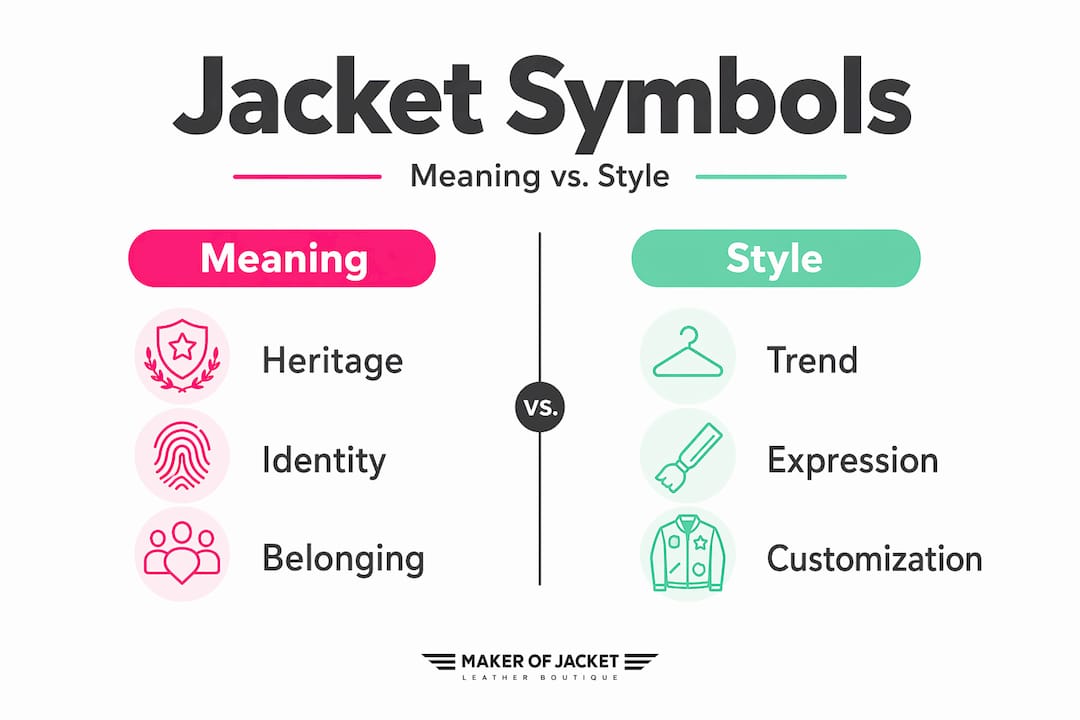
How to choose and wear jacket icons respectfully
Practical choices matter here. Understanding symbolism is one thing; applying it thoughtfully in your wardrobe is another. Choosing symbolic jackets should be a deliberate process, not an impulse buy.
Follow this approach when selecting jacket icons:
- Identify what you want to communicate. Write it down if that helps. Are you expressing a cultural connection, a hobby, a belief, or just an aesthetic vibe? Knowing the goal shapes better choices.
- Research any formal or organizational symbols you’re drawn to. Military insignia, MC patches, national symbols, and religious imagery all carry specific weight. Understand them before wearing them.
- Check whether the symbol is trademarked or exclusively tied to a living organization. Misusing recognized patch structures like MC three-piece back patches can accidentally signal affiliation or disrespect, which is a real concern, not just an aesthetic one.
- Consider scale and placement before buying. A bold back graphic demands a jacket with presence. Subtle sleeve embroidery suits a minimalist style. Match the scale to your intent.
- Seek out custom options when possible. Original designs sidestep borrowed meaning entirely and give you something no one else wears.
When to avoid certain icon styles:
- Official MC three-piece patches. Unless you’ve earned membership in a specific club, this structure is genuinely off-limits by MC convention.
- Military rank insignia from active services. In many countries, impersonating military personnel is a legal issue, not just a social one.
- Religious or sacred symbols from cultures that consider them spiritually significant. Wearing these without understanding or connection can cause real offense.
Pro Tip: Current trends in jacket expression show that personalized, story-driven jackets outperform trend-chasing pieces in long-term style impact. Invest in meaning and the aesthetic follows naturally.
Why jacket symbolism remains powerful—and why most people miss its meaning
Here’s an uncomfortable truth about how mainstream fashion handles jacket symbolism: most of the time, it doesn’t actually handle it at all. It borrows the surface look without engaging with the underlying story, and that’s a missed opportunity at best and a form of carelessness at worst.
We’ve watched MC imagery get plastered on fast-fashion jackets sold to people who’ve never sat on a motorcycle, let alone understood the earned nature of those patches. We’ve seen sacred cultural symbols reduced to print-on-demand decorations. And every time this happens, the original meaning gets diluted a little more, until the symbol becomes noise rather than signal.
The real power of jacket symbolism comes from informed wearing. When you understand why a fireman hid his artwork on the inside of his coat, or why a three-piece patch structure took decades of tradition to develop, you approach your own jacket choices differently. You stop asking “does this look cool?” and start asking “does this say something true?”
The riders and fashion leaders who wear symbols with the most authority are almost always the ones who did their homework. They know the expression and function of what they’re putting on their body, and that awareness comes through in every detail of how they carry themselves.
Our perspective: jacket symbolism doesn’t need to be gatekept. But it does need to be respected. The best way to honor a visual tradition is to understand it first, then make it your own in a way that adds to the conversation rather than cheapening it. Fashion with depth always outlasts fashion with only surface.
Find your next iconic jacket with us
Ready to put this knowledge to work? Understanding jacket symbolism is only the beginning. The real satisfaction comes from wearing something that reflects exactly who you are, built to the standard you’ve come to expect.
At Maker of Jacket, we specialize in exactly that kind of intentional design. Whether you’re looking for custom jackets built around your personal icons, exploring the full range of jacket styles and customization options available, or diving into premium moto gear and style for riders who take both safety and aesthetics seriously, we’ve got you covered. Our team works with you to translate meaning into something you’ll actually wear with pride. Free worldwide shipping and full bespoke customization make the next step easy.
Frequently asked questions
What does a three-piece motorcycle patch mean?
A three-piece motorcycle patch typically means the wearer is a full member of a chartered motorcycle club, with the top rocker showing club name, the center showing the emblem, and the bottom rocker identifying territory.
Why do motorcycle jackets have so many patches?
Jacket patches display group membership, personal achievements, history, and symbols that matter to the rider, since MC iconography depends heavily on context and placement to communicate multiple layers of identity at once.
Are there jacket symbols I should avoid wearing?
Yes. Avoid recognized MC patches or official uniform insignia if you’re not actually affiliated, because misusing patch structures like the three-piece back patch can signal false affiliation or cause genuine disrespect within those communities.
Do fashion designers use traditional jacket symbols?
Absolutely. Many designers reinterpret historical icons through custom embroidery, patches, and motifs drawn from cultural traditions around the world, adapting them for modern audiences while (ideally) acknowledging their roots.
How can I personalize a jacket with my own icons?
Add personal patches, original embroidery, or painted motifs that connect to your real interests or story. Work with skilled makers when possible, and keep the designs original so you’re building a new visual language rather than borrowing one you haven’t earned.


