

Waxed leather: Benefits, care, and buying tips explained

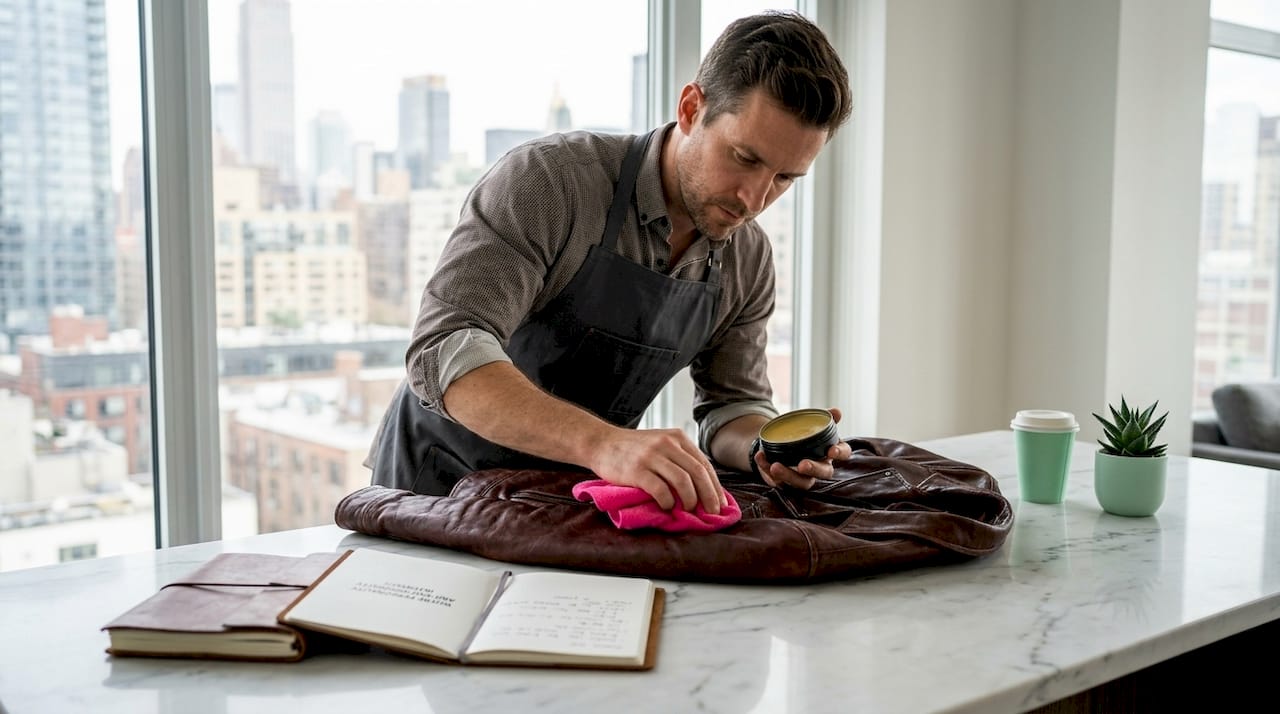
TL;DR:
- Waxed leather is a genuine animal hide treated with wax, offering superior water resistance, durability, and evolving patina. Its manufacturing varies across brands and involves tanning, waxing, and finishing processes that influence aging and performance. Proper maintenance ensures longevity, and knowing leather grade and wax application helps shoppers select high-quality, authentic jackets.
Not all leather is created equal, and if you’ve been treating every jacket as just “leather,” you’re likely missing out on one of the most functional and visually rewarding materials available. Waxed leather sits at the crossroads of rugged performance and refined style, offering weather resistance, a distinctive evolving look, and the kind of durability that turns a jacket into a lifelong piece. Whether you’re considering a custom biker build or a premium moto jacket, understanding what waxed leather actually is will change the way you shop.
Table of Contents
- What is waxed leather? A simple explanation
- How waxed leather is made: The process revealed
- Top benefits and unique features of waxed leather
- How to care for and maintain waxed leather jackets
- What to know before buying a waxed leather jacket
- The real value of waxed leather: An insider’s perspective
- Ready for a waxed leather upgrade? Discover your perfect jacket
- Frequently asked questions
Key Takeaways
| Point | Details |
|---|---|
| Waxed leather defined | Waxed leather is natural hide finished with a wax layer, making it distinct from waxed canvas and untreated leathers. |
| Superior durability | Waxed leather resists water and develops a unique patina, offering long-term style for custom jackets. |
| Care essentials | Regular cleaning and occasional re-waxing keep your jacket looking sharp and performing well. |
| Buying advice | Choosing the right leather base and wax method is key for longevity, comfort, and style. |
What is waxed leather? A simple explanation
The term “waxed leather” gets used loosely, and that creates real confusion in the market. At its core, waxed leather is genuine animal hide that has been treated or finished with a layer of wax, most commonly beeswax or a wax blend, applied after the tanning process. This finish modifies the surface, adding water resistance and a subtle sheen that standard untreated leather doesn’t have.
One very important distinction worth clearing up immediately: waxed leather is not the same thing as waxed canvas. As GQ explains, waxed canvas is a cotton-based fabric that has been coated or infused with wax for weather resistance, while waxed leather refers to wax-finished animal hides. These are two completely different materials with different structures, weights, and performance profiles. Swapping one term for the other when you’re shopping for a premium custom jacket can lead to very different results.
“Waxed leather is generally not the same as waxed canvas; waxed canvas is cotton-based fabric coated or infused with wax for weather resistance, while waxed leather refers to wax-finished hides.”
So why do brands use waxed finishes on leather in the first place? Several strong reasons drive that choice:
- Water resistance without sacrificing the breathability that makes leather so comfortable to wear
- Enhanced durability as the wax penetrates the hide and adds a protective barrier
- Unique patina development where the jacket literally evolves with your lifestyle
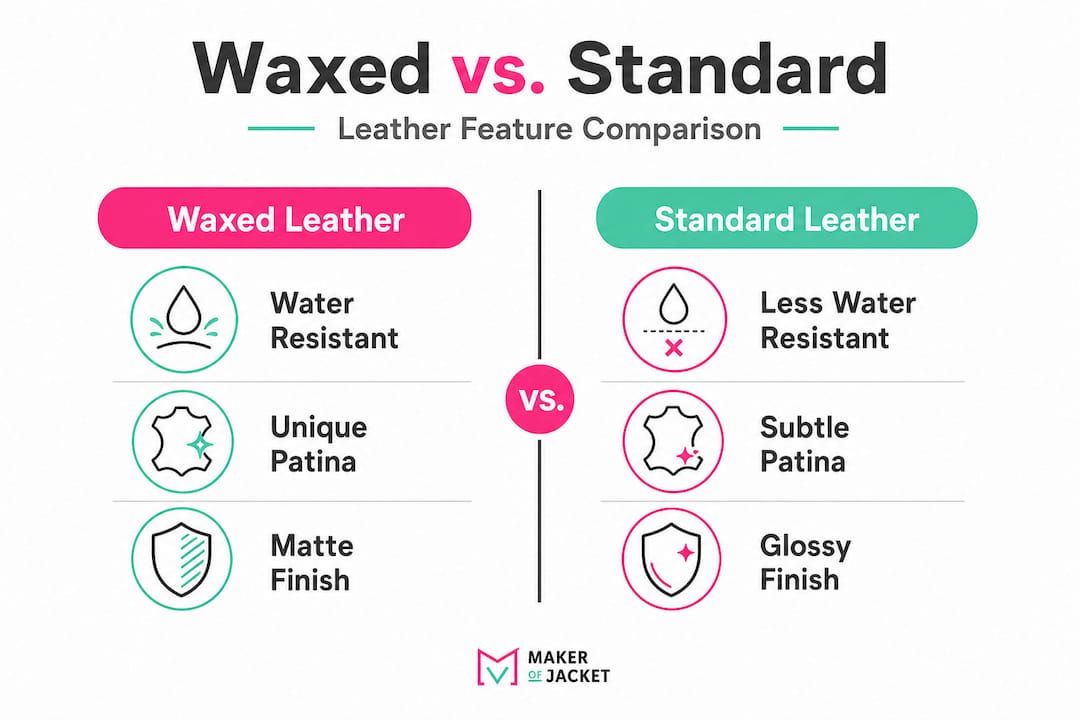
- A richer, slightly matte or semi-glossy appearance that standard leather simply cannot replicate
- Conditioning benefits that slow drying and cracking over time
To go deeper on how base leather quality affects these outcomes, check out the breakdown of full grain vs top grain leather, since the type of hide used before waxing has a major impact on the final result.
How waxed leather is made: The process revealed
Now that you know what waxed leather is, let’s demystify how it’s created and why the process matters for style and performance. The manufacturing process is not a single universal method. It varies significantly across tanneries and brands, and those variations directly affect how your jacket looks, feels, and ages.
Here is a general overview of how quality waxed leather is produced:
- Sourcing the raw hide: The process begins with selecting the animal hide, most often cowhide, though lamb and goat hides are also used for softer styles.
- Tanning: The hide goes through a tanning process, which stabilizes the material and prevents decay. Chrome tanning is the most common industrial method, while vegetable tanning is slower but produces leather that ages more beautifully.
- Drying and conditioning: After tanning, the leather is dried under controlled conditions. At this stage it’s still untreated.
- Wax application: The wax layer is applied either by hand or machine. Hand application allows craftspeople to work wax into specific areas more deeply, while machine application gives a more uniform coat. Beeswax-based products are industry favorites because they form a durable barrier against water while also conditioning the leather simultaneously.
- Buffing and finishing: The leather is then buffed to even out the wax layer and set the final texture and sheen level.
The leather base used before waxing matters enormously. Here’s how different bases react once waxed:
| Leather base | Patina development | Pull-up effect | Durability |
|---|---|---|---|
| Full-grain | Rich and complex over time | Strong, visible | Highest |
| Top-grain | Moderate, more uniform | Moderate | Very good |
| Corrected-grain | Minimal, more plastic feel | Low to none | Good but surface only |
The tanning process) and wax application method together determine how the material ages, how it responds to scratches, and how deeply that characteristic “pull-up” effect appears. Pull-up refers to the way lighter marks appear when waxed leather is stretched or pressed, then slowly fade back toward the original color as the wax redistributes.
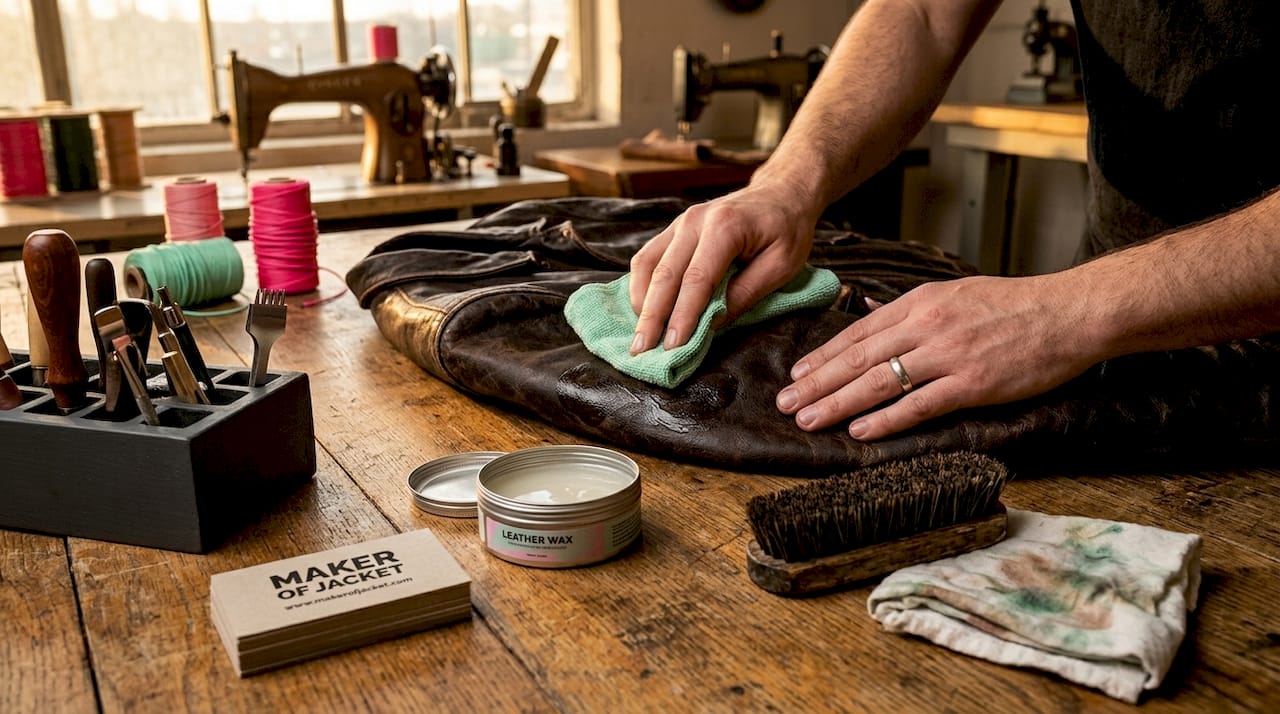
Pro Tip: A thicker wax layer gives your jacket a more matte, rugged look and stronger water resistance but makes the leather feel stiffer initially. A thinner coat preserves more of the leather’s natural drape and softness while still adding meaningful protection. Neither is objectively better, it all depends on your intended use and the look you want.
Proper maintenance after manufacturing makes a difference too. Learning how to care for white leather and lighter finishes in particular shows just how sensitive different wax treatments can be to environmental factors.
Top benefits and unique features of waxed leather
Understanding the creation process helps you appreciate the standout characteristics waxed leather brings to the table. When you break down why people consistently choose waxed finishes for their most important jackets, a clear set of advantages emerges.
Key benefits of waxed leather:
- Superior water resistance: The wax creates a hydrophobic layer that causes water to bead and roll off the surface. Beeswax-based treatments are widely regarded as forming one of the most durable waterproofing barriers available for leather, while also maintaining the hide’s condition.
- Character through patina: Every scratch, crease, and fold you put into a waxed leather jacket contributes to a patina that is entirely your own. It’s genuinely impossible to replicate artificially.
- Enhanced durability: The wax acts as a physical buffer against abrasion, reducing the rate at which the leather surface wears down.
- Low maintenance reality: Contrary to popular belief, properly waxed leather is actually easier to maintain than untreated leather because the wax seals out moisture and dirt more effectively.
- Temperature resilience: Waxed leather performs better in variable weather than many alternatives.
Here’s how it stacks up against other common jacket materials:
| Feature | Waxed leather | Standard leather | Waxed canvas |
|---|---|---|---|
| Weather resistance | Very high | Moderate | High |
| Aesthetic evolution | Rich patina | Gradual aging | Fades with use |
| Maintenance required | Low to moderate | Moderate to high | Low |
| Cost | Higher | Mid to high | Lower |
| Breathability | Good | Best | Moderate |
The pull-up effect, where lighter marks show and then gradually blend back, is a feature that separates waxed leather from almost every other outerwear material. Most people mistake their first scratch on a waxed jacket for damage. In reality, it’s the material doing exactly what it’s designed to do.
Best use cases for waxed leather jackets:
- Motorcycle and moto-inspired jackets where abrasion resistance matters
- Urban outerwear for unpredictable weather conditions
- Heritage-style biker jackets, where aging and character are part of the aesthetic
- Adventure travel jackets that need to look great and hold up to real use
For a thorough leather base comparison to help you choose the right starting point for your custom piece, that resource covers the grade differences in detail.
How to care for and maintain waxed leather jackets
Once you choose waxed leather, proper care is key. Here’s how to make the most of your investment and keep that jacket looking exceptional for years or even decades.
Step-by-step care routine:
- Wipe down regularly: Use a slightly damp, clean cloth to wipe away surface dust and dirt. Do this after heavy use or exposure to rain.
- Let it dry naturally: Never use direct heat sources like hair dryers or radiators. Air dry at room temperature.
- Check the wax layer: Run your hand across the surface periodically. If water no longer beads up or the leather feels dry, it’s time to re-wax.
- Re-wax the jacket: Apply a beeswax-based product in circular motions with a clean cloth, working it into the leather evenly. Focus on seams and high-flex areas.
- Buff after re-waxing: Once the wax has been absorbed (give it 20 to 30 minutes), buff the surface with a dry cloth to restore an even finish.
- Store properly: Hang on a wide, padded hanger in a cool, dry space away from direct sunlight or heat sources.
Dos and don’ts for long-term care:
- Do re-wax before the leather starts feeling stiff or dry
- Do use products specifically formulated for waxed or finished leather
- Do allow the jacket to air out after heavy wear
- Don’t use alcohol-based cleaners, as they strip the wax layer aggressively
- Don’t fold and store for long periods without re-conditioning first
- Don’t machine wash under any circumstances
One thing that surprises new owners is how well waxed leather handles scratches. Light surface marks can usually be rubbed out with a fingertip because the friction and warmth from your skin redistributes the wax. Deeper marks often become part of the jacket’s story rather than damage to hide.
Pro Tip: For spot repairs, gently warm a small amount of wax between your fingers and work it into just the scratched area. The targeted application heats the wax enough to blend seamlessly with the surrounding finish without disrupting the whole jacket’s look.
For more detailed guidance on leather jacket maintenance and best practices for storing leather jackets long-term, those resources go deeper into the specifics.
What to know before buying a waxed leather jacket
Last, if you’re shopping for a custom or premium waxed leather jacket, make sure you know what matters most with these pointers. The market has a wide range, from genuine hand-waxed full-grain hides to thin splits with a wax-look coating that won’t last two seasons.
The tanning method and wax application process) together determine the final quality far more than the label. Don’t assume “waxed leather” on a hang tag tells the whole story.
Key questions to ask any retailer or custom maker:
- What is the base leather grade: full-grain, top-grain, or corrected?
- Is the wax applied by hand or machine, and how many layers?
- What type of wax is used: beeswax, paraffin, or synthetic blend?
- Will the jacket develop a natural patina, and what does that look like over time?
- How thick is the hide in millimeters, and what finish weight is used?
- What maintenance products does the brand recommend?
Red flags to watch for:
- Vague descriptions like “premium waxed finish” with no details on the leather base
- Prices that seem too low for genuine waxed full-grain leather
- A surface that looks plastic or uniformly shiny with no natural grain variation
- No mention of re-waxing or maintenance in the product care instructions
Understanding leather grades before you buy is genuinely the single most important step. The full breakdown of leather grades will help you ask the right questions and spot the difference between marketing language and real material quality.
The real value of waxed leather: An insider’s perspective
Here’s what most guides skip: waxed leather is not automatically better than standard leather just because it has a wax finish. The wax is only as good as the hide underneath it. A cheap corrected-grain hide with a heavy wax coating is still a cheap hide. The wax masks problems temporarily. Over time, as the wax wears off and the hide flexes, the underlying quality becomes visible in ways you can’t reverse.
Patina is often sold as a universal positive, and it usually is. But it’s worth being honest about the flip side. Waxed leather develops marks, color shifts, and creases permanently. If your style tends toward clean, structured, and uniform, the aging process of a waxed leather jacket may frustrate rather than delight you. Know your aesthetic preference before you fall for the romanticized pitch.
The biggest mistake shoppers make is focusing entirely on the wax and ignoring the hide. Ask about the leather grade first. Then ask about the wax method. The order matters. A beautifully applied wax on a full-grain, vegetable-tanned hide produces something remarkable. The same wax on a split leather base produces a jacket that will feel stiff, crack at stress points, and age poorly.
Our practical advice: when you handle a waxed leather jacket in person, press your thumb firmly into the surface and hold for five seconds. Quality waxed leather will show a faint mark from the pressure that fades slowly. Plastic-coated or heavily corrected leather will show no mark at all. That simple test tells you more than the label will. For further care guidance across different leather types and finishes, the deeper care tips resource is well worth reviewing.
Ready for a waxed leather upgrade? Discover your perfect jacket
You now know what separates genuinely great waxed leather from the imitations, and that knowledge puts you in a much stronger position when making a real investment.
At Maker of Jacket, we specialize in exactly the kind of craftsmanship that matters here. Whether you want to design a custom waxed leather jacket from scratch or need expert guidance through every decision from hide grade to hardware finish, we’ve built the process around your preferences. Our customization process is designed to give you full control without the overwhelm. We also prioritize responsible sourcing, so if that matters to you, explore our ethical leather options to make a choice you’ll feel great about for years to come.
Frequently asked questions
Is waxed leather waterproof?
Waxed leather is water-resistant but not fully waterproof; beeswax-based treatments create a durable barrier that repels water effectively, but prolonged submersion will eventually penetrate the hide. Keep the jacket as dry as possible during heavy rain.
Does waxed leather age differently than standard leather?
Yes, waxed leather develops a much more pronounced and personalized patina over time), showing color shifts and marks that standard leather rarely achieves as dramatically. Many jacket enthusiasts consider this the primary appeal.
Can you restore waxed leather if it gets scratched?
Minor scratches can often be blended by gently rubbing the area with a fingertip or applying a small amount of wax. The tanning base and wax method) both influence how well scratches self-heal or blend after treatment.
How often should waxed leather jackets be re-waxed?
Re-wax roughly once a year for regular use, or sooner if water stops beading on the surface, which signals the wax barrier has worn thin and the leather needs refreshing to stay protected and conditioned.
Recommended
- Sheep leather guide: Qualities, uses, and buying tips
- Cowhide leather explained: qualities, uses, and how to choose
- Ultimate Guide on Cowhide Leather: Origins, Characteristics, Benefits, Care, and Applications – Maker of Jacket
- How to Care for Leather: Maintain Your Gear and Fashion – Maker of Jacket


