

Why jacket zippers matter for style and safety

TL;DR:
- Zippers are essential for jacket durability, fit, and style, especially for motorcycle gear.
- Choosing the right zipper material, gauge, and brand impacts longevity and performance.
- Regular maintenance and proper specifications prevent common zipper failures and extend jacket life.
Most riders and style hunters spend hours choosing leather grade, cut, and color on a new jacket, then barely glance at the zipper. That’s a costly oversight. A zipper is one of the most mechanically stressed parts of any jacket, opening and closing thousands of times over its life while enduring sweat, rain, road grime, and the pull of gloved hands. Get it wrong and you face a stuck slider in freezing weather, a broken tooth mid-ride, or a silhouette that looks cheap the moment someone looks closely. Get it right and your jacket fits better, lasts longer, and signals real quality before you say a word.
Table of Contents
- What makes jacket zippers essential for function and style
- Types of zippers: Materials, gauges, and where they matter
- Common zipper failures and how to avoid them
- Selecting the right zipper for your lifestyle and custom jacket
- Why the little details—like zippers—define the best jackets
- Upgrade your jacket experience with expert customization
- Frequently asked questions
Key Takeaways
| Point | Details |
|---|---|
| Zippers impact safety | Premium zippers keep jackets secure and reliable even in tough riding conditions. |
| Durability varies widely | Not all zippers are equal—high-end options like YKK last far longer than standard brands. |
| Style is in the details | Choosing the right zipper adds flair and custom personality to any jacket. |
| Prevent failures early | Proper materials and routine care prevent most common zipper issues. |
What makes jacket zippers essential for function and style
A zipper does far more than open and close a jacket. It holds the entire front closure under tension, shapes how a jacket sits on your body, and acts as one of the most visible design elements on the garment. Understanding the impact of jacket zippers on both structure and style is the first step toward making smart choices.
For motorcycle riders, a jacket zipper carries extra weight. The main front zipper keeps wind from blasting through, maintains the jacket’s protective fit around armor panels, and needs to operate cleanly with thick gloves on. A lightweight fashion zipper has no place on a serious biker jacket. The pull tab needs to be large enough to grip, the slider needs to lock under vibration, and the teeth need to hold under the torque of a sudden tug.
Beyond the front closure, specialty zippers shape both utility and look:
- Sleeve zippers allow a snug, adjustable fit at the wrist. As noted by the sleeve zipper function, sleeve zippers in leather jackets allow fitted arms, prevent sleeves from falling when pushed up during motorcycle riding, and enhance snug fit.
- Chest zippers add a pocket and break up the visual line of the jacket, giving it that layered, tactical look popular in biker styles.
- Hip and pocket zippers provide secure storage without bulk, critical when you need to keep keys or cards from flying loose at speed.
- Diagonal front zippers are the signature of the classic biker jacket. The angle creates a flattering silhouette and echoes decades of motorcycle culture.
A zipper’s hardware finish, whether gunmetal, antique brass, or polished silver, ties directly into the jacket’s overall visual identity. Switching a zipper color can take the same jacket from rugged to refined.
For anyone exploring the full benefits of leather jackets from a rider’s perspective, the zipper system is inseparable from those benefits. It’s not decorative trim. It’s load-bearing infrastructure.
Types of zippers: Materials, gauges, and where they matter
Not all zippers are built the same, and choosing the wrong type for your jacket is one of the most common mistakes buyers make. The jacket construction process at quality manufacturers always starts with selecting the right hardware for the job.
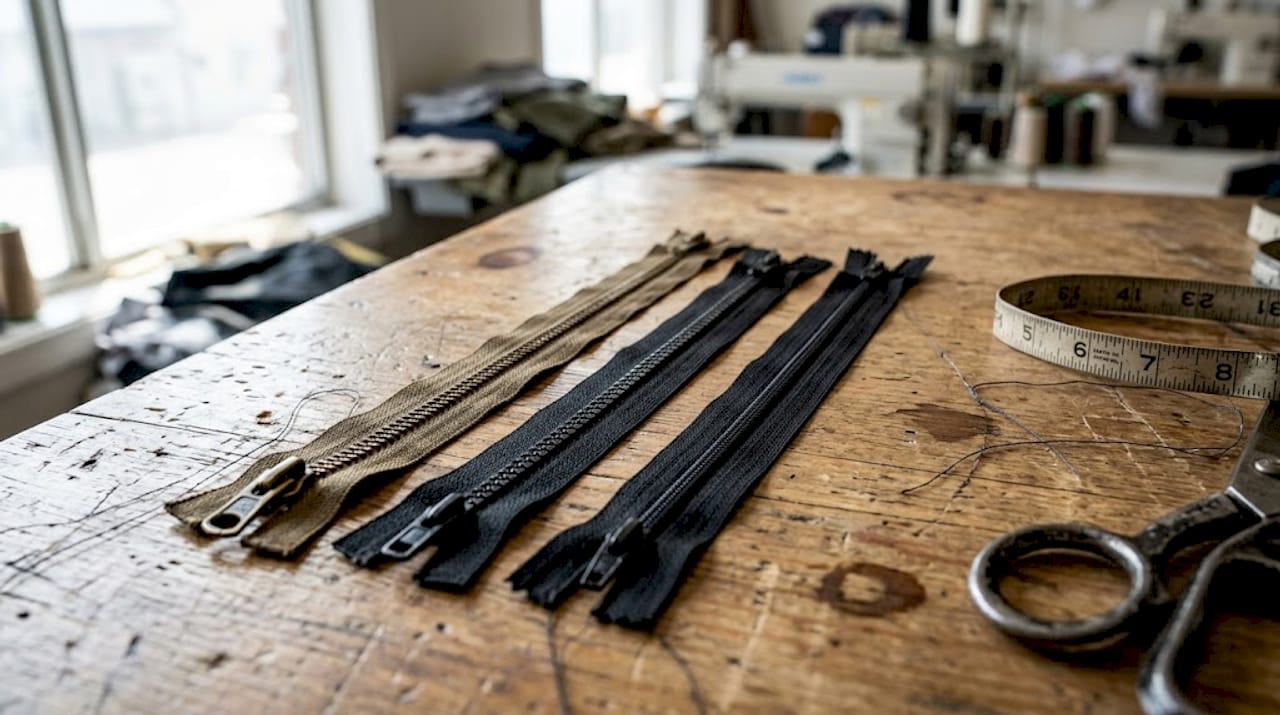
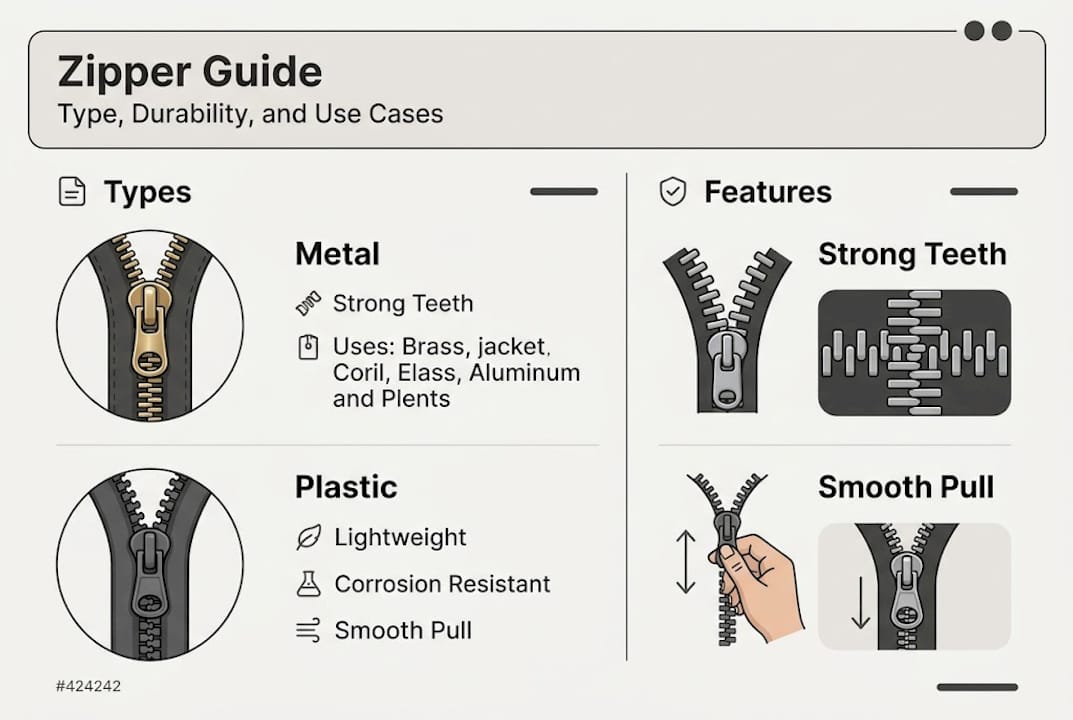
Here’s a quick comparison of the main zipper types used in jackets:
| Zipper type | Best use | Key strength | Weakness |
|---|---|---|---|
| Metal (brass/aluminum) | Motorcycle, fashion | Durability, look | Heavier, can corrode |
| Plastic (nylon coil) | Lightweight fashion | Flexible, light | Lower durability |
| Water-resistant | Rain gear, outdoor | Moisture protection | Stiffer feel |
| Invisible/concealed | High fashion | Clean look | Not for heavy use |
Gauge refers to the thickness and tooth size of the zipper. Larger gauge means stronger teeth, a heavier slider, and better resistance to the forces that tear zippers apart. For a leather motorcycle jacket, a gauge of #5 or higher is standard. Anything lighter may look fine on the rack but will show stress quickly under real riding conditions.
The brand behind the zipper matters too. YKK zippers undergo testing of 12,000 to 15,000 open-close cycles and are tested to ASTM D2061 standards, outperforming SBS zippers which typically max out at 8,000 to 10,000 cycles. In cold weather, YKK also shows better dimensional stability, which means the slider doesn’t bind up as the teeth contract.
Where to prioritize zipper quality by placement:
- Front closure: Highest priority. Use large-gauge, corrosion-resistant metal zippers with a locking slider.
- Sleeves: Medium priority. Needs to be operable with gloves. Smooth coil or fine-tooth metal work well here.
- Chest pockets: Medium priority. Exposed zipper adds style; choose hardware that matches the front.
- Interior pockets: Lower priority. Concealed zippers here are fine since they see minimal stress.
Pro Tip: When testing a zipper for glove compatibility, literally put on your riding gloves before pulling the slider. If you can’t get a clean grip in the store, you won’t be able to on the road.
Common zipper failures and how to avoid them
Zipper failure rarely happens all at once. It creeps up through repeated stress, neglect, and wrong specification from the start. Common zipper failures include jamming from dirt or fabric catch, tooth breakage from undersizing, slider wear, corrosion in wet conditions, and splitting, all of which are prevented by proper gauge, material selection, and testing to 10,000 to 25,000 cycles.
Here’s how the most frequent problems break down and what causes them:
| Failure type | Root cause | Prevention |
|---|---|---|
| Jamming | Dirt, debris, fabric caught | Regular cleaning, proper lining alignment |
| Tooth breakage | Undersized gauge for stress load | Upgrade to correct gauge for use case |
| Slider wear | High-frequency use, poor metal | Premium slider material, brand-tested hardware |
| Corrosion | Moisture, salt, no treatment | Corrosion-resistant finish, periodic wax |
| Splitting apart | Misaligned teeth, worn slider | Precise manufacturing, slider replacement |
If you’re troubleshooting an existing jacket, you can find targeted guidance on fixing jacket zippers to diagnose and repair common issues before they get worse.
Here’s a numbered checklist to protect your jacket’s zippers from premature failure:
- Clean after exposure. Dirt and road salt are the top killers. Wipe down zippers after wet or muddy rides.
- Lubricate twice a year. A bar of dry wax or dedicated zipper lubricant keeps the slider moving smoothly.
- Never force a stuck slider. Forcing causes tooth damage. Work it backward first, clear the obstruction, then proceed.
- Check alignment regularly. A zipper that starts to feel off-track needs attention before the teeth separate.
- Store properly. Leave main zippers half-open during long storage to avoid slider compression deformation.
Pro Tip: The fastest way to identify a zipper that’s about to fail is a slider that wobbles side to side. A tight, centered slider means healthy teeth and a box that hasn’t worn out yet.
For long-term jacket care that goes beyond zippers, the full set of jacket maintenance tips will help you protect every component of your investment.
Selecting the right zipper for your lifestyle and custom jacket
Choosing a zipper isn’t a one-size decision. Your lifestyle determines what specs actually matter. A fashion-forward city rider has very different needs than a weekend touring motorcyclist who puts 500 miles on a jacket in two days.
When choosing a motorcycle jacket, here are the key factors to match against your actual use:
- Riding frequency: If you’re on the bike daily, prioritize cycle-tested zippers from proven brands. A zipper rated to 12,000 cycles will last roughly 16 years if you open and close it twice daily.
- Weather exposure: Rain, salt spray, and freezing temps demand corrosion-resistant, large-gauge zippers with weatherproof sliders. Standard metal zippers will pit and bind within a season in coastal or winter conditions.
- Fashion focus: Exposed zipper aesthetics matter here. Gunmetal or antique brass finishes age beautifully on leather. Consider how the zipper color plays against your jacket color when ordering.
- Glove operability: Test every closure zipper with your actual gloves. Pull tabs shorter than 1.5 inches are nearly impossible to grip with heavy winter gloves.
For anyone ordering a custom jacket, think about choosing jacket lining alongside your zipper spec since the two interact directly at pocket openings and interior closures.
Custom order checklist for zippers:
- Specify zipper brand (YKK is a reliable benchmark for cycle count and cold-weather performance)
- State preferred gauge (#5 for motorcycles, #3 to #4 for fashion jackets)
- Define hardware color finish to match overall jacket design
- Confirm all closures are glove-testable if motorcycle use is intended
- Ask about weatherproofing treatment on main closure and sleeve zippers
Statistic to remember: YKK zippers tested to 12,000 to 15,000 cycles outperform the 8,000 to 10,000 cycle average of lesser brands, making them the clear spec of choice for anyone putting serious miles or years on a jacket.
Why the little details—like zippers—define the best jackets
Here’s something most jacket buyers figure out too late: the people who truly know leather jackets always check the zippers first. Not the seams. Not the lining. The zippers. Because a zipper tells you everything about how seriously a maker takes their craft.
A quality zipper operates with a specific kind of confidence. The slider moves smoothly without play. The pull tab sits firm. The teeth lock without any give. That tactile experience sets the tone for the entire jacket before you even put it on. When we talk about the real impact of zippers, we mean this: the zipper is a signal that the maker sweated the details.
The riders and style leaders who demand the most from their gear are never fooled by a flashy exterior with a flimsy closure. They know a zipper rated to 15,000 cycles won’t let them down at mile 400 on a cold morning. Underestimating zippers is a rookie mistake, and in performance and customization, it’s simply non-negotiable. The best jackets aren’t defined by one bold choice. They’re defined by every small choice made right.
Upgrade your jacket experience with expert customization
If this breakdown has made you look differently at the jacket hanging in your closet, or the one you’re planning to order, you’re already ahead of most buyers.
At Maker of Jacket, every custom order gives you full control over zipper brand, gauge, hardware finish, placement, and weatherproofing spec. You work with makers who understand the difference between a zipper that looks good in a photo and one that performs through years of real use. Whether your priority is the smooth pull of a perfectly weighted slider or the visual punch of antique brass on black leather, customize your jacket to match exactly what you need. Ready to build something that lasts? Order your custom jacket or browse motorcycle gear essentials to see the full range of performance options available.
Frequently asked questions
Why do motorcycle jackets need special zippers?
Motorcycle jackets use strong, large-gauge, and corrosion-resistant zippers because they must perform reliably under vibration, cold, moisture, and the force of gloved hands across thousands of cycles.
How long should a quality jacket zipper last?
A premium zipper like YKK should handle at least 12,000 to 15,000 cycles of opening and closing, which translates to many years of daily use on a well-maintained leather jacket.
Can I replace the zipper on a custom leather jacket?
Yes, a skilled leather worker or the original maker can replace a worn or damaged zipper to match your preferred spec, brand, and hardware finish without compromising the jacket’s structure.
What causes most zipper failures in jackets?
The most common causes are undersized gauges for the stress load, jamming from dirt or fabric, slider wear from high-frequency use, and corrosion from moisture exposure without proper care.


