

Two Way Zipper Jacket: When to Buy for Mid Thigh Coats and Travel

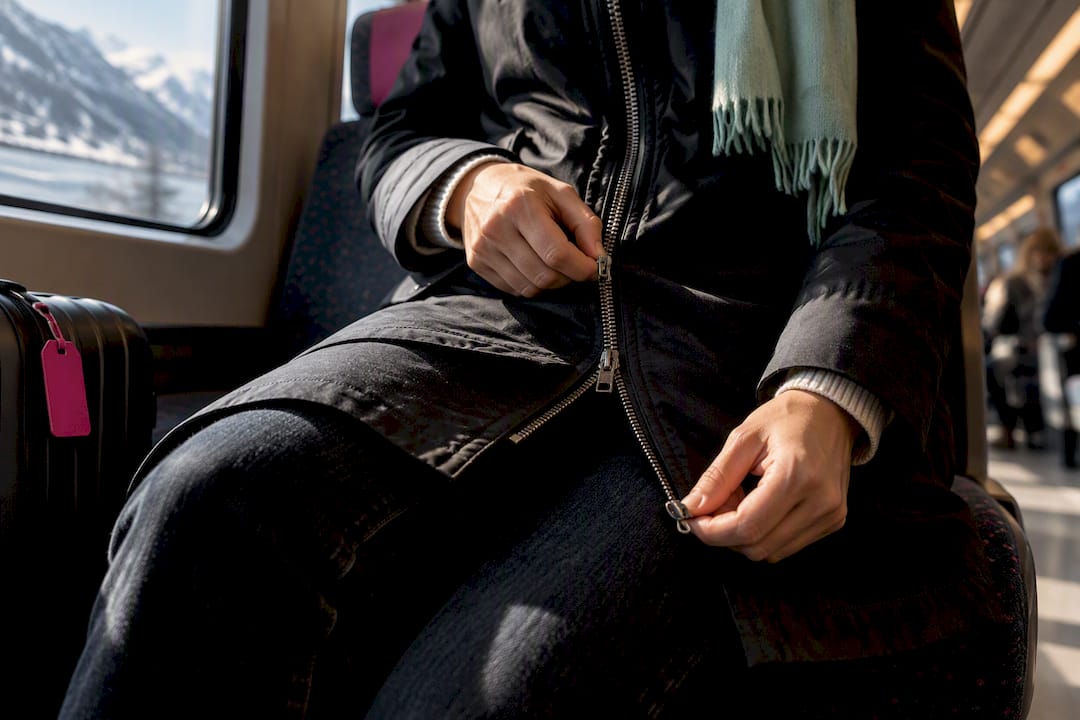
A two-way zipper jacket has a double-slider zipper that opens from the top and the bottom, giving you ventilation and easier movement without taking the jacket off. It’s worth prioritizing on mid-thigh or longer coats, and for cycling, driving, or hiking, where sitting or reaching matters. Check the product specs for “two-way separating” zipper and note the gauge before you buy.
TL;DR:
- A two-way zipper is mainly beneficial on long coats, parkas, and outdoor gear where opening from the bottom improves mobility or ventilation.
- Zipper gauge and material choice are crucial: size 5 suits midweight jackets, while size 8 or higher is necessary for heavy coats or luggage.
- Proper operation requires correctly seating both sliders at the bottom before unzipping, with maintenance involving cleaning and lubrication to prolong lifespan.
- Confirm the zipper is a true separating two-way type, with reinforced hem and suitable gauge, before purchasing a jacket to ensure durability.
- Custom jackets allow you to specify the exact zipper gauge, material, and reinforcement, ensuring optimal performance for your specific activity.
Table of Contents
- What Is a Two-Way Zipper, and What Types Show Up on Jackets?
- When Does a Two-Way Zipper Actually Matter?
- How Do You Use and Fix a Two-Way Zipper?
- What Should You Check Before Buying a Jacket With a Two-Way Zipper?
- How Maker of Jacket Handles Two-Way Zippers on Custom Orders
- Our Take: Buy for the Coat Length, Not the Feature List
- Get a Custom Jacket Built Around the Right Zipper
- Sources
- FAQ
What Is a Two-Way Zipper, and What Types Show Up on Jackets?
A two-way zipper, also called a double slider or dual-slider zipper, runs two independent sliders on one chain. You can open the top for ventilation while keeping the bottom closed, or unzip from the bottom to move your legs freely while the top half stays shut around your chest. Most jacket applications use a two-way separating zipper, meaning the two halves detach completely at the base, the same way a normal jacket zipper works, just with a second slider added at the bottom of the track.
Non-separating two-way zippers exist too, mostly on bags, tents, and some jacket pockets, where the garment or item never needs to open flat. On outerwear, though, separating is the standard, because you still need to get the jacket on and off like a normal coat.
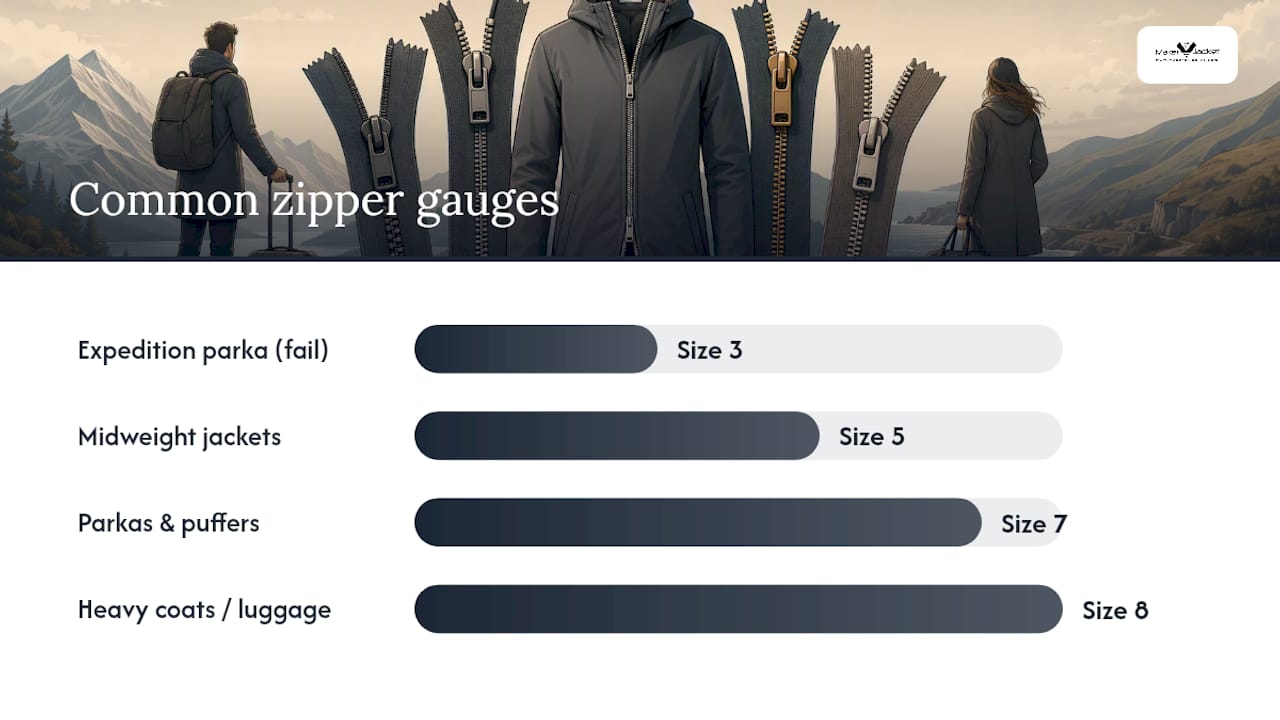
Gauge matters more than most shoppers realize. Zipper gauge refers to the width of the teeth or coil, and it directly affects strength and bulk. According to The Tailor Shed, size 5 gauge suits midweight jackets and casual outerwear, while size 8 and above show up on heavier coats, parkas, and luggage that need to hold up under more strain. A thin windbreaker with a size 8 zipper would look and feel oversized; a heavy expedition parka with a size 3 zipper would fail fast.
Material choice splits into three main camps:
- Coil zippers (usually nylon) flex well and resist snagging, common on softshells and lightweight jackets.
- Metal zippers (brass or aluminum) look rugged and handle heavy use, common on leather jackets and denim.
- Molded plastic zippers run quieter and lighter, often chosen for ski shells and technical outerwear.
- Coated or laminated zippers add water resistance, standard on rain shells and winter parkas.
Parkas and puffers almost always carry two-way separating zips in size 7 or 8 gauge. Ski shells lean toward molded plastic with a water-resistant coating. Lightweight hoodies and zip-front jackets sometimes skip the second slider entirely to save weight and cost, since a dual zipper jacket adds a small amount of hardware that a minimalist layer doesn’t always need.
When Does a Two-Way Zipper Actually Matter?
The honest answer is: it depends on what you’re wearing the jacket for. A two-way zipper earns its place on some garments and adds nothing but cost on others.
- Long coats and parkas. Anything hitting mid-thigh or longer restricts leg movement when zipped shut. Unzipping from the bottom lets you walk, climb stairs, or sit in a car seat without the hem binding at your knees.
- Cycling and driving. Bottom access matters when you’re seated for long stretches. A jacket that opens from the bottom keeps your torso warm while freeing your hips and thighs to move, which is exactly why cycling-specific jackets and long touring coats use this feature so often.
- Hiking and skiing. Body heat spikes fast during exertion. Top-down venting from a two-way zip lets warm air escape without you stopping to strip off a layer, and outdoor gear writers point out that two-way zips show up constantly on hardshells and ski jackets for exactly this reason.
- Access to inner pockets or hip belts. Anyone wearing a backpack, tool belt, or hip pack under a jacket benefits from bottom access, since it avoids having to unzip the whole coat just to reach something at waist level.
- Short jackets and everyday commuting. Waist-length jackets and bombers rarely need it. There’s not enough hem length for the second slider to solve a real mobility problem, so it’s mostly a nice-to-have rather than essential.
The trade-offs are minor but real. A second slider and the extra zipper pull add a little weight, which is why ultralight hiking layers often skip it to save grams. There’s also a short learning curve. The first few times you use a two-way separating zip, seating both sliders correctly takes a beat longer than a standard zipper. Once you’ve done it a handful of times, it becomes automatic.
Some shoppers and reviewers frame this feature as a “must” on longer coats and a “nice to have” on shorter ones, and that’s a fair way to think about it: match the feature to the coat length and your actual activity, not to a blanket rule that every jacket needs it.
How Do You Use and Fix a Two-Way Zipper?
Using a two-way separating zipper correctly comes down to one habit: always seat both sliders at the very bottom before you start.
Here’s the step-by-step version. Line up the two zipper halves at the base, insert the free edge (the small metal or plastic pin) into the bottom of both sliders, and push it down until it clicks into the retainer box. Pull the top slider upward to close the jacket like normal. Once you’re wearing it, you can slide the bottom slider up from the hem whenever you want ventilation or leg room, independent of the top slider. This insertion and operation method is the same one recommended across multiple maker and retail how-to guides.
Most failures happen at that first step. If the pin isn’t fully seated before you pull the slider, the zipper will jam almost immediately or the teeth will misalign a few inches up. The fix: don’t pull on the sliders themselves while seating the pin. Specialty Outdoors recommends holding the jacket’s fabric near the base with one hand while guiding the pin in with the other, which keeps the track straight and prevents the crooked start that causes most jams later on. If a slider does get stuck mid-track, don’t force it. Reverse both sliders back to the base, confirm the pin is seated, and try again.
A few maintenance habits keep a two-way zipper running for years:
- Clean lint and debris out of the track with a soft brush every few weeks if you wear the jacket often.
- Apply a small amount of paraffin wax or a zipper-specific lubricant to a sticky track. Skip household oils, which attract more dirt.
- Never force a jammed slider with pliers or excessive pressure. That’s how you tear a slider off the track for good.
- Inspect the slider stops and the retainer box (the little metal housing at the base) periodically. Worn stops let sliders pop off the track entirely.
Pro Tip: If your jacket’s zipper pull feels loose or wiggly, it’s usually the slider wearing out, not the teeth. Replacing just the slider is a cheap fix a tailor can do in minutes, and it’s worth trying before you assume the whole zipper needs replacing.
Some damage goes past a home fix. A completely bent zipper track, missing teeth, or a torn retainer box usually calls for a professional repair or a full zipper replacement. Our step-by-step zipper repair guide walks through which fixes are safe to try yourself and which ones need a tailor. It’s also worth knowing that not every jacket can accept a two-way separating zip after the fact, which the next section covers in more detail.
What Should You Check Before Buying a Jacket With a Two-Way Zipper?
Start with the product description, not the photo. Confirm the listing specifically says “two-way separating zipper,” not just “double zipper” or “dual pull,” since those terms sometimes describe a decorative second pull tab rather than a true second slider. Then check the gauge and material listed in the specs.
Here’s a practical checklist to run through before you commit:
- Confirm separating vs non-separating. A true two-way jacket zipper detaches at the base; if it doesn’t, you’re not getting the mobility benefit.
- Check the gauge against the jacket’s weight class. Size 5 for casual midweight jackets, size 8 or higher for heavy coats and parkas, per The Tailor Shed’s guidance.
- Look closely at slider photos. Sturdy, metal-reinforced sliders with a visible retainer box tend to hold up longer than thin molded-plastic versions.
- Confirm hem reinforcement. The base of the zipper takes the most stress on a two-way design, so a reinforced hem panel is a good sign of durable construction.
- Ask about waterproofing. If you need weather resistance, look for a coated or laminated zipper tape, not just a water-resistant shell fabric with a standard zipper.
- Measure functional zipper length along the stitch line, not the total tape length, which is the measuring method e-zippers recommends for getting an accurate fit comparison between listings.
- Make sure there’s enough hem ease. A jacket cut too tight at the hip or hem strains the bottom slider every time you use it, which shortens its life.
Quick data point: Size 5 zipper gauge is the standard choice for midweight jackets and casual outerwear, while size 8 and up is reserved for heavier coats, according to The Tailor Shed. If a listing doesn’t mention gauge at all, that’s usually a sign to ask before you buy.
When you’re not sure from the listing alone, three questions to customer support will settle it fast:
- What gauge is the zipper, and is it metal, coil, or molded plastic?
- Are replacement sliders or zipper parts available if one wears out?
- What’s the repair or return policy if the zipper fails within a certain window?
A jacket brand that can answer all three without hesitation usually built the garment with the zipper’s long-term function in mind, not just its look in a photo. Product photography matters here too. Zoom in on the slider and the stitching around the base. Blurry or distant photos of that area on a listing are often a sign the seller isn’t confident in that part of the construction.
Fit plays a bigger role than most buyers expect. A jacket that’s cut too slim through the hip will strain the bottom slider every time you try to use the ventilation feature, since the fabric fights the zipper instead of moving with it. If you’re between sizes, sizing up slightly on a longer coat with a two-way zip hoodie or parka style tends to serve the zipper mechanism better than sizing down for a slimmer silhouette.
How Maker of Jacket Handles Two-Way Zippers on Custom Orders
Custom jackets are built to order, allowing you to specify your preferred zipper configuration rather than selecting from preset factory options. When you place a custom jacket order, you can request a two-way separating zip and specify the gauge and material that fit your intended use, whether that’s a heavy leather biker jacket or a lighter custom windbreaker.
Choosing the right zipper for a custom build comes down to a few practical checks:
- Matching gauge to the jacket’s weight class, so a heavy leather biker jacket gets a sturdier zipper than a lightweight cropped style.
- Reinforcing the hem where the two-way zip terminates, since that’s the stress point that fails first on a poorly built jacket.
- Testing slider action before the jacket ships, confirming both sliders move smoothly from top to bottom without binding.
Fit and construction details like lining and hem structure affect how a zipper performs day to day, and our guide on choosing the right lining covers how those choices interact with zipper comfort against the skin. For care after purchase, our jacket maintenance guide pairs well with the zipper care habits covered earlier in this article.
Not every jacket style is a good candidate for a two-way separating zip; some styles are recommended with a standard zipper instead. A jacket built with a closed hem or without enough seam allowance at the base often can’t take a true separating two-way zipper without compromising the garment’s structure, which is why some styles are recommended with a standard zipper instead.
Our Take: Buy for the Coat Length, Not the Feature List
The biggest mistake shoppers make with two-way zippers is treating them as a universal upgrade, the kind of feature that makes any jacket automatically better. It doesn’t. A two-way separating zip on a waist-length bomber solves a problem that jacket never had in the first place. The feature earns its keep on longer coats, parkas, and anything you’ll wear seated, cycling, or working hard in, and it’s dead weight everywhere else.
Conventional buying advice tends to focus on price and fabric, mentioning zipper type as an afterthought if at all. That’s backwards for anyone buying a long coat or technical shell, where the zipper is the single moving part most likely to fail within the first year. Gauge and slider quality matter more than most listings let on, and asking about replacement parts before you buy beats discovering the hard way that a jammed slider means the whole jacket is done.
If you take one thing from this guide, check the hem reinforcement and the gauge before you check the color. Everything else about a two-way zipper jacket is negotiable. Those two things aren’t.
— Maker
Get a Custom Jacket Built Around the Right Zipper
This service offers custom jackets where the zipper is matched to the coat specifications. Instead of scanning dozens of listings hoping one happens to have the right gauge and a reinforced hem, you specify it up front: separating two-way zip, gauge, material, and reinforcement, built into a custom biker jacket, trench coat, or windbreaker made to your measurements.
The process is simple. Check the size guide to confirm your measurements, choose your zipper gauge and material during customization, and flag reinforcement if you’re ordering a heavier coat style. Handcrafted construction with premium-grade materials means the hem and slider get built to hold up, not just to look right in a listing photo. Start your custom jacket order today and specify the exact two-way zipper setup your coat actually needs.
Sources
- What kind of two-way zipper do I need? — YKK Americas
- Two-Way Zips explained for jackets, bags and outdoor gear — The Tailor Shed
- More zipper problems — two-way zippers (Specialty Outdoors)
- Do you need a two-way zipper on your hiking jacket? — Advnture
- Jacket zippers for coats & parkas — e-zippers
FAQ
What’s the point of a two-way zipper jacket?
A two-way zipper jacket lets you open the coat from the top for ventilation or from the bottom for leg mobility, without fully removing the jacket. It’s most useful on longer coats, parkas, and jackets worn for cycling, driving, or hiking, where sitting or reaching matters.
What does a two-way zipper mean?
It means the zipper has two independent sliders on one track, so both ends of the zipper can move separately. On jackets, this is almost always a two-way separating zipper, meaning the two halves fully detach at the base like a standard jacket zipper.
What is a double-sided zipper called?
It’s most commonly called a two-way zipper, double-slider zipper, or dual-slider zipper. These terms are used interchangeably across manufacturers and retailers, though “two-way” is the most widely recognized term when shopping.
Can you turn a regular zipper into a two-way zipper?
Not usually, and not as a simple swap. Retrofitting requires an open-end hem construction and enough seam allowance at the base, and forcing the conversion on a jacket that wasn’t built for it can cause puckering and poor slider movement. If you want this feature, ordering a custom jacket built with a two-way zip from the start avoids the structural limits of a retrofit.


