

A-2 Roots, Custom Fit: Bi-Swing Back Jacket That Actually Moves

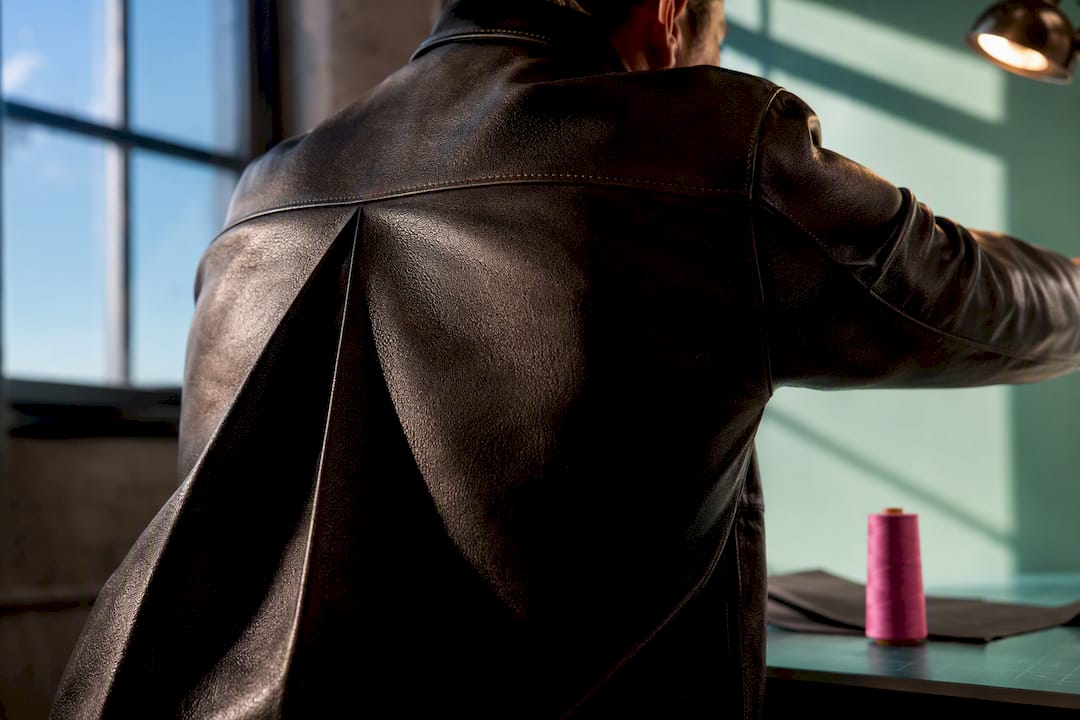
A bi-swing back jacket uses a rear pleat or gusset, usually anchored at the yoke, that opens when you raise your arms or reach forward, then folds flat when you drop them. Choose one if you ride, shoot, climb, or work with your arms overhead all day. Skip it for a slim city coat, where the pleat can add bulk without adding much benefit unless the cut and materials are handled well.
TL;DR:
- A full action back with pleats across the entire shoulder width offers significantly more mobility than a smaller shoulder gusset, especially on leather jackets.
- Material choices like leather, cotton, or waxed canvas affect how the pleat behaves and how well the back folds or recovers during movement.
- Proper fit is crucial: the jacket must be snug enough to activate the pleat’s function without excess bulk, and a tailor can optimize the opening for your activity.
- Genuine bi-swing backs feature an inner gusset panel and reinforced stitching, unlike decorative pleats that lack functional movement.
- Custom-built jackets allow precise adjustments of pleat depth, lining, and material to maximize comfort and mobility tailored to your activity.
Table of Contents
- What Is a Bi Swing Back, and How Does It Work?
- Why Tailors and Wearers Actually Value This Design
- Materials and Construction: Leather, Cotton, and Lining Choices
- How to Try On a Bi-Swing Back and When to Get It Tailored
- How to Spot Quality Construction and Avoid Fake Bi-Swing Details
- Where a Bi-Swing Back Actually Earns Its Keep
- How Maker of Jacket Builds and Customizes Action Backs
- Why Mechanical Tailoring Still Beats Stretch Fabric for Heavy Outerwear
- Get a Bi-Swing Back Built for the Way You Actually Move
- Sources
- FAQ
What Is a Bi Swing Back, and How Does It Work?
The bi-swing back, sometimes called an action back, is a mechanical answer to a problem plain-back jackets never solve well: raise your arms and the fabric across your shoulder blades pulls tight, sometimes hard enough to lift the whole hem. Add a folded panel behind the shoulder yoke, and that panel opens like an accordion when your arms move, then closes flat when you settle back down.
The construction has a few consistent parts:
- The yoke is the horizontal seam across the upper back where the pleat attaches.
- The outer pleat is the visible fold of fabric, usually box-pleated, that expands outward.
- The inner panel or gusset is the hidden layer that gives the pleat somewhere to go instead of straining the seams.
- The stitch points anchor the pleat at the top and let it release lower down.
Variants differ mainly in how much of the back they cover. A full action back runs pleats across the entire shoulder width, the version patent US2457356 describes in detail, connecting front and back panels so the sleeves move with real freedom. A shoulder gusset variant only opens near the armhole, a smaller, less effective compromise favored by brands chasing a cleaner silhouette.
Why Tailors and Wearers Actually Value This Design
Owner communities on forums like The Fedora Lounge consistently report that a full action back delivers noticeably more range of motion than a small shoulder gusset.
The mechanical benefit is straightforward: a pleat that folds and unfolds doesn’t wear out the way stretch fabric can over years of flexing. Leather especially benefits here, since leather has limited give on its own, so a mechanical pleat does work synthetic stretch panels would otherwise need to handle.
That said, the design has real trade-offs:
- Bulk builds up under a tight base layer, especially with heavier leather.
- The pleat changes the back’s silhouette, which some wearers find less clean than a plain back.
- Cheap linings can bind inside the fold and cancel out the mobility gain entirely.
Pro Tip: If you’re deciding whether you actually need this feature, ask yourself one question: does your activity require overhead or forward-reaching arm motion for more than a few minutes at a stretch? If yes, the pleat earns its keep. If you mostly sit or stand still, a plain back will look cleaner and cost you nothing functionally.
Materials and Construction: Leather, Cotton, and Lining Choices
Material choice changes how a bi-swing pleat behaves almost as much as the cut does. Leather holds a crease and develops patina at the fold lines over time, which some wearers like and others find distracting on a newer jacket. Heavy cotton and waxed canvas fold more crisply and recover their shape faster, which is part of why so many original field and flight jackets used cotton duck rather than hide.
Lining decides whether the pleat actually functions or just sits there for looks:
- A slippery lining, like a smooth polyester or bemberg weave, lets the inner panel glide open without catching.
- A heavy or bonded lining can stick to itself inside the fold and blunt the mobility gain.
- No lining at all, common on some field jackets, exposes the raw gusset seam but keeps weight down.
Picking the right lining for a jacket matters more on an action back than on almost any other jacket style, precisely because the lining has to move with the pleat, not against it. Stitch quality tells you a lot too: look for reinforced bar tacks at the top of the pleat, where stress concentrates every time the panel opens. Loose or single-pass stitching there is usually the first thing to fail. Leather versions need conditioning to keep the fold supple; cotton versions tolerate washing but should skip heavy starching, which stiffens the exact spot that needs to flex.
How to Try On a Bi-Swing Back and When to Get It Tailored
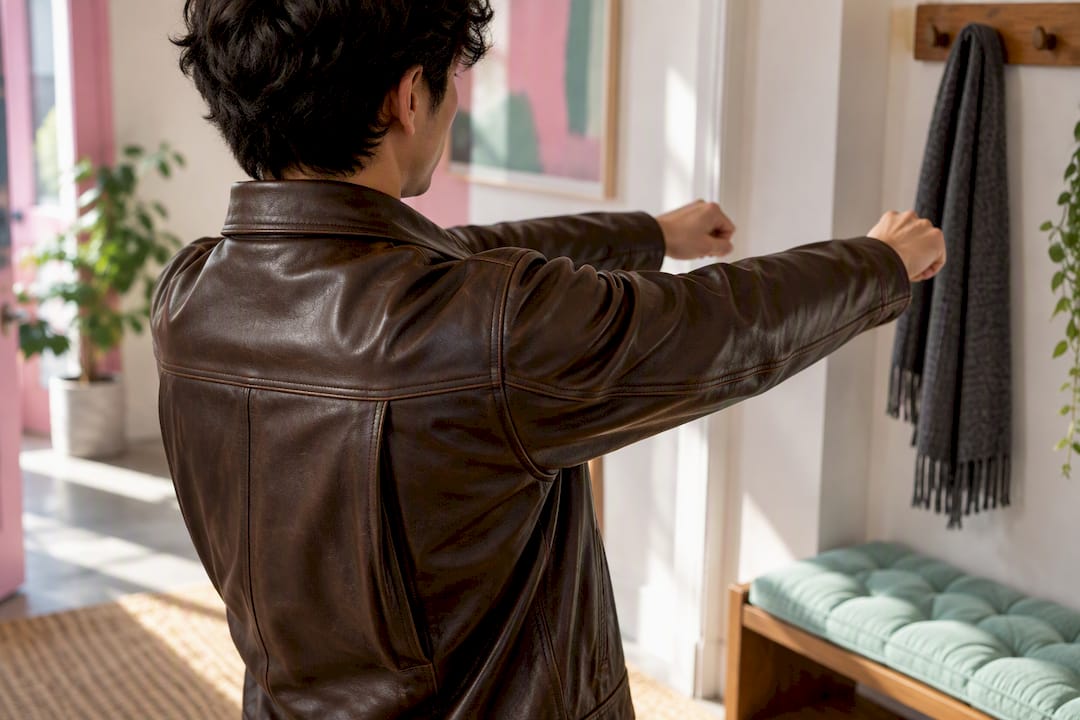
A bi-swing back only does its job when the rest of the jacket is cut close enough to need it. An oversized jacket already has enough loose fabric across the shoulders to allow arm movement on its own, so the pleat just becomes extra material with nothing to do. A properly fitted cut is what makes the mechanism worth having in the first place.
Run through this checklist before you commit to a jacket, or before you order a custom one:
- Do the reach test. Extend both arms straight forward like you’re grabbing handlebars. The pleat should open smoothly and the hem should stay put.
- Do the overhead test. Raise your arms above your head. Watch whether the shoulder seam lifts or stays anchored.
- Check the layering fit. Try the jacket over whatever you’ll actually wear underneath, whether that’s a base layer or riding armor, since bulk compounds fast.
- Confirm the yoke seam sits on your actual shoulder line, not an inch off in either direction, which throws off how the pleat opens.
If the fit is close but not quite right, a tailor can narrow the pleat width, adjust the yoke depth, or shorten the pleat base to reduce bulk without losing the mobility benefit.
How to Spot Quality Construction and Avoid Fake Bi-Swing Details
Not every pleat on the back of a jacket is a real bi-swing. Plenty of jackets add a decorative fold purely for looks, with no inner gusset panel behind it and no actual give when you move. Community reviews of ready-to-wear windbreaker jackets, including feedback on Zappos, note that owners specifically value durability and long-term wear from properly built pleats, which is a good reminder that construction quality shows up over years, not in the first fitting.
Run through this short checklist before buying:
- Even, symmetrical folds. Uneven pleats usually mean rushed stitching.
- A visible inner panel when you spread the pleat open with your hand.
- Reinforced stitching at the yoke, where the pleat takes the most repeated stress.
- A lining that moves freely inside the fold, not one that’s tacked down flat.
According to tailoring guidance summarized by The Chic Tribe, the pleat’s functional value depends heavily on whether the inner gusset is properly connected to both the front and back panels, not just decoratively sewn onto the yoke. A jacket with a loose or unattached inner panel will look right on a hanger and fail the reach test in the fitting room.
Where a Bi-Swing Back Actually Earns Its Keep
Motorcycle riders get the clearest benefit: reaching for handlebars all day is exactly the repeated forward motion the pleat is built for, and it pairs well with tapered sleeves that keep armor underneath from bunching. Fieldwork and outdoor jobs benefit similarly, especially when paired with durable waxed cotton or canvas that can take repeated flexing without cracking the way stiffer leather sometimes does.
Everyday styling is more of a judgment call:
- A pleated back reads slightly more rugged or vintage, which suits a casual or workwear-inspired outfit.
- A plain back looks cleaner under a blazer or for office wear, where you’re not reaching overhead anyway.
- Layer a bi-swing jacket over a thin base in cold weather, since heavy sweaters underneath can eat into the pleat’s extra room.
The A-2 flying jacket preserved at the Smithsonian is a good reference point here: aviators needed to reach cockpit controls without their jacket riding up, which is the same problem a rider or field worker solves today with the same mechanism.
How Maker of Jacket Builds and Customizes Action Backs
Customizing a bi-swing back means solving the bulk-versus-mobility trade-off for your specific build, not a generic size chart. At Maker of Jacket, buyers work through material grade, lining, and pleat specifications before an order goes into production, which is how the fit stays close without sacrificing the reach test.
The process runs in a few steps: pick your jacket style, whether that’s a fitted biker cut or a heavier field-style build, then choose your leather grade or fabric weight. From there, confirm pleat depth and yoke fit notes with your order, and place it. Adjustments that would normally require a separate tailoring trip get considered from the start in made-to-order pieces.
Why Mechanical Tailoring Still Beats Stretch Fabric for Heavy Outerwear
Synthetic stretch panels get marketed as the modern fix for mobility, but they wear out. Elastic loses recovery after repeated stress, especially in cold weather, while a well-built pleat is just geometry: it has nothing to degrade because there’s no elastic memory involved. That’s a real advantage for anyone buying a jacket meant to last years, not one season, particularly in leather, which doesn’t stretch at all on its own and depends entirely on mechanical construction like this to allow real movement.
The trade-off is that a pleat has to be sized to your build to work right, which is exactly why small tweaks at the ordering stage matter more than they look like they should. If you’re getting a jacket built for actual use, not just display, it’s worth asking for those adjustments up front rather than living with a compromise later.
— Maker
Get a Bi-Swing Back Built for the Way You Actually Move
Most off-the-rack jackets treat the bi-swing back as one fixed size, which is exactly why so many buyers end up with either extra bulk or a pleat that barely opens. Maker of Jacket builds each order around your actual measurements, letting you set pleat depth, leather grade, and lining together so the mobility gain shows up without the added weight.

You pick the base style, whether that’s a fitted biker jacket or a heavier field-inspired cut, then work through material and lining choices using the leather selection guide. Every order ships with worldwide free shipping and 24/5 support, and pricing stays visible at every step instead of buried behind a quote request. A Custom Biker Jacket runs $249, and a full Customize Motorcycle Jacket Order with armor-ready construction runs $299.
Start your build on the custom jacket order page and specify your pleat depth and fit notes before checkout, so the jacket that arrives actually moves the way you need it to.
Sources
Serious buyers researching this feature have three solid places to dig further. The Smithsonian’s Type A-2 flying jacket record documents the design’s aviation roots. Patent US2457356 lays out the technical mechanics of front and back gusset construction. Owner threads on The Fedora Lounge offer real-world comparisons between full action backs and shoulder gussets, straight from people who’ve worn both for years.
- United States Army Air Forces Type A-2 flying jacket (Smithsonian)
- Jacket with biswing gusset in front and in back – FreePatentsOnline
- What Is A Bi Swing Jacket? – The Chic Tribe
FAQ
What Does “Bi-Swing Jacket” Mean?
A bi-swing jacket has a pleat or gusset built into the back, usually at the shoulder yoke, that opens when you raise or reach your arms and folds flat when you lower them. The term comes from the panel’s ability to “swing” open on both sides of the back seam, a design patent US2457356 describes in technical detail.
Are Bi-Swing Jackets Worth the Price?
They’re worth it if your activity genuinely requires reaching or overhead motion, since the pleat solves a real mobility problem rather than adding a cosmetic detail. Owner reviews of ready-to-wear versions on Zappos note that buyers who value durability and long-term wear tend to rate the construction highly, though a jacket that’s too oversized won’t show much benefit either way.
Can an Older Rider Wear a Biker Jacket With an Action Back?
Yes, age has nothing to do with whether a bi-swing back suits you. What matters is fit and activity: if you’re riding, working outdoors, or doing anything that needs shoulder mobility, the pleat helps regardless of who’s wearing it, and a custom order through Maker of Jacket lets you dial in the fit to your actual build.
What Are Double-Sided or Two-Way Pleat Jackets Called?
Jackets with pleats on both the front and back panels are typically called front-and-back bi-swing jackets, a construction detailed in patent US2457356, which connects both panels to the sleeves for maximum arm freedom. This differs from a standard action back, which only opens at the rear yoke.
Does a Bi-Swing Back Work on Leather Jackets?
Yes, and it’s arguably more valuable on leather than on cotton, since leather has almost no natural stretch and depends on mechanical construction like a pleat to allow real arm movement. The trade-off is that leather holds a crease at the fold over time, so tailors often recommend a slightly deeper pleat and a smooth, non-bonded lining to keep the fold moving freely.


