

Measure Once: Maker’s Guide to Leather Jacket Sleeve Length

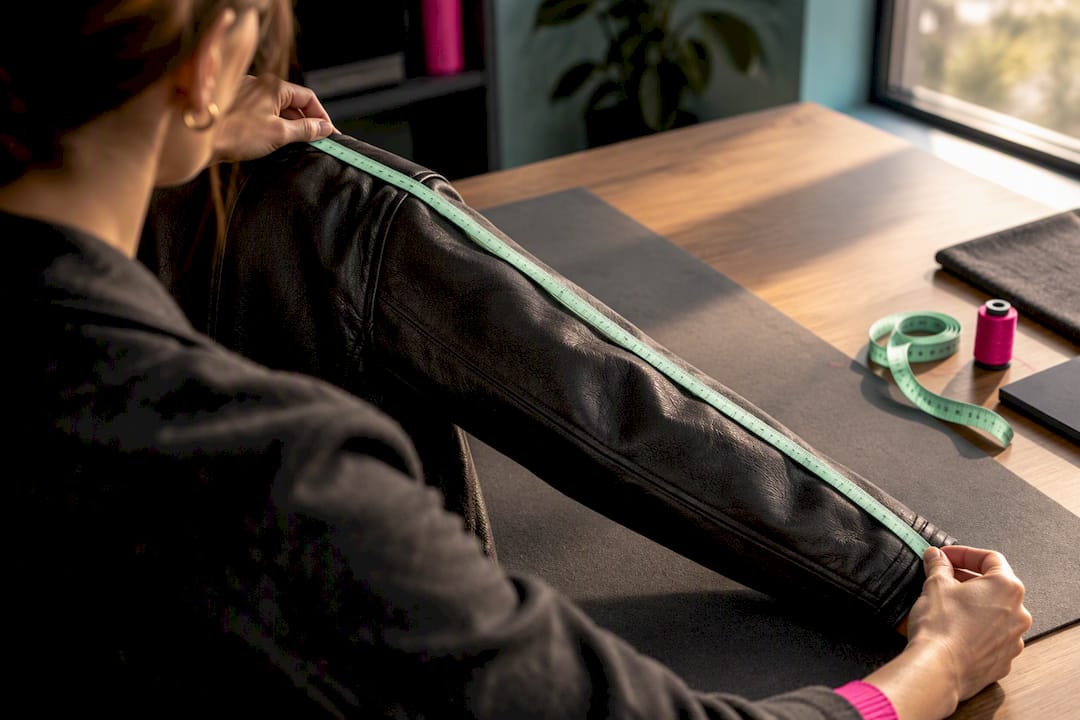
Your cuff should hit right at the wrist bone, maybe half a centimeter above it, when your arm hangs relaxed at your side. That’s the resting target for nearly every leather jacket style. But resting position only tells half the story. A jacket that looks perfect standing still can choke your wrist or ride up your forearm the moment you reach, grip a handlebar, or bend your elbow, so any sleeve you’re judging needs a motion check before you call it done.
TL;DR:
- Most leather jackets should have sleeves ending right at the wrist bone or slightly above when arms are relaxed, but motion checks are essential before purchase.
- Sleeve length issues often stem from shoulder or body fit problems, such as dropped shoulder seams or oversized chests, not the cuff or hem.
- Measuring shoulder tip to wrist provides the most accurate sleeve length, especially for custom orders, and should be done with a fitted shirt and professional assistance.
- Altering cuffs is cheaper and easier than adjusting shoulder or armhole seams, which can cost significantly more due to the complexity of the work.
- Different jacket styles, like biker, bomber, or trench coats, have varying sleeve lengths that suit their purpose and posture, making style fitting crucial.
Table of Contents
- Getting Leather Jacket Sleeve Length Right at Rest and in Motion
- How to Measure Sleeve Length Accurately
- Why Sleeves Look Long Even When the Measurement Is Right
- What Sleeve Alterations Cost and Why Complexity Drives Price
- How Jacket Style Changes What “Right” Sleeve Length Means
- Do Men’s and Women’s Leather Jacket Sleeves Fit Differently?
- How Sleeve Length Shapes the Whole Jacket’s Silhouette
- Maker’s Take on Getting Sleeve Fit Right
- Get a Sleeve Length Built Around Your Own Measurements
- Sources
- FAQ
Getting Leather Jacket Sleeve Length Right at Rest and in Motion
Standing in front of a mirror with your arms down tells you almost nothing about whether a jacket actually fits. That resting pose is where most people stop checking, and it’s exactly why so many leather jackets end up altered within a month of purchase.
The rule at rest is simple: the cuff sits at the wrist bone or up to about a centimeter above it. Go lower and the sleeve swallows your hand. Go higher and you get that awkward “shrunk in the wash” look, even on a jacket that’s brand new.
Leather behaves nothing like a cotton blazer or a wool coat. It has almost no stretch and holds its shape the moment it’s cut and stitched. A denim jacket sleeve might give you an extra half inch of forgiveness when you raise your arm. Leather won’t. What you measure is close to what you get, for better or worse, which is exactly why the motion test matters more here than with any other fabric.
Before you buy or send anything to a tailor, run through this:
- Raise both arms straight overhead and check whether the cuffs pull up past your wrist.
- Reach forward like you’re grabbing a steering wheel or handlebar grip and watch for bunching at the elbow.
- Bend your elbow sharply, as if checking a watch, and see if the sleeve rides up your forearm.
- Cross your arms and confirm the shoulder seam doesn’t shift or pull.
Pro Tip: If you ride a motorcycle, do the handlebar test in the actual riding position you’ll use, not just standing upright. Leaning forward changes how much stretch the sleeve needs by more than most people expect.
If a sleeve fails two or more of these checks, it’s not a hemming problem. It’s usually a sign the shoulder or body size is off, which we get into further down.
How to Measure Sleeve Length Accurately
Two measurement methods cover almost every situation you’ll run into, whether you’re buying off the rack or placing a custom order.
Method A: mid-back to wrist. This is the standard used by most sizing charts and tailors. The measurement runs from the midpoint of the back at the base of the neck, across the shoulder, down to the wrist bone. It’s the number you’ll see on most size guides, including ready-to-wear leather jacket charts.
Method B: shoulder tip to wrist. Instead of starting at the spine, this method starts at the shoulder seam or armhole and runs to the wrist bone, with the arm kept relaxed at your side throughout. Tailors lean on this version for pattern work and custom fittings because it isolates the sleeve itself from shoulder width.
To get a clean number with either method:
- Wear a fitted shirt, not a bulky sweater, since extra layers add false length to your reading.
- Stand naturally with your arm relaxed and slightly bent, not stiff at your side.
- Have someone else measure you rather than trying to do it in a mirror. Self-measured sleeve lengths are notoriously off by an inch or more.
- If the jacket has a zippered or ribbed cuff, measure to where the cuff sits when zipped or relaxed, not to the raw edge of the leather.
- Record the number in inches and note which method you used, since a size chart or custom order form built for Method A won’t line up with a Method B number.
Once you have a figure, compare it against a size chart. Charts often group sleeve lengths into short, regular, and long bands tied to height, so someone around 5’7″ typically lands in a shorter band while someone over 6 feet lands in the long category. For a fuller breakdown across body types, Makerofjacket’s jacket sizing guide walks through how these bands translate into actual chest and sleeve numbers. If you’re placing a custom order, give the shoulder tip to wrist number. It’s the figure a maker actually cuts the pattern from.
Why Sleeves Look Long Even When the Measurement Is Right
A lot of “my sleeves are too long” complaints have nothing to do with sleeve length at all. The sleeve is just doing what a dropped shoulder or oversized chest tells it to do.
Dropped shoulder seams push the entire sleeve down your arm before it even starts. A jacket cut with the shoulder seam sitting an inch below your natural shoulder bone will make a correctly sized sleeve look several inches too long, because a sleeve only hangs straight when it starts at the actual shoulder point. Check this by feeling for your shoulder bone through the jacket. If the seam sits noticeably past it, the sleeve isn’t the problem.
An oversized chest or torso creates the same illusion. If the jacket is a size too big through the body, the whole garment sags downward, dragging the sleeves along with it. This is worth fixing first, because tailoring a torso down and then shortening a sleeve twice costs more than getting the body size right from the start.
Sleeve cap shape and shoulder padding play a smaller but real role too. A structured shoulder pad can visually shorten a sleeve without a single stitch touching the cuff, since adjusting shoulder width changes the sleeve’s apparent length even when the actual measurement stays the same.
Quick way to sort it out:
- If the shoulder seam sits right at your shoulder bone and only the cuff is long, a simple cuff shortening fixes it.
- If the shoulder seam sits past your shoulder bone, or the chest gaps when zipped, you need a different size or broader tailoring, not just a hemmed sleeve.
Pro Tip: Button or zip the jacket fully before judging sleeve length. An open jacket hangs differently and can make sleeves look longer or shorter than they’ll actually sit once worn properly.
What Sleeve Alterations Cost and Why Complexity Drives Price
Shortening a sleeve at the cuff is the most common leather alteration, and there’s a practical reason for that beyond cost. Tailors prefer working at the cuff because it avoids touching the armhole or sleeve cap, which means the shoulder fit and overall silhouette stay untouched. A shop simply removes leather from the cuff end, re-forms the hem, and reattaches any hardware.
Shortening from the shoulder is a different job entirely. It means detaching the sleeve, resetting the armhole, and reshaping the sleeve cap so the arm still moves naturally. That level of work risks changing how the shoulder sits on your frame, so most leather specialists reserve it for cases where cuff shortening genuinely won’t solve the problem.
Here’s roughly what to expect at a leather-specialist tailor:
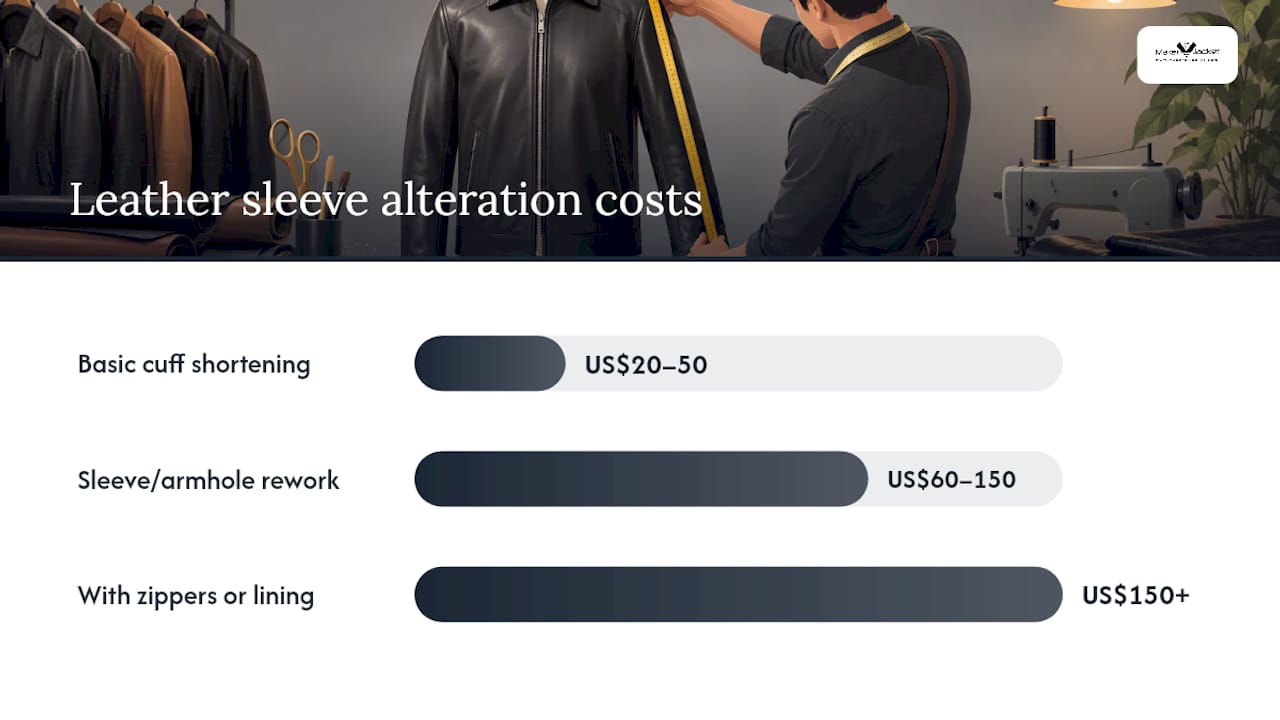
- Basic cuff shortening: about $20 to $50, depending on the shop and how the cuff is finished.
- Sleeve or armhole rework: $60 to $150 or more, since it involves detaching and resetting structural seams.
- Anything with zippers, snaps, or heavy lining: push toward the higher end of either range, because hardware and linings add time the tailor has to charge for.
Zippers are the biggest wildcard. When a jacket needs more than two or three inches removed, the zipper itself may need to be shortened and moved, and the visible spacing of snaps or studs can shift too. A good shop will flag this before starting, not after. Lined jackets add another layer, since the lining has to be trimmed and re-hemmed separately from the leather shell so it doesn’t bunch inside the sleeve.
One thing nearly every leather-alteration shop agrees on: lengthening a sleeve is rarely possible. Leather doesn’t have extra seam allowance the way some fabric garments do, and most services simply can’t add material back once it’s cut. If there’s any chance you’ll want more room later, size up before you order rather than hoping a tailor can undo a too-short cuff.
Leather alterations also cost more across the board than fabric ones, since leather requires specialized tools and skill that most general tailors don’t have. Not every dry cleaner or seamstress can touch it safely, so it’s worth confirming a shop has leather-specific experience before you hand over a jacket.
How Jacket Style Changes What “Right” Sleeve Length Means
There’s no single sleeve length that works across every leather jacket style, because the style dictates the job the sleeve is doing.
- Cropped and fashion jackets often run intentionally shorter, sitting slightly above the wrist bone to show a shirt cuff or watch. That’s a style choice, not a fit mistake.
- Biker and motorcycle jackets need extra coverage in a riding position, so a sleeve that looks slightly long standing still often sits correctly once you’re leaning forward on a bike. If you’re shopping for one, check the fit sitting in a riding stance, not just standing upright, and browse a style like the Super Ride leather motorcycle jacket with that posture in mind.
- Bomber and varsity jackets usually have ribbed knit cuffs, which stretch slightly and let you get away with a shorter measured length since the ribbing pulls in around the wrist anyway.
- Trench-style leather coats tend to run longer through the sleeve to match a more formal, structured silhouette.
Match the sleeve target to what you’ll actually be doing in the jacket, not just how it looks hanging in a closet.
Do Men’s and Women’s Leather Jacket Sleeves Fit Differently?
The wrist bone rule applies to everyone, but how you get there differs based on typical proportions and style preferences between men’s and women’s cuts. Men’s leather jackets are generally patterned with a straighter sleeve and less taper from bicep to wrist, since men’s jacket sizing tends to prioritize shoulder and chest room first, letting the sleeve follow proportionally.
Women’s leather jackets more often use a tapered sleeve that narrows noticeably from the elbow down, which changes how the same “wrist bone” target actually looks and feels. A tapered sleeve can sit at the correct length by measurement but feel tighter around the forearm than a straight-cut sleeve of identical length, simply because there’s less circumference to move through.
Style preference plays a role too. A slightly cropped sleeve that stops just above the wrist is a common styling choice in women’s fashion leather jackets, worn deliberately to show a bracelet or layered cuff underneath, similar to the cropped-jacket logic covered above. Men’s styling leans toward covering the wrist fully more often, particularly in biker and motorcycle designs where wrist coverage doubles as practical protection.
Neither approach is more “correct.” What matters is that whichever cut you choose, you still run the same motion tests, since a tapered women’s sleeve and a straight men’s sleeve can both fail the same reach-and-bend check if the shoulder placement is off. Sleeve length rules don’t change by gender. The silhouette built around that length does.
How Sleeve Length Shapes the Whole Jacket’s Silhouette
Sleeve length doesn’t work in isolation. It’s one of three or four measurements that together decide whether a jacket reads as sharp or sloppy, and it has an outsized effect on that overall impression because your arms are almost always in motion or visible.
A sleeve that ends exactly at the wrist bone creates a clean horizontal line that makes the whole jacket look intentional, even if the body fit is only decent. Push that same sleeve half an inch longer and the jacket suddenly reads as borrowed or oversized, even when the shoulders and chest are cut correctly. It’s a small measurement with an outsized visual impact, because the cuff is one of the few places on a jacket where the eye naturally lands.
Proportion also works in relation to torso length. A cropped jacket body paired with a sleeve that runs long looks unbalanced, like two different jackets stitched together. A longer coat-length leather jacket can carry a slightly longer sleeve without looking off, because the eye reads the whole garment as more formal and elongated to begin with.
Shoulder width ties back into this too, echoing the dropped-shoulder issue from earlier. Wider shoulders shorten the visual sleeve line even at an identical measured length, while narrower, higher shoulders make the same sleeve look longer. That’s part of why two people with the exact same sleeve measurement can end up with jackets that look completely different on their frames.
If you’re building toward a specific look rather than fixing an existing jacket, the sleeve is the last measurement to nail down, not the first. Get shoulder and chest fit settled, then let sleeve length follow.
Maker’s Take on Getting Sleeve Fit Right
Our position is straightforward: fix the shoulder and chest fit before you touch the sleeve, then measure to the wrist bone and test in motion before calling it done. Most sleeve complaints trace back to shoulder placement, not the cuff itself. If you want a fit that skips the guesswork entirely, a custom order built from your own shoulder tip to wrist measurement removes the sizing-band gamble altogether. Measure once, measure carefully, and the rest of the jacket tends to fall into place.
— Maker
Get a Sleeve Length Built Around Your Own Measurements
Skip the size chart guessing altogether. Makerofjacket builds every custom order around the measurements you provide, so the sleeve is cut to your shoulder tip to wrist number instead of a generic short, regular, or long band that may not fit your arm at all.
Before you place an order or book an alteration anywhere, take five minutes with the two measuring methods above and write both numbers down, along with a note on whether you want a biker fit, a cropped fit, or standard coverage. That single step is what separates a jacket that needs a trip to the tailor from one that fits right out of the box. Makerofjacket’s custom jacket order page walks you through submitting those measurements directly, and the jacket sizing guide is worth checking first if you’re not sure which band you fall into. A Custom Biker Jacket built to your own sleeve number starts at $249, handcrafted to the measurements you send in rather than a standard size run. Send your numbers in, and the fit follows.
Sources
- Professional Attire Sizing Guide – Center for Careers, Life, and Service | Grinnell College
- Women sizing guide (sleeve measurement instructions) — Old Dominion University
- Leather jacket alterations – options and considerations — Liberty Leather Goods
- Leather & Suede Jacket Sleeve Shortening service — LeatherCareUSA
FAQ
What length should a leather jacket sleeve be?
The cuff should sit right at your wrist bone, or up to about half a centimeter above it, when your arm hangs relaxed. Always confirm this with a motion test, since a sleeve that looks correct standing still can ride up when you reach or bend your elbow.
Do leather jacket sleeves get shorter with wear?
No, leather sleeves don’t shorten with regular wear the way some knit fabrics can stretch or shrink. Leather has very little give, so a sleeve that’s too long when you buy it will stay too long unless you have it professionally altered.
What is the perfect sleeve length?
There’s no single perfect number since it depends on your arm length and the jacket style, but the target position is universal: the cuff at the wrist bone. Measure using the shoulder tip to wrist method for the most accurate custom fit.
Is it better for sleeves to be too long or too short?
Slightly long is easier and cheaper to fix, since cuff shortening is a standard, affordable leather alteration. Too short is a much bigger problem, because most leather specialists can’t reliably add length back once material has been cut away.
Can Makerofjacket build a jacket to my exact sleeve measurement?
Yes, custom orders are built from the measurements you submit, including sleeve length, rather than a fixed size chart. Details on submitting those measurements are available on the custom jacket order page.


