

Save a $349 Jacket: Snow Care for Custom and Motorcycle Jackets

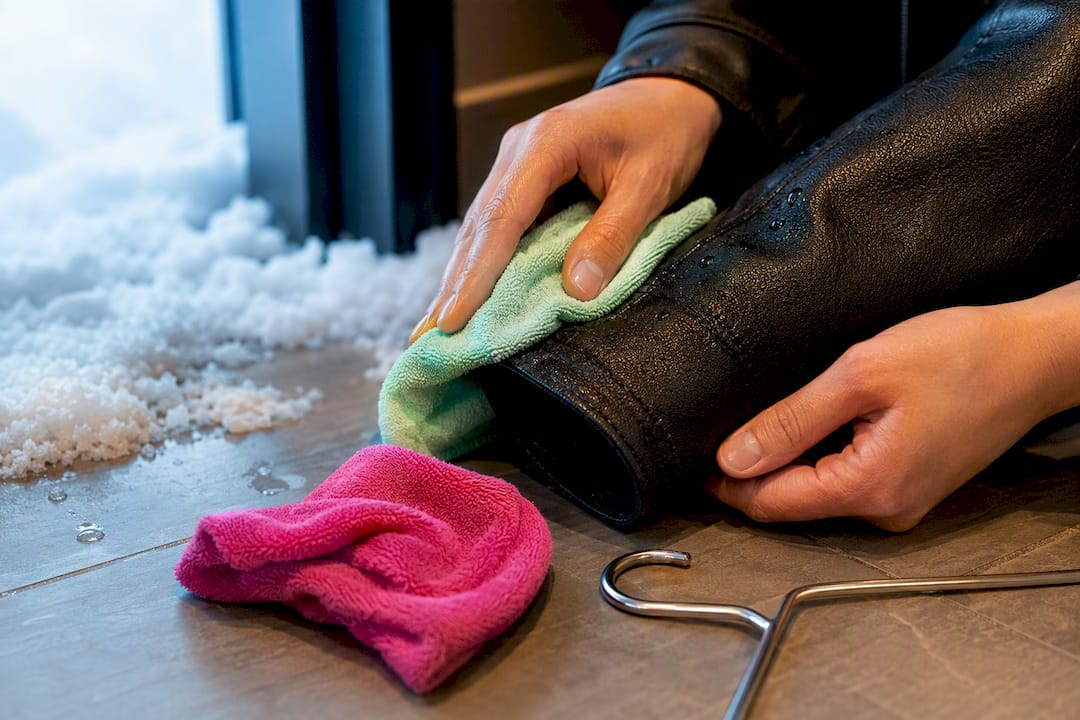
Blot away snow and salt, skip the heat, and let the jacket dry slowly with its shape supported. That single sequence prevents most snow-related damage to leather and suede. Smooth leather usually forgives a little moisture; suede does not, and treats every water drop differently. Get the material-specific steps right in the first hour, and a custom biker jacket or a bespoke motorcycle suit will outlast the season it was built for.
TL;DR:
- Moisture in leather should be sponged away within the first hour with no heat; suede requires immediate blotting and slow air drying to prevent lasting damage.
- Finish leather tolerates snow well if dried correctly, but salt residue can leave dull, chalky films that require gentle cleaning and conditioning; suede is much more vulnerable to salt and water marks.
- Always test waterproofing products on hidden areas first; sprays are safer for dyed jackets, while waxes or oils can darken lighter leathers permanently.
- Severe damage from oil saturation, dye bleeding, or mildew needs professional intervention rather than home remedies.
- Proper storage involves breathable covers, padded hangers, and controlled humidity to prevent long-term damage, especially for prized or bespoke pieces.
Table of Contents
- Quick Action Checklist for the First 24 Hours
- How Do You Clean Smooth Leather After Snow?
- Can You Wear Leather or Suede in the Snow Safely?
- Protecting Custom Patches, Studs, and Painted Details From Snow Damage
- What Waterproofing Actually Works Before Winter?
- When Does a Snow-Damaged Jacket Need a Professional?
- Storing Jackets Between Snowy Seasons
- Why Conservative Care Wins With Custom Jackets
- Get Expert Help With Snow-Damaged or Replacement Jackets
- Sources
- FAQ
Quick Action Checklist for the First 24 Hours
What you do in the first few hours after snow hits your jacket matters more than anything you do later. Salt and mineral residue set into leather fast, and once a stain migrates through the grain, home remedies stop working.
Here’s the sequence to follow the moment you’re back inside:
- Brush off surface snow with a soft brush or dry microfiber cloth before it melts into the fibers or grain.
- Blot, don’t rub, any wet patches with a clean microfiber towel to lift moisture without spreading it.
- Stuff the sleeves and body with rolled towels or acid-free paper to hold the jacket’s shape while it’s still damp. Skip narrow wire hangers until the leather is fully dry, since wet leather stretches under its own weight.
- Wipe visible salt crust gently with a barely damp cloth. If the crust is heavy, a light rinse with distilled water works, but only if you can control the drying afterward. Tap water carries extra minerals that create new white marks.
- Keep it away from radiators, vents, hair dryers, and direct sun. Rapid heat pulls moisture out of the hide unevenly, and that’s what causes stiffening, cracking, and shrinkage rather than the snow itself.
Pro Tip: Lay the jacket flat on a towel-lined surface for the first 20 minutes if it’s soaked through. Gravity and airflow do more work than any tool you own.
How Do You Clean Smooth Leather After Snow?
Finished, chrome-tanned leather (the kind used in most motorcycle and biker jackets) handles snow better than people assume. The tanning process seals the grain, so water tends to sit on the surface rather than soak in. What it doesn’t handle well is road salt, which leaves a dull, chalky film once the moisture evaporates.
The cleaning order matters:
- Wipe away any dried residue with a barely damp cloth, working in small sections.
- Apply a mild leather cleaner made for finished hides, never a household soap or glass cleaner, which strips natural oils.
- Blot the area dry immediately rather than letting cleaner sit.
- Once fully air-dried, work in a light conditioner in thin layers, letting each pass absorb before adding more.
Specialist guidance on motorcycle leather care agrees consistently on one point: clean before you condition. Sealing dirt or salt under a layer of conditioner just traps the abrasive residue against the grain. If the leather feels tacky, ammonia-smelling, or shows dark oil rings after drying, that’s beyond a home fix and worth a professional look. Our leather conditioner guide breaks down which formulas suit different hide finishes.
Can You Wear Leather or Suede in the Snow Safely?
Smooth leather tolerates occasional snow exposure reasonably well when dried correctly. Suede and nubuck are a different story. The raised nap on suede grabs moisture and mineral salt almost instantly, and once a water mark sets, it tends to stay.
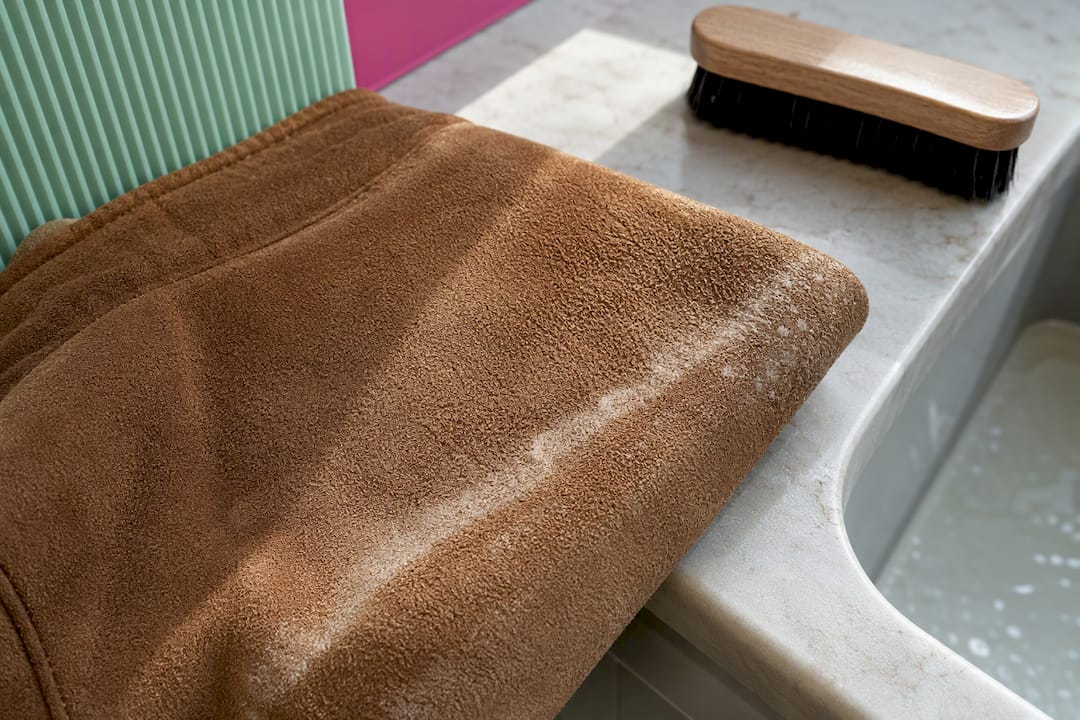
That’s because suede has no sealed grain layer to resist penetration. Water spreads through the nap in an irregular pattern, carrying dissolved salt with it, and the mark left behind is fixed pigment residue, not just a wet patch you can shake out.
If your suede jacket gets snowed on:
- Blot immediately, then stuff it for shape and let it air-dry completely before touching it further.
- Once dry, restore the nap with a suede brush, working in one direction.
- For stubborn marks, a suede eraser lifts light residue; deeper marks need a solvent-based spot treatment rather than water, since restoration specialists note that adding more water only spreads mineral salts further into the nap.
- Apply a suede protectant spray before wear each season, and reapply roughly every three to four months if you wear the jacket often.
Pro Tip: Test any suede spray on the inside hem first. Some sprays darken light-colored suede permanently, and there’s no way to reverse it once it dries.
If you see color loss, a visible tide line ringing the stain, or stiffening in the nap, stop treating it yourself. That’s restoration territory, not a weekend fix.
Protecting Custom Patches, Studs, and Painted Details From Snow Damage
Bespoke jackets with embroidered patches, studs, painted graphics, or fringe need an extra layer of caution, because the cleaning products that are safe for plain leather aren’t always safe for what’s attached to it.
Before treating the whole jacket, test any cleaner or conditioner on a hidden seam or the inside hem. Watch for 10 minutes; if the color shifts or the surface feels tacky, stop and rinse the area with a dry cloth.
A few rules worth following every time:
- Keep solvent-based cleaners away from painted or printed areas unless a specialist recommends that specific product for that finish.
- Dry metal hardware (studs, zippers, snaps) thoroughly and quickly; trapped moisture around metal causes rust bloom and rust stains on surrounding leather.
- Remove detachable patches or pins before deep cleaning if possible, rather than cleaning around them.
- If you notice a patch edge lifting or paint flaking after cleaning, stop immediately. That’s glue-lift or pigment damage, and pushing further usually makes it worse.
What Waterproofing Actually Works Before Winter?
Two categories dominate pre-winter protection: spray repellents and wax or oil-based treatments. Sprays sit on the surface and repel water without changing the leather’s texture much, which makes them the safer default for dyed or custom-colored jackets. Wax and oil treatments penetrate deeper and add real water resistance, but they can darken the leather permanently, especially on lighter dyes.
Before treating a full jacket, run this test:
- Apply a small amount to a hidden area, like the inside cuff.
- Wait a full day and check for darkening, stiffening, or a change in sheen.
- If the finish looks unchanged, treat the rest of the jacket in thin, even passes.
- Let it cure fully before wearing.
Testing protective products on a hidden section first is standard practice among leather-care professionals, since some finishes react unpredictably to oils and waxes. Daily riders should reapply spray protection regularly through winter; occasional wearers can stretch that to once a season. Our waterproofing guide covers product compatibility by leather type in more depth.
When Does a Snow-Damaged Jacket Need a Professional?
Some damage sits past the point where blotting and conditioning help. Watch for oil saturation (a jacket that feels heavy, greasy, or has dark rings spreading outward), tide lines that won’t lift, dye bleeding onto lining, mildew smell, or seams pulling apart at the stress points.
Museum conservators handle comparable damage with solvent poultices and controlled suction-table work to draw oil and moisture out without stressing the hide, methods well beyond home tools. Conservation case studies also show that gradual humidification and slow drying reshape distorted leather far more safely than any quick fix.
- Photograph the damage before shipping or dropping off a jacket.
- Keep it flat or on a padded hanger in transit, never folded.
- Note what happened (snow exposure, drying method used) for the specialist.
Storing Jackets Between Snowy Seasons
Storage habits do as much long-term damage as bad weather does. Plastic bags trap humidity and cause mildew; wire hangers distort shoulders over months of storage.
- Use wide, padded hangers, never wire, and breathable cotton garment bags instead of plastic.
- Stuff sleeves and the body loosely with acid-free tissue or soft paper, not so much that seams stretch.
- Aim for moderate humidity, roughly 40 to 50 percent relative humidity. Too dry and the leather cracks; too damp and mold takes hold.
- Condition once before storage if the jacket saw heavy wet-weather use that season, then again before the next winter’s first wear.
Our jacket storage guide walks through hanger types and humidity control in more detail if you’re setting up long-term storage for multiple pieces.
Why Conservative Care Wins With Custom Jackets
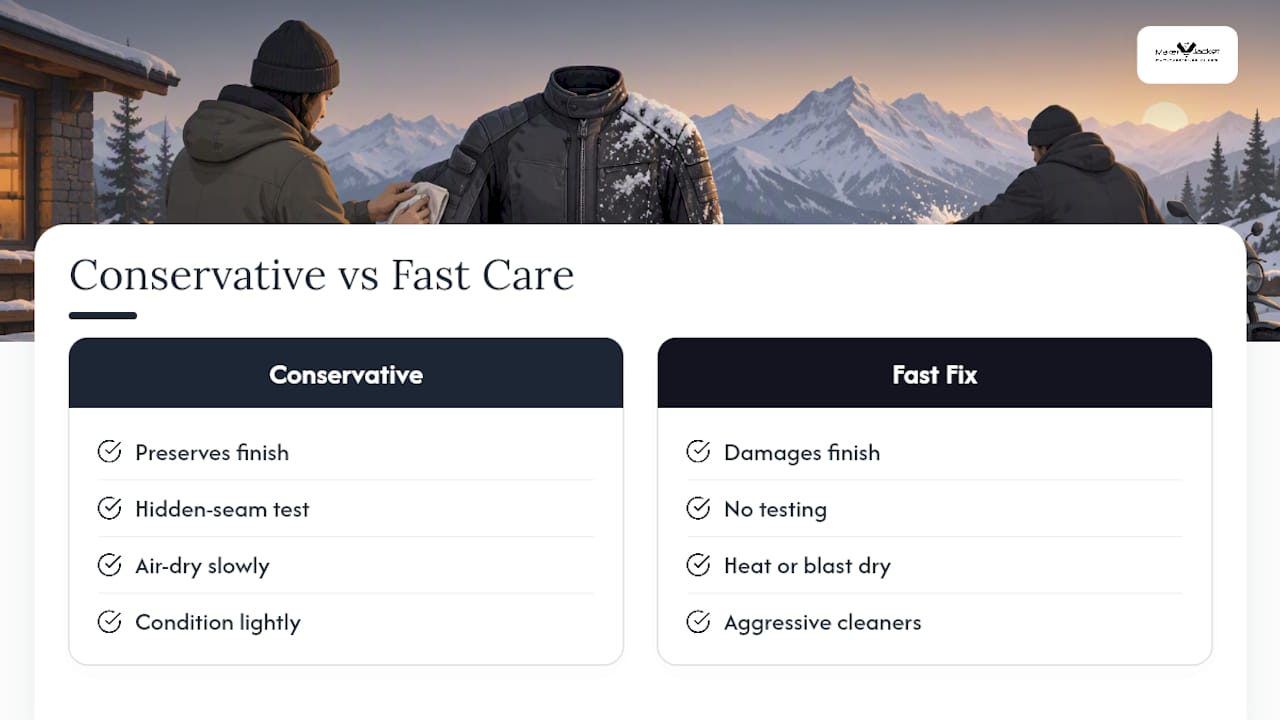
Working around bespoke leather and motorcycle pieces day in and day out teaches you one thing fast: the fastest fix is usually the one that costs you the finish. Every stitched patch, hand-dyed panel, and stud row on a custom jacket is a spot where an aggressive cleaner or a blast of heat can do damage that no amount of conditioner reverses.
The conservative path, testing on a hidden seam, air-drying slowly, conditioning lightly, isn’t cautious for caution’s sake. It’s what keeps a $349 studded jacket or a hand-fitted motorcycle suit looking the way it did on day one. When a jacket carries real sentimental or financial weight, a professional’s judgment is worth more than a home remedy’s speed.
— Maker
Get Expert Help With Snow-Damaged or Replacement Jackets
Each piece is built to individual size and style specifications, using high-quality materials handcrafted by skilled tailors, which means the finish is made to match how you actually wear it. If snow damage has gone past a home fix, or you’re ready to replace a jacket that didn’t survive the season, specialized support is available to talk through the right rebuild for your climate and riding habits.

If salt stains or a hard winter finally wore down your leather, the Customize Jacket Order category lets you rebuild it with the exact fit, color, and hardware you want, backed by worldwide free shipping. For riders logging serious winter miles, the Customize Motorcycle Jacket Order line uses materials suited to repeated exposure rather than fair-weather wear. Severe damage, oil saturation, or historic pieces still call for a conservator, and we’ll say so plainly rather than pushing a product that won’t fix it. Browse the current lineup and start specifying your build today.
Sources
For oil-saturated or historic pieces, museum conservation reports like the buckskin jacket case study detail specialist solvent and suction methods. For product regimens, motorcycle leather-care guidance and this 8-step motorcycle wash routine cover cleaning and conditioning cadence in depth.
- How to Properly Clean and Care for Motorcycle Leather: Pro Guide with SWISSVAX
- Conserving nineteenth-century polar over suit — Royal Museums Greenwich
- Paul Smith Suede Jacket Restoration: Reviving Color and Texture | Baroni Cleaners
FAQ
Can You Wear Leather in the Snow?
Yes, finished leather handles brief snow exposure well because the tanning process seals the grain against moisture. The bigger risk is road salt residue and slow, careless drying, not the snow itself.
How Do You Remove White Salt Stains From a Leather Jacket?
Wipe the residue with a cloth barely dampened with distilled water, then blot dry and condition once fully dry. Our white leather jacket care guide covers stain removal steps for light-colored hides where residue shows most.
Is It Safe to Use a Hair Dryer on a Wet Leather Jacket?
No. Direct heat pulls moisture out unevenly, which causes leather to stiffen, shrink, or crack. Air-dry at room temperature away from vents and radiators, as detailed in our wet leather jacket drying guide.
How Often Should You Condition a Leather Jacket in Winter?
Condition after any significant wet-weather exposure, then again before the next season’s first heavy use. Frequent riders in salt and snow may need it more often since salt exposure dries out natural oils faster than normal wear.
Does Maker of Jacket Offer Custom Replacements for Snow-Damaged Jackets?
Yes. The Customize Jacket Order category starts at $199 for a custom build with your specified materials and sizing. Motorcycle-specific builds and suits are priced separately within the same product category.


