

Fix Leather Wrinkles Safely: Steam 6 to 12 Inches, When to Call a Pro

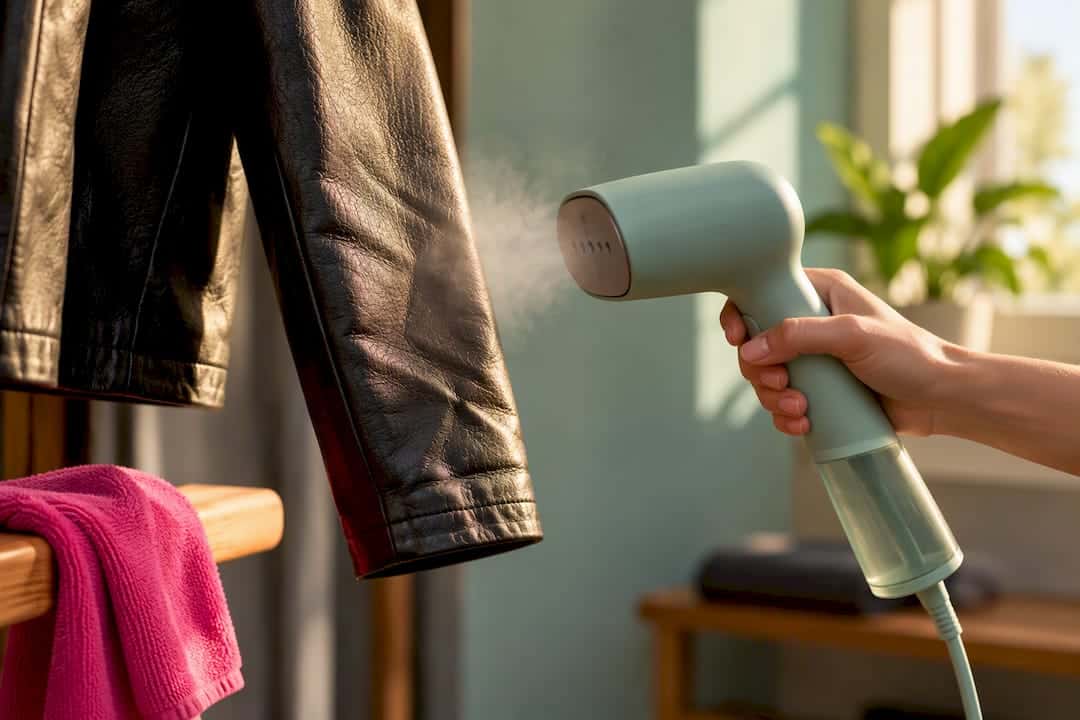
Start with steam held 6 to 12 inches away from the surface, or simply hang the jacket and let gravity work overnight for shallow creases. Always test any method on a hidden spot first, like the inside hem, and skip heat entirely if the leather is thin, vintage, or an unfamiliar finish. Deep, set creases or valuable jackets deserve a professional’s eye, not a hair dryer and hope.
TL;DR:
- Shallow creases in full-grain or top-grain leather may relax with gentle steam held 6 to 12 inches away, but deep creases often require professional treatment.
- Suede and nubuck should never be steamed or ironed, as heat and moisture can damage the raised nap; instead, brush or use a suede eraser for restoration.
- Always test on hidden areas first and avoid heat on thin, vintage, or unfamiliar finishes to prevent damage or peeling.
- Damp cloth and conditioner can soften fibers and reduce minor wrinkles, but this method is less effective on long-set or deep creases.
- When home methods fail, professional cleaning with specialized steam presses is safest, especially for vintage or heavily creased jackets.
Table of Contents
- Assess the wrinkle and your jacket before you start
- Steam method: the safest first move for most jackets
- Damp cloth and conditioner: a gentler way to relax the fibers
- Ironing with a barrier: a last resort for stubborn creases
- Suede and nubuck care: reviving the nap without moisture
- When to choose professional cleaning and what to tell the cleaner
- Prevention: storage and habits that stop wrinkles from coming back
- Maker of Jacket’s shop-tested maintenance tips
- Should you smooth every wrinkle or leave some alone?
- When repair isn’t worth the risk, consider a fresh option
- Sources
- FAQ
Assess the wrinkle and your jacket before you start
Not all leather behaves the same way, so figuring out what you own matters more than picking a method. Full-grain and top-grain leather have visible natural grain and tolerate gentle heat and moisture reasonably well. Bonded leather, which is made from scraps and adhesive, can peel or bubble under the same treatment. Suede and nubuck have a raised nap that steam and irons will flatten permanently, so they need dry techniques instead.
Wrinkle depth matters too. Shallow, flexible creases from sitting or packing often relax with time and light steam. Deep, set lines that have been there for months resist gentler methods and may need the ironing technique in this guide, or a professional’s steam press.
- Check the care label for tannage or finish notes before choosing a method.
- Press a fingernail into the leather; if it springs back quickly, the fibers are still flexible.
- Test whatever product or heat you plan to use on an inside seam or hem first.
Steam method: the safest first move for most jackets
A garment steamer gives you the most control, though holding the jacket over a pot of simmering water or a running shower works if you keep real distance from the heat source. Skip the hair dryer. It concentrates dry heat in one spot and dries out the leather’s natural oils faster than steam ever does.
- Hang the jacket on a sturdy hanger so the leather falls naturally and wrinkles show clearly.
- Hold the steamer 6 to 12 inches from the fabric, never touching the nozzle to the surface.
- Move the steamer continuously in small sections, giving each spot only a second or two of exposure.
- Smooth the warmed leather with your palm in the direction of the grain as you go.
- Let the jacket air dry fully before wearing or storing it, then apply conditioner while the leather is still slightly receptive.
Pro Tip: Work in short passes and keep checking the leather’s surface. If it starts looking shiny, sticky, or unusually dark, stop immediately and let it dry before deciding whether to continue.
Steam won’t do much for creases that have been set for a long time, or for jackets with a damaged or peeling finish. In those cases, moving straight to a professional is often faster and safer than repeated steam sessions.
Damp cloth and conditioner: a gentler way to relax the fibers
Wring out a cloth until it’s just barely damp, not wet, and wipe the wrinkled area lightly to introduce a small amount of moisture into the fibers. Once the leather feels barely damp to the touch, work in a small amount of leather conditioner using circular motions, following the grain rather than fighting it.
- Use a dime-sized amount of conditioner per section; more product doesn’t mean better results.
- Avoid household oils, olive oil, or generic furniture polish, since they aren’t formulated for leather and can darken or clog the surface.
- Let the jacket sit somewhere dry and out of direct sun for a few hours after conditioning.
Applying a leather conditioner every 6 to 12 months helps replenish natural oils and keeps the hide flexible enough to resist creasing, according to Iowa State University Extension. Climates that run dry or see heavy seasonal changes may call for conditioning closer to every six months. Our ultimate guide to leather conditioner breaks down how to pick the right product for your finish.
Ironing with a barrier: a last resort for stubborn creases
Never let an iron touch leather directly. Lay a thick cotton pillowcase or folded cloth over the wrinkled area first, every time, no exceptions.
- Set the jacket flat on an ironing board or table covered with a soft towel.
- Set the iron to its lowest heat setting and turn off any steam function, since some synthetic finishes react badly to added moisture under heat.
- Cover the crease with the cotton barrier, then press briefly with the iron in constant motion, never letting it rest in one spot.
- Check the leather after every pass and stop the moment you notice softening, shine changes, or any smell.
- Let the area cool completely before folding or hanging the jacket again.
Industry guidance on leather production notes that pressing works best when a steam pass is followed immediately by a dry-heat step, since skipping that drying stage leaves the leather moist and prone to pore damage, a risk that increases in casual attempts at home, according to CTL’s guide on removing wrinkles from leather. Skip ironing entirely on bonded or synthetic leather, since the adhesive layers underneath scorch and separate at temperatures real leather tolerates fine.
Suede and nubuck care: reviving the nap without moisture
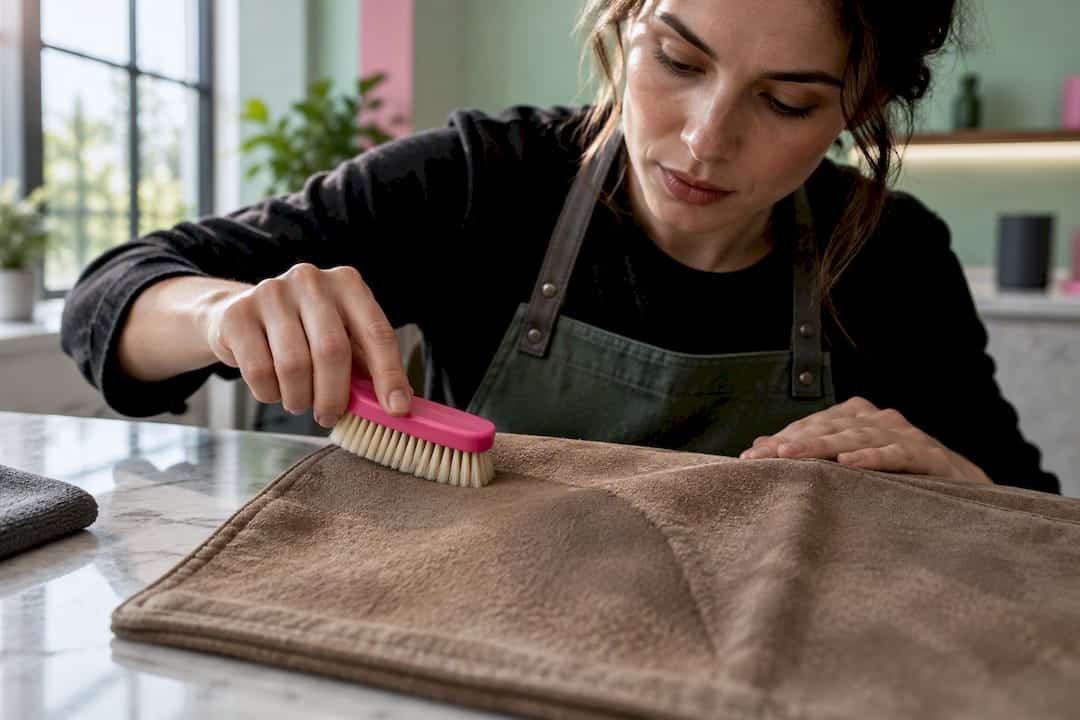
Suede and nubuck don’t respond to steam or irons the way smooth leather does. Both have a raised nap that moisture flattens and heat can singe, so dry tools are the safer route.
- Brush the wrinkled area gently with a suede brush, working in the direction the nap naturally lies.
- Use a suede eraser on flattened or shiny patches to lift the nap back up.
- If the suede gets wet, let it air dry completely flat before brushing, never near a heater or in direct sun.
Pro Tip: Brush suede in short, light strokes rather than long, heavy ones. Aggressive brushing can wear down the nap instead of restoring it.
Heavy matting or deep creases in suede usually call for a professional suede cleaning service rather than more brushing at home.
When to choose professional cleaning and what to tell the cleaner
Some jackets are simply too risky to work on yourself. Vintage pieces, unfamiliar finishes, and creases that don’t budge after gentle steam or conditioning all point toward a professional cleaner.
- Bring any original care labels or tags so the cleaner knows the tannage and finish.
- Mention any past spills, water exposure, or DIY attempts, including what products you used.
- Note where and when the wrinkles first appeared, since that can hint at storage damage versus wear.
Professional cleaning typically involves specialized steam presses, solvent-based cleaning, and reconditioning that go beyond what’s practical at home. Professional dry cleaning for leather can sometimes make relaxed wrinkles more visible once the surrounding leather is cleaned and smoothed, so ask what result to expect before committing.
Prevention: storage and habits that stop wrinkles from coming back
The easiest way to deal with wrinkles is to stop creating new ones. Storage habits matter more than most people realize.
- Use a wide, padded hanger that supports the shoulders, never a thin wire one.
- Store the jacket in a breathable garment bag, not sealed plastic, which traps moisture and encourages creasing.
- Avoid folding leather for long periods; hanging keeps the hide’s own weight from setting new lines.
- When traveling, wear the jacket on the plane or roll it loosely inside a garment folder surrounded by soft clothing.
- Air the jacket out after wet weather and follow a regular conditioning schedule rather than waiting for damage to show.
Our guides on storing leather jackets and packing for travel go into more detail on hanger types and folding alternatives.
Maker of Jacket’s shop-tested maintenance tips
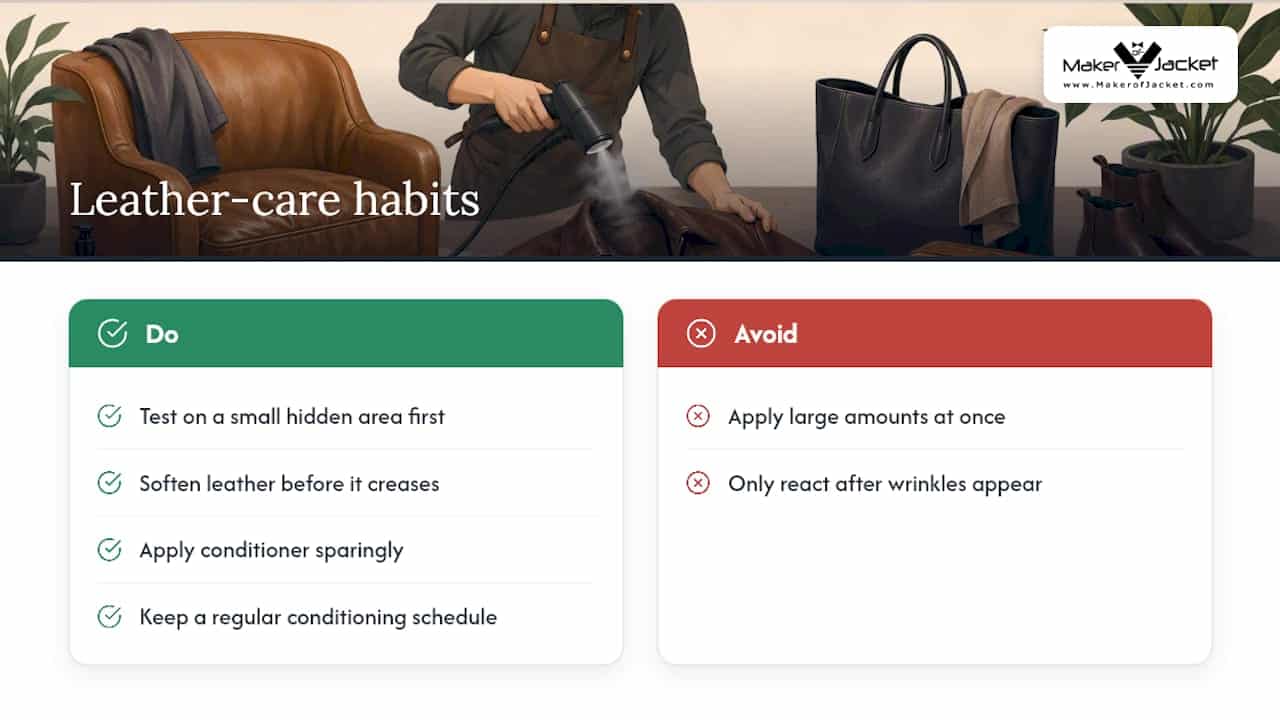
We put together a dedicated page on how to remove wrinkles from leather jackets and a quick-reference checklist for readers who want a faster rundown. For softening stiff leather before it creases further, see our guide on how to soften your leather jacket. The habits that matter most: test small, use a little conditioner at a time, and keep a regular conditioning schedule instead of reacting only when wrinkles show up.
Should you smooth every wrinkle or leave some alone?
Not every wrinkle is a flaw. Soft creasing at the elbows and across the back is part of how leather ages, and on a well-worn biker or bomber jacket, that character often looks better than a stiff, freshly pressed surface. Save aggressive correction for creases that actually bother you or affect fit, and let everyday wear do the rest.
— Maker
When repair isn’t worth the risk, consider a fresh option
Some jackets have taken too much damage for steam, conditioner, or a careful iron to fix safely, and that’s a fair moment to consider a replacement instead of chasing a crease that won’t quit.

Custom jackets including biker, bomber, trench, and fashion styles are available, made from high-quality materials and designed to suit individual size and style preferences rather than off-the-rack options. If your current jacket is beyond safe repair, browse the custom jacket order page to start one built the way you want it, or reach out to our support team with fit and care questions before you buy.
Sources
- Leather Care Tips • AnswerLine • Iowa State University Extension and Outreach
- Dry Clean Leather Jacket – All For One
- CTL – Removing Wrinkles, Marks and Creases in Leather (PDF)
FAQ
Can you steam wrinkles out of a leather jacket?
Yes, steam held 6 to 12 inches from the surface and moved continuously can relax shallow creases in full-grain and top-grain leather. Always dry and recondition the jacket right after steaming, and avoid steam entirely on suede or nubuck.
Can I iron wrinkles out of leather?
Ironing works only as a last resort, and never directly against the leather. Place a thick cotton barrier over the crease, use the lowest heat setting with no steam function, and keep the iron moving to avoid scorching or stripping the finish.
Can wrinkles be removed from leather?
Shallow, flexible wrinkles usually respond well to steam, hanging, or a damp cloth followed by conditioner. Deep, set creases are harder to fully remove at home and may need a professional’s steam press or reconditioning treatment, per guidance on professional leather cleaning.
How do you flatten out creased leather?
Start with the gentlest option: hang the jacket and let gravity relax light creases over a day or two, or apply careful steam from a safe distance. For creases that don’t budge, move to the barrier-ironing method described above, testing a hidden spot first, or send the jacket to a professional cleaner.


