

95% Fixation: Drum Dyed Leather for Crafters and Custom Jackets

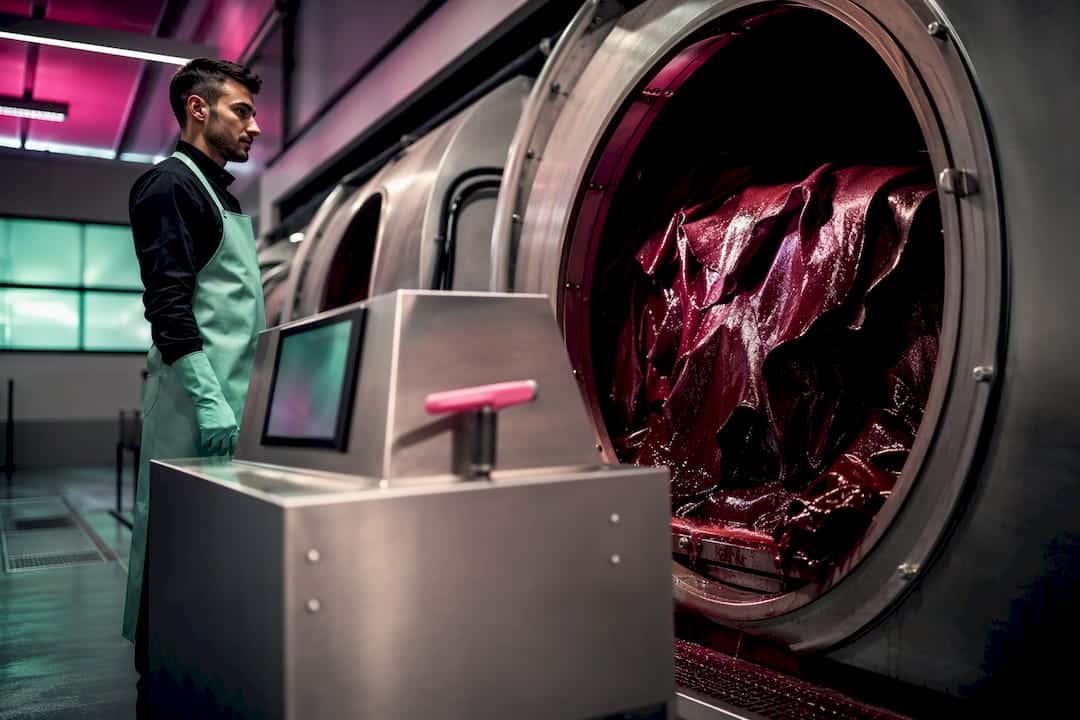
Drum dyed leather is leather dyed through the hide so color penetrates the full thickness, delivering deeper, longer-lasting color and predictable aging. Because the dye reaches beyond the surface, scratches and worn edges tend to show the same tone underneath rather than a lighter core. Expect natural variation from hide to hide, and always ask for swatches or a cut sample before committing to a full order.
TL;DR:
- Only full-grain and aniline leathers absorb dye deeply enough to develop natural character and patina over time, making them ideal for aging gracefully.
- Drum dyeing involves tumbling hides in heated tanks for hours, ensuring dye penetrates fully into the leather, unlike DIY methods that produce uneven surface color.
- Over 95% of dye bonds covalently with collagen fibers during proper drum dyeing, resulting in colorfast leather that resists washing out or fading in light.
- Surface testing, requesting cross-section images, and inspecting for pigment transfer are necessary steps to confirm if leather is truly drum dyed before purchase.
- Drum-dyed leather is typically more expensive and uses more dye than spray or pigmented finishes but offers better aging and a more natural look suited for characterful pieces.
Table of Contents
- How the drum dyeing process actually works
- Which leathers take drum dye best
- What the technical data says about fixation and colorfastness
- Drum dyeing versus spray, hand rub, and pigmented finishes
- How to inspect and buy drum dyed hides or jackets
- Caring for drum dyed leather over time
- How we think about drum dyed leather at Maker of Jacket
- Order a custom jacket in drum dyed leather
- Sources
- FAQ
How the drum dyeing process actually works
Drum dyeing gets its name from the equipment: hides are loaded into a large rotating drum along with a dye solution, then tumbled so the liquid works into the fibers rather than just sitting on top. The mechanical action of the drum, paired with sustained soaking time, is what pushes color through the cross-section instead of leaving it stranded near the grain. Prima Chemicals describes this immersion and tumbling process as the defining feature that separates drum dyeing from spray or surface coating.
Tanneries run this step with real controls in place:
- Temperature is held in a defined process window, tannery documentation on cow leather processing notes drums are used for chemical reactions, dyeing, and both wet-end and dry milling.
- Cycles run for hours, not minutes, giving the dye time to migrate fully into the hide.
- Drum material, typically wood or polypropylene, affects how gently or aggressively the mechanical action works the leather.
A home tumbler or bucket soak cannot match this. Without controlled temperature, timed agitation, and the chemistry that fixes dye to collagen, DIY attempts usually produce uneven surface color rather than a true through-dye result.
Which leathers take drum dye best
Not every hide behaves the same way once it hits the drum, and the leather type sets expectations for both look and upkeep.
- Aniline and full-grain leather absorb dye deepest, keeping natural markings visible and developing a rich patina over time. This is the category most prized for premium garments and small leather goods, and our guide to aniline leather characteristics and care covers what to expect as it ages.
- Semi-aniline, corrected, and pigmented leathers favor uniform color and easier daily care over depth, often relying on a surface pigment layer rather than full penetration.
- Suede, nubuck, and milled leathers take on a distinct texture after drum dyeing, since the napped or heavily milled surface scatters light differently than a smooth grain. Milled variations such as NDM, PDM, and YDM each handle dye and texture differently, as Volere’s comparison of natural dyed milled leather types explains.
Matching the leather type to the intended use matters more than chasing a single “best” option. A jacket meant to age with character calls for aniline. A piece that needs to resist stains and stay consistent calls for a pigmented finish.
What the technical data says about fixation and colorfastness
The science behind drum dyeing centers on how well dye molecules bond to the collagen fibers in the hide, and that bond determines whether color stays put or migrates.
Modern reactive dyeing can fix more than 95% of applied dye to the leather, according to research on covalent fixation of drum dyes to collagen, which means less dye washes out or transfers onto clothing over time. That level of fixation depends on running the process within the right temperature range and using dye chemistry suited to the hide.
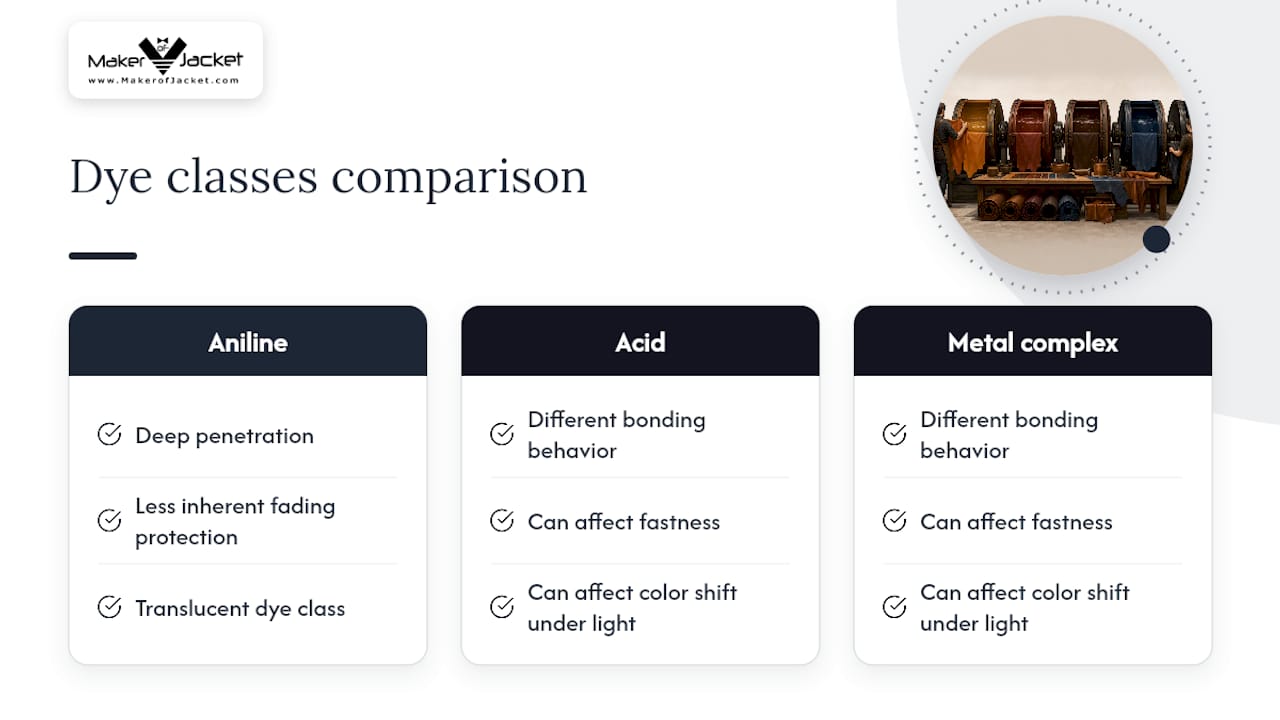
Dye class matters too. Aniline and other translucent dyes penetrate deeply but offer less inherent protection against fading, while acid and metal complex dyes bond differently and can affect both fastness and how the color shifts under light. Suppliers who cannot speak to their dye chemistry or fixation practices are harder to evaluate on quality.
Environmental impact is part of the same conversation. A review of leather processing’s environmental footprint notes that dyeing operations generate colored wastewater and that dye losses vary by process, making effluent handling worth asking about when choosing a tannery or supplier.
Drum dyeing versus spray, hand rub, and pigmented finishes
Drum dyeing is one of several ways to add color to leather, and each method trades off differently on durability, cost, and repair.
- Depth and patina: drum dyeing penetrates the hide, so scuffs age gracefully instead of exposing a pale core.
- Scalability: batch processing in a drum suits production runs better than hand application does.
- Trade-offs: drum dyeing uses more dye per hide and can show batch-to-batch variation, and it typically offers less built-in surface protection than a pigmented topcoat.
If stain resistance and uniform color across every panel are the priority, pigmented or coated leather is the more practical choice. If natural character and a color that ages honestly matter more, drum-dyed aniline wins.
How to inspect and buy drum dyed hides or jackets
Verifying a drum-dye claim takes a few concrete checks rather than trusting a label.
- Ask the supplier directly how the leather was dyed, and request photos of a cross-section or a cut edge showing color depth.
- Request a swatch or a small offcut sample before ordering a full hide or finished piece.
- Run a quick water-drop test on the surface. Water that beads up suggests a topcoat, while water that darkens the leather slightly points to a more open, dye-receptive surface.
- Rub a light cloth against the grain to check for pigment transfer, which signals a surface coating rather than through-dye.
Slight tone variation between panels is normal and often a sign of genuine hide-to-hide difference rather than a flaw. A problem shows up when color sits only on the surface, rubs off easily, or looks flat and plastic-like across the whole piece.
Pro Tip: Keep any swatch you approve and compare it against the finished product before final payment: color that looks identical under store lighting can shift once you see it in daylight.
Caring for drum dyed leather over time
Routine care keeps drum-dyed color looking its best without stripping the finish that protects it.
- Wipe down with a soft, dry cloth regularly and condition periodically using a product suited to the leather type, as covered in our ultimate guide to leather conditioner.
- Avoid harsh solvents or aggressive cleaning that can pull dye toward the surface unevenly.
- Test a hidden spot before applying any conditioner or dye to check how the leather absorbs it.
Factory topcoats often block aftermarket dye from penetrating, which is why re-dyeing a finished jacket rarely matches the original depth. Minor scuffs on true through-dyed aniline usually blend in on their own, but larger repairs or color correction are best left to a professional. Our broader guide on how to care for leather covers day-to-day maintenance for finished goods.
How we think about drum dyed leather at Maker of Jacket
Selecting leather for a custom jacket means weighing hide type, finish, and how the customer plans to wear it over years, not just the first season. We favor drum-dyed hides for pieces meant to develop character, since the color holds up as the leather creases and softens. When customers want that look, we recommend they specify hide type and finish upfront and ask to see swatches, the same steps any careful buyer should take before ordering. You can see the range of finished results in our brown leather jackets collection.
— Maker
Order a custom jacket in drum dyed leather

If you would rather skip sourcing hides and running your own quality checks, we build custom jackets using drum-dyed leather selected for depth of color and consistent aging. You choose the size, style, and finish, and the rest of the process handles matching the leather to the desired look, whether a biker silhouette or a fashion cut.
| Product line | Price |
|---|---|
| Custom Biker Jacket | $249 |
| Custom Bomber Jacket | $249 |
| Custom Suede Leather Jacket | $299 |
| Custom Trench Coat | $399 |
Start your order through our customize order collection and specify drum-dyed leather and your preferred finish when you submit the details.
Sources
This article draws on tannery process documentation, a peer-reviewed leather chemistry article, and an environmental review to back its technical claims.
- Leather dyeing techniques — Prima Chemicals
- Covalent fixation of drum dyes to collagen | JALCA article (download)
- Modern Cow Leather Processing (Buckman technical note)
- Environmental impact of leather processing — PMC review
FAQ
Is there any color you can’t dye leather?
Very light or pastel shades are hard to achieve on darker hides since drum dyeing adds color rather than removing it, and the natural hide tone limits how light the final result can go. Lightening leather typically requires bleaching or starting with a naturally pale hide rather than dyeing alone.
Can leather be dyed?
Yes, leather can be dyed through several methods, including drum dyeing, spraying, and hand application, each producing different depth and durability of color. Drum dyeing penetrates through the hide, while spray and pigment methods tend to sit closer to the surface.
What is the real color of leather?
Untreated, undyed leather typically has a natural tan or light brown tone that varies by animal and tanning method, which is why tanneries dye it to achieve the wide range of colors seen in finished goods. Vegetable tanned leather in particular starts with a warm, neutral base before any dye is applied.
When you dye leather, do you dye both sides?
Drum dyeing colors the leather through its full thickness, so both the grain side and the flesh side pick up color rather than just the surface a spray or hand-rub method would reach. That through-color is one of the clearest signs a hide went through genuine drum dyeing rather than surface treatment.


