

How to verify jacket quality: step-by-step guide

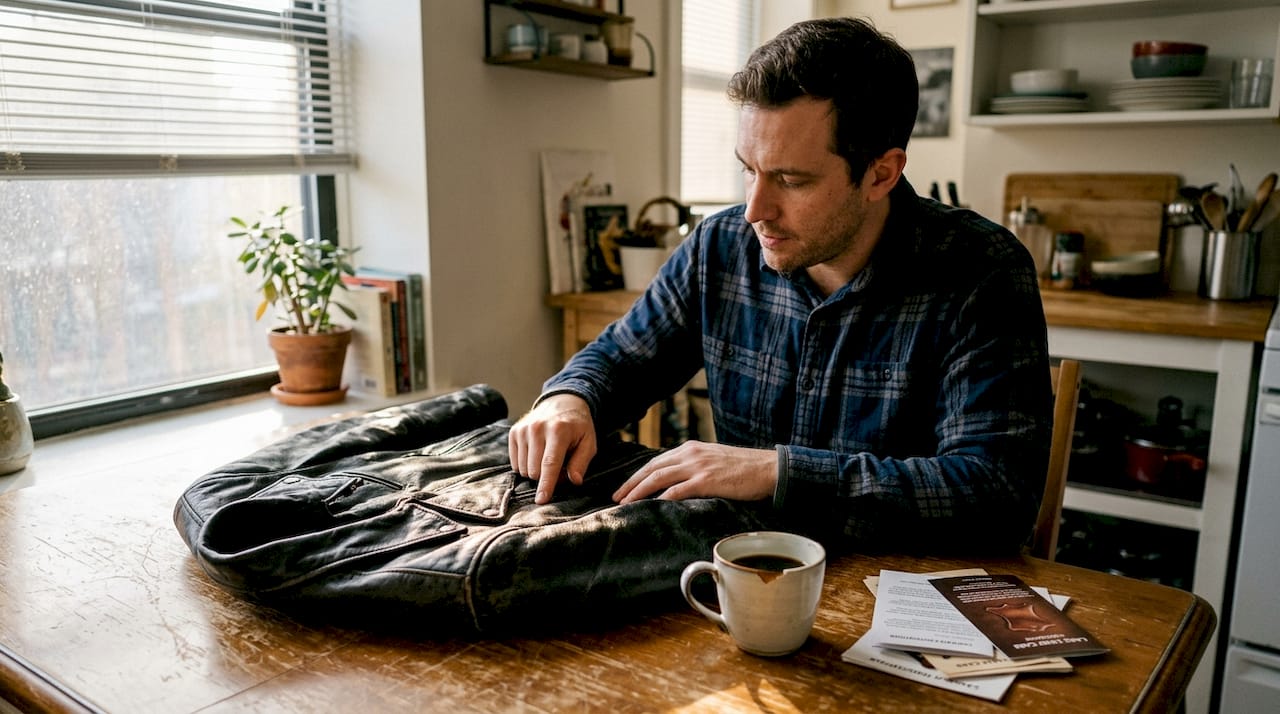
You spend real money on a leather jacket, it arrives looking sharp, and six months later the surface is peeling like a sunburn. It happens more than you’d think. Thrifters and collectors are regularly disappointed by low-quality or fake leather sold at premium prices. The good news is that you don’t need to be a leather industry insider to spot the difference. This guide walks you through every practical step, from pre-inspection prep to post-purchase expectations, so you can buy with confidence every single time.
Table of Contents
- What you need before inspecting a jacket
- Step-by-step: How to assess leather quality
- Inspecting craftsmanship: Construction, stitching, and hardware
- Lining, interior, and protective features
- Expert tips: Brand signatures, patina, and price cues
- Troubleshooting and avoiding common mistakes
- What to expect from a high-quality jacket purchase
- Get the perfect high-quality jacket—customized for you
- Frequently asked questions
Key Takeaways
| Point | Details |
|---|---|
| Check leather type | Full-grain leather is most durable and develops a unique patina, while bonded leather peels quickly. |
| Inspect build details | Tight, even stitching, premium hardware, and quality lining set top jackets apart. |
| Test with your senses | Smell, feel, weight, and simple tests like water droplets reveal real leather. |
| Watch for expert cues | Brand signatures, genuine aging, and realistic prices signal authenticity and long-term value. |
What you need before inspecting a jacket
Before you even touch a jacket, get prepared to make the most out of your inspection. Walking in blind is how buyers end up with bonded leather dressed up as full-grain. A little preparation changes everything.
First, understand the leather hierarchy. Full-grain vs top-grain leather is not just marketing language. Full-grain is the strongest, most natural layer of the hide. Top-grain is sanded down for a uniform look but loses some durability. Genuine leather and bonded leather sit much lower on the quality scale, with bonded being little more than leather scraps glued together.
Here’s what to bring to any jacket inspection:
- Magnifying glass to examine grain texture and stitching
- Bright flashlight or phone light to check for surface inconsistencies
- Tape measure to verify sizing against the brand’s size chart
- A single drop of water for the absorption test (more on this below)
- Your nose — real leather has a distinct earthy smell that synthetics can’t replicate
Set your expectations based on price. Premium jackets typically use 1.2–1.4mm thick full-grain steerhide for durability, while inferior ones use bonded or split leather. If you’re shopping for a motorcycle jacket specifically, also check for CE-rated armor pockets and a minimum leather thickness that meets abrasion resistance standards.
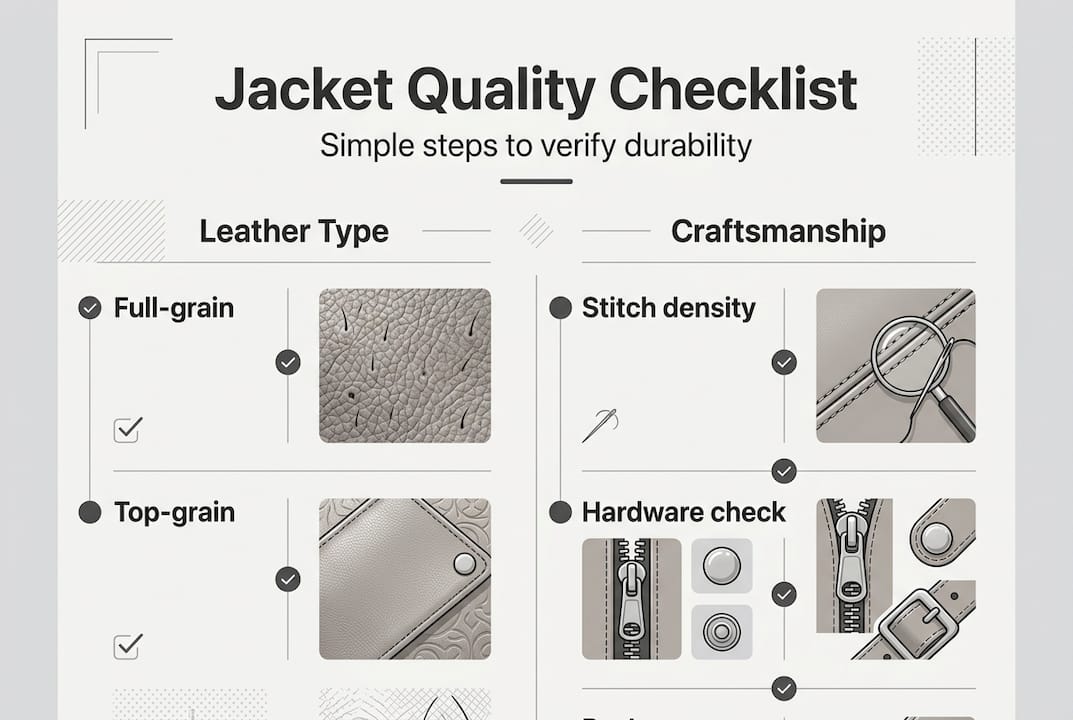
Pro Tip: Before shopping in person or online, spend 10 minutes learning to identify genuine leather by its grain pattern. Natural leather has irregular, organic texture. Faux leather looks almost too perfect.
Step-by-step: How to assess leather quality
Now that you’re equipped, let’s put your senses and tools to work with these practical inspection steps.
- Smell it. Real leather has an earthy, slightly musky scent. Faux leather smells like plastic or chemicals. This single test eliminates a huge percentage of fakes immediately.
- Feel the weight. Genuine leather is heavier than synthetic alternatives. Pick up the jacket and notice whether it has real substance or feels hollow and light.
- Check the grain. Run your fingers across the surface. Natural grain is irregular and slightly textured. If it looks machine-perfect, it’s likely faux vs real leather.
- Do the water drop test. Place one small drop of water on an inconspicuous area. Real leather absorbs water and darkens slightly. Faux leather beads the water up.
- Flex and wrinkle test. Pinch and bend a small section. Genuine leather wrinkles naturally, just like skin. Synthetics crease in a stiff, unnatural way.
- Measure thickness. Use a leather gauge or ask the seller. Premium thickness sits at 1.2–1.4mm for steerhide.
- Look at the edges. Raw leather edges show fibrous texture. Bonded or faux leather edges look smooth, painted, or plastic-coated.
For motorcycle riders, thickness and abrasion resistance matter far more than initial softness. A jacket that feels stiff at first is often the one that protects you best in a slide. Full-grain leather develops patina over years of wear, while bonded leather peels and can’t be repaired.
Red flags to watch for: a plasticky sheen, perfectly uniform texture across the entire surface, uneven dye that looks sprayed on, or a jacket that feels paper-thin. Expert jacket collectors consistently flag these as signs of low-grade materials.
Pro Tip: To spot fake leather on the back panel, look at the underside of the jacket near the hem. Real leather shows a suede-like fibrous backing. Faux leather has a fabric or mesh backing that’s clearly synthetic.
Inspecting craftsmanship: Construction, stitching, and hardware
After confirming the leather itself, a close look at how the jacket is built will reveal much about its overall quality.
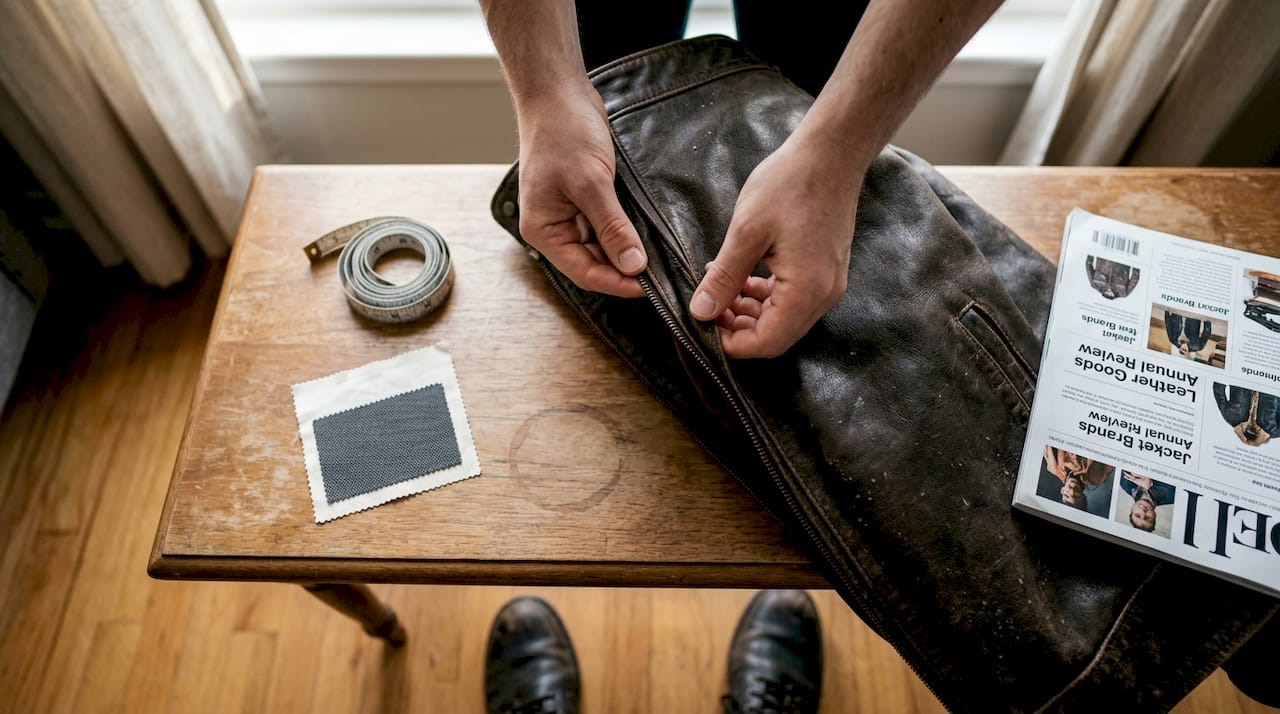
Stitching is one of the clearest quality signals. Quality jackets feature 8–12 stitches per inch, double-stitched at stress points like armholes and pocket openings, with finished edges throughout. Count the stitches on a one-inch section. If you’re seeing fewer than 8, the seams will fail under regular use.
| Feature | High quality | Low quality |
|---|---|---|
| Stitches per inch | 8–12 SPI | Fewer than 8 SPI |
| Stress point stitching | Double-stitched | Single-stitched |
| Zipper brand | YKK, Talon, RiRi | Unbranded |
| Snap hardware | Solid metal, branded | Lightweight, plastic-feel |
| Edge finishing | Clean, sealed | Raw or fraying |
| Lining attachment | Smooth, no bunching | Loose, uneven |
Hardware quality is non-negotiable on a premium jacket. Branded zippers from YKK, Talon, or RiRi glide smoothly and resist corrosion. Cheap zippers snag, corrode, and break. Snap closures should feel solid and click firmly. Wiggle them. If they feel loose or hollow, they’ll fail.
“Even tight stitching, quality hardware, and finished edges are hallmarks of excellent jackets — and a stitching defect rate under 2% is the industry standard.”
Check the lining attachment by running your hand inside the jacket. It should lie flat with no bunching, pulling, or excess material. Loose lining is a sign of rushed construction. Look at quality jacket features to understand what separates a well-built jacket from a shortcut-heavy one.
Lining, interior, and protective features
Don’t let the flawless exterior fool you. The inside of a jacket reveals both comfort and longevity.
A quality lining should be smooth, breathable, and firmly attached. Well-attached linings made from cotton, satin, or viscose and poly blends are a hallmark of quality construction. For motorcycle jackets, look for abrasion-resistant inner layers or removable CE-rated armor at the shoulders, elbows, and back.
Here’s a quick interior checklist:
- No snagging when you slide your arm through the sleeve
- No excess material bunching at the shoulders or underarms
- No tears or loose threads anywhere along the lining seams
- Care label present with material composition and washing instructions
- Armor pockets clearly labeled and accessible (motorcycle jackets)
- No hidden damage in secondhand pieces, especially near the collar and cuffs
| Lining material | Best for | Comfort level |
|---|---|---|
| Cotton | Casual, warm climates | High breathability |
| Satin | Fashion, dress wear | Smooth, luxurious feel |
| Viscose/poly blend | Everyday wear | Balanced comfort |
| Abrasion-resistant layer | Motorcycle use | Safety-focused |
For more guidance on interior materials, picking a jacket lining is a decision that affects both daily comfort and long-term wearability. Motorcycle riders should also review motorcycle jacket safety features before committing to a purchase.
Expert tips: Brand signatures, patina, and price cues
Having mastered the basics, let’s look at deeper signs only experts and enthusiasts use to confirm jacket pedigree.
Brands like Schott and Belstaff leave specific signatures. Schott uses embossed labels, numbered hardware, and a distinctive break-in feel that stiff steerhide produces. Schott steerhide jackets can last 10–20 years or more, with a break-in period of 8–12 weeks. If a jacket claiming to be Schott feels immediately soft and pliable, that’s a red flag.
Patina is the natural aging process of full-grain leather. It’s a feature, not a flaw. Over time, the leather darkens, softens, and develops a unique character based on how you wear it. Full-grain leather develops patina while bonded leather simply peels and cracks. You may also notice a white, powdery residue on aged real leather. That’s fatty acid spew, a sign of genuine aged hide.
Price is a reliable signal. A price under $800 for a new jacket generally indicates lower-quality materials or construction shortcuts. Here’s a rough breakdown:
- Under $300: Likely genuine or bonded leather, minimal hardware quality
- $300–$600: Top-grain leather, decent construction, limited customization
- $600–$800: High top-grain or entry full-grain, solid hardware
- $800 and above: Full-grain steerhide or horsehide, premium hardware, long lifespan
Pro Tip: When choosing a motorcycle jacket, never prioritize price over protection. A jacket that costs $400 less but lacks proper armor and thickness is not a deal. It’s a liability.
Troubleshooting and avoiding common mistakes
Even with the right knowledge, buyers fall for common traps. Here’s how to sidestep them.
- Confusing leather grades. Bonded and genuine leather are often marketed with vague terms like “real leather” or “leather blend.” Always ask for the specific grade.
- Ignoring hardware. Buyers focus on the leather and overlook zippers and snaps. Cheap hardware fails first and is expensive to replace.
- Skipping the fit check. Leather is extremely difficult to alter. Unlike fabric jackets, a leather jacket that’s too tight in the shoulders or too short in the torso is essentially unwearable. Try it on fully before buying.
- Trusting photos alone online. Request close-up images of stitching, hardware, lining, and edges. A seller who won’t provide them is hiding something.
- Dismissing return policies. Always confirm the return window before purchasing. If a seller offers no returns on a premium-priced jacket, walk away.
Bonded leather jackets peel quickly, can’t be easily repaired, and are often misrepresented as real leather. Careful inspection prevents post-purchase regret.
Key questions to ask any seller: What is the leather grade? What is the hide source? What hardware brand is used? Is there a warranty or return policy?
Pro Tip: If you’re buying secondhand, use the spotting fakes checklist on every jacket regardless of the asking price. Sellers sometimes mislabel jackets unintentionally, not just fraudulently.
What to expect from a high-quality jacket purchase
Once you’ve found your perfect jacket, here’s what comes next for a lasting relationship.
Expect stiffness at first. Full-grain steerhide and horsehide jackets are firm when new. That’s normal. High-end jackets like Schott last 10–20 years or more, with a break-in period of 8–12 weeks of regular wear. The leather softens and molds to your body over time, becoming more comfortable the longer you own it.
Here’s what to expect and how to manage it:
- Initial stiffness: Wear it around the house before committing to long outings
- Minor scuffs: These add character. Light buffing with a leather conditioner handles most surface marks
- Patina development: Embrace it. Uneven color and natural darkening are signs of authentic aging
- Odor changes: Real leather smell evolves with wear. Use a leather conditioner to keep it fresh
- Post-purchase issues: If you discover a defect within the return window, document it with photos immediately
For ongoing care, follow a regular conditioning schedule. Leather care tips cover everything from cleaning methods to storage, which directly affects how long your jacket lasts. Professional cleaning is worth the cost once a year for heavily worn jackets.
Pro Tip: Store your leather jacket on a wide, padded hanger. Wire hangers distort the shoulders over time, and folding leather causes permanent creases.
Get the perfect high-quality jacket—customized for you
Ready to put this expertise to use? Here’s how to get a jacket quality you can trust and make it uniquely yours.
Knowing how to verify jacket quality is powerful. But buying from a source that builds quality in from the start removes most of the guesswork. At Maker of Jacket, every piece is crafted with full-grain leather options, premium hardware, and construction standards that match everything covered in this guide.
You can customize your jacket from the leather grade and color to the lining material and hardware finish. Whether you’re after a biker jacket built for the road or a fashion piece that turns heads, the customization journey puts every decision in your hands. When you’re ready to move from research to ownership, order your custom jacket and get exactly what you’ve been looking for.
Frequently asked questions
How can I quickly tell if a leather jacket is real or fake?
Real leather has a unique earthy smell, feels warm and grainy, wrinkles when flexed, and darkens slightly when a tiny water droplet is applied to the surface.
What is the ideal leather thickness for a quality jacket?
Premium jackets feature 1.2–1.4mm thick leather, which provides both durability and a substantial, reassuring feel when worn.
Why does price matter for jacket quality?
Jackets priced under $800 new are usually made with lower-grade materials; higher-end pieces use better hides, hardware, and construction that extend the jacket’s lifespan significantly.
How long should a real leather jacket last?
A well-cared-for premium jacket can last 10–20 years or more with regular conditioning and proper storage.
What helps a jacket develop a unique patina?
Full-grain leather develops patina naturally through wear and exposure to the elements. Bonded leather cannot develop patina and instead peels and cracks over time.
Recommended
- Step-by-step varsity jacket buying guide for style and durability – Maker of Jacket
- Step-by-Step Guide to Picking Jacket Styles for You – Maker of Jacket
- How to Spot Fake Leather: Master Identification Techniques – Maker of Jacket
- How to Order from Maker of Jacket | Step-by-Step Guide
- How to spot designer dresses: expert guide for 2026 – DressMeUpNY


