

Why Branded Jackets Matter: Style, Safety, Identity

TL;DR:
- Branded jackets symbolize identity, craftsmanship, and community rather than just logo display.
- Safety and protection depend on quality materials, armor, and standards, not brand name.
- True value lies in fit, construction, durability, and personal customization, not just prestige.
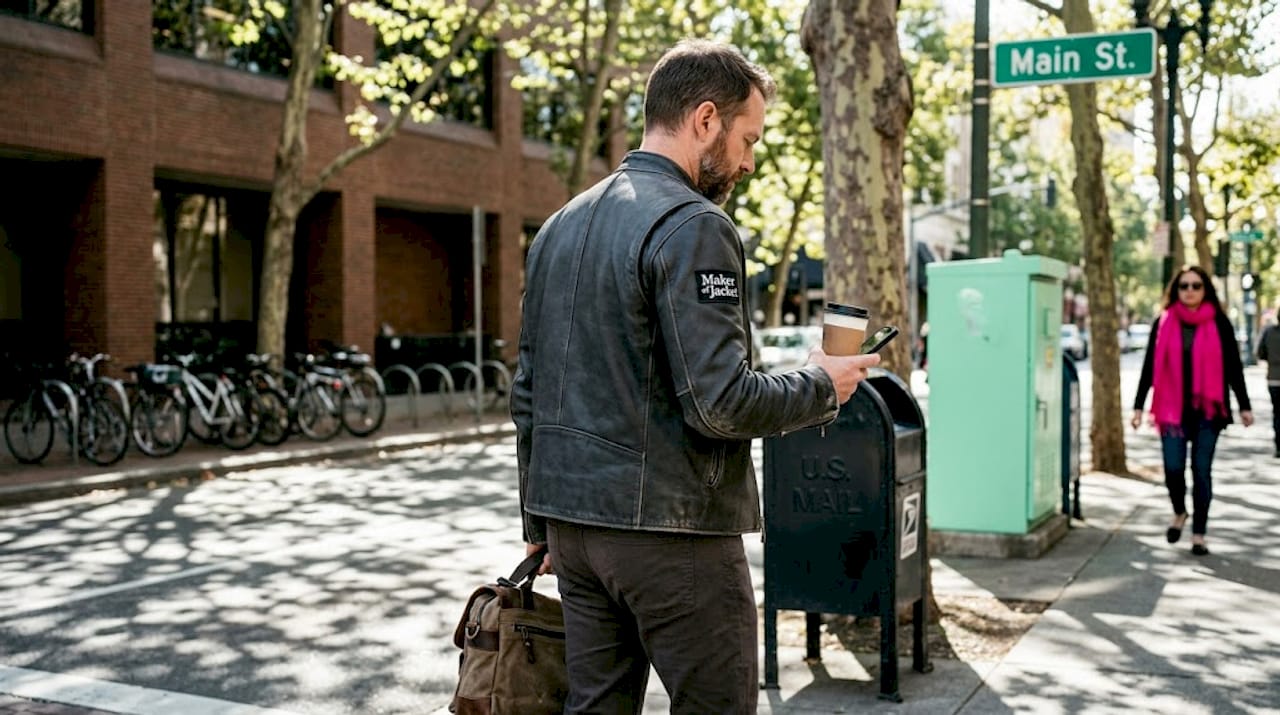
Most people assume that slapping a recognizable logo on a jacket automatically makes it worth buying. That assumption can cost you both money and, for riders, real physical protection. A branded jacket carries far more weight than a stitched emblem on the chest. It speaks to who you are before you say a word, signals your values to others on the street or the highway, and, when chosen wisely, delivers genuine technical performance. This article breaks down exactly what makes a branded jacket meaningful, how to separate real quality from marketing noise, and how to make a purchase you will actually feel proud to wear for years.
Table of Contents
- The power of branded jackets: Beyond the label
- Function and safety: Not all jackets are created equal
- What makes a branded jacket worth it?
- Brand prestige vs. real value: Decoding the price
- A fresh perspective: Why your jacket should tell your story
- Find your signature piece with Maker of Jacket
- Frequently asked questions
Key Takeaways
| Point | Details |
|---|---|
| Expression and identity | Branded jackets provide a canvas for sharing your unique style and personal story. |
| Safety is not automatic | A branded logo alone does not ensure real-world protection or durability—always verify credentials. |
| Real value checklist | Fit, material, safety features, and cost-per-wear matter more than just the price or name tag. |
| Customization counts | Personalized features boost emotional connection and practical performance. |
The power of branded jackets: Beyond the label
Having introduced the misconception around branded jackets, let’s explore what really makes them significant.
A jacket is one of the few garments that carries weight in almost every social context. You wear it at work, on the road, at concerts, at dinners, and everywhere in between. Because of that versatility, jackets in fashion have evolved into something closer to personal architecture than clothing. They frame how others perceive you, and, just as importantly, how you perceive yourself when you catch your reflection.
The idea of a jacket as a canvas for personal identity goes back decades. Think of the classic biker jacket worn by counterculture icons in the 1950s, or the varsity jacket that signaled school pride and athletic belonging. These weren’t just garments. They were declarations. Today that tradition continues at the highest levels of design, where ELLE describes leather jackets as culturally meaningful, recognizing their power as a vehicle for self-expression, runway presence, and lasting style investment.
“A jacket doesn’t just cover your body. It communicates your story to everyone who sees you. The right one can be a lifetime investment in both identity and craftsmanship.”
That cultural resonance has moved well beyond runways and movie sets. Custom patches, unique colorways, embroidered names, and personalized hardware have made personalized jackets for self-expression a genuine movement. People are no longer content to wear exactly what the brand designed for the masses. They want a jacket that fits their actual story.
Here is what really elevates a branded jacket from a purchase into a piece that matters:
- Heritage and craftsmanship: Established brands often carry construction methods refined over decades, meaning quality is baked into the process, not just the label.
- Community identity: Wearing a recognizable brand signals belonging to a specific tribe, whether that’s the moto community, a streetwear culture, or a heritage fashion movement.
- Emotional investment: When you care about what’s on your back, you take better care of it, and the garment lasts longer as a result.
- Customization potential: The best branded jackets serve as starting points, not final products. Adding personal details transforms a commodity into something irreplaceable.
Function and safety: Not all jackets are created equal
While branded jackets can express who you are, their material difference often lies in how well they protect you.
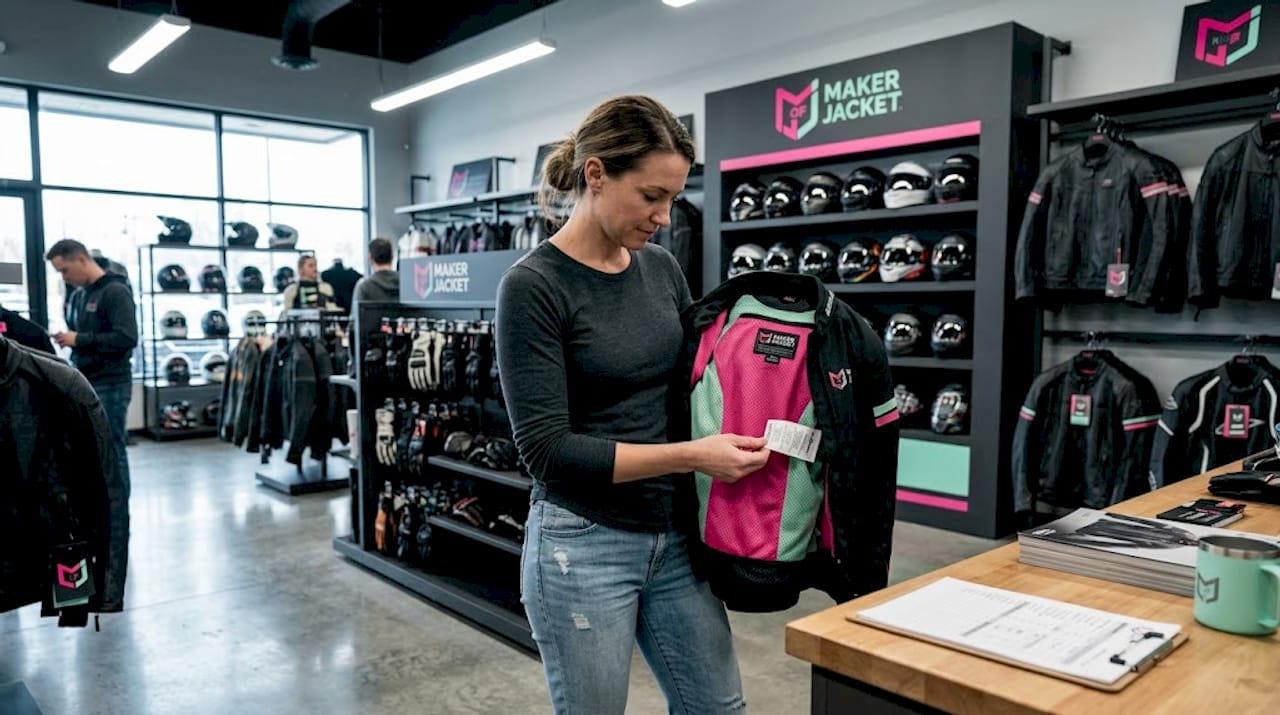
Walk into any motorcycle gear retailer and you will find shelves of jackets sporting names you recognize. Some of those jackets are engineered to keep you alive in a crash. Others are designed primarily to look good in the parking lot. The difference is not always obvious from a glance, and that gap matters enormously to anyone who actually rides.
According to safety guidance for motorcycle clothing, a branded jacket is not automatically protective. Real protective performance requires CE-rated armor in the shoulders, elbows, and back, along with abrasion-resistant shell materials that can handle pavement contact. Without those elements, even an expensive jacket from a recognizable brand offers little more protection than a standard cotton hoodie.
Here is a practical checklist to run through before buying any riding jacket:
- Check for CE certification: Look for a CE Level 1 or Level 2 label on any armor inserts. Level 2 offers significantly better impact absorption.
- Identify armor placement: Shoulders and elbows are non-negotiable. Back protection is highly recommended, and a chest protector pocket is a strong bonus.
- Examine shell material: Full-grain leather or certified textile materials (like Cordura or Kevlar blends) resist abrasion far better than fashion leathers or synthetic substitutes.
- Check the fit under armor: Armor should sit exactly over the joint it protects. If the shoulder pad slides around, the jacket doesn’t fit correctly for riding.
- Look for a safety standard label: EN 13595 is the European standard for professional motorcycle gear. ASTM F1952 applies in the US context.
Pro Tip: Before trusting any brand’s safety claim, flip the jacket inside out and physically locate every armor pocket. If you can’t find a dedicated back armor slot, that jacket was designed for style, not safety.
| Feature | Fashion branded jacket | Certified riding jacket |
|---|---|---|
| CE-rated armor | Rarely included | Standard requirement |
| Abrasion resistance | Low to moderate | High (tested and rated) |
| Shell material | Fashion leather or synthetic | Technical leather or textile |
| Back protector pocket | Usually absent | Typically present |
| Price range | $150 to $500+ | $200 to $800+ |
Use this buying checklist for style and safety to make sure your next jacket decision covers both bases, and always cross-reference with jacket safety criteria specific to your riding style.
What makes a branded jacket worth it?
Function and protection are must-haves, but when is a branded jacket truly worth it?
The word “worth” trips people up constantly when it comes to jackets. Worth is not the same as expensive. A $900 fashion jacket from a prestige house can be worth far less than a $350 technically engineered riding jacket, depending on how you measure it. The smartest framework for judging jacket value involves four concrete factors.
Road and Track’s methodology for choosing a jacket consistently evaluates fit, construction details, safety credentials, and cost-per-wear, rather than brand prestige alone. That approach cuts through marketing noise and gets to what actually makes a jacket earn its price tag.
Fit and comfort deserve more weight than most buyers give them. A jacket that restricts your shoulder movement will fatigue you on long rides and look awkward off the bike. Fit should account for layering in cold weather and freedom of movement with arms raised to riding position, not just how it looks while you stand still.
Construction details tell you everything about how a jacket will age. Look for:
- Double or triple stitching along seams under stress (shoulders, armpits, cuffs)
- YKK or equivalent quality zippers that move smoothly and seat firmly when closed
- Full lining or removable thermal liner for year-round usability
- Reinforced stress points at pockets and belt loops
Safety credentials we covered in the previous section, but they belong in this equation too. A jacket without verifiable protection credentials simply has a lower ceiling on its real-world value, no matter how good it looks.
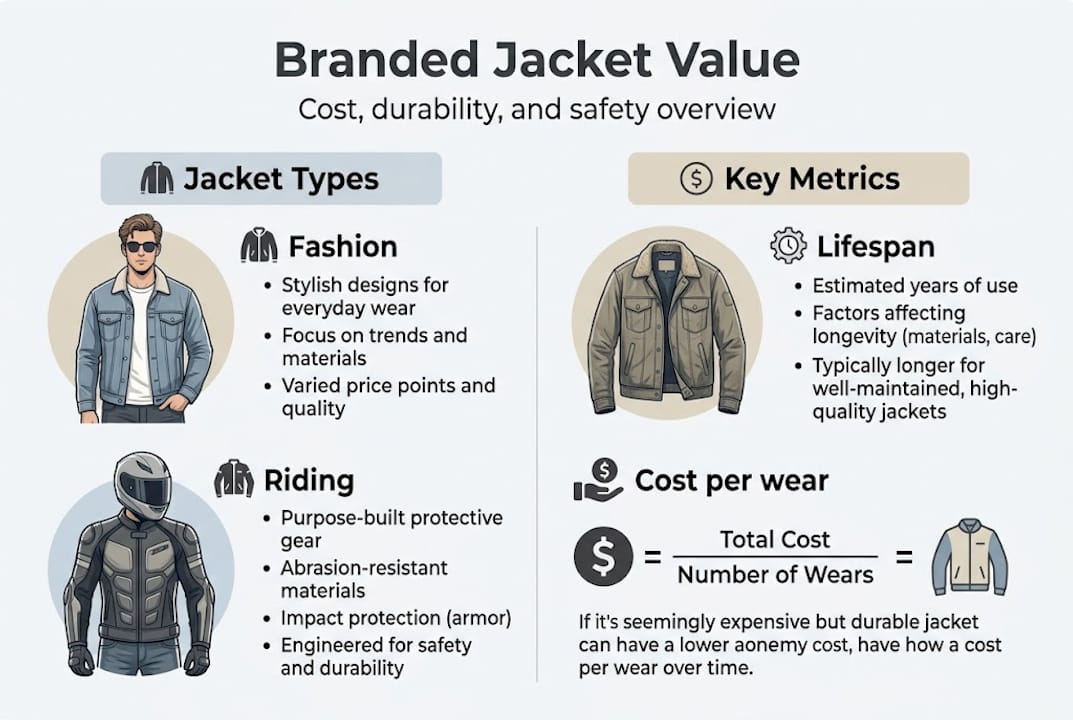
Cost-per-wear is the metric that tends to change people’s minds. A $600 jacket worn 300 times over five years costs $2 per use. A $150 fashion jacket that pills, fades, and falls apart in eighteen months costs far more per wear. Real leather jacket benefits include exactly this kind of longevity, which is why full-grain leather remains one of the best long-term investments in outerwear.
| Jacket type | Avg. price | Avg. lifespan | Cost per wear (est.) |
|---|---|---|---|
| Fashion faux leather | $120 to $200 | 1 to 2 years | $0.50 to $2.00 |
| Entry-level branded leather | $300 to $450 | 3 to 5 years | $0.20 to $0.60 |
| Premium full-grain leather | $500 to $900 | 8 to 15 years | $0.10 to $0.30 |
| Certified riding jacket | $350 to $800 | 5 to 10 years | $0.12 to $0.44 |
Pro Tip: When shopping for riding jackets, bring a friend and test shoulder and elbow range of motion fully. Simulate your actual riding position in the store. Fit and comfort in jackets directly influence both how long you wear the jacket and how well it protects you when it counts.
Brand prestige vs. real value: Decoding the price
Defining jacket value leads us to the question: does paying more always mean getting more?
Short answer: no. Long answer: it depends entirely on what you are paying for. Brand prestige operates on a different economy than material quality, and confusing the two is one of the most common and most expensive mistakes jacket buyers make.
Strategist price comparison features consistently find that a higher price tag on outerwear does not automatically translate to superior real-world performance. The actual differences that show up between a well-made affordable jacket and an expensive prestige option tend to appear in material quality, construction precision, and fit range, not in the brand name on the label.
“The logo is the smallest part of what you are paying for. The biggest part should be the leather, the lining, the stitching, and the way it moves with your body. When those things are exceptional, the price earns itself.”
Prestige branding adds a real emotional component to ownership. There is genuine value in wearing something with a strong heritage story. But that emotional premium is only worth paying when the physical product actually backs it up. When it doesn’t, you are essentially paying for marketing.
Here is how to spot real value before you spend:
- Research the shell material specifically. Ask or look up whether the leather is full-grain, top-grain, or genuine leather. Full-grain is the highest quality, using the entire hide surface. Genuine leather is often the lowest grade despite the trustworthy-sounding name.
- Compare stitching density visually. More stitches per inch signals more durable seams. Run your finger along the shoulder seam and feel whether it’s tight and consistent or loose and spaced unevenly.
- Test the zippers cold. Pull a zipper quickly from both directions. Quality zippers don’t catch or require two hands to close. Cheap zippers fail first.
- Check the lining attachment. A lining that’s loosely tacked in place will bunch and tear within months. A properly finished jacket has a clean, fully anchored lining that moves with the shell.
- Look for independent reviews, not just brand marketing. Riders who own a jacket for two or three seasons offer more honest assessments than any product page.
Use the verify jacket quality guide to walk through this process systematically on any jacket you are considering.
The goal isn’t to avoid brands with strong reputations. It’s to make sure the reputation is backed by physical evidence you can see and feel before you buy. Sometimes the best value comes from a smaller, craft-focused maker who puts every dollar into construction instead of advertising.
A fresh perspective: Why your jacket should tell your story
Here’s a viewpoint most jacket guides skip entirely: buying a branded jacket is an act of authorship, not just consumption. Every rider and every style-conscious person has a specific story to tell, and a jacket is one of the most visible chapters. Choosing one purely because a brand name is popular hands that authorship over to a marketing team. Choosing one based on how it fits your body, your riding style, and your personal aesthetic keeps the story in your hands.
Customization is where this authorship becomes tangible. Adding custom embroidery, unique colorways, or personalized armor configurations transforms a jacket from something you own into something you are. The practical confidence that comes from knowing your jacket fits perfectly and protects you properly is completely different from the shallow confidence of wearing a recognizable logo. That difference shows, in how you carry yourself and in how the jacket ages alongside you.
Take inspiration from embracing style with windbreaker jackets as proof that even functional outerwear can be deeply personal when the right choices are made. Your jacket’s story and impact outlast any fashion cycle. That’s the real win.
Find your signature piece with Maker of Jacket
Ready to let your wardrobe reflect both who you are and what you value? Here’s how you can start.
At Maker of Jacket, we build jackets around the person wearing them, not around what’s trending this season. Whether you ride every day, collect leather as a lifestyle statement, or want something that bridges both worlds, our catalog covers every style with serious material quality behind each one.
Every custom jacket order starts with your specifications: your preferred material, your fit measurements, your color choices, and your safety requirements. We handle the rest with precision craftsmanship and worldwide free shipping. If you’re ready to explore styles, colors, and construction options, browse our full range of jacket customization options and find the piece that genuinely belongs to you.
Frequently asked questions
Are all branded jackets safe for riding?
No, not every branded jacket is designed for safety. Always check for CE certification and proper armor placement before trusting any jacket on the road, regardless of the brand name attached to it. A branded jacket isn’t automatically protective without verified ratings.
How can I tell if a branded jacket is high quality?
Look for durable stitching, strong full-grain or top-grain materials, reliable YKK-quality closures, and independent safety credentials that verify real-world performance. A solid methodology for choosing a jacket focuses on construction evidence you can physically examine, not just brand reputation.
Why are branded jackets so expensive?
Pricing is often driven by label prestige and advertising costs rather than superior materials alone. Real value should show up in construction quality and fit, not just the logo. As price comparison analysis consistently shows, high price doesn’t automatically mean higher performance.
Is customization important for branded jackets?
Customization amplifies both personal expression and practical functionality, letting your jacket reflect your specific body, riding needs, and style preferences. A jacket that functions as a canvas for self-expression connects you to your gear in a way a standard off-the-shelf piece simply can’t.


