

5 Checks to Spot Genuine Nappa Leather and 6 Care Steps for Owners

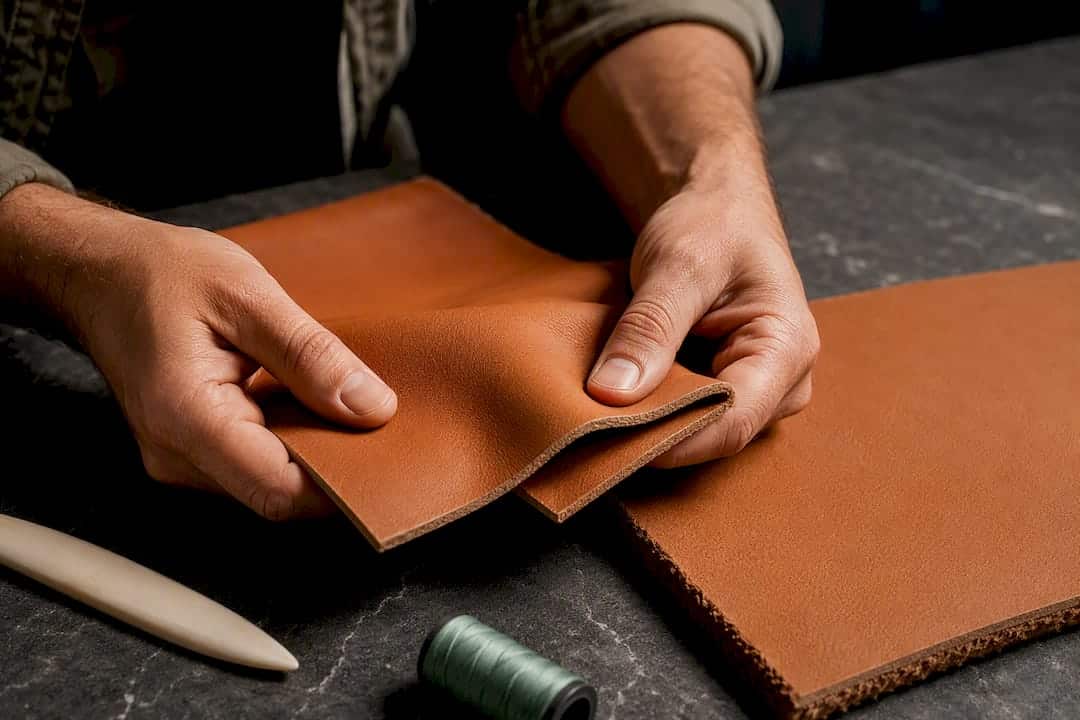
Nappa leather is a soft, full-grain leather, most often made from calf, lamb, or kid hides, prized for its buttery hand-feel and fine, even grain. It’s a finish category, not a single animal or fixed method, which is why quality varies between makers. The trade-off is real: that softness comes from a hide left largely uncoated, so Nappa scratches and stains more easily than heavier, corrected leathers.
TL;DR:
- Genuine Nappa leather is made from calf, lamb, or kid hides, with a full-grain, minimally processed surface that emphasizes natural texture and softness.
- Its porosity makes it more susceptible to stains, scratches, and moisture damage, requiring careful handling and regular, gentle maintenance.
- Nappa is typically used for fashion items like jackets, handbags, and small accessories, where comfort and appearance outweigh durability concerns.
- Because “Nappa” is unregulated, verifying full-grain, aniline dyeing, and specific hide type is essential to distinguish authentic Nappa from cheaper, coated alternatives.
- Proper care involves immediate spill blotting, using mild cleaner and Nappa-specific conditioners, and avoiding heavy embellishments that could damage its delicate surface.
Table of Contents
- What Is Nappa Leather, Exactly?
- How Is Nappa Leather Made?
- Where You’ll Find Nappa Leather
- Is Nappa Leather High Quality?
- How to Spot Genuine Nappa Before You Buy
- Caring for Nappa Leather the Right Way
- What Nappa Means for Anyone Buying a Leather Jacket
- Build Your Own Nappa-Style Jacket
- Sources
- FAQ
What Is Nappa Leather, Exactly?
Nappa is best understood as a tanning and finishing classification rather than a specific species of animal. The term describes leather processed to stay soft, thin, and full-grain, meaning the surface keeps its natural markings instead of being sanded down and printed with an artificial pattern. Wikipedia’s entry on Napa leather notes it’s a generic term with no single lab test for verification, which explains why two “Nappa” products from different brands can feel noticeably different.
A few traits show up consistently across genuine Nappa hides:
- Full-grain surface with minimal correction, so natural texture and small imperfections remain visible
- Butter-soft hand-feel with real stretch and drape, unlike stiffer corrected leathers
- Porous structure that absorbs dye evenly but also soaks up moisture and oils fast
- Lower scratch resistance compared to pigmented or heavily topcoated leather, despite decent tensile strength
- Feel shifts by hide species: calf tends to be firmer and finer grained, lamb is the softest and most delicate, kid sits somewhere between the two in resilience
That porosity is the whole story in miniature. It’s what makes Nappa feel alive against skin, and it’s also why a spilled drink or a rough car key can leave a mark that a thicker automotive-grade hide would shrug off.
How Is Nappa Leather Made?
Nappa starts as a decision about which layer of the hide to use, then moves through tanning and finishing choices that lock in its signature softness.
- Selecting the top grain. Manufacturers use the outermost layer of the hide, unsplit, since splitting removes the tight natural grain that gives Nappa its look and feel.
- Choosing the species. Calf, lamb, and kid hides dominate because their fiber structure is naturally fine and flexible, unlike thicker cattle hide used for work boots or luggage.
- Tanning and softening. Chrome tanning is the standard route, prized for producing a supple, stable hide relatively quickly, though vegetable and combination tannages appear in higher-end runs.
- Dyeing through the hide. Aniline dyes soak into the leather rather than sitting on top, which is where Nappa gets its rich, even color and natural feel.
- Light finishing. Instead of a heavy pigmented topcoat, Nappa gets little more than a thin protective layer, if any, leaving the pores largely open.
The name itself traces back to a real place. Wikipedia records that Emanuel Manasse developed the process at the Sawyer Tanning Company in Napa, California, and the name eventually became shorthand for any soft, full-grain leather made this way. That light-touch finishing is also exactly why Nappa needs more careful handling than a leather built with stain resistance as the priority.
Where You’ll Find Nappa Leather
Nappa shows up wherever softness and tactile luxury matter more than raw toughness.
- Handbags and small leather goods, where drape and a smooth hand-feel read as quality the moment someone picks the item up
- Jackets and fashion apparel, prized for comfort against the skin and a premium look that stiffer hides can’t match
- Automotive seating, where it’s marketed heavily as a premium upgrade, though J.D. Power notes that finish types vary between manufacturers even when the “Nappa” label appears on the spec sheet
- Gloves, wallets, and small accessories, plus occasional furniture accents where a soft, upscale touch is the selling point
Foley + Corinna’s overview of the material points to handbags and gloves in particular as places where Nappa’s suppleness does real work, letting the leather fold and move with the item’s shape instead of resisting it.
Is Nappa Leather High Quality?
Nappa earns its reputation, but it’s not the right answer for every use case. Here’s the honest ledger.
What works in its favor:
- Genuinely soft, natural-looking grain that ages with character instead of cracking
- Breathable structure that feels better against skin over long wear
- Even color from aniline dyeing, without the plasticky uniformity of pigmented leather
What works against it:
- Porous surface that stains from water, oil, and ink faster than corrected leather
- Lower scratch resistance, so keys, pet claws, and rough handling leave marks
- Higher price point than corrected or bonded leather, plus ongoing care costs
- Requires more attention over its life than a “wipe and forget” coated hide
Choose Nappa when comfort and appearance matter more than rough daily abuse, think a fashion jacket or a handbag you’re not dragging through job sites. Choose a corrected or heavily coated leather when the item needs to survive weather, scuffs, and minimal upkeep.
Pro Tip: If you’re torn between a Nappa jacket and a tougher hide, ask how the item will actually be used week to week. A jacket for commuting on a motorcycle needs different resilience than one for evenings out.
How to Spot Genuine Nappa Before You Buy
Because “Nappa” isn’t a regulated term, some listings stretch it to cover leather that’s really just soft-finished and pigmented. A few checks separate the real thing from marketing language.
- Read the product description closely. Genuine Nappa listings usually specify full-grain, aniline or semi-aniline dyeing, and the hide type (calf, lamb, or kid).
- Check the texture in person when possible. Real Nappa has a soft, slightly matte surface with visible natural grain, not the glossy, uniform sheen of pigmented vinyl-coated leather.
- Smell test. Genuine leather has an earthy, organic scent; a strong chemical or plastic smell is a red flag for a synthetic or heavily coated substitute.
- Watch the price. Real Nappa costs more to produce than corrected leather, so a suspiciously low price on a “Nappa leather” jacket or bag is worth questioning.
- Ask the seller directly. A legitimate seller can tell you the hide species, tanning method, and finish type without hesitation, and should offer a clear return policy if the material doesn’t match the description.
Understanding how leather grades work before you shop makes these red flags much easier to catch, since full-grain, top-grain, and corrected leather all get marketed with overlapping language. On the automotive side, J.D. Power’s guidance is a useful reminder that “Nappa” on a trim sheet doesn’t guarantee a standardized material, so asking the dealer what finish process was actually used is worth the extra minute.
Caring for Nappa Leather the Right Way
Nappa rewards gentle, consistent care and punishes neglect faster than tougher leathers do. A spill left overnight can set into a stain that a quick wipe would have prevented entirely.
- Handle spills immediately. Blot, don’t rub, and keep the item away from direct heat and long stretches of sunlight, both of which dry out the natural oils in the hide.
- Clean with the right tools. A soft horsehair brush and a mild, solvent-free cleaner handle everyday dust and light grime; always spot-test on a hidden area first.
- Condition with Nappa-specific products. Saphir’s care guidance recommends solvent-free Nappa creams over waxy, heavy polishes, since wax and pigment residues can permanently darken or stain the exposed pores.
- Don’t overdo it. Conditioning too often lets lipids build up in the fibers over time, which can actually stiffen leather that’s supposed to stay supple, so treat it seasonally rather than weekly.
- Store it breathable. Use a cloth bag, never sealed plastic, and keep the item away from damp or extreme temperature swings.
- Bring in a professional for deep stains or cracking. A restorer with experience in soft, full-grain hides can often save an item that home treatment would only make worse.
If you’re maintaining a lighter-colored piece, Maker of Jacket’s guide to caring for white leather covers the extra precautions discoloration-prone hides need. For general upkeep on any jacket, the step-by-step cleaning guide walks through safe methods that won’t strip natural oils. On the automotive side, ECOLIA’s overview of car leather seat care covers similar cleaning principles for upholstery that sees daily wear.
What Nappa Means for Anyone Buying a Leather Jacket
Nappa’s reputation as the softest, most luxurious leather is well earned, but that softness is exactly why we don’t recommend it for every jacket style. A featherweight fashion jacket or a statement piece meant for evenings out is a natural fit for Nappa’s drape and hand-feel. A heavy-duty riding jacket built to survive a slide down asphalt is a different job entirely, and a thicker, more abrasion-resistant hide serves that purpose far better.
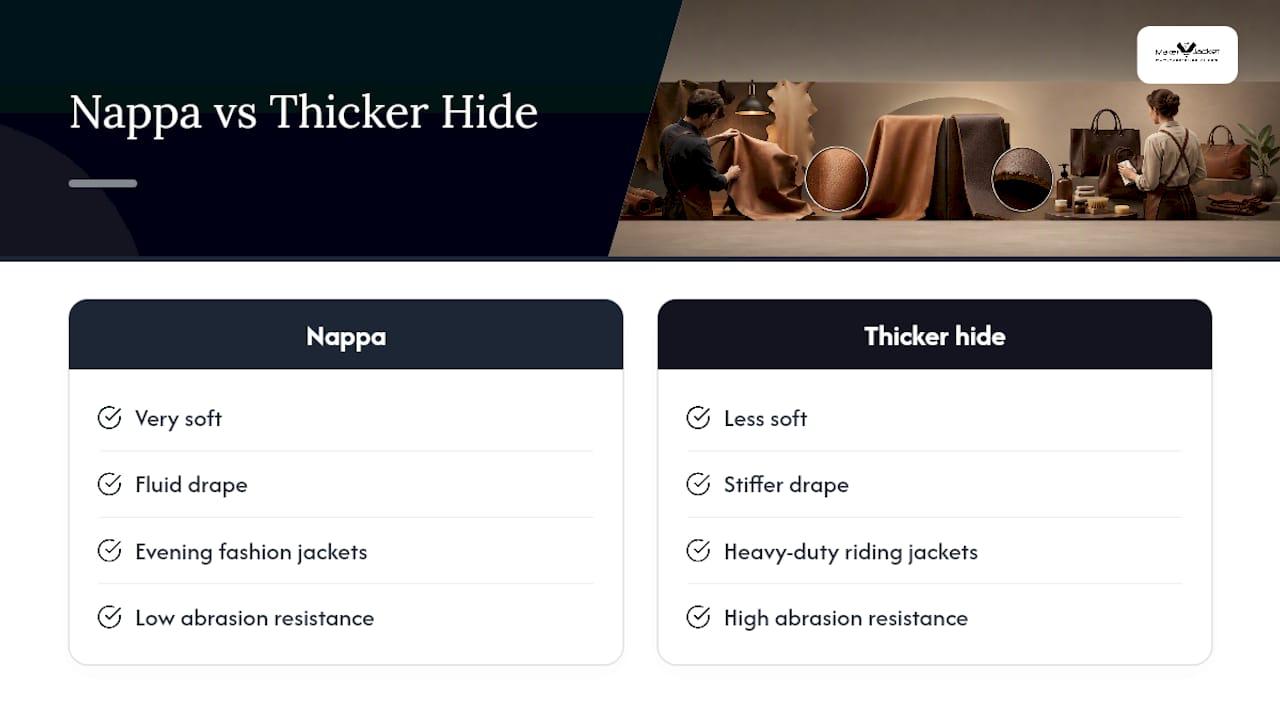
When customers ask us about hide options, we walk through the same trade-offs covered here: softness versus resilience, natural grain versus coated durability. A Nappa jacket also breaks in differently than corrected leather, expect it to feel supple from day one rather than needing weeks of wear to loosen up, and expect it to show wear patterns sooner if it’s not cared for.
Anyone weighing this decision should look at how leather grades actually break down before committing to a hide type.
— Maker
Build Your Own Nappa-Style Jacket
If everything above has you leaning toward a Nappa-soft jacket, the fastest way to get one that fits both your body and your lifestyle is to skip the guesswork of matching a store rack size to a hide you’ve never touched.

Each order is built around the customer’s hide and finish preference, whether a soft, full-grain Nappa-style leather for a fashion piece or a sturdier hide for daily wear and riding. You pick the style, the color, and the fit specs, and the jacket gets made to match rather than the other way around. Sizing runs custom, finish options are laid out clearly before ordering, and shipping is available to multiple locations. Start by browsing how to customize your jacket to see the hide and style choices available, or head straight to the custom jacket order page to spec out your build.
Sources
- Napa leather – Wikipedia
- What is Nappa Leather? – J.D. Power
- Nappa leather routine care guide – Saphir Médaille d’Or France
- What Is Nappa Leather? The Soft Luxury Leather Explained – Foley + Corinna
FAQ
What is Nappa leather made from?
Nappa leather is typically made from calf, lamb, or kid hides, chosen for their fine, flexible fiber structure that produces a soft, full-grain finish.
Is Nappa leather real leather?
Yes. Nappa is genuine full-grain leather, distinguished by its tanning and finishing process rather than being a synthetic or coated material.
Is Nappa leather durable?
Nappa has decent tensile strength but low resistance to scratches and stains because of its minimal surface finish, so it holds up well under gentle use but shows wear faster than corrected leather.
How is Nappa leather different from genuine leather in general?
“Genuine leather” is a broad, often low-grade category, while Nappa specifically refers to a soft, full-grain, minimally finished leather, meaning all Nappa is genuine leather, but not all genuine leather qualifies as Nappa.
Can I get a custom Nappa-style leather jacket?
Yes. Makerofjacket lets you choose hide type and finish when ordering a custom leather jacket, so you can match the softness of Nappa to your preferred style and fit.


